Radon mitigation fans & parts
This category is for homeowners who already know their radon level is high and want to understand the hardware that fixes it: the inline fan at the center of an active mitigation system, and the U-tube manometer that shows whether that system is still pulling. It also suits owners of an existing system whose fan has failed or grown noisy. The short answer: fan choice depends on what is under the slab, a new system is best designed and installed by a certified radon mitigation professional, and replacing a failed fan on an existing system with a matching model is a more reasonable job for a capable homeowner. This page is general guidance, not a substitute for a certified mitigator's site assessment or for local building and electrical codes. The product buttons below go to Amazon, where you can check the live price and current availability.
What the fan does in a sub-slab depressurization system
The most common radon fix for homes with a basement or slab is active sub-slab depressurization. A mitigator drills a suction hole through the slab, removes a small pit of material beneath it, and runs a PVC pipe from that pit up and out of the house. An inline fan on that pipe runs continuously and creates a slight vacuum under the slab. Soil gas, including radon, is drawn into the pipe and discharged above the roofline instead of seeping in through cracks and floor drains.
The fan is the only moving part. The pipe, seals and suction pit do nothing on their own without it, which is why a dead or undersized fan is the most common reason a system stops working. A system without a fan is a passive system, which usually reduces radon far less; many new homes have passive piping so a fan can be added later. For the full picture of how the parts fit together, see the guide to how radon mitigation systems work.
Sizing a fan: suction vs airflow
Radon fans are not sized by the square footage of the house. They are sized by how easily air moves through the material beneath the slab, which mitigators call permeability.
- Loose, permeable sub-slab material. A layer of clean gravel under the slab lets air move freely. The fan does not need much suction to reach the whole footprint, but it may need to move a lot of air. A higher-flow fan with modest suction usually suits these homes.
- Tight, low-permeability material. Clay, packed sand, silt or no gravel layer at all resists airflow. The fan has to pull hard to extend the vacuum across the slab, but very little air actually moves. A high-suction, low-flow fan is the usual choice.
Mitigators often drill small test holes to measure how far vacuum reaches before choosing a fan. An oversized fan wastes electricity and can pull conditioned air from the house; an undersized one leaves parts of the slab untreated.
Reading fan specs: watts, CFM and static pressure
Inline radon fans from the major makers come in families that run from low-power, high-flow models to higher-power, high-suction models. Three numbers matter on a spec sheet.
- Watts. The power the fan draws. Because a radon fan runs around the clock, wattage translates directly into the running cost on the electric bill.
- CFM (cubic feet per minute). How much air the fan can move.
- Static pressure (inches of water column). How much suction the fan can produce against resistance.
The key idea is the fan curve. Every fan trades airflow for suction: at zero resistance it moves its maximum CFM, and as resistance rises the airflow drops until, at its maximum static pressure, it moves almost nothing. A high-flow fan has a curve that starts high on CFM but falls off quickly as pressure rises; a high-suction fan starts lower on CFM but keeps pulling at higher pressures. The right fan is one whose curve passes through the pressure and flow the house needs. Pipe diameter, typically 3 or 4 inches, also has to match the fan's connections. The best radon fan buyer's guide walks through the main model families in more detail.
Where the fan goes, and the U-tube manometer
EPA guidance for active soil depressurization calls for the fan to be located outside the living space, not in the basement or any occupied area, and for the discharge to vent above the roof edge, away from windows and other openings. Everything downstream of the fan is under positive pressure, so a leak there pushes radon-laden air out; fans therefore go in an attic, a garage not beneath living space, or on an exterior wall. Exterior fans need an outdoor rating; the exterior radon fan guide covers those details. Electrical work should follow local code, and many installations use an outdoor-rated disconnect near the fan.
The U-tube manometer is the system's simple gauge. It is a small clear U-shaped tube of colored liquid connected to the vent pipe below the fan. When the fan pulls a vacuum, one side rises and the other falls; the difference, in inches of water column, is the suction in the pipe.
- There is no single correct number. A healthy reading depends on the fan and the soil. Installers typically mark the starting level after commissioning.
- What matters is change. If the liquid levels are even, the fan has likely stopped or lost power. A reading that drops well below the original mark can mean a failing fan or a leak in the piping. A reading that climbs well above it can point to a blockage such as ice, water or debris in the pipe.
- A gauge is not a radon test. A normal manometer reading shows the fan is pulling, not that radon is low. Retesting confirms that.
Pairing the manometer with a continuous monitor from the radon detector category shows both that the system is running and that indoor levels stay down.
Lifespan, noise, replacement and Colorado
Inline radon fans commonly last on the order of 5 to 10 years or more, depending on the model, the climate and how much moisture moves through the pipe. Bearings usually fail gradually, so a new rattle, hum or vibration is often the first sign. Noise also comes from fans mounted directly to framing, airflow at the roof discharge, or an oversized fan; the quiet radon fan guide lists the common fixes.
When a fan on an existing, working system dies, replacing it with the same or an equivalent model is a more manageable task than designing a new system. Fans typically attach with rubber couplings and hose clamps. Even so, homeowners should cut power at the disconnect, follow the fan maker's instructions and local electrical code, and hire an electrician or mitigator if wiring is involved or the fan is in a hard-to-reach attic. After any replacement, note the new manometer reading and retest. The radon fan replacement guide and the radon fan replacement cost guide cover the steps and the budget.
For a new system, a certified radon mitigation professional is strongly recommended. Diagnostics, suction-point placement, sealing and post-mitigation testing all affect whether a system works. Colorado is a high-radon state, and much of the Front Range sits on uranium-bearing granite and shale, so mitigation systems are common there; the Colorado radon mitigation cost guide covers local pricing. Start with a test: the radon testing hub explains how.
| Item | What it does | Best for | Key consideration |
|---|---|---|---|
| High-flow inline fan | Moves a large volume of air at modest suction | Gravel or other permeable sub-slab material | Loses airflow quickly against tight soil |
| General-purpose inline fan | Balanced airflow and suction | The broad middle of typical homes | Confirm the curve matches measured conditions |
| High-suction, low-flow fan | Pulls strong vacuum while moving little air | Clay, packed sand or no gravel layer | Higher wattage; overkill on loose gravel |
| U-tube manometer | Shows suction in the vent pipe | Every active system, checked regularly | Shows the fan is pulling, not the radon level |
| Certified mitigator install | Diagnostics, design, sealing and testing | All new systems | Higher cost; check certification and warranty |
Our picks in this category
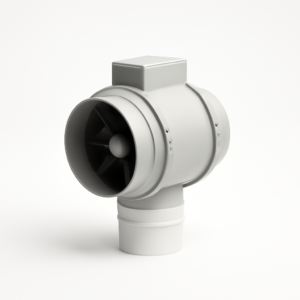
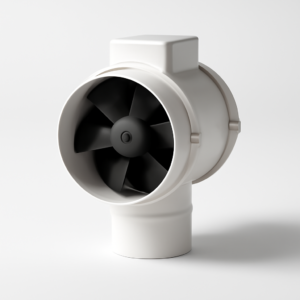
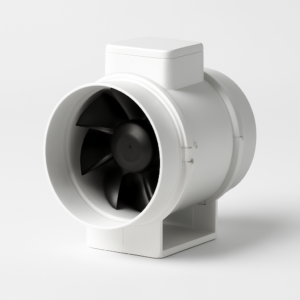
The RadonAway RP145 Inline Fan is one of the most widely used general-purpose radon fans, with a curve aimed at moving good airflow through permeable or moderately permeable sub-slab material.
The RadonAway GP501 Inline Fan is a high-suction model from the same maker, intended for tight soils where strong vacuum matters more than airflow; it draws more power than lower-suction models.
The Fantech Rn2 Radon Fan is an inline fan from Fantech's radon line, often used as a mid-range option; the Fantech radon fan guide compares the range.
The Festa AMG Radon Fan comes from Festa's AMG series of inline radon fans, which spans several suction and flow levels; check the listing for which model is offered and its fan curve.
The Tjernlund Radon Mitigation Fan is an inline fan from Tjernlund, a maker of venting and draft equipment; confirm on the listing that the exact model is rated for radon mitigation and matches your pipe size.
The Radon U-Tube Manometer is the simple suction gauge mounted on the vent pipe, useful for adding to a system that lacks one or replacing a faded or damaged gauge.
Related guides
To understand the whole system, read the sub-slab radon mitigation system guide and the radon mitigation system diagram, which labels each part. Fan basics are covered in radon fans: what homeowners need to know, and piping in the radon vent pipe guide.
On budget, the radon fan cost guide and the cost of a radon mitigation system price the hardware and the full job. Upkeep is covered in the radon mitigation system maintenance guide, and anyone weighing a self-install should read DIY radon mitigation: what to know first.
References
Frequently asked questions
How do I know what size radon fan I need?
Radon fans are sized by the material under the slab, not by the size of the house. Loose gravel usually suits a higher-flow fan, while clay or packed soil needs a high-suction fan. Mitigators often run a quick vacuum test through small holes in the slab to choose the right model, which is one reason professional design is recommended for new systems.
Can a radon fan be installed in the basement?
EPA guidance calls for the fan to be outside the living space, such as in an attic, a garage not beneath living space, or on an exterior wall. Everything after the fan is under positive pressure, so a leak there would push radon into the home if the fan were inside a basement or occupied area.
What should the U-tube manometer read?
There is no single correct number, because the reading depends on the fan and the soil. Installers usually mark the starting level after the system is set up. Even liquid levels suggest the fan has stopped, a much lower reading can mean a failing fan or a leak, and a much higher reading can mean a blocked pipe. A normal reading shows suction, not a low radon level, so periodic retesting is still needed.
How long does a radon fan last?
Many inline radon fans run for roughly 5 to 10 years or longer, depending on the model, climate and moisture in the pipe. New noise, vibration or a change in the manometer reading are common signs that a fan is wearing out.
Can I replace a radon fan myself?
Swapping a failed fan on an existing system for the same or an equivalent model is a more manageable job than building a new system, since fans usually attach with rubber couplings. Turn off power first, follow the fan maker's instructions and local electrical code, and use an electrician or mitigator for any wiring. Retest radon after the replacement to confirm the system still works.
6 products



Gear picks you can trust
Tied to our guides
Each product maps to a topic we cover in depth — radon, mold, lead, moisture, electrical and thermal inspection — so you know what the tool is for before you buy.
Short list on purpose
No endless catalog. We list the kinds of kits and meters we’d point a homeowner or new inspector to, not every model on the market.
No extra cost
Buttons open Amazon, where you check the live price and buy. As an Amazon Associate we earn from qualifying purchases, at no cost to you.
Frequently asked
- Do you sell these products?
- No. We’re a guide-first site — every button takes you to Amazon to complete the purchase there.
- Why don’t you show prices?
- Amazon prices change constantly, so we send you to the live listing rather than show a number that may be out of date.
- Is a DIY kit a substitute for a professional inspection?
- For screening, often yes. For real-estate transactions, remediation clearance or anything health-critical, use a certified professional — our guides explain when.