DIY mold test kits
A DIY mold test kit is for homeowners, renters and buyers who smell something musty, see a stain they cannot identify, or want a first data point before deciding whether to call a professional. The honest short answer: if mold is already visible, a kit usually is not needed, because the next step is the same either way (find the moisture, fix it, clean or remove the growth). Where a kit can help is in confirming whether an unclear stain is mold, or in sending a sample to a lab for a species-level report. This page explains the main kit types, what each can and cannot tell you, and when a professional inspection is the better buy. The information here is general guidance, not a substitute for an on-site assessment. The product buttons below go to Amazon, where you can check the live price and current availability.
Do you need a mold test at all?
The EPA's position is direct: in most cases, if visible mold growth is present, sampling is unnecessary. There are also no EPA or other federal limits for mold or mold spores in homes, so a test result cannot be checked against a legal standard to say a house "passes" or "fails." What matters most is the moisture problem feeding the growth. The EPA advises that small areas (under about 10 square feet, roughly a 3 ft by 3 ft patch) can often be cleaned by a homeowner, while larger areas, mold from contaminated water, or growth inside HVAC systems call for more care and often professional help.
Testing earns its place in narrower situations:
- An ambiguous stain that could be mold, soot, dirt or old water marks.
- A persistent musty odor with no visible growth, which can point to hidden mold behind walls, under flooring or in a crawl space.
- Real estate transactions, where a buyer wants documentation of a suspected problem.
- Post-remediation checks, where a professional compares indoor and outdoor samples to judge whether cleanup worked.
In each of these, the quality of the sample and the interpretation matter more than the brand of the kit.
Settle-plate (petri dish) kits: what they show
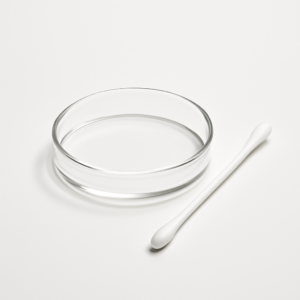
The most common kit on store shelves is the settle plate: a petri dish with a growth medium that is left open in a room for a set time, then covered and watched for colonies over several days. Many of these kits offer optional lab identification of what grew, for an additional fee.
The limitation is fundamental. Mold spores are present in nearly all indoor and outdoor air, so an open dish left in almost any home will grow something. A plate with colonies confirms that spores exist, which was already known. It does not measure how many spores are in a given volume of air, it does not compare indoor levels with outdoor levels, and it favors fast-growing species that happen to land on the dish. That means a settle plate cannot reliably tell you whether a home's mold levels are abnormal.
Settle plates are inexpensive and easy, and some homeowners use them as a curiosity or a rough before-and-after comparison in the same room under the same conditions. They should not be used to decide that a home is safe, or that it needs remediation.
Mail-in lab kits: air, tape and swab samples
Mail-in kits send a physical sample to a laboratory, usually with the lab fee included or listed separately. They are generally more informative than settle plates because a trained analyst examines the sample and reports on what is there.
- Tape-lift samples press clear tape onto a suspect surface. The lab examines it under a microscope and can say whether the stain contains mold growth and which general types are present. This is the most useful kit format for answering "is this stain mold?"
- Swab samples work the same way for textured or hard-to-tape surfaces, and may be cultured or examined directly depending on the lab.
- Air samples in consumer kits vary widely. True spore-trap air sampling draws a measured volume of air through a cassette with a calibrated pump, and is normally paired with an outdoor control sample for comparison. Kits without a pump and a measured volume cannot produce a meaningful spores-per-cubic-meter number.
Even a good lab report describes only the spot or the moment sampled. Mold growth is patchy, spore counts swing with activity and weather, and a single sample can miss a hidden source entirely. Read the lab report as one piece of evidence alongside what can be seen and smelled.
Instant swab tests, ERMI kits and "black mold" claims
Rapid or instant surface tests give a yes-or-no style result on the spot within minutes. They can help answer whether a surface residue is likely mold, but they do not identify species or measure exposure, and a positive on a damp bathroom grout line is not surprising.
ERMI kits (Environmental Relative Moldiness Index) collect household dust, usually by vacuum or cloth wipe, and a lab uses DNA-based analysis to score a set of mold species against a national comparison database. ERMI was developed by EPA researchers as a research tool, and EPA has cautioned that it is not intended for routine public use in deciding whether a specific home has a mold problem. Results depend heavily on how and where the dust was collected, so treat an ERMI score as background information, not a verdict.
"Black mold" kits are a marketing category more than a test type. Many molds are dark in color, and color alone does not identify a species or its health effects. The CDC and EPA both advise addressing any indoor mold growth the same way regardless of type: fix the moisture and remove the growth. For more context, see the guide on the black mold test.
When a professional inspection is the better buy
A DIY kit can add one data point. A professional mold inspection adds context: a visual survey, moisture readings, often thermal imaging, and properly collected air or surface samples with outdoor controls and a lab chain of custody. A professional assessment is usually the better choice when:
- Visible growth covers more than about 10 square feet, or follows a flood, sewage backup or long-running leak.
- A musty smell persists but the source cannot be found.
- Someone in the home has asthma, allergies or a weakened immune system and symptoms track with time spent indoors.
- A purchase, insurance claim or landlord dispute needs documentation that will hold up.
- Cleanup has been done and clearance testing is needed before rebuilding.
The mold testing hub explains how professional sampling works, what it typically includes, and how to read the results. In Colorado, dry air can mask problems until a roof leak, a failed sump, a swamp cooler or a snowmelt event wets a basement, so moisture history is often the most useful clue.
| Option | What it samples | What it can tell you | Main limitation |
|---|---|---|---|
| Settle plate (petri dish) | Spores that land on an open dish | That spores are present; optional lab ID of what grew | Spores are everywhere, so cannot show whether levels are abnormal |
| Instant surface test | Residue on a surface | Quick indication of whether a stain is likely mold | No species ID, no exposure measure |
| Mail-in tape or swab kit | A specific surface | Whether a stain is mold growth, and general types | Describes only the spot sampled |
| Mail-in air kit | Room air | Spore types; counts only if a measured volume is drawn | Needs a pump and outdoor control to be meaningful |
| ERMI dust kit | Settled household dust | DNA-based score versus a national database | Research tool; results depend heavily on sampling |
| Professional inspection | Visual, moisture, air and surface | Source, extent and documented lab results | Higher cost; quality varies by inspector |
Our picks in this category
The ImmunoLytics DIY Mold Test Kit is a settle-plate style kit with an option to send plates to a lab for identification, a reasonable choice for homeowners who want a low-cost first look and understand its limits.
The Mold Armor FG500 DIY Test Kit is a widely stocked petri-dish kit from a familiar cleaning-products brand, with optional lab analysis available for an extra fee.
The Healthful Home 5-Minute Mold Test is a rapid surface test that gives an on-the-spot indication of whether a stain or residue is likely mold, without waiting for a culture.
The DIY Mold Test (lab included) is a mail-in kit sold with laboratory analysis included; check the listing for the sample type and what the lab report covers before buying.
Related guides
For the background on testing a dark stain, read the black mold test guide. Homeowners on the Front Range can find local context in the guides to mold testing in Larimer County, Weld County and Broomfield County.
City-level guides cover mold testing in Golden, Evergreen, Greeley and Pueblo, where foothill snowmelt, older basements and irrigation leaks each shape the typical moisture problems.
For kit-by-kit detail, compare the best home mold test kits, read whether an at-home mold test kit actually works, and see how an air mold test kit differs from a surface sample. For a step-by-step approach without a kit, start with how to test your home for mold.
References
- EPA: Mold Testing or Sampling
- EPA: A Brief Guide to Mold, Moisture and Your Home
- American Lung Association: Mold and Dampness
Frequently asked questions
Are DIY mold test kits accurate?
It depends on the kit type. Settle-plate petri dish kits will grow mold in almost any home because spores are present in nearly all air, so they cannot show whether levels are abnormal. Mail-in tape or swab kits analyzed by a lab are more informative for answering whether a specific stain is mold. No home kit replaces a professional inspection that looks for the moisture source.
Do I need to test mold I can already see?
Usually not. The EPA says that in most cases, if visible mold growth is present, sampling is unnecessary. The priority is to find and fix the moisture problem and clean or remove the growth. Areas larger than about 10 square feet, or mold from contaminated water, may need professional help.
Can a mold test kit tell me if I have black mold?
A lab-analyzed tape or swab sample can identify general mold types, but color alone does not identify a species. Many molds look dark. The CDC and EPA advise treating any indoor mold growth the same way: correct the moisture and remove the growth, regardless of type.
What is an ERMI mold test?
ERMI, the Environmental Relative Moldiness Index, uses DNA analysis of household dust to score a set of mold species against a national database. It was developed by EPA researchers as a research tool, and EPA has cautioned against relying on it for routine decisions about an individual home. Results depend heavily on how the dust was collected.
When should I hire a professional instead of using a kit?
A professional mold inspection is usually the better choice when growth covers more than about 10 square feet, follows a flood or sewage backup, when a musty odor persists with no visible source, when occupants have health concerns, or when a sale, insurance claim or clearance after remediation needs documented results.
4 products


Guides on diy mold test kits
- Mold Test at Home: DIY Kits and Their Real Limits
- Mold Home Test: DIY Kits vs Professional Sampling in 2026
- Garage Floor Epoxy: Prep, Moisture Testing and Costs
- VOC Test: How to Test Indoor Air for VOCs and Formaldehyde
- Petri Dish Mold Identification Photos Guide
- Black Mold Test: What Homeowners Need to Know
Gear picks you can trust
Tied to our guides
Each product maps to a topic we cover in depth — radon, mold, lead, moisture, electrical and thermal inspection — so you know what the tool is for before you buy.
Short list on purpose
No endless catalog. We list the kinds of kits and meters we’d point a homeowner or new inspector to, not every model on the market.
No extra cost
Buttons open Amazon, where you check the live price and buy. As an Amazon Associate we earn from qualifying purchases, at no cost to you.
Frequently asked
- Do you sell these products?
- No. We’re a guide-first site — every button takes you to Amazon to complete the purchase there.
- Why don’t you show prices?
- Amazon prices change constantly, so we send you to the live listing rather than show a number that may be out of date.
- Is a DIY kit a substitute for a professional inspection?
- For screening, often yes. For real-estate transactions, remediation clearance or anything health-critical, use a certified professional — our guides explain when.