Mold Testing in Weld County, Colorado
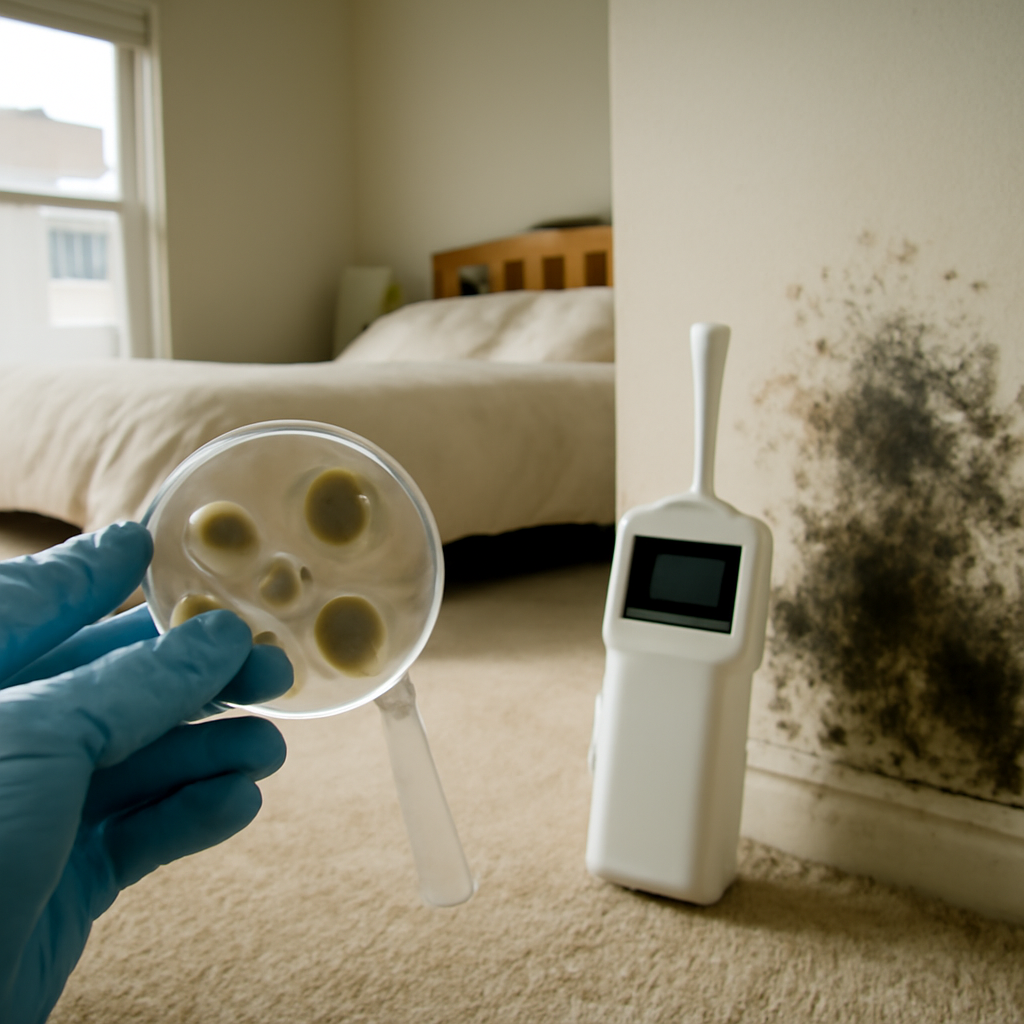
Mold testing weld county homeowners request usually answers one of two questions: is there a hidden mold problem behind a musty smell, or how bad is the visible growth I already found? Testing means laboratory sampling of air or surfaces to identify and quantify mold spores, and it complements the visual inspection rather than replacing it. Weld County’s dry plains climate, sealed cold winters, and widespread evaporative coolers create a moisture profile unlike humid coastal regions, so local sampling has to be read in that context. This page explains how mold testing works in Weld County, when it is worth doing, and what it costs. The guidance here reflects EPA, CDC, and CDPHE positions current as of 2026 and is educational only; a certified professional should interpret results and direct any remediation for your home.
Part of our Mold Testing & Inspection guide — start there for the full picture →
Is this mold, asbestos, or water damage? Get a free instant screen
Upload a clear photo of the suspect area. You'll get an instant AI screening opinion and what to do next. This is screening guidance, not a professional determination.
Screening guidance only. AI can be wrong. Confirm asbestos, mold type, or lead with lab testing or a licensed professional before acting.
Mold testing in Weld County: what to know
Mold testing collects samples that a laboratory analyzes for spore type and concentration. The two common methods are air sampling, which captures airborne spores for comparison between indoor and outdoor air, and surface sampling, which lifts material from a suspect spot to confirm whether a stain is mold. Testing produces numbers and species; an inspection produces a diagnosis of the water source. The two work together.
The EPA’s guidance is blunt on a key point: sampling is usually unnecessary if mold is already visible, because any sizeable growth should be removed and the moisture fixed regardless of type. Testing earns its keep in narrower cases, confirming a hidden problem behind a persistent odor, documenting conditions for a transaction or dispute, or verifying that a remediation actually worked. For the diagnostic walkthrough that often comes first, see our guide to mold inspection in Weld County, and for the broader science, the plain-language mold hub for homeowners covers how spores behave indoors.
Because Colorado sets no numeric mold action limit, a Weld County lab report does not produce a simple pass or fail. A qualified professional interprets the indoor-versus-outdoor comparison and the spore types in the context of your home, which is why test results are a tool for decisions, not a verdict on their own.
That interpretation depends heavily on the outdoor baseline, and Weld County’s setting makes the baseline its own variable. Outdoor spore counts shift with the season and the surroundings: agricultural fields, harvest activity, and dry windblown soil across the plains can push outdoor levels up at certain times of year, while a sealed winter day reads differently again. A professional reading a Greeley or Fort Lupton sample knows that an elevated indoor count only means something relative to what is outside that same day. Comparing a summer indoor sample against an unrelated outdoor reference, or skipping the outdoor sample entirely, produces a number that looks alarming but says nothing. This is the single most common way DIY and low-quality mold tests mislead homeowners, and it is why a properly paired indoor-outdoor sample is the foundation of any test worth paying for.
Why Weld County conditions shape mold testing
The local moisture drivers determine what testing is likely to find. Evaporative coolers, common in Greeley, Eaton, Ault, and the older plains towns, raise indoor humidity all summer. Air sampling in a home with a wet cooler may show elevated spore counts in the rooms it serves, even without a dramatic visible problem, because the added moisture supports background growth on cool surfaces.
Cold sealed winters are the second factor. Weld County homes stay closed for months, so indoor moisture from daily living concentrates. In tight 2010s and 2020s builds across Severance, Johnstown, and Windsor, that trapped humidity can fuel bathroom and window-area growth that a test will register. In older Fort Lupton and Platteville housing, cold wall cavities create hidden condensation surfaces, exactly the kind of concealed problem that air sampling is designed to flag.
Snowmelt and storm-driven water intrusion add the third pattern. Finished basements across the Carbon Valley towns of Firestone, Frederick, and Dacono are the most common settings for elevated basement spore counts. In agricultural Weld, damp crawlspaces under century-old farmhouses near Platteville or Ault, and informal additions on rural parcels, produce the musty-odor, no-visible-source cases where testing is most justified. The CDC links damp indoor environments to respiratory symptoms, which is the health reason behind a sampling request.
What Weld County mold testing covers
A typical testing visit pairs a brief visual assessment with the actual sampling. The professional first identifies where moisture and odor concentrate, then chooses sampling points to answer the homeowner’s specific question.
Air sampling
Air samples are pulled indoors in the suspect area and outdoors as a baseline. The lab compares the two: a much higher indoor spore count, or indoor-dominant species absent outdoors, suggests an active indoor source. In a Greeley basement with a musty smell but no visible growth, air sampling is the standard way to confirm whether a hidden problem exists.
Surface sampling
Surface samples, by swab or tape lift, confirm whether a specific stain or discoloration is actually mold and identify the genus. This is useful when a homeowner is unsure whether a dark patch on a Windsor basement wall is mold, soot, or mineral staining. It answers a narrow question precisely.
Post-remediation verification
After cleanup, a clearance test confirms that spore counts have returned to a normal indoor-versus-outdoor relationship and that the work resolved the problem. For a documented remediation tied to a sale or insurance claim, this verification step matters.
When testing is genuinely worth it in Weld County
It helps to be specific about the cases that justify sampling here. The strongest is a persistent musty odor with no visible source, common in older Greeley basements and crawlspaced Ault and Platteville farmhouses, where air sampling confirms whether a hidden problem is real before a homeowner opens up walls. The second is a real-estate or insurance dispute, where one party needs documented numbers rather than an opinion. The third is post-remediation clearance, proving a cleanup in a Windsor or Frederick basement actually worked. The fourth is a health-driven request, where a household member’s persistent respiratory symptoms prompt a family to characterize what is in the air. Outside these cases, when mold is already visible and the water source is obvious, testing usually adds cost without changing the plan, since the response is the same: remove the mold and fix the moisture.
Mold testing cost in Weld County
Mold testing in the Weld County market is typically priced per sample plus a base visit fee. A two-sample air comparison, one indoor and one outdoor, commonly runs about $250 to $450 once lab fees are included, and each additional sample adds roughly $75 to $150. A standalone surface sample to confirm a single stain sits at the lower end.
Larger homes and properties needing multiple sampling zones, such as a Greeley house with both a basement and a swamp-cooler-served upper floor, cost more because more samples are needed for a meaningful picture. Post-remediation clearance testing is priced similarly to an initial air comparison. Bundling testing with an inspection during a purchase is the most cost-effective route, since the professional is already evaluating the home.
Spend on testing where it answers a real question. Paying for samples to confirm visible mold you already plan to remove rarely adds value; paying to locate a hidden source behind a persistent odor, or to verify a remediation, is money well spent. The cost of testing is small against the expense of tearing out and rebuilding mold-damaged finishes that a hidden source keeps feeding.
Weld County regulations and disclosure
Colorado does not license mold testers or set a numeric mold standard, so the credibility of a Weld County test rests on method and the independence of the lab and sampler. The Seller’s Property Disclosure asks sellers to report known mold and moisture issues, and a documented test can support either side of that conversation in a sale.
For buyers, a test that confirms a hidden basement problem strengthens a request for repairs or a credit. For sellers, a clean post-remediation clearance test offers concrete reassurance that a past leak was resolved. Because results have no statutory threshold to point to, the interpretation must come from a qualified professional who reads the indoor-outdoor comparison and species in the context of the specific Weld County home, whether it is a downtown Greeley rental or a new Severance build.
Communities and areas served
Mold testing requests in Weld County concentrate in Greeley, where older downtown housing, University of Northern Colorado rentals, and finished basements drive the most cases. Windsor and the Carbon Valley, Firestone, Frederick, and Dacono, contribute subdivision basement testing, while Johnstown, Severance, and Milliken add newer tight homes where sealed-winter humidity raises questions.
The older plains towns of Eaton, Ault, Fort Lupton, and Platteville bring farmhouse and crawlspace sampling where musty odors lack an obvious source, and Erie on the Boulder County edge rounds out coverage. The county’s size means a tester may sample a century-old Ault farmhouse one day and a 2022 Severance build the next, each with a different expected spore profile.
How to choose a Weld County mold testing provider
Choose a provider who explains why a test is or is not needed for your situation rather than defaulting to maximum sampling. Independence is the key safeguard: a tester who does not also perform remediation has no reason to manufacture a problem. Ask whether they use an accredited laboratory and whether air samples include a proper outdoor baseline, since indoor numbers are meaningless without it.
Request a written report that states the question being answered, the sampling locations, and a plain interpretation. If you are buying, coordinating testing with a full home inspection in Weld County places the lab results alongside the rest of the property’s condition. A trustworthy provider will sometimes tell you to skip testing and simply fix a visible problem, which is exactly the kind of honest counsel worth paying for.
Be wary of any provider who sells testing and remediation as a single inseparable package, since that arrangement gives them a financial reason to find a problem worth remediating. The cleaner model is a tester whose only product is information: they sample, they interpret, and they hand you a report you can take to whatever independent remediator you choose. In a county where the housing and the moisture drivers vary so much from town to town, that independence is what keeps a Weld County mold test honest, whether the property is a downtown Greeley duplex or a new Severance build on the edge of the plains.
References
- Mold testing or sampling guidance — U.S. Environmental Protection Agency
- Mold and your health — Centers for Disease Control and Prevention
- Mold in the home — Colorado Department of Public Health and Environment
Frequently asked questions
Do I need mold testing if I can see the mold in my Weld County home?
Usually not. The EPA notes that visible mold should be removed and the moisture fixed regardless of type, so testing adds little. Sampling is more useful for hidden problems, documentation, or verifying a completed remediation.
What does mold testing actually measure?
Air sampling captures airborne spores to compare indoor and outdoor air, while surface sampling confirms whether a specific stain is mold and identifies the genus. A lab analyzes the samples for type and concentration.
How much does mold testing cost in Weld County?
A two-sample indoor-outdoor air comparison typically runs $250 to $450 with lab fees, and each additional sample adds roughly $75 to $150. A single surface sample sits at the lower end.
Is there a pass-or-fail mold limit in Colorado?
No. Colorado sets no numeric mold action limit, so a lab report has no statutory threshold. A qualified professional interprets the indoor-versus-outdoor comparison and spore types in the context of your specific home.
Can a swamp cooler affect mold test results?
Yes. Evaporative coolers raise indoor humidity, so air samples in rooms they serve may show elevated spore counts even without dramatic visible growth. A good tester accounts for that high-plains pattern when interpreting results.
In Weld County, the right mold test answers a specific question rather than confirming what you can already see. To connect with a vetted local provider who uses an accredited lab and reads results honestly, reach out through our contact page.