Radon Mitigation in Weld County, Colorado
When a radon test comes back at or above the EPA’s 4 pCi/L action level, the next step is radon mitigation weld county homeowners can rely on to bring the number down. Weld County sits in EPA Radon Zone 1, the highest-risk category, which applies countywide from Greeley to the Carbon Valley, so elevated readings are common and mitigation is a routine fix rather than a rare event. The good news is that a properly designed system reliably cuts indoor radon, often by 90 percent or more. This page explains how mitigation works in Weld County’s plains housing, what it costs, and how to confirm it succeeded. This summary reflects EPA and CDPHE guidance current as of 2026; consult a certified mitigation professional for design and installation decisions specific to your home.
Radon mitigation in Weld County: what to know
Radon mitigation is the process of reducing indoor radon to a safe level, almost always by installing an active sub-slab depressurization system. A pipe draws soil gas from beneath the foundation and an inline fan vents it above the roofline, before it can enter the living space. Done correctly, this is the most reliable radon reduction method the EPA recognizes.
Mitigation follows testing. You should only mitigate after a valid test confirms a level at or above 4 pCi/L, and you should retest after installation to prove the system works. If you have not yet tested, start with our guide to radon testing in Weld County, and for the underlying science the plain-language radon guide for Front Range homeowners explains how the gas enters and accumulates.
Because all of Weld County is Zone 1, a high test is not unusual. A reading of 8 or 10 pCi/L in a finished Windsor or Greeley basement is well within the range mitigation systems are designed to handle, and a competent installer can typically bring it below 2 pCi/L.
It also helps to set expectations about the result. The EPA does not define a level it considers entirely risk-free, and its guidance encourages homeowners to consider reduction even between 2 and 4 pCi/L. A good Weld County installer aims not merely to scrape under the 4 pCi/L line but to get the home as low as the system practically allows, often well below 2 pCi/L. For a family spending years in a finished basement, the difference between a post-mitigation reading of 3.8 and one of 1.5 is meaningful, and a properly sized system usually achieves the lower figure without extra cost. That is why the post-installation test is not just a pass-fail check but a measure of how well the system was designed.
Why Weld County homes need radon mitigation
The same factors that drive high readings make mitigation worthwhile. Uranium in the high-plains soils releases radon into the ground beneath foundations across the county, and the flat plains geology means the soil-gas source is broadly consistent from town to town. Finished basements, common in Greeley’s older neighborhoods and in the 2000s-to-2020s subdivisions of Severance, Firestone, Frederick, and Dacono, put occupied living space in direct contact with that soil.
Climate seals the problem in. Weld County winters are cold, so homes stay closed for months and furnaces create negative pressure that actively pulls soil gas indoors. The tight construction of newer Carbon Valley homes, prized for energy efficiency, traps radon once it enters because air exchange is limited. A basement bedroom or home office in such a home can hold radon at levels that warrant prompt mitigation, since that is both the most soil-contacted space and a place families occupy daily.
Older plains housing has its own pathways. Century-old farmhouses near Eaton, Ault, and Platteville often have stone or block foundations, dirt or partial crawlspaces, and multiple slab penetrations, all routes for soil gas. Mitigating these older structures can require sealing crawlspace membranes in addition to a depressurization pipe, which is why design has to match the specific foundation rather than following a single template.
What a Weld County radon mitigation system involves
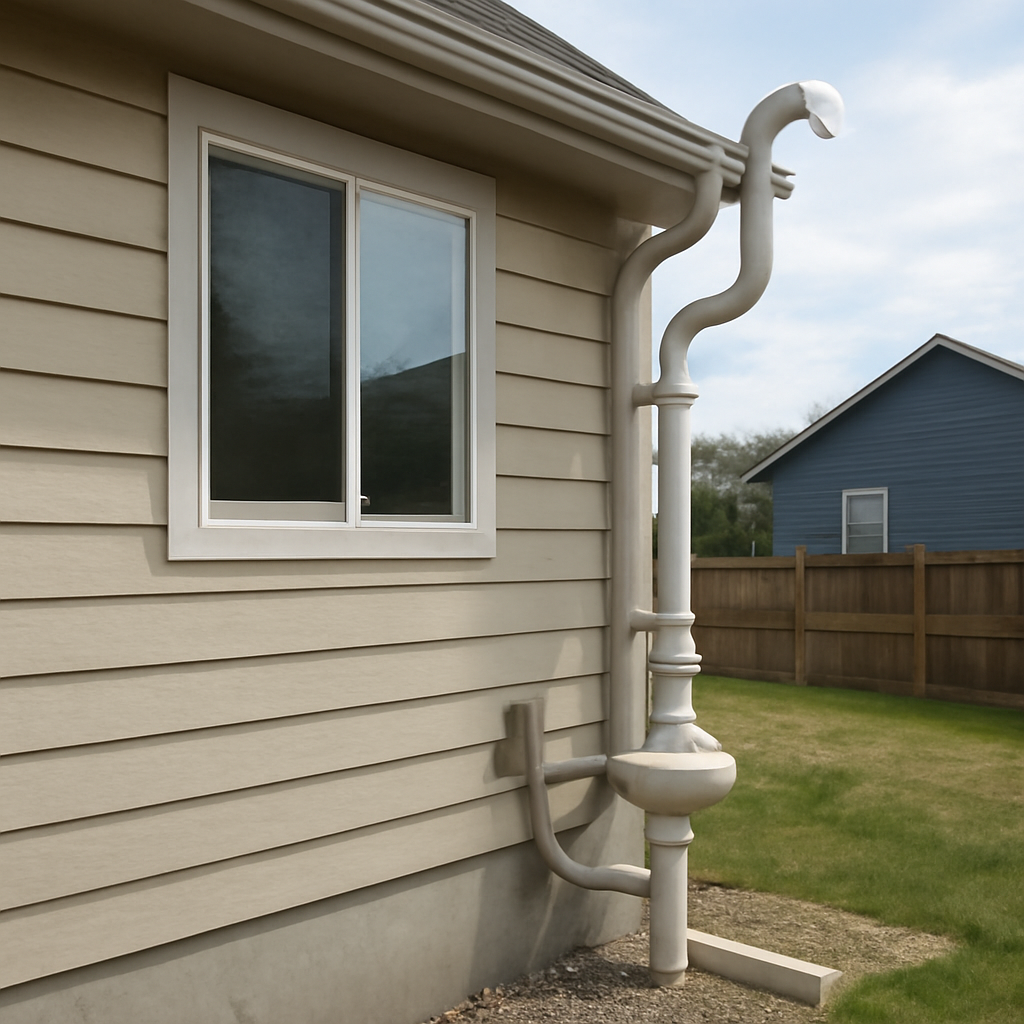
A standard active sub-slab depressurization system is the workhorse for the great majority of Weld County homes. The installer cores a hole through the basement slab, removes a small amount of material beneath to create a suction pit, and runs PVC pipe from that point up through the home or along an exterior wall to a fan and a roofline discharge.
Sub-slab depressurization
The inline fan, mounted in an attic or outside, maintains constant negative pressure under the slab so radon is captured and vented before it enters the home. A visible manometer on the pipe shows the system is running. For a typical finished-basement Greeley or Windsor home with a poured slab, this single-suction-point design is usually all that is needed.
Sealing and crawlspace systems
Sealing slab cracks, control joints, and the sump lid improves system efficiency by reducing the air the fan has to move. Homes with crawlspaces, common in older rural Weld properties, often use sub-membrane depressurization: a sealed plastic membrane laid over the crawlspace soil with the suction drawn from beneath it. This adapts the same principle to a different foundation type.
Discharge routing is where good and careless installations diverge. The vent pipe has to terminate above the roofline and away from windows, doors, and air intakes so the expelled soil gas disperses rather than re-entering the home, and EPA and AARST standards specify minimum clearances for exactly that reason. On a Weld County home the route can run up through an interior chase and out the roof, the cleaner look, or along an exterior wall to a roofline discharge, which is less invasive but more visible. A thoughtful installer discusses both with the homeowner rather than defaulting to whichever is fastest. Poorly placed discharge that vents too close to a bedroom window can undermine the whole point of the system, which is why the routing decision deserves as much attention as the suction point itself.
Post-mitigation testing
After installation, a follow-up radon test confirms the system brought the level below 4 pCi/L, and ideally well below. Reputable installers include or recommend this verification. Skipping it leaves you with a system you assume is working rather than one you know is working.
Living with the system
An installed system is not entirely maintenance-free. The inline fan runs continuously and typically lasts several years to over a decade before needing replacement, an inexpensive swap when the time comes. The manometer on the pipe should be checked occasionally; if the two liquid columns even out, the fan has failed and the home is no longer protected, so a homeowner who glances at it from time to time will catch a problem early. The EPA also recommends re-testing every couple of years even with a working system, because foundations and homes change. For a Weld County household, that adds up to a small ongoing electricity cost for the fan plus an occasional inexpensive re-test, a modest price for keeping a finished basement in a Zone 1 county continuously below the action level rather than assuming the one-time fix holds forever.
Radon mitigation cost in Weld County
A standard sub-slab depressurization system in the Weld County market typically runs about $1,200 to $1,800 installed for a straightforward single-family home. More complex jobs cost more: multiple suction points for a large or segmented foundation, crawlspace membrane systems, and difficult routing all add to the total, pushing some installations toward $2,000 to $2,800.
Older farmhouses and rural properties on the plains tend toward the higher end because of irregular foundations, crawlspaces, and longer pipe runs, while a simple Carbon Valley tract home with an accessible basement sits at the lower end. A post-installation verification test adds a modest amount if not already bundled. Most reputable installers warranty the system to hold the home below 4 pCi/L.
The value is strong. A one-time installation in the low-thousands cuts a lifetime of radon exposure in a home families occupy for years, and it protects resale value, since a documented mitigation system reassures the next Zone 1 buyer. Against the EPA’s link between radon and thousands of annual lung-cancer deaths, the cost is modest for the protection it delivers.
Colorado regulations and disclosure
Colorado does not license radon mitigation contractors at the state level, so for a Weld County installation, confirm the installer holds national certification through a recognized program and follows EPA and AARST standards. The Seller’s Property Disclosure asks sellers to report known radon results and any existing mitigation system, which makes a documented, properly installed system a selling point rather than a liability.
For buyers, a seller’s existing system should come with proof of a post-installation test showing it works; an untested or non-certified DIY system warrants scrutiny. For sellers, installing and documenting mitigation before listing removes a common contingency-stage negotiation and signals diligence to buyers who know the county sits entirely in Zone 1. Either way, the verification test is the document that gives the system credibility.
Communities and areas served
Radon mitigation demand spans Weld County because elevated readings appear countywide. Greeley brings the largest volume, with older downtown homes and University of Northern Colorado neighborhoods that often need retrofits into existing finished basements. Windsor and the Carbon Valley towns of Firestone, Frederick, and Dacono contribute heavy subdivision installation, where newer tight homes hold radon efficiently once it enters.
Johnstown, Severance, Milliken, Eaton, and Ault add a mix of new builds and older cores, while Fort Lupton and Platteville on the southern plains and Erie on the Boulder County edge round out coverage. Rural farmhouses between these towns often need crawlspace or multi-point systems tailored to irregular older foundations, a reminder that mitigation design follows the building, not a town boundary.
How to choose a Weld County radon mitigation provider
Hire a nationally certified mitigation contractor who inspects the foundation before quoting, since a fixed price given sight-unseen cannot account for a crawlspace or a segmented slab. A good installer explains the suction-point plan, the discharge routing, and the expected post-mitigation level, and includes or arranges the verification test. A system warranty to hold the home below 4 pCi/L is a reasonable expectation.
Ask to see the planned fan location and discharge point, since a poorly routed system can be both ineffective and unsightly. Coordinating mitigation with a full home inspection in Weld County during a purchase lets buyers fold radon into the overall negotiation. The installer worth hiring is the one who designs to your specific Weld County foundation and proves the result with a follow-up test.
References
- Consumer’s guide to radon reduction — U.S. Environmental Protection Agency
- Colorado radon program and mitigation guidance — Colorado Department of Public Health and Environment
- Radon health risk overview — Centers for Disease Control and Prevention
A high radon reading in Weld County is a routine, fixable problem in a Zone 1 county, and a verified mitigation system makes the home safer and easier to sell. To connect with a vetted, certified local installer, get in touch through our contact page.