Mold Inspection & Testing: A Plain-Language Hub for Homeowners
Explore by topic
Mold is the consequence, not the cause. Almost every residential mold problem traces back to an unaddressed moisture issue — a roof leak, a plumbing failure, a poorly graded foundation, a chronic condensation pattern, or a single water event that was not dried fast enough. The right way to think about mold is as a downstream symptom of a moisture problem; the right remediation order is fix the water first, remove the contamination second, verify the cleanup third. This pillar exists for the homeowner, buyer, or seller trying to figure out what they are dealing with and what the next responsible step looks like.
InspectandTest is an independent editorial team. We are not licensed mold remediators, industrial hygienists, or environmental consultants. This hub synthesizes guidance from the U.S. Environmental Protection Agency, the Centers for Disease Control and Prevention, the IICRC S520 Standard for professional mold remediation, and OSHA. Mold can be a health-adjacent topic; for medical questions or symptoms, consult a clinician.
Is this mold, asbestos, or water damage? Get a free instant screen
Upload a clear photo of the suspect area. You'll get an instant AI screening opinion and what to do next. This is screening guidance, not a professional determination.
Screening guidance only. AI can be wrong. Confirm asbestos, mold type, or lead with lab testing or a licensed professional before acting.
What mold actually is
Mold is a category of fungi that reproduces by releasing microscopic spores, which exist in essentially every indoor and outdoor environment year-round. Spores require three things to grow into visible colonies: moisture, a food source, and time. Indoor mold has plenty of food (drywall paper, wood, insulation, dust on most surfaces) and plenty of time, so the entire residential mold-control problem reduces to controlling moisture.
Common species that show up in residential investigations include Aspergillus and Penicillium (often grouped together in lab reports as “Asp/Pen”), Cladosporium, Alternaria, and Stachybotrys chartarum — the species most commonly labeled “toxic black mold” in marketing copy. Most species are common in indoor air at low concentrations and become a problem only when an indoor moisture event allows colonies to grow at concentrations meaningfully above outdoor baseline.
Where mold grows in homes
Mold colonies develop where water meets a food source long enough for spores to germinate. The pattern shows up reliably in the same locations:
- Bathrooms. Around tubs and showers, in caulked grout joints, behind drywall in walls that share plumbing, and on ceilings above showers without adequate ventilation.
- Kitchens. Under sinks (slow supply-line or P-trap leaks), behind dishwashers, behind refrigerators with ice makers (water lines fail), and around windows behind kitchen sinks where condensation forms.
- Basements and crawlspaces. The single most common location, driven by foundation seepage, condensation in cold-surface conditions, and inadequate vapor barriers.
- Attics. From roof leaks (visible water staining), from inadequate attic ventilation that traps humid air against the underside of the roof deck, and from bathroom exhaust fans that vent into the attic instead of through the roof.
- HVAC systems. Inside the air handler around evaporator coils where condensation collects, and inside ductwork in humid climates. HVAC contamination is the worst-case residential mold scenario because the system distributes spores throughout the home.
- Wall cavities adjacent to plumbing. Slow drips behind walls produce contamination invisible from the room side, often discovered only during renovation.
- Around windows. Especially older single-pane windows where condensation forms on the interior surface and runs down to soak the frame and adjacent drywall.
Health implications — what the evidence supports
The CDC’s published position is that exposure to mold may cause symptoms in some people, particularly those with allergies, asthma, immunocompromise, or chronic lung conditions. Symptoms range from upper-respiratory irritation (sneezing, congestion, sore throat) to more serious conditions like mold-induced asthma in sensitized individuals. The connection between mold exposure and other claimed conditions — cognitive symptoms, mycotoxin illness, chronic fatigue — is more contested in the scientific literature; the CDC and the World Health Organization recognize that some individuals report these symptoms but the causal mechanisms are not as well established.
What the evidence does support is that visible indoor mold growth is associated with worse respiratory outcomes in occupants and that remediating the mold improves outcomes. The practical implication: if you have visible mold and unexplained respiratory symptoms in your household, addressing the mold is reasonable regardless of whether you can prove a one-to-one causal relationship.
The “toxic black mold” framing
The phrase “toxic black mold” is marketing language, not a scientific or medical category. Stachybotrys chartarum — the species most commonly labeled this way — is real, does produce mycotoxins under specific lab conditions, and warrants remediation. But many black-pigmented molds are not Stachybotrys, some Stachybotrys colonies are not visibly black, and the mycotoxin production observed in laboratories does not necessarily translate to airborne concentrations sufficient to cause the dramatic health effects sometimes attributed to it. The remediation protocol does not change based on species — visible indoor mold growth is removed regardless of which species the lab identifies. Pay for species identification only if you have a specific reason to need it (insurance dispute, litigation, medical workup).
When to test, when not to
Testing is appropriate in three scenarios:
- Hidden contamination is suspected but not visible. Persistent musty odor with no visible source, or recurring symptoms that follow the home, justifies surface or air sampling to find the contamination.
- Post-remediation verification. After professional remediation, post-remediation verification (PRV) sampling confirms that the work cleared. PRV should be performed by an independent third party — not the contractor who did the work.
- Documentation for insurance, litigation, or real-estate disclosure. When the result will be relied on by another party, the testing needs to be done by a qualified professional with documented chain of custody.
Testing is rarely useful when:
- You can already see the mold. Lab analysis of visible material rarely changes the remediation plan.
- The DIY kit lacks an outdoor control sample. Spore counts inside need to be compared against outside levels for the same day; without that comparison, the indoor number is uninterpretable.
- You are using results to determine whether mold is present at all. Background spore counts in normal indoor air vary widely; isolated tests cannot distinguish “elevated due to active growth” from “normal seasonal variation.”
Our companion guide on finding a mold remediation expert walks through what credentials matter when you are ready to remediate.
Testing methods
Surface sampling is the most reliable method when visible growth is present and you want species identification. Two approaches: tape lifts (clear tape pressed to the surface, peeled, and analyzed under microscopy) and bulk samples (a piece of the contaminated material itself). Both are sent to a lab for direct microscopic identification. Cost: $50 to $100 per sample including lab fee.
Air sampling measures spore concentrations in indoor air, typically using a spore trap that pulls a known volume of air across an adhesive surface. Indoor counts are compared against an outdoor control taken the same day. Useful for detecting hidden growth and for post-remediation verification. Cost: $300 to $600 for a residential scope including lab fees, typically performed by a licensed inspector.
ERMI (Environmental Relative Moldiness Index) is a DNA-based dust test that compares the home’s mold profile against an EPA-developed reference. Useful in some clinical contexts but the EPA does not recommend ERMI for routine home assessments — it has known false-positive issues in newer homes and limited correlation with health outcomes.
Consumer test kits using settling-plate methods (an open petri dish left out for an hour) are essentially decorative. They tell you that spores exist in your home — true of every home — without quantifying anything useful. Skip them.
Remediation: what scale of job needs a professional
The EPA’s working threshold is 10 square feet. Below that, surface contamination on non-porous materials can be cleaned by a homeowner using detergent and water, with proper PPE (N-95 respirator minimum, gloves, eye protection). Above 10 square feet, on porous materials, or any contamination involving sewage or HVAC ductwork, the EPA recommends hiring a professional.
The reason is not chemistry — household cleaners are adequate for many surfaces. The reason is containment. Without negative-pressure containment with HEPA filtration, large-area cleanup spreads spores throughout the home rather than removing them. Containment is what professionals bring; chemistry is incidental.
The IICRC S520 Standard formalizes the professional remediation sequence: assessment, containment, source control, removal, cleaning, and verification. A serious contractor can describe each step and provide a written scope that names the affected area in measurable terms, the containment plan, the air scrubber capacity, the disposal method, and the verification approach. Quotes that lack these elements warrant a second opinion.
Source control — the step that determines whether remediation lasts
Mold returns to homes where the moisture source was not addressed. The single most predictable failure pattern in residential mold remediation is a thorough cleanup followed by a recurrence three to six months later because the underlying water issue persisted. Common moisture sources and their fixes:
- Roof leaks — flashing, shingle replacement, ice dam mitigation. Inspect after every major weather event.
- Foundation seepage — exterior grading correction, gutter and downspout extensions, interior drain tile in worst cases.
- Plumbing leaks — visible repairs are easy; slow hidden leaks behind walls require detection by a leak-detection specialist using thermal imaging or acoustic methods.
- HVAC condensation — proper drain pan slope and condensate line clearance, evaporator coil cleaning, return-side filter quality.
- Bathroom and kitchen humidity — adequate exhaust ventilation venting to exterior (not to attic), shorter shower run-times, range hood use during cooking.
- Crawlspace humidity — encapsulation with a sealed vapor barrier, dehumidification, sealed perimeter.
A contractor who quotes remediation without addressing source control is selling a recurring revenue stream. Push back hard if the proposal does not include — at minimum — a description of how the moisture source will be handled before remediation begins.
Cost expectations
- Independent assessment by a qualified inspector: $300 to $600 for a typical residential scope.
- Surface remediation, non-porous, under 100 sq ft: $500 to $1,200.
- Localized residential job, 100 to 500 sq ft, with drywall removal: $1,500 to $6,500.
- Multi-room or HVAC contamination: $6,500 to $15,000.
- Major water event with whole-house contamination: $15,000 to $30,000+.
- Post-remediation verification: $300 to $600 (independent of remediation contractor).
The homeowner sequence
- Stabilize moisture if you can do it safely (turn off a leaking valve, place buckets, ventilate).
- Document the water event with photos and timestamps for any insurance claim.
- Hire an independent assessor — IICRC-certified or state-licensed — who does not also remediate. The conflict-of-interest issue is real and several states have it written into law.
- Get three quotes against the assessor’s written scope.
- Verify license and insurance before signing.
- Confirm post-remediation verification is in scope.
- Address the underlying moisture source before, during, or immediately after remediation.
Frequently asked questions
How do I know if I have a mold problem?
Visible growth, a persistent musty smell, or a recurring health issue (chronic congestion, cough, headache) that improves when you leave the house and worsens when you return are the three signal patterns. None of these alone is diagnostic — odors can come from condensation in HVAC ducts, and symptoms can have many causes — but the combination warrants investigation. The right first step is identifying whether the home has unaddressed moisture: a roof leak, plumbing failure, basement seepage, or chronic condensation. Mold is downstream of water; finding water finds mold.
Is air sampling worth it?
Air sampling is useful when there is no visible mold but symptoms or odor suggest hidden contamination, when post-remediation verification is required, or when a buyer or insurer is asking for documented air quality data. It is generally not useful as a first step when visible mold is already present — the visible material answers the question. Air sampling without an outdoor control sample is meaningless; spore counts inside should be compared against outside levels for that day. A reputable indoor air quality professional always takes the outdoor sample.
Will my insurance cover mold remediation?
Coverage depends on whether the underlying water event is a covered peril. A burst pipe is typically covered (sudden and accidental); a slow leak that went undetected is typically not (maintenance issue). Even covered claims often cap mold remediation at $5,000 to $10,000 unless you have a specific mold endorsement. Read your policy and document the water event date with photos and timestamps before calling the insurer — claims adjusters use the timeline against you when remediation costs run high.
What's the difference between mold inspection, mold testing, and mold assessment?
Inspection is visual examination plus moisture measurement. Testing collects samples (air or surface) for laboratory analysis. Assessment is the broader umbrella term that includes both, plus a written scope of work for remediation if needed. A homeowner facing visible mold typically needs an inspection and a written remediation scope, not lab testing — testing the visible mold rarely changes the remediation plan.
How quickly does mold grow after water damage?
Many common indoor molds can begin colonizing wet cellulose materials (drywall paper, wood, paper-faced insulation) within 24 to 48 hours of saturation at room temperature. The IICRC S500 Standard for water damage restoration uses 24 hours as the threshold between Category 1 'clean water' rapid response and the elevated category that follows from delayed drying. Faster drying — within 24 hours — is the single most reliable mold prevention strategy after a water event.
References
- Mold Cleanup in Your Home — U.S. Environmental Protection Agency
- Mold and Health — U.S. Environmental Protection Agency
- About Mold — Centers for Disease Control and Prevention
- Mold Remediation in Schools and Commercial Buildings
- Mold — Workplace Safety — Occupational Safety and Health Administration
- WHO Guidelines for Indoor Air Quality: Dampness and Mould — World Health Organization
Explore all guides in this topic

Spray Mold Killer: What Works on Drywall and What Doesn’t
How a spray mold killer works, which types suit drywall and hard surfaces, bleach safety, PPE, EPA's 10 sq ft…

Death From Black Mold: What CDC and EPA Actually Say
Can you die from black mold? A careful look at death from black mold claims, who faces higher risk, what CDC s…
Black Pin Mold: What Pinpoint Dark Spots Mean at Home
Black pin mold usually means tiny dark spots on caulk, grout or window frames fed by condensation. Learn cause…

How to Get Black Mold Off Walls: Step-by-Step Guide
Learn how to get black mold off walls safely: PPE, the 10 sq ft DIY limit, fixing moisture, cleaning drywall,…

What Does Mold Look Like? Colors, Textures and Look-Alikes
What does mold look like? A visual guide to mold colors, textures and patterns on walls, wood, fabric and food…

Cost of Mold Inspection: What Homeowners Pay in 2026
The cost of mold inspection depends on samples, home size and add-ons. See hedged price ranges, lab fees, clea…

Mold Remediation and Restoration: Two Phases Explained
How mold remediation and restoration differ: containment, removal and clearance first, then rebuilding, plus d…
Aspergillus Nidulans: Lab Model Mold and Home Facts
What is aspergillus nidulans? Learn where this green mold grows, why labs study it, who is at risk of infectio…
Dangerous Kinds of Mold: Allergenic, Pathogenic and Toxigenic
Learn which dangerous kinds of mold matter most, from allergenic molds to Aspergillus and mycotoxin producers,…

How Long Does It Take Black Mold to Grow After a Leak?
How long does it take black mold to grow? EPA says dry wet materials within 24-48 hours; Stachybotrys usually…

Can Mold Cause Depression? What the Evidence Shows
Can mold cause depression? Research links damp, moldy homes with low mood, but cause is unproven. See what CDC…

Black Mold on Ceiling: Causes, Cleanup and Repairs
Black mold on ceiling surfaces usually points to a leak, attic condensation or a cold spot. Read the pattern,…
Free Mold Inspection for Renters: Options and Limits
Looking for a free mold inspection for renters? See where low-cost help may come from, the catch with free off…
Bipolaris Mold: What It Means in Your Home or Lab Report
Bipolaris mold is a dark, grass-loving fungus that often shows up on spore trap reports from outdoor air. Lear…

Mold Swab Test: What Surface Sampling Can and Cannot Show
A mold swab test shows what is growing on one surface, not what is in the air or behind walls. See how swab an…
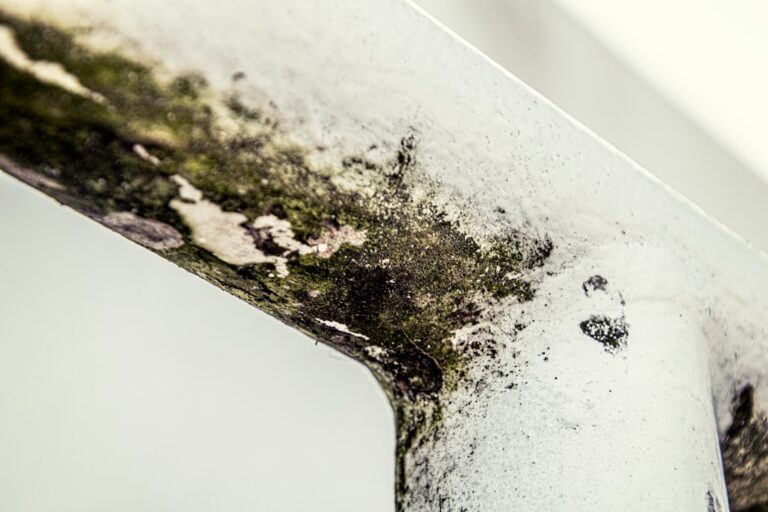
Is Black Mold Common? What Dark Mold in Homes Really Means
Is black mold common? Dark molds show up wherever moisture lingers, but Stachybotrys needs prolonged wetness.…

Mold Urine Test: What It Measures and Its Limits
What a mold urine test claims to measure, why its value for household exposure is disputed, and why fixing moi…
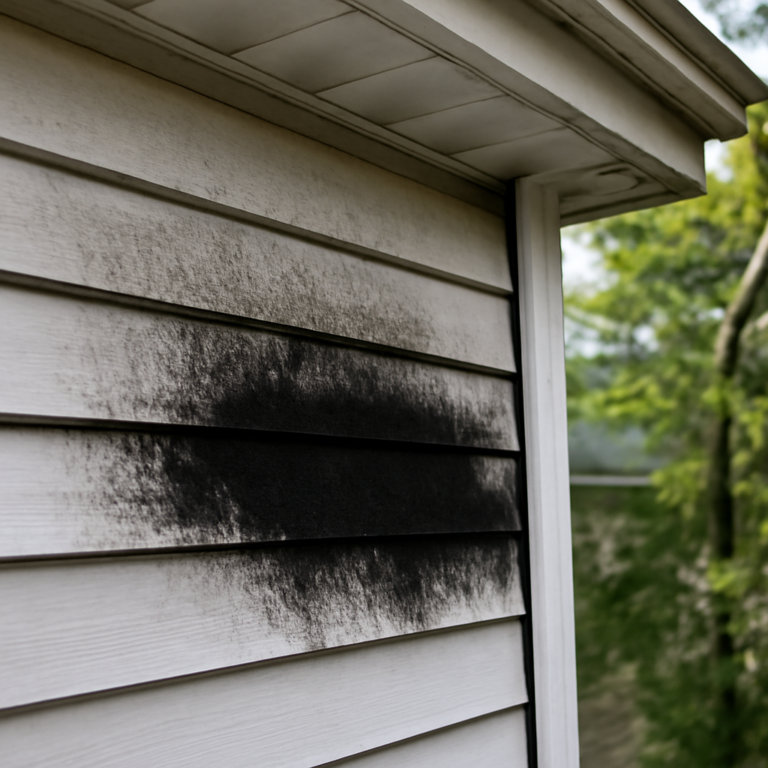
Black Sooty Mold: Plant Fungus, Indoor Soot or Real Mold?
Black sooty mold outdoors usually grows on insect honeydew; indoors, a sooty film may be candle soot, ghosting…
Average Cost for Crawl Space Mold Remediation (2026 Guide)
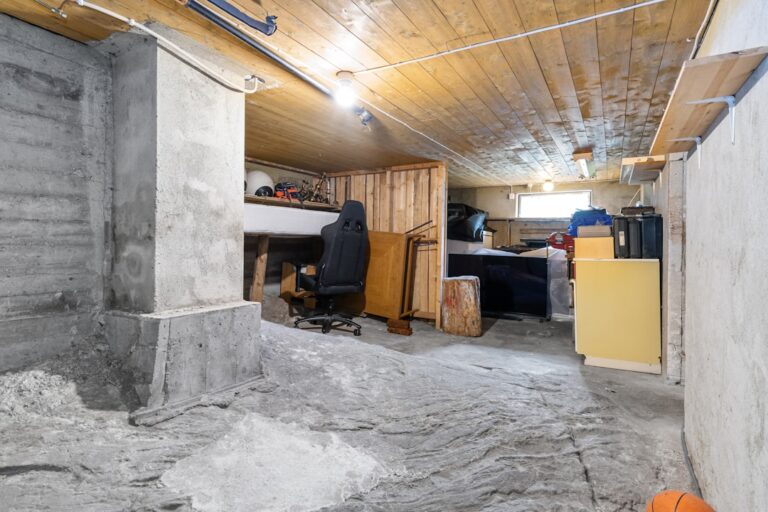
The average cost for crawl space mold remediation depends on access, how much framing is affected, the cleanin…

Bathroom Smells Like Mildew? Find the Source and Fix It
If your bathroom smells like mildew, the cause is usually damp textiles, grout, a drain, a hidden leak or poor…

Fuzzy Mold: What the Texture Means and How to Respond
Fuzzy mold is usually active growth on a damp surface. See what causes the texture, what the colors can and ca…

How to Identify Mold on Walls: A Step-by-Step Check
Learn how to identify mold on walls with a look, smell and touch routine, a moisture check, common look-alikes…

Mold Remediation Financing: Ways to Pay and What to Check
Mold remediation financing compared: insurance, contractor plans, personal loans, HELOCs, credit cards and aid…

Mold Culture Testing: What Agar Plates Can Tell You
A mold culture grows live spores on agar to count colonies and name species. Learn its strengths, blind spots,…