Types of Mold: Species, Colors & How to Identify Them
Thousands of fungal species can grow indoors, but a short list of genera accounts for most of what homeowners actually find on drywall, window frames, bathroom grout and stored belongings. This hub sorts the types of mold into practical groups: the common household species, what color can and cannot tell you, the difference between mold and mildew, mold on food and other organic material, and the odd growths that confuse people. It sits under our mold inspection and testing pillar, and it is written for homeowners, renters and buyers trying to make sense of a spot they just noticed. If you have not yet looked around the house systematically, start with a room-by-room check for mold. This is general guidance drawn from EPA and American Lung Association material, not medical advice, and only lab analysis of a sample can identify a mold to genus or species.
Common household mold species
Three genera show up in most indoor samples: Penicillium, Aspergillus and Cladosporium. They are common because their spores are everywhere outdoors and they need only a damp surface and some dust or organic material to grow.
Penicillium and Aspergillus are so similar under a microscope that spore-trap lab reports often lump them together, which is why you see the combined label explained in our guide to the Penicillium/Aspergillus group on lab reports. Penicillium tends to form blue-green, velvety patches on water-damaged materials and food; our plain-language overview of Penicillium and the page on Penicillium growing inside a house cover where it turns up. It is also the genus behind the antibiotic, a link unpacked in whether penicillin is a mold. For health questions, see how risky Penicillium is indoors.
Aspergillus is a large genus with many colors. Aspergillus niger forms black colonies, Aspergillus flavus is yellow-green, and Aspergillus fumigatus is the species most associated with infections in people with weakened immune systems. Yellowish early growth is discussed in our early-stage Aspergillus guide.
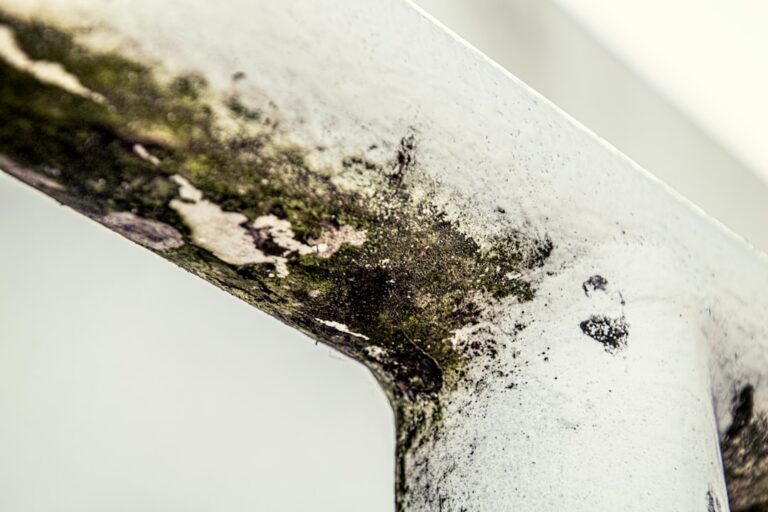
Cladosporium is the most common mold in outdoor air and often appears indoors as olive-green to black speckling on window frames, painted surfaces and fabrics. Read what Cladosporium means for homeowners, the species profile of Cladosporium herbarum, and what indoor Cladosporium usually signals.
What mold color does and doesn’t tell you
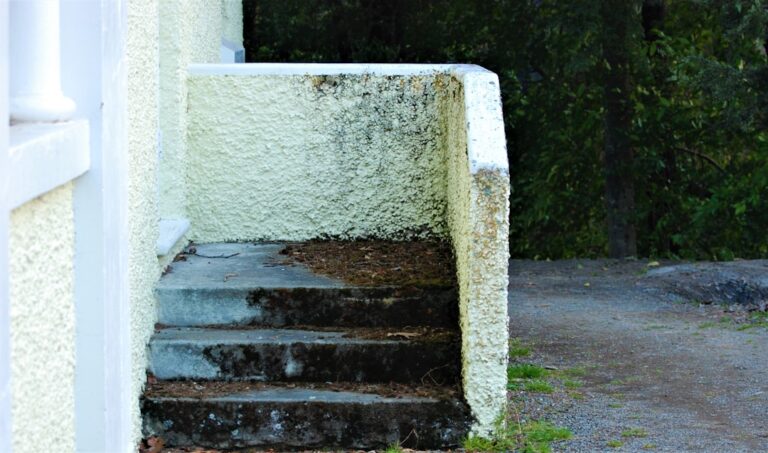
Color is the first thing people notice and the least reliable way to identify a mold. The same species can look white when young and green or black as it produces spores, and the material underneath, light levels and age of the colony all change its appearance. “Black mold” is a color description, not a species name, and plenty of dark growth is Cladosporium, Alternaria or Aspergillus niger rather than Stachybotrys.
That said, color can narrow the conversation. Green mold is most often Penicillium, Aspergillus or Cladosporium. White growth can be young mold of almost any type, but on concrete and brick it is frequently efflorescence, a mineral salt deposit left by evaporating water; our guide to telling white mold from efflorescence explains a simple water test, and white mold inside the house covers the true fungal cases. People also ask whether white mold is bad; the answer depends on the moisture behind it, not the shade.
Pink or red growth in showers is often a bacterium, Serratia marcescens, rather than a fungus, while red tones on wet building materials can be Fusarium or other molds; see what red coloring really means. For darker patches, read whether brown mold is dangerous and what yellow mold indicates. In every case, the practical response is the same: find the water source and clean or remove the growth.
Mold vs. mildew
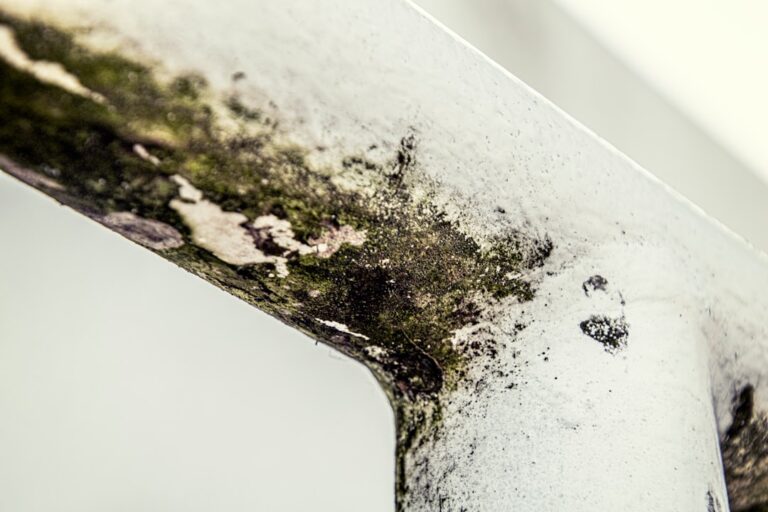
Mildew is not a separate category in the way most people think. In everyday use it is a lay term for flat, powdery or downy surface mold, usually white, gray or light brown, growing on damp surfaces such as shower grout, window sills and fabric. Botanists also use “mildew” for specific plant pathogens, but inside a house the word generally describes early or shallow mold growth. Our guides to the difference between mildew and mold and whether mildew counts as mold go further, and fungus vs. mold explains how both fit within the broader fungal kingdom.
Visually, mildew stays on the surface and wipes away more easily, while established mold can root into porous materials. See what mildew looks like and the musty smell mildew gives off, which comes from microbial volatile organic compounds released as fungi grow. A bathroom that keeps smelling damp is a moisture and ventilation problem first; bathroom mildew covers exhaust fans and drying habits.
Dark spotting on caulk is often labeled black mildew rather than black mold, though the distinction is cosmetic, not medical. For health questions, read whether mildew is dangerous. For cleanup, products that work on mold and mildew compares options, and preventing mold and mildew at home focuses on keeping humidity down so neither returns.
Mold on food, plants and wood
Many people first meet mold on a loaf of bread, and food molds are a useful way to understand how fungi grow. The fuzzy black-dotted colonies on bread are usually Rhizopus stolonifer, covered in our black bread mold guide; the dots are spore-bearing structures on top of a network of thread-like hyphae that reach well into the loaf. That hidden growth is why the USDA advises discarding soft, porous foods that show mold rather than cutting around the spot. Other species on bread include Penicillium, Mucor and Aspergillus, as laid out in types of bread mold.
Molds are not plants. They belong to the fungal kingdom, lack chlorophyll and feed by digesting organic material around them, which is explained in whether mold is a plant. That feeding habit is what makes wood, paper-faced drywall, cardboard, leather and natural fabrics vulnerable once they stay damp. The same logic applies to a mushroom growing indoors: a fruiting body on a floor or wall means a wood-decay fungus has had long-term moisture to work with, often inside the framing.
Food mold in a kitchen is normal and usually just means old food. Mold on structural wood, subfloor or the back of drywall is different; it points to a leak, condensation or high humidity that needs fixing before cleanup will last.
Unusual growths and where mold shows up
Some growths look like mold but aren’t, and some are mold in unexpected places. Black slime mold is the classic case: slime molds are not true fungi at all but amoeba-like organisms that usually appear on mulch or soil outdoors. Fuzzy mold describes the cottony texture of fast-growing genera such as Mucor, while hyphae are the threads that make up every mold colony.
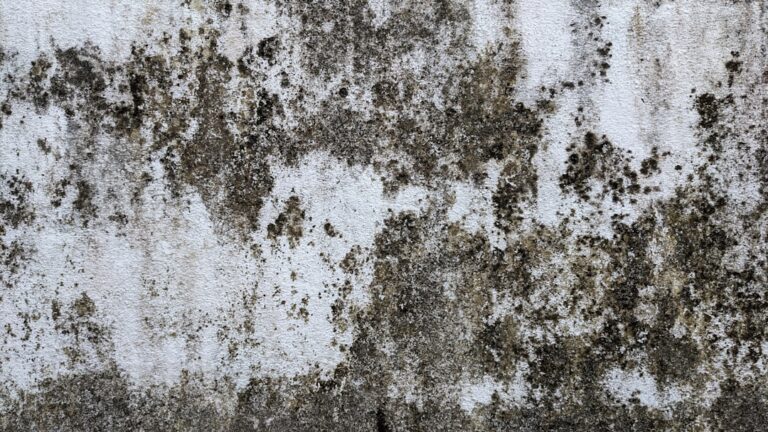
Surface appearance can mislead in both directions. A persistent mold stain may remain after the growth itself is dead, and black dust that might be mold around vents is often soot, dirt or combustion residue. Material matters too: mold on sheetrock usually means the board needs replacing because the paper facing feeds growth, while mold on fabric can sometimes be laundered out. Even non-porous surfaces carry growth when grime builds up, as mold on stainless steel shows.
When the source isn’t obvious or the area is large, a professional assessment is worth the cost. Our guides on who to call to check for mold and what a mold hygienist does explain when lab sampling adds value. EPA notes there are no federal limits for indoor mold spores, so sampling is most useful for finding hidden growth or confirming cleanup, not for labeling a visible patch.
Common household molds at a glance
| Genus | Typical color | Where it grows | Notes |
|---|---|---|---|
| Cladosporium | Olive-green to black | Window frames, painted surfaces, fabrics, HVAC surfaces | Most common outdoor mold; tolerates cooler temperatures. |
| Penicillium | Blue-green, often with a white edge | Water-damaged drywall, carpet, food, wallpaper | Common after leaks; musty odor. |
| Aspergillus | Varies: green, yellow, black, gray | Dust, damp building materials, stored food | Large genus; some species affect people with weakened immunity. See Aspergillus terreus. |
| Alternaria | Dark olive to brown | Showers, window sills, damp outdoor-facing walls | Common outdoor allergen that also grows indoors. |
| Stachybotrys | Greenish-black, slimy when wet | Paper-faced drywall, ceiling tiles, wood after prolonged wetting | Needs sustained moisture; often called “black mold.” |
| Chaetomium | White and cottony, turning gray to olive-brown | Water-damaged drywall, wallpaper, wood | Indicator of long-term water damage. |
| Fusarium | White, pink or reddish | Wet carpet, wallboard, humidifiers, plants | Also a crop pathogen; prefers very wet materials. |
| Mucor | White to gray, fluffy | Food, damp carpet, HVAC drip pans | Grows fast; related to bread-mold Rhizopus. |
Treat the table as a starting point. Colors overlap across genera, and a lab result is the only way to confirm which mold you have. For cleanup decisions, the type matters less than the size of the area and the moisture source.
References
- What Are Molds? — U.S. Environmental Protection Agency
- A Brief Guide to Mold, Moisture and Your Home — U.S. Environmental Protection Agency
- Mold Cleanup in Your Home — U.S. Environmental Protection Agency
- Mold and Dampness — American Lung Association
Frequently asked questions
What are the most common types of mold in homes?
Cladosporium, Penicillium and Aspergillus account for most indoor mold, with Alternaria, Stachybotrys, Chaetomium, Fusarium and Mucor also turning up in damp areas. All of them need moisture to grow, so the water source matters more than the name.
Can you identify mold by its color?
Not reliably. The same species can change color as it matures and different genera can look alike, so only a lab analysis of a sample identifies a mold to genus or species. Color is useful mainly for spotting look-alikes such as efflorescence or soap scum.
Is black mold always Stachybotrys?
No. Many dark molds, including Cladosporium, Alternaria and Aspergillus niger, look black. Stachybotrys needs prolonged wetting of cellulose materials like paper-faced drywall, and any mold growing indoors should be cleaned up regardless of type.
Is mildew less harmful than mold?
Mildew is a lay term for flat surface mold growth, so it can trigger the same allergy and irritation symptoms in sensitive people. It is usually easier to clean because it has not rooted into porous materials, but it still signals excess moisture. Consult your doctor about symptoms.
Do I need to test to find out what type of mold I have?
Usually not. EPA advises that if you can see or smell mold, you should fix the moisture problem and clean it up; knowing the species rarely changes that plan. Testing helps when growth is hidden, the area is large, or you need to confirm cleanup worked.
Common household species




Mold by color


Mold vs. mildew


Mold on food, plants & wood


More guides





Browse all 484 types of mold guides » Back to the Mold Inspection & Testing hub