Mold Mushroom: Why Fungi Fruit Indoors and What to Do
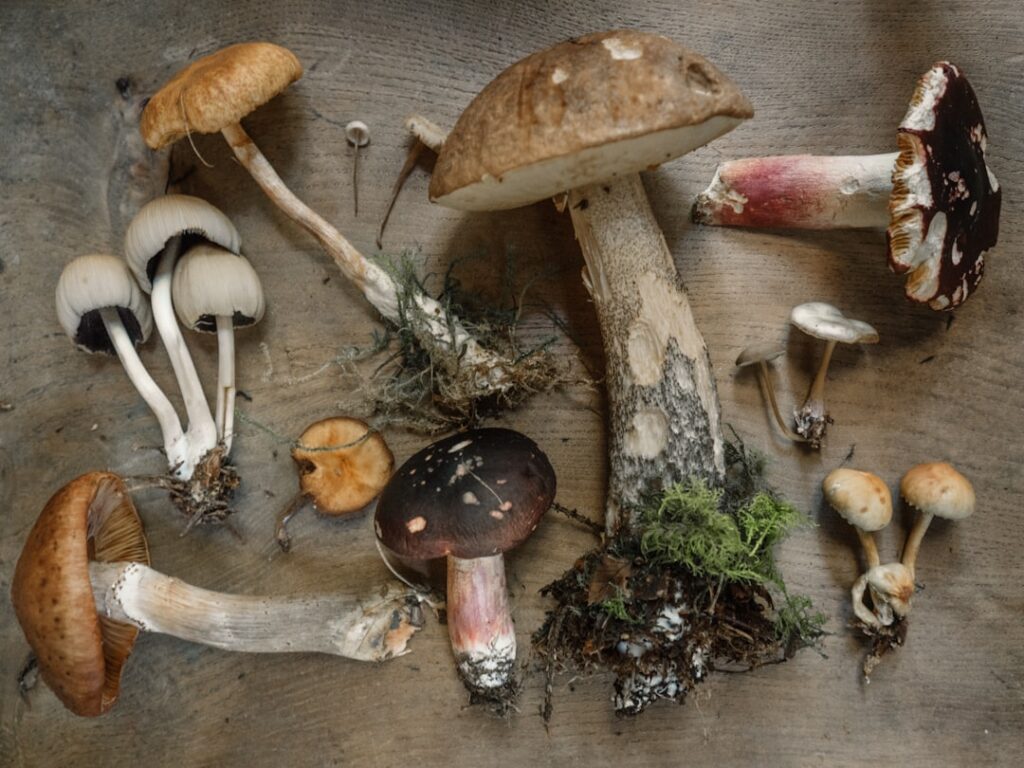
Finding a mushroom on a bathroom floor, sprouting from damp carpet or poking out of a crawl space joist is unsettling, and most homeowners search for a “mold mushroom” because they are not sure which of the two they are looking at. The short answer is that molds and mushrooms are both fungi, but they are different growth forms, and an indoor mushroom usually tells a more serious story than a patch of surface mold. A mushroom is the reproductive structure of a fungus that has often been feeding on wet wood or other building material for a long time, out of sight. This guide explains how they differ and what to do. It summarizes EPA and CDC guidance current as of 2026; consult a qualified professional for structural, health or remediation decisions.
Part of our Types of Mold guide — start there for the full picture →
Is this mold, asbestos, or water damage? Get a free instant screen
Upload a clear photo of the suspect area. You'll get an instant AI screening opinion and what to do next. This is screening guidance, not a professional determination.
Screening guidance only. AI can be wrong. Confirm asbestos, mold type, or lead with lab testing or a licensed professional before acting.
Mold and Mushrooms: Two Forms of the Same Kingdom
The EPA’s mold course opens with a plain definition: molds are organisms found indoors and outdoors that break down and digest organic material such as dead leaves, and they are neither plants nor animals but part of the kingdom Fungi. The same lesson notes that molds are also called fungi or mildew. That puts mold and mushrooms in the same biological kingdom, which is why the two are so often confused. For more background on the classification question, see our guides on whether mold is a type of fungus and whether mold is a plant.
The difference is in how the fungus grows and what you can see. A mold is a filamentous fungus: it spreads as a network of microscopic threads, called hyphae, across or into a surface, and it reproduces by producing very large numbers of spores. The EPA describes those spores as microscopic, roughly 2 to 100 microns across, and small enough to float on gentle air currents. On a wall or a piece of bread, you see the mass of threads and spores as a fuzzy, powdery or slimy patch of color.
A mushroom is something else. It is the fruiting body of certain fungi, a temporary, visible structure built to release spores. The main body of that fungus, a mass of threads called mycelium, lives inside the material it is feeding on, whether that is soil, a log or a wet floor joist. When conditions are right, the hidden mycelium pushes up a cap, a bracket or a crust to spread spores. In other words, the mushroom you see is the smallest and newest part of the organism; most of it is inside the material underneath.
So the phrase “mold mushroom” usually describes one of three things: a true mushroom growing from a wet building material, a large, raised mold colony that looks mushroom-like, or wood-decay fungi producing a crust or bracket. Each points to moisture, but the last two can point to damage beyond the surface. Our guides to types of mold and names of mold cover common indoor molds.
Mold vs Mushroom vs Wood-Rot Fungi: Comparison Table
The table below compares the three growth forms homeowners most often find. These are general descriptions, not an identification key; appearance varies with age, moisture, light and surface, and only a lab or an experienced professional can confirm what a specific growth is.
| Feature | Surface mold | Indoor mushroom | Wood-rot (decay) fungi |
|---|---|---|---|
| What you see | Flat or fuzzy patches, spots or stains in many colors | A cap and stem, a cluster of small caps, or a cup shape | Crusts, flat sheets, shelf-like brackets, white or yellowish strands, cracked or stringy wood |
| Where the fungus lives | Mostly on and just below the surface | Mycelium inside soil, wood, carpet backing or debris below the visible fruit | Inside the wood itself, breaking down its structure |
| Moisture it suggests | Damp surface, condensation or a recent leak | Sustained moisture over weeks or longer | Wood that has stayed wet for a long period |
| Common indoor spots | Bathrooms, window frames, drywall, closets, basements | Bathroom floors near toilets or tubs, damp carpet, crawl spaces, behind walls | Subfloors, sill plates, joists, rim boards, window and door framing |
| Main risk | Exposure, staining, damage to finishes | Signal of a hidden leak and possible decay | Loss of wood strength and structural damage |
| Typical response | Clean hard surfaces, discard porous items, fix moisture | Find the water source, open up and assess the material below | Fix the moisture, remove and replace decayed wood, assess structure |
Why Mushrooms Grow Inside Homes
Fungi need two things above all to grow indoors: moisture and food. The EPA’s mold course calls moisture the most important factor influencing mold growth indoors and states that moisture control is the key to mold control. It also lists common building materials that mold can use as food, including paper, cloth, wood, plant material and soil. Our guide on what mold needs to grow walks through each condition.
Mushroom-forming fungi follow the same rules but usually need more. A fungus typically has to establish a large body of mycelium and have steady water before it can afford to build a fruiting body. That is why a mushroom on a floor or wall rarely appears after a single spill. It more often follows a slow toilet seal leak, a cracked shower pan, a plumbing drip inside a wall, chronic condensation, or groundwater wicking into a crawl space. By the time a cap appears, the material underneath has often been wet for weeks or months.
Common places indoor mushrooms appear
- Bathroom floors. Around toilet bases, tub aprons and shower thresholds, where a failed wax ring or grout joint can keep the subfloor wet without obvious puddles.
- Carpet. Especially carpet laid over concrete slabs or along exterior walls, where the pad and backing hold moisture from leaks, flooding or condensation.
- Crawl spaces. Exposed soil, poor drainage and humid air make crawl spaces a frequent site for fungal growth on joists, beams and debris. See our guide to black mold in a crawl space.
- Behind walls and baseboards. Mushrooms sometimes push through drywall seams, baseboard gaps or grout lines, with the source inside the wall cavity.
- Window sills and frames. Repeated condensation or failed flashing can keep wood wet enough for decay fungi.
The EPA’s Brief Guide lists similar hidden locations for mold: the back side of drywall, wallpaper or paneling, the underside of carpets and pads, inside walls around leaking or condensing pipes, and in roof materials above ceiling tiles after roof leaks. A mushroom on a visible surface can be the first clue to a problem in one of those concealed spots.
What an Indoor Mushroom Reveals About Hidden Damage
The most useful way to think about an indoor mushroom is as a symptom. It says that a fungus has had enough water and food, for long enough, to complete part of its life cycle. That raises three questions worth answering before any cleanup.
1. Where is the water coming from?
Mushrooms do not create moisture; they reveal it. The source might be a plumbing leak, a failed seal at a toilet or tub, roof or flashing leaks, a missing or damaged vapor barrier in a crawl space, poor grading that sends rain toward the foundation, or condensation on cold surfaces. Until that source is found and fixed, removing the visible growth only buys time. The EPA’s Brief Guide says the key to mold control is moisture control, and advises drying water-damaged areas and items within 24 to 48 hours to prevent mold growth.
2. Is the wood decaying?
This is the question that separates an indoor mushroom from routine surface mold. The EPA’s mold course notes that unchecked mold growth can rot wood, damage drywall and cause structural damage to buildings. Wood-decay fungi go further than surface molds: they digest the components that give wood its strength. Signs that decay may be present include:
- Wood that feels soft, spongy or crumbly when probed with a screwdriver or awl
- Cracking into small cubes, or stringy, bleached-looking fibers
- A subfloor that flexes, dips or squeaks where it used to be solid
- White, cream or yellowish sheets, strands or crusts on wood surfaces
- Shelf-like or crust-like fungal growths on joists, sills or framing
Surface mold on wood, by contrast, often sits on top of sound material and can be cleaned off once the wood is dry. Our guide to mold on wood explains how to tell the difference in more depth, and wood rot repair covers what is involved when decay has set in.
3. How far does it extend?
Because the mycelium lives inside the material, the area of damage is usually larger than the mushroom suggests. A single cap at a baseboard can be fed by growth across a stretch of subfloor or wall cavity. The EPA’s Brief Guide cautions that investigating hidden mold can be difficult and requires care, because disturbing potential growth sites, for example by removing wallpaper, can release spores.
Wood-Decay Fungi Versus Surface Mold
It helps to understand the broad categories that inspectors and remediators use when they discuss fungi on wood. These are general descriptions rather than diagnostic criteria.
- Surface molds and mildew. These feed mainly on dust, sugars and other easily digested material on or near the surface. They stain and discolor wood but generally do not weaken it much. Cleaning and drying is often enough once the moisture source is fixed.
- Brown rot. Commonly described as leaving wood darker, shrunken and cracked into small cubes that crumble when pressed. It is often associated with softwood framing such as joists and sills.
- White rot. Commonly described as leaving wood pale, spongy or stringy. The wood may look bleached rather than dark.
Color does not identify a fungus. The EPA notes that molds come in many colors, including white, and that “black mold” is not a species or specific kind of mold. Our guide to mold colors explains why color is a poor guide to what is growing. The practical takeaway is that any fungus that has fruited from a building material deserves a closer look at the material itself, not just the visible growth.
Are Indoor Mushrooms Dangerous?
There are two kinds of risk to consider: risk to people and risk to the building.
For people, the CDC says damp and moldy environments may cause a variety of health effects, or none at all. It lists stuffy nose, sore throat, coughing or wheezing, burning eyes and skin rash among possible effects for some people, notes that people with asthma or mold allergy may have severe reactions, and says immune-compromised people and people with chronic lung disease may get lung infections from mold. A fruiting mushroom releases spores, and the damp conditions that allow it to grow often support mold as well, so the area is worth treating with care.
Never eat a mushroom found growing indoors, and keep children and pets away from it. Many wild mushrooms are poisonous, and indoor fruiting bodies cannot be identified by appearance with any confidence. If a child or pet eats one, contact a poison control center or a veterinarian right away.
For the building, the larger concern is decay. A mushroom growing from a floor or wall may indicate wood that has lost strength. That matters most in load-bearing framing such as joists, beams, sills and rim boards, and in floors near tubs and toilets where people stand on wet surfaces.
What to Do When You Find a Mold Mushroom
The fix follows a simple order: find the water, stop it, remove what is damaged, and dry and repair. The steps below reflect the EPA’s general cleanup guidance; larger or structural jobs belong with professionals.
Step 1: Protect yourself and limit spread
The EPA’s Brief Guide advises avoiding breathing in mold or spores, says you may want to wear an N-95 respirator, and recommends long gloves and goggles without ventilation holes. Avoid touching mold or moldy items with bare hands.
Step 2: Find and stop the moisture source
Trace the water. Check toilet bases and supply lines, tub and shower seals, under-sink plumbing, nearby exterior walls, the roof and flashing above, and grading and gutters outside. In a crawl space, look at the soil, vapor barrier, vents and any standing water. A moisture meter can help map how far wet material extends.
Step 3: Remove the mushroom and the damaged material
Pulling off the mushroom alone does not remove the fungus; the mycelium remains in the material. The EPA’s cleanup guidance says to scrub mold off hard surfaces with detergent and water and dry completely, and notes that absorbent or porous materials such as ceiling tiles and carpet may have to be thrown away if they become moldy, because mold can fill the crevices of porous materials and be difficult or impossible to remove completely. In practice, that usually means:
- Bagging and discarding wet or moldy carpet and pad
- Cutting out and replacing wet, moldy drywall
- Removing decayed subfloor, trim or framing and replacing it with sound material
- Cleaning and thoroughly drying sound wood that only has surface growth
Step 4: Dry, repair and confirm
Dry the area completely before closing walls or laying new flooring. The EPA advises against painting or caulking moldy surfaces and says to clean up the mold and dry the surfaces first. Recheck the area over the following weeks; a returning mushroom or odor means moisture is still getting in.
When to call a professional
The EPA says that if the moldy area is less than about 10 square feet, in most cases a homeowner can handle the job, but if there has been a lot of water damage or growth covers more than 10 square feet, a professional should be considered. Call in help when the wood is soft, when growth is inside walls or under floors, when the moisture source is not obvious, when framing may be load-bearing, or when someone in the home has asthma, allergies or a weakened immune system. A home inspector can help locate moisture and decay; a contractor or structural professional handles repairs to framing.
Testing and Front Range Considerations
Many people want to know exactly which fungus they found. The CDC says you do not need to know the type of mold to clean it up, and the EPA’s Brief Guide says that in most cases, if visible mold growth is present, sampling is unnecessary. For an indoor mushroom, the more useful work is moisture investigation and checking the wood. Sampling can still help in specific situations, such as looking for hidden growth or confirming a cleanup, and if you want a starting point, our mold test kits are listed separately.
Colorado’s Front Range climate is relatively dry, which can make an indoor mushroom seem surprising. Dry outdoor air does not protect a house from plumbing leaks, failed shower pans, snowmelt running toward a foundation, crawl spaces with exposed soil, or condensation on cold surfaces in winter. In a dry climate, an indoor mushroom usually points to a specific, local water source rather than general humidity.
Preventing Mushrooms and Mold From Coming Back
Prevention is moisture control. The EPA’s Brief Guide offers practical steps that apply to mushrooms as much as to mold:
- Fix leaky plumbing and other water problems as soon as possible.
- Dry wet or damp materials within 24 to 48 hours of a leak or spill.
- Keep indoor relative humidity below 60 percent, ideally between 30 and 50 percent.
- Clean and repair gutters and make sure the ground slopes away from the foundation.
- Keep air conditioning drip pans clean and drain lines flowing.
- Vent moisture-producing appliances such as clothes dryers to the outside where possible.
The CDC adds advice such as removing or replacing carpets and upholstery that have been soaked and cannot be dried right away, and avoiding carpet in places like bathrooms or basements that may have a lot of moisture. In crawl spaces, a well-installed ground vapor barrier, working drainage and a plan for humidity control help keep framing dry. For a broader view of inspection, testing and remediation, see our mold inspection guide and the mold types hub.
Frequently Asked Questions
Frequently asked questions
Is a mushroom the same thing as mold?
No. Both are fungi, and the EPA describes molds as part of the kingdom Fungi. Molds grow as networks of microscopic threads on surfaces, while a mushroom is the fruiting body of a fungus whose main body lives inside the material it feeds on.
What does it mean if mushrooms are growing in my bathroom?
A mushroom on a bathroom floor or wall usually means the material underneath has stayed wet for a long time, often from a leaking toilet seal, tub or shower. Find and fix the leak, then check the subfloor for soft or decayed wood.
Does pulling out the mushroom solve the problem?
Removing the mushroom does not remove the fungus, which lives inside the wood, carpet or drywall. Fix the moisture, remove damaged porous material, clean and dry hard surfaces, and replace decayed wood.
Are mushrooms in a crawl space a sign of wood rot?
They can be. Fungi fruiting from joists, sills or beams often indicate long-term moisture and possible decay. Probe the wood for softness and have a professional assess the framing and the moisture source.
Does an indoor mushroom need to be tested?
Usually not. The CDC says you do not need to know the type of mold to remove it, and the EPA says sampling is usually unnecessary when growth is visible. Finding the water source and checking the wood are more useful.
Found a mushroom indoors and can’t trace the leak behind it? Send us a note and we can help you work out where the moisture is coming from.