Are Molds Fungi: What Homeowners Need to Know
The question sounds academic until a homeowner is staring at a dark patch on a basement wall and trying to understand what they are dealing with. Are molds fungi, or are they something else entirely? The answer is yes, and that classification is not just trivia: it explains how mold grows, why it spreads the way it does, and why fixing the moisture matters more than scrubbing the surface. This guide summarizes EPA and CDC guidance current as of 2026 and is informational only; consult your physician about symptoms and a certified professional for testing and remediation decisions.
Dealing with mold or water damage? Talk to a remediation pro now.
📞 Call (833) 723-1134Are Molds Fungi? The Short Answer
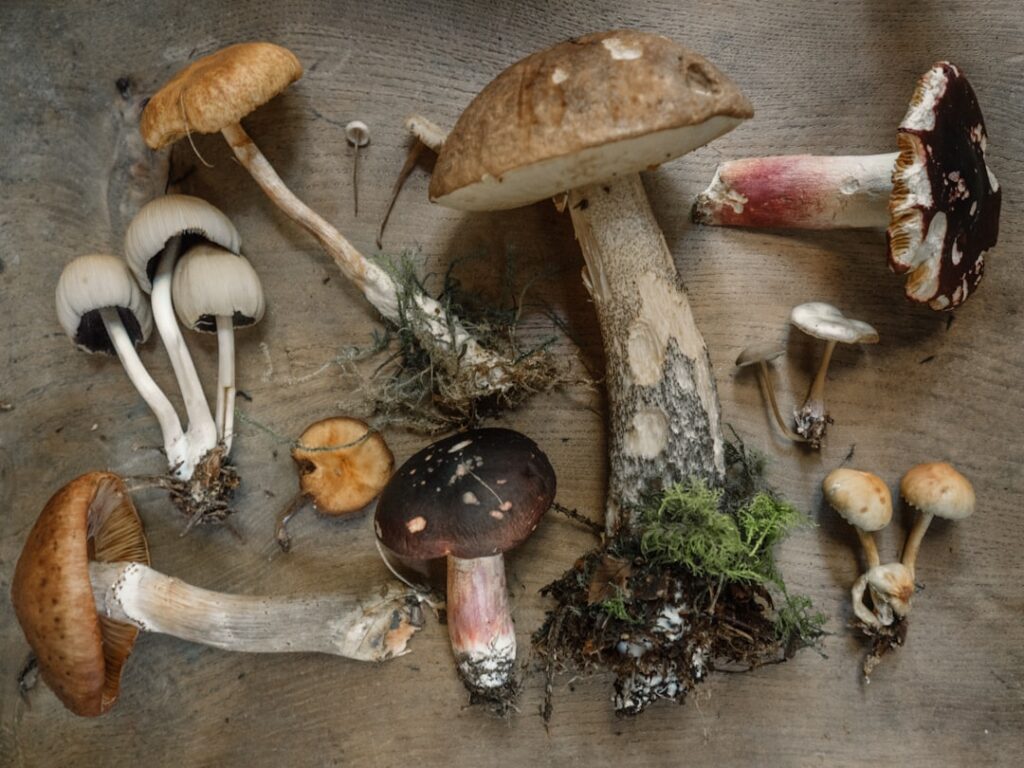
Yes. Molds are a type of fungus. They belong to the fungal kingdom, a group of organisms separate from plants, animals, and bacteria. Within that kingdom, molds are the filamentous fungi that grow as multicellular threads called hyphae and reproduce by releasing spores. The mushroom you might picture when you hear “fungus” is a different growth form of the same kingdom; mold is the fuzzy, spreading version that colonizes damp surfaces.
This matters for the home because fungal biology drives fungal behavior. Mold does not photosynthesize like a plant. It feeds by breaking down organic material around it, which is exactly why it digests drywall paper, wood, and dust. Understanding mold as a fungus reframes cleanup: you are removing a living organism and cutting off the water and food that sustain it. Our mold inspection and testing hub builds on this foundation.
Where Mold Fits in the Fungal Kingdom
Fungi are an enormous and diverse kingdom that includes yeasts, mushrooms, and molds. Molds are distinguished by their growth as a mass of branching filaments, collectively called a mycelium, that spreads across and into a surface.
Common indoor mold genera include Cladosporium, Penicillium, Aspergillus, and the dark-pigmented Stachybotrys often labeled “black mold.” All are fungi, and all share the same basic needs: moisture, a food source, and a suitable temperature. The CDC notes that molds are found everywhere in the environment, both indoors and outdoors, and that no practical way exists to eliminate all spores from indoor air. The realistic goal is controlling the conditions that let them grow into a problem.
How Mold Grows and Reproduces as a Fungus
Mold’s fungal nature explains its life cycle, and that cycle explains why it spreads so readily.
Spores
Mold reproduces by releasing tiny spores, the fungal equivalent of seeds. Spores are microscopic, lightweight, and present in nearly all air. They are durable enough to survive dry, harsh conditions and wait, sometimes for long periods, until conditions favor growth.
Germination and growth
When a spore lands on a damp surface with available food, it germinates and sends out hyphae. Those threads branch into a mycelium that digests the material beneath it. This is why mold seems to appear suddenly: spores were already present, and a moisture event simply switched them on.
The moisture trigger
The EPA emphasizes that moisture control is the key to mold control. Remove the water, and the fungus cannot grow no matter how many spores are present. This single fact underlies all credible cleanup guidance. Our overview of mold on an agar plate shows how spores germinate and colonize when given food and moisture.
Why the Fungal Classification Matters for Your Home
Knowing mold is a fungus changes how a homeowner should think about it.
- It is alive and feeding. Mold actively breaks down materials, so the longer it grows, the more structural damage it causes.
- It spreads by spores. Disturbing growth releases spores that can colonize new damp areas, which is why containment matters during cleanup.
- It cannot be eradicated, only controlled. Since spores are everywhere, the realistic aim is denying them moisture, not sterilizing the air.
- Killing it is not enough. Dead mold can still cause irritation, and the EPA notes that the goal is removal plus moisture correction, not just applying a biocide.
This is why professionals focus relentlessly on the water source. A fungus without water is a fungus that cannot grow, so cutting off moisture does more than any spray.
Mold, Mildew, and Other Fungi: Sorting the Terms
Everyday language blurs the fungal vocabulary, which causes confusion.
Mildew is often used for a thin, surface-level mold growth, especially the powdery white or gray film on bathroom surfaces. It is still a mold and still a fungus, just a less established growth form. Our guide to whether mildew can be black untangles that overlap.
Yeasts are single-celled fungi that grow differently from molds, though some fungi can switch between forms. Mushrooms are the fruiting bodies of certain fungi and can appear indoors in chronically wet wood, signaling a serious moisture problem. All of these are fungi, which is why damp conditions can produce any of them.
Health Considerations With Fungal Growth Indoors
Because molds are fungi that release spores, exposure happens through breathing those spores and through contact. The CDC associates damp, moldy environments with nasal congestion, throat and eye irritation, coughing, and skin irritation, with stronger reactions in people who have asthma, mold allergies, or weakened immune systems.
The fungal nature also explains why dead mold still matters: fragments and spores can remain allergenic even after the organism is no longer growing. That is one reason the EPA’s guidance centers on physical removal rather than simply killing the growth in place. Anyone experiencing persistent symptoms should consult a physician rather than relying on assumptions about the home.
What This Means for Cleanup and Prevention
Treating mold as the living fungus it is points to a clear strategy.
- Remove the growth. Clean small areas of hard surface with detergent and water; discard ruined porous materials where hyphae have penetrated.
- Fix the moisture. Repair leaks, lower humidity below 60 percent, and improve ventilation so spores have nothing to germinate on.
- Contain during work. Limit spore spread when disturbing growth, especially for larger areas.
- Watch for return. If the fungus comes back, the moisture source was never resolved.
For growth larger than about ten square feet, or growth in wall cavities and following flooding, the EPA recommends professional remediation. The biology is the same at every scale: deny the fungus water, and it cannot persist.
What Fungi Need to Grow Indoors
Because molds are fungi, their requirements are predictable, and that predictability is what lets homeowners control them. Three conditions must align for mold to grow: moisture, a food source, and a suitable temperature.
Moisture is the variable homeowners can actually control. The food source is nearly always present, since fungi digest the organic content in drywall paper, wood, dust, fabric, and many other common materials. Temperature is rarely a limiting factor either, because the range that suits indoor mold overlaps closely with the range people keep their homes. That leaves moisture as the lever. Remove the water, and the other two conditions cannot produce growth on their own. This is why every credible guide, and every honest remediation contractor, returns relentlessly to the moisture source. It is the one requirement a homeowner can take away.
The forms moisture takes indoors are varied: plumbing leaks, roof and foundation intrusion, high humidity, and condensation on cool surfaces. Each delivers the water a fungus needs. Spotting and eliminating these sources does more to prevent fungal growth than any cleaning product, because it addresses the cause rather than the symptom.
How Fungi Spread Through a Home
Understanding mold as a spore-producing fungus explains how a small problem becomes a large one. As a colony matures, it produces and releases spores into the air. Those spores travel on air currents, settle on new surfaces, and germinate wherever they find moisture and food. A leak in one room can therefore seed growth in another once spores disperse and land on a second damp spot.
This is also why disturbing mold without containment can make matters worse. Scrubbing or tearing into a colony releases a burst of spores that can colonize previously clean areas. Professional remediation uses containment, sheeting and negative air pressure, precisely to keep that spore release confined during removal. For homeowners cleaning a small area, the same principle argues for working carefully, ventilating, and avoiding aggressive dry-brushing that aerosolizes spores. The fungal life cycle, growth, spore release, dispersal, and new growth, is the mechanism behind every spreading mold problem, and interrupting it means both removing existing growth and denying spores the moisture they need to start over.
Are All Fungi Harmful? Putting Mold in Perspective
It is easy to come away thinking all fungi are problems, but that is not the case. Fungi are essential to ecosystems, breaking down dead organic matter and recycling nutrients, and many are beneficial or harmless. Some fungi are food, and others produce medicines. The fungal kingdom is vast, and most of it has nothing to do with household trouble.
Indoor mold is a problem not because fungi are inherently dangerous but because of where it grows. A fungus digesting a fallen log in a forest is doing its natural job; the same kind of organism digesting the drywall paper in a bedroom is damaging the home and potentially affecting the air people breathe. The CDC notes that mold is found everywhere in the environment and cannot be eliminated entirely, which puts the goal in perspective. The aim indoors is not to wage war on fungi as a category but to keep them from establishing colonies inside the building envelope, where their normal decomposing behavior works against the structure and its occupants.
Dead Mold and Why Removal Still Matters
A frequent misunderstanding follows directly from the fungal nature of mold: the idea that once the growth is dead, the problem is solved. It is not. Dead fungal material, including spores and the fragments of hyphae, can still trigger allergic reactions and irritation. The body responds to the proteins in mold whether or not the organism is alive.
This is the biological reason the EPA emphasizes physical removal over simply killing mold in place. Applying a biocide may stop growth, but it leaves the dead material on the surface, where it continues to pose a potential irritant. Removing the growth and the colonized material, then correcting the moisture, addresses both the living organism and its lingering remains. For a homeowner, the takeaway is practical: treating mold means getting it out of the home, not just rendering it inactive. The fungus being dead does not make its remnants disappear, and those remnants are part of why moldy environments affect sensitive people even after the growth has stopped advancing.
Common Indoor Mold Genera and What They Have in Common
The molds homeowners encounter belong to a handful of frequently named genera, and seeing them together reinforces that they are all fungi with the same basic needs. Cladosporium is among the most common, appearing on damp surfaces and fabrics in a range of colors. Penicillium spreads readily on water-damaged materials and is recognizable to many people from its role in food spoilage. Aspergillus is widespread both indoors and out. Stachybotrys, the dark, slow-growing genus often labeled toxic black mold, favors materials that stay very wet, such as chronically soaked drywall.
What unites them is more important than what distinguishes them. All are fungi, all reproduce by spores, and all require moisture and an organic food source to grow. The EPA’s guidance does not change based on which genus is present, because the response is identical: remove the growth and fix the moisture. This is why obsessing over identifying a specific mold often wastes effort. The fungal biology they share dictates a single, consistent approach regardless of the name on a lab report.
Mold Versus Bacteria: Two Different Problems
Damp homes can harbor both mold and bacteria, and confusing the two leads to muddled thinking. Mold is a fungus, a multicellular organism that grows as visible fuzzy or slimy colonies and reproduces by spores. Bacteria are single-celled organisms from an entirely separate domain of life, far smaller and usually invisible as individuals, though they can form films and produce odors.
The distinction matters because the two can look similar in a damp setting yet behave differently. The slimy pink film in a shower or the dark ring in a toilet is often bacterial rather than fungal, while the spreading growth on a damp wall is usually mold. Both signal a moisture problem, and the practical response, removing the growth and drying the area, overlaps considerably. But understanding that mold is specifically a fungus, distinct from bacteria, helps a homeowner make sense of why certain growths spread, smell, and respond to cleaning the way they do. The shared lesson is that controlling moisture controls both.
References
- About Mold and Health — Centers for Disease Control and Prevention
- A Brief Guide to Mold, Moisture and Your Home — U.S. Environmental Protection Agency
- Mold and Your Health — National Institute of Environmental Health Sciences
If you are a Front Range homeowner dealing with recurring fungal growth and suspect an unresolved moisture source, you can connect with a vetted local inspector through our contact page.