Black Mold on Agar Plate: What Homeowners Know
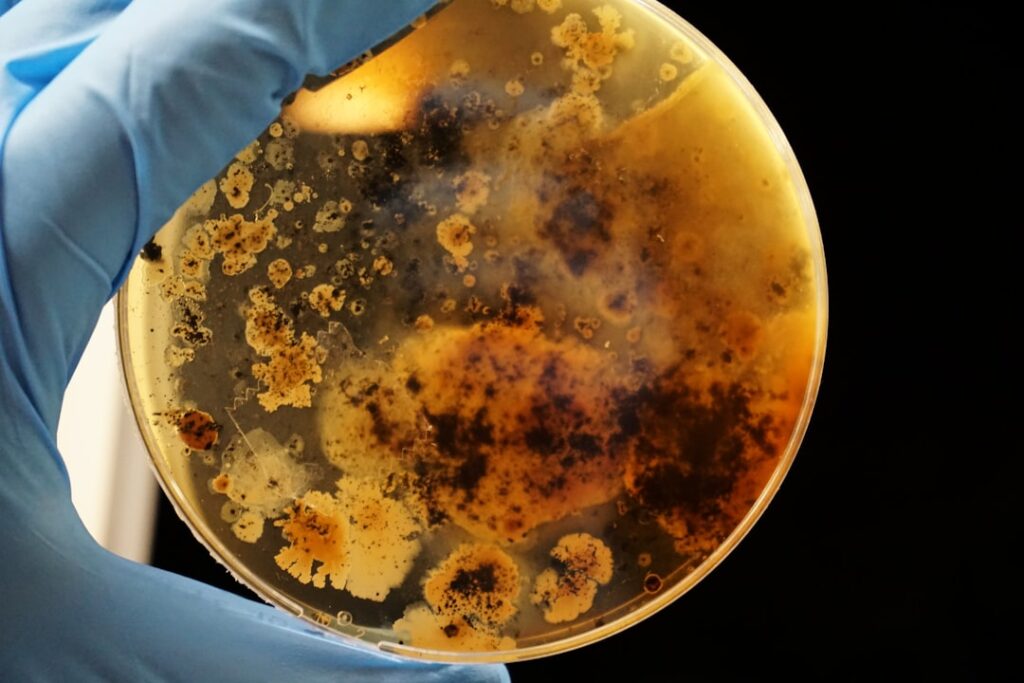
When a home mold kit or a school science experiment grows a dark, spreading colony, the result can look unsettling. Black mold on agar plate media is exactly what these culture kits are designed to produce, and the dark color that alarms people is usually one of the ordinary household molds rather than the toxic species the name suggests. Understanding what an agar plate can and cannot tell you prevents both false alarm and false comfort. This guide summarizes EPA and CDC guidance current as of 2026 and is educational only; consult a certified professional for interpretation and your physician for any symptoms.
Is this mold, asbestos, or water damage? Get a free instant screen
Upload a clear photo of the suspect area. You'll get an instant AI screening opinion and what to do next. This is screening guidance, not a professional determination.
Screening guidance only. AI can be wrong. Confirm asbestos, mold type, or lead with lab testing or a licensed professional before acting.
What is an agar plate and what does black growth mean?
An agar plate is a shallow dish containing a nutrient gel, agar, that supports microbial growth. Mold-testing kits use specialized media that encourage fungal colonies to form from spores captured by air sampling, surface swabbing, or simply leaving the plate open to settle airborne spores. Over several days at room temperature, spores germinate into visible colonies you can see and photograph.
Black growth on the agar means that viable spores capable of producing dark colonies landed on the medium and grew. Because mold spores are present in every building, almost any plate left exposed will grow something, frequently in dark shades. The black color confirms growth occurred; it does not confirm a hazardous species, a health threat, or even an indoor source rather than normal outdoor spores. The plate is a snapshot of what was in the air, weighted by where and how long you sampled.
Why a dark colony is usually not “toxic black mold”
The phrase “black mold” has become shorthand for Stachybotrys chartarum, but many genera produce dark colonies on agar. Cladosporium, Aspergillus niger, Alternaria, and others commonly appear black, gray, or dark green, and they are far more abundant in typical indoor and outdoor air than Stachybotrys, which is slower-growing and tends to need sustained wetness. So a dark agar colony is statistically much more likely to be a common mold than the feared toxic one.
Color alone never identifies a species. Mycologists confirm identity by examining spore structures under a microscope or by culturing on selective media, not by eyeballing a colony. A homeowner comparing a plate to internet photos has no reliable basis to claim toxicity. The same caution applies to settle-plate kits, as the guide on black mold petri dish pictures explains in detail.
Culture plates versus air-sample cassettes
Agar (culture) plates and air-sample cassettes answer different questions. A culture plate grows only the spores that are viable, alive and able to germinate, so it can identify living organisms but undercounts dead spores, which can still be allergenic. An air-sample cassette, by contrast, captures all spores onto a sticky slide for direct microscope counting, viable or not, giving a total spore concentration but usually only a genus-level identification.
Neither is universally better; labs choose based on the goal. Culture plates suit identifying a specific living organism, while cassette sampling suits quantifying overall spore load against an outdoor baseline. Consumer agar kits lean on culture, which is why their colony counts cannot be directly compared to a professional cassette report’s spores-per-cubic-meter figures. Knowing which method produced a number keeps you from comparing incompatible results.
How to read an agar plate result meaningfully
The most useful step with any home agar kit is a paired comparison. Run an indoor plate and an outdoor plate at the same time, for the same duration, under the same conditions. Indoor growth that closely resembles outdoor growth suggests a normal background load. Indoor growth that dramatically exceeds the outdoor plate, or shows colony types the outdoor plate lacks, suggests an indoor source worth investigating.
Without that control, a single indoor plate, however dramatic, means little. Colony count also depends on exposure time, airflow, and plate placement, so two plates from the same room can differ widely. If the result genuinely concerns you, mail-in lab analysis can identify the genus under a microscope. Even then, there is no residential safe-level standard, so identification informs decisions rather than producing a pass-or-fail verdict. The guide on normal mold test results pictures covers this comparison logic further.
Limits of home agar kits
Home agar kits are inexpensive and satisfying to watch, but they have real limits. They have no standardized quality control, so brands and even individual plates vary. They cannot find mold hidden inside walls, ducts, or under flooring, since they only sample accessible air or surfaces. They do not measure moisture, which is the actual cause of any mold problem. And they cannot, on their own, tell you whether a result is health-relevant, because that depends on species, concentration, and individual sensitivity.
The EPA’s position is that if you can already see or smell mold, sampling is unnecessary, the priority is cleanup and fixing the moisture. Agar kits are best treated as curiosity tools and rough screens, not as the basis for major spending or for a clean bill of health.
What to do after a concerning plate
A dark, heavy agar colony is a prompt to inspect your home, not to panic. Look for visible growth, water stains, leaks, condensation, and musty odors in bathrooms, basements, around windows, and under sinks. Measure indoor humidity and keep it in the EPA’s 30 to 50 percent range. Finding and correcting the moisture source is the action that reduces exposure.
Clean small visible areas, under about ten square feet on hard surfaces, with detergent, water, and protective gear. For extensive, recurring, or flood-related growth, or anything tied to health symptoms, engage a certified professional who can sample properly and remediate with containment. The mold inspection and testing hub explains how proper assessment goes beyond what any home agar plate can show.
How sampling method gets spores onto the agar
Not all agar kits collect their sample the same way, and the collection method shapes what the colonies can tell you. Settle-plate kits simply leave the open dish exposed so airborne spores drift down onto the medium by gravity, which is easy but heavily biased by air movement, foot traffic, and how long the lid stays off. Surface-swab kits press a swab against a stain or surface and streak it onto the agar, which confirms what is growing on that specific spot but says nothing about the air.
Pump-driven impaction samplers, used mostly by professionals, draw a measured volume of air and force it onto the agar at a known rate, which lets a lab convert colonies into a concentration figure. A consumer settle plate cannot produce that figure, because no one knows how much air it sampled. Understanding which method your kit uses explains why its result is a qualitative snapshot, this much grew here, rather than the quantitative spores-per-cubic-meter measurement a calibrated pump and lab provide.
Incubation: the variable that changes everything
What happens to the plate after sampling influences the picture as much as what landed on it. Agar colonies need time and warmth to develop, and the kit instructions specify an incubation period, often two to five days at room temperature, for a reason. A plate read too early shows faint specks that look reassuring; the same plate a few days later shows mature, merged, darker colonies that look alarming, even though the air sampled never changed.
Temperature matters too. Warmth speeds growth, so a plate incubated on a sunny windowsill develops faster and larger colonies than one in a cool basement, which can make two identical air samples look like different results. Contamination is another pitfall: opening the lid to inspect or sniff the growth lets new spores land and skews the count, and handling can introduce skin and surface organisms that were never airborne. Following the incubation time and temperature exactly, and resisting the urge to peek inside, is what keeps an agar result interpretable rather than an artifact of how it was handled.
When agar results justify lab analysis
A home agar plate is a screening tool, and the sensible question is when its result should escalate to professional lab work rather than another plate. Lab analysis earns its cost when the answer would change a decision. If a dark indoor colony grows far heavier than a matched outdoor control, and you are weighing expensive remediation, identifying whether it is an ordinary surface mold or a water-damage indicator like Stachybotrys can change the scope of the work and is worth confirming under a microscope.
Lab work also matters for clearance, confirming that levels after a cleanup have returned to outdoor-comparable, and for situations with real stakes, a real-estate transaction, an insurance question, or symptoms in a sensitive household member. What lab analysis does not provide is a safety verdict, because no residential exposure standard exists to measure against; it provides identification and quantification that inform a decision a professional helps you make. If a plate result would not actually change what you do next, more testing is rarely the best use of money, fixing visible mold and its moisture source is.
Handling and disposing of a grown plate safely
Once an agar plate has grown colonies, it holds a concentrated mass of live spores, and handling it carelessly can release them into the room you were trying to assess. The first rule is to leave the lid sealed. Opening a grown plate to sniff or poke the colonies disturbs the growth and puffs spores into the air, which both contaminates your indoor environment and skews any further reading. Photograph and examine the plate through the sealed lid instead.
For disposal, treat a heavily grown plate as you would other moldy material: seal it in a bag before discarding it, and wash your hands afterward, particularly if anyone in the household has asthma, allergies, or weakened immunity. If you intend to mail the plate to a lab for identification, follow the kit’s packaging instructions exactly, since labs need the sample intact and uncontaminated to read it. The same caution that applies to cleaning visible mold, avoiding disturbance that aerosolizes spores, applies in miniature to a grown plate, which is essentially a small, deliberate mold colony you cultivated indoors.
Agar plates as a teaching tool versus a diagnostic
Agar kits occupy two very different roles, and confusing them leads homeowners astray. As a teaching and curiosity tool, they are genuinely valuable: watching colonies emerge from invisible air makes the abstract idea that spores are everywhere concrete, and a paired indoor-outdoor demonstration teaches the single most important concept in mold testing, that meaning comes from comparison rather than from the mere presence of growth. For a science lesson or a homeowner’s general understanding, that is a worthwhile result.
As a diagnostic for deciding what to do about a home, the same plate is far weaker. It cannot quantify airborne concentration, cannot find hidden growth, cannot measure the moisture that causes mold, and cannot, on its own, establish whether any result is health-relevant. Treating an educational demonstration as a diagnosis is how a dramatic-looking plate triggers spending it cannot justify, or how a sparse plate creates false comfort about a hidden problem. The honest framing is that an agar plate teaches well and diagnoses poorly; for actual decisions, it is a prompt to inspect for moisture and visible growth, and a reason to bring in professional sampling only when the answer would change what you do.
This is also why a single agar plate rarely justifies the next expensive step on its own. A dramatic colony is a reason to look around the home for damp spots, leaks, and musty odors, and to check humidity against the recommended range, not a reason to commission remediation. The plate started a useful conversation; what continues it is a physical inspection and, where the stakes warrant, calibrated professional sampling that can quantify and compare against an outdoor baseline in ways a settle plate never could.
References
- Mold Cleanup in Your Home — U.S. Environmental Protection Agency
- A Brief Guide to Mold, Moisture and Your Home — U.S. Environmental Protection Agency
- About Mold and Your Health — Centers for Disease Control and Prevention
- Mold Health Topic — National Institute of Environmental Health Sciences
If an agar plate result has you unsure what is growing in your home, Front Range homeowners can reach out through our contact page to connect with a vetted local inspector who can sample and interpret results properly.