Early Stage Aspergillus Yellow Mold Guide
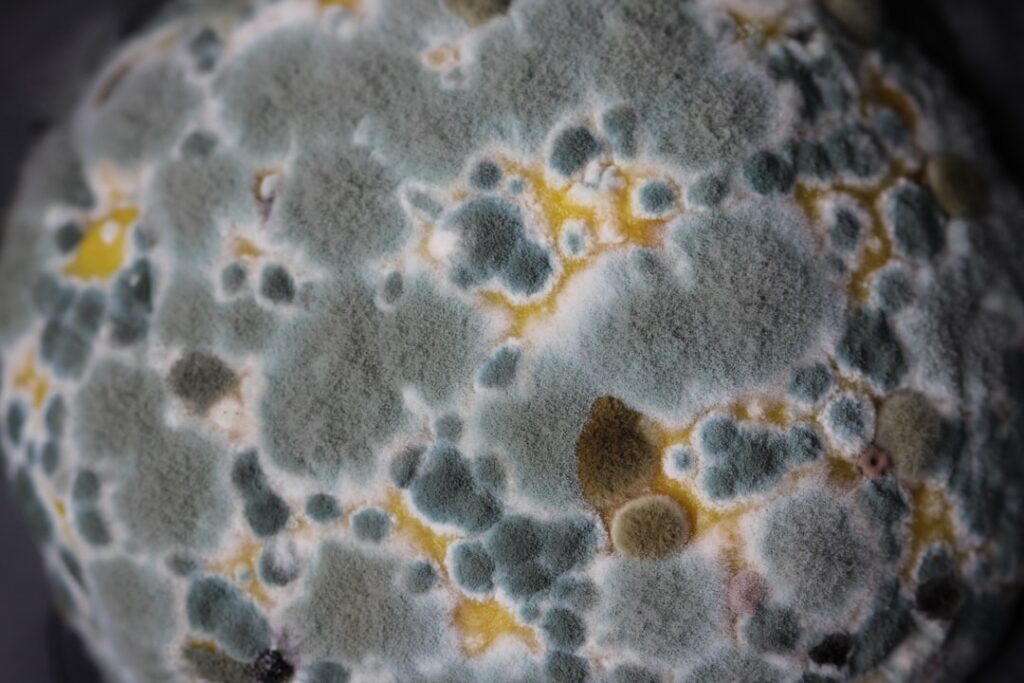
A faint yellow or yellow-green bloom appearing on a wall, a window frame, or a damp basement surface often catches homeowners off guard, because mold is usually pictured as black or green rather than yellow. Identifying early stage aspergillus yellow mold matters because catching growth while it is small and shallow makes cleanup far easier and limits how far it spreads. This guide summarizes EPA and CDC guidance current as of 2026, keeps health information general, and offers no medical diagnosis. It is not a substitute for a physician on symptoms or a certified professional on testing and removal.
Is this mold, asbestos, or water damage? Get a free instant screen
Upload a clear photo of the suspect area. You'll get an instant AI screening opinion and what to do next. This is screening guidance, not a professional determination.
Screening guidance only. AI can be wrong. Confirm asbestos, mold type, or lead with lab testing or a licensed professional before acting.
What early stage aspergillus yellow mold looks like
Aspergillus is one of the most common indoor mold genera, and it can appear in a range of colors depending on the species and the surface, including yellow, yellow-green, greenish, white, and darker shades as it matures. In its early stage, the growth is often subtle: small, scattered specks or a light powdery film rather than a dense, obvious patch. The yellow tint can be easy to mistake for a stain, dust, or discoloration, which is exactly why early growth gets overlooked.
Texture offers clues. Early aspergillus tends to look powdery or velvety rather than slimy, and it may feel slightly fuzzy if disturbed, though disturbing it releases spores and should be avoided without protection. As it develops, the colony typically darkens and spreads outward from its starting points. Because color alone cannot confirm a species, a yellow patch should be treated as suspected mold to investigate rather than positively identified by eye; only microscopy in a lab can name the genus with confidence.
The practical point is that yellow does not mean harmless or harmful by itself. It is a signal that mold may be establishing on a damp surface, and the early stage is the best moment to act before it becomes a larger job. For visual comparison with other early growth, our guide on early stage white mold on painted walls covers how subtle initial colonies appear.
Aspergillus is not a single organism but a large group containing many species, which is part of why its appearance is so variable. Some are common, generally low-concern molds found almost everywhere, while a few are of greater concern for people with specific vulnerabilities. Because a homeowner cannot tell these apart by eye, the prudent default is to treat any early yellow growth the same way: as something to clean up promptly while protecting yourself, rather than trying to judge from color alone whether a given patch is one of the more or less concerning members of the group.
A few look-alikes cause confusion at the yellow-speck stage. On basement and masonry walls, efflorescence, a white-to-yellowish crystalline mineral salt left as water evaporates through concrete or brick, is frequently mistaken for early mold. It brushes off as a powder, dissolves in water, and lacks the fuzzy or velvety quality of growth, which helps distinguish it. Yellowish water staining, dried adhesive residue, and even pollen accumulation can also masquerade as early mold. None of this should make a homeowner complacent; the safe habit is to treat a suspicious yellow patch as possible mold and investigate the moisture behind it, while recognizing that not every yellow mark is fungal. When the surface is also damp or recently water-damaged, the mold interpretation becomes far more likely.
Health considerations with aspergillus
Aspergillus is common, and for most healthy people, ordinary household exposure to small amounts is primarily an allergen concern rather than a serious threat. Sensitive individuals may experience sneezing, congestion, coughing, or worsened asthma. The CDC and lung-health organizations note that the genus deserves attention mainly for people in higher-risk groups, and the response for everyone is the same: reduce exposure and remove the growth.
Certain people should be more cautious. Individuals with weakened immune systems, chronic lung conditions, or asthma can be more affected, and aspergillus is among the molds associated with opportunistic infections in immunocompromised patients, though such cases are uncommon and usually involve significant underlying illness. The honest, general framing is that the danger is dose-dependent and person-dependent. This article does not diagnose any condition, and anyone with symptoms they associate with their home should consult a physician rather than self-assessing from a web page.
Because health risk cannot be judged from color or appearance, the safe approach is to treat any indoor mold growth as something to remove while protecting yourself and vulnerable household members during the process.
It is also worth setting expectations about so-called mold testing aimed at health. The CDC notes there is no established blood test or standardized panel that diagnoses illness from household mold exposure, and routine environmental testing is generally not recommended for the purpose of linking symptoms to a specific mold. That guidance applies to aspergillus as much as any genus. A homeowner who finds a yellow bloom does not need a battery of medical mold tests to justify cleaning it; the cleanup is warranted regardless. If symptoms are present and persistent, the productive step is a conversation with a physician about those symptoms, not an attempt to prove a particular mold caused them from a home sample. This article does not diagnose any condition.
Why aspergillus grows and where it appears
Like all molds, aspergillus needs moisture, a food source, and a comfortable temperature. It feeds on the organic content in building materials, dust, drywall paper, wood, and similar surfaces, and it follows dampness wherever it collects. Common locations include bathroom and kitchen walls, window frames where condensation forms, basements, crawl spaces, around leaks, and inside HVAC systems.
Front Range homes have specific triggers despite the region’s dry outdoor air. Finished basements and garden-level rooms hold moisture, swamp coolers raise indoor humidity in summer, and ice dams and snowmelt drive water into walls and around windows in winter. A yellow bloom appearing in a cold-season window corner often points to condensation, while one in a basement may indicate foundation seepage or elevated humidity. Identifying the moisture pattern tells you what to correct so the mold cannot return after cleaning.
Catching it early pays off
Early stage growth is shallow and limited, which usually means it sits on the surface rather than penetrating deep into porous material. That makes it far more likely to be cleanable by a homeowner and far less likely to require cutting out drywall. The longer it grows, the deeper it digs and the wider it spreads, so acting at the yellow-speck stage is genuinely worthwhile.
The economics reinforce the point. A few square feet of surface growth caught early is often a thirty-minute cleanup with a respirator, gloves, and a detergent solution, plus a fix for whatever was keeping the surface damp. The same problem left for months can mean colonized drywall that must be cut out and replaced, contamination spread to adjacent materials, and possibly a professional remediation with containment. The difference in cost and disruption between catching aspergillus as a yellow speck and dealing with an established colony is large, which is why noticing and acting promptly is the single most valuable habit a homeowner can have with this mold.
What to do about early aspergillus growth
For a small area of early growth on a hard, non-porous surface, the standard cleanup applies. Wear an N95 respirator, gloves, and eye protection, ventilate the room, and clean with detergent and water rather than relying on bleach, which the EPA does not recommend as a routine mold cleaner. Scrub gently to avoid scattering spores, wipe with a damp cloth, and dry the area completely. Discard saturated porous materials that cannot be fully dried, since spores penetrate where surface cleaning cannot reach.
Just as important, find and fix the moisture source so the growth does not come back. Keep indoor relative humidity below roughly 50 percent, run exhaust fans, address leaks promptly, and use a dehumidifier in damp basements. If the growth covers more than about ten square feet, recurs after cleaning, appears inside walls or ductwork, or the home includes someone with serious respiratory or immune concerns, bring in a professional. A qualified inspector can confirm the extent of the problem, identify hidden moisture, and verify the area is dry afterward. The mold inspection and testing hub explains when expert help is the right call. Caught early and paired with moisture control, a small yellow aspergillus patch is usually a manageable problem rather than a crisis.
When you clean, contain the work to limit how far spores travel. Close the door to the room, cover nearby furniture or move it out, and avoid running the central HVAC system during cleanup so you do not pull spores into the ductwork and distribute them through the house. Dispose of cleaning cloths and any removed material in a sealed bag rather than carrying loose debris through living spaces. After finishing, ventilate the room and let it dry fully. These simple containment steps keep an early cleanup from accidentally seeding aspergillus in other parts of the home, which is a real risk when growth is disturbed without care.
Monitoring after you clean
Cleanup is not quite the end. Because aspergillus returns wherever moisture returns, the weeks after a cleanup are when you confirm the fix actually held. Watch the spot for any reappearance of yellow specks, which would signal that the surface is still getting damp. Keep an eye on the humidity in that room with an inexpensive hygrometer, aiming to stay below 50 percent. If the growth was tied to a seasonal cause, like winter condensation or summer swamp-cooler humidity, check the area again when that season returns, since that is when it is most likely to come back. A clean surface that stays clean through the season that originally caused it is good evidence the moisture problem is genuinely solved, not just paused.
Where early yellow growth tends to appear first
Knowing the usual first locations helps a homeowner catch aspergillus while it is still a few yellow specks. Window frames and sills are common starting points, because condensation collects there in cold weather and the painted wood holds moisture. Bathroom walls and ceilings, especially around a poorly ventilated shower, are another frequent site. In basements, the cool surfaces of exterior walls, the area behind stored boxes, and the framing near any past water intrusion tend to bloom first. Around the HVAC system, the area near the air handler or a sweating duct can host early growth that then spreads through the home’s airflow.
Stored belongings are an easily overlooked first site as well. Cardboard boxes, books, fabric, and leather kept in a basement or closet absorb moisture and can show early yellow growth before any wall does, acting as an early-warning indicator for the whole space. Glancing at the outward-facing surfaces of stored items during seasonal checks can reveal a developing humidity problem while it is still trivial to address.
Checking these spots periodically, particularly at the change of seasons, turns up early growth before it becomes established. A flashlight angled across a surface reveals texture and faint discoloration that flat lighting hides. Pulling furniture away from exterior walls occasionally and looking behind it catches the stagnant-air corners where aspergillus likes to start. For Front Range homeowners, timing these checks to the conditions that drive local moisture, cold-weather window condensation in winter and swamp-cooler humidity in summer, makes the inspection more productive. A few minutes of looking in the right places at the right time of year is the cheapest mold control there is, because it keeps every problem at the small, easily cleaned, early stage.
References
- About Mold and Health — Centers for Disease Control and Prevention
- Mold Cleanup in Your Home — U.S. Environmental Protection Agency
- Mold and Indoor Air Quality — American Lung Association
If a yellow bloom keeps reappearing in your Front Range home, you can reach out through our contact page to connect with a vetted local inspector before it spreads further.