Early Stage Black Mold Symptoms: What to Know
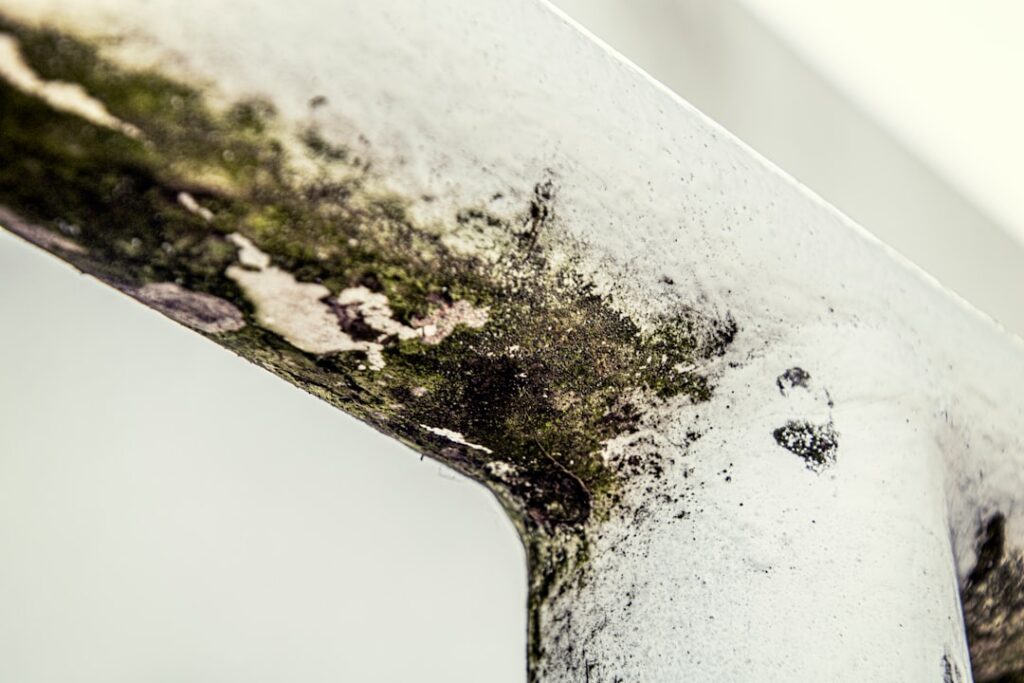
People who discover dark mold at home often start scanning their bodies for signs that exposure has already affected them. Searching for early stage black mold symptoms is one of the most common ways homeowners react to that worry. The honest picture is more nuanced than many websites suggest, and it is important to separate documented effects from overstated claims. This guide summarizes EPA, CDC, and public-health guidance current as of 2026 and is educational only. It does not diagnose any condition and is not medical advice; anyone with health concerns should consult a physician. Here is what the symptoms can look like, why they vary so much, and what to do.
Is this mold, asbestos, or water damage? Get a free instant screen
Upload a clear photo of the suspect area. You'll get an instant AI screening opinion and what to do next. This is screening guidance, not a professional determination.
Screening guidance only. AI can be wrong. Confirm asbestos, mold type, or lead with lab testing or a licensed professional before acting.
What Early Stage Black Mold Symptoms Can Look Like
The symptoms most commonly associated with early mold exposure are respiratory and allergic, and they tend to resemble seasonal allergies or a cold. According to the CDC, exposure to mold can be linked to nasal congestion, sneezing, a runny or stuffy nose, coughing, wheezing, sore throat, and itchy or watery eyes. Some people also report skin irritation or a general sense of irritation in the airways.
These early signs are nonspecific, meaning many other things cause the same symptoms. There is no single symptom that confirms mold exposure, and no symptom checklist can diagnose it. A pattern worth noticing is symptoms that improve when you leave the home and return when you come back, which can suggest something in the environment, though even that is only a clue rather than proof. The reasonable interpretation of early symptoms is to treat them as a prompt to check for moisture and mold and to talk to a doctor, not as a diagnosis on their own.
Why Sensitivity Varies So Much
One of the most important things to understand is that reactions to mold differ enormously between people. The CDC emphasizes that sensitivity varies widely, and the same exposure that causes nothing noticeable in one person may trigger clear symptoms in another.
People with mold allergies, asthma, or other respiratory conditions are more likely to react and to react sooner. Infants and young children, older adults, and people with weakened immune systems may also be more vulnerable. In rare cases, people who are significantly immunocompromised can develop fungal infections, which is a serious and distinct concern from ordinary allergy. For most healthy adults, early exposure to common indoor mold produces allergy-type irritation if it produces anything at all. This variation is exactly why symptoms cannot be used to estimate how much mold is present or how dangerous a particular situation is. Our guide to black mold symptoms covers the fuller range, and the mold inspection and testing hub explains how exposure is actually assessed.
What the Science Does and Does Not Support
Black mold, usually meaning Stachybotrys chartarum, has a fearsome reputation, and a lot of that reputation runs ahead of the evidence. The mold can produce mycotoxins, which is the basis for many alarming claims about memory loss, severe neurological problems, and other systemic illnesses. Public-health agencies have not established a causal link between black mold and those severe conditions.
The CDC has stated that the proposed link between black mold and serious systemic health effects has not been proven, and that the health effects of mold are generally the same across types: allergic and respiratory irritation, with more serious infection risk limited mainly to vulnerable groups. That does not make black mold harmless, and it does not mean exposure should be ignored. It means the documented early symptoms are the respiratory and allergic ones above, and the dramatic claims circulating online go beyond what science currently supports. The right response to black mold is to remove it and fix the moisture, regardless of the species, while treating any health symptoms as a matter for a physician. Our profile of Stachybotrys details what is established about this specific mold.
When to See a Doctor
Symptoms are a medical question, and a doctor is the right resource. Consider seeing a physician if you have persistent respiratory symptoms that do not resolve, a noticeable worsening of asthma or allergies, symptoms that consistently improve away from home and return when you go back, or if you belong to a higher-risk group such as people with weakened immune systems or chronic lung disease and you are concerned about exposure.
A doctor can evaluate symptoms properly, consider other causes, and order testing if appropriate. Home test kits and symptom lists cannot diagnose a health condition; only a healthcare provider can. If symptoms are severe, such as significant difficulty breathing, seek prompt medical care. The key principle is that no website, including this one, can tell you whether mold is affecting your health, and self-diagnosis based on a symptom list is unreliable because the symptoms overlap with so many ordinary illnesses.
Why Symptoms Are an Unreliable Diagnostic Tool
It is tempting to use a symptom list as a self-test, matching what you feel against an online checklist to decide whether mold is the cause. This approach is unreliable, and understanding why protects you from both false alarm and false reassurance.
The core problem is that mold symptoms are nonspecific. Nasal congestion, coughing, a sore throat, and itchy eyes are produced by colds, seasonal allergies to pollen and other allergens, dry indoor air, dust, pet dander, viral infections, and many other common causes. A symptom that has dozens of possible explanations cannot point reliably to any single one. Someone with a head cold who has just discovered mold may attribute the cold to the mold, while someone with a genuine mold allergy may blame their symptoms on the weather. Neither conclusion is trustworthy without a proper medical evaluation.
The wide variation in individual sensitivity compounds the problem. Two people in the same home with the same exposure can have completely different experiences, so the absence of symptoms in one person does not mean the air is safe for everyone, and strong symptoms in another do not necessarily indicate a large or dangerous amount of mold. There is also no reliable dose-response relationship that lets you estimate exposure from symptom severity. For all these reasons, public-health agencies do not endorse diagnosing mold-related illness from symptoms alone, and neither should homeowners. Symptoms are a reason to investigate the home and to talk to a doctor, not an answer in themselves.
Separating Documented Effects From Online Myths
Searches about black mold turn up a spectrum of claims, from accurate to wildly exaggerated, and sorting them matters for making good decisions. On the documented end are the allergic and respiratory effects that public-health agencies recognize, plus the rare but real risk of invasive infection in people who are significantly immunocompromised. These are supported by evidence and worth taking seriously.
On the exaggerated end are claims that ordinary household black mold reliably causes memory loss, severe neurological damage, bleeding lungs in healthy adults, or a defined toxic mold syndrome with a long, fixed list of symptoms. The CDC has stated that a causal link between black mold and such serious systemic conditions has not been proven. That does not mean such claims are definitively impossible in every conceivable circumstance, but it does mean they are not established science and should not drive a homeowner’s response.
The practical filter is to ask what action a claim implies. Both the documented and the exaggerated views point to the same sensible steps: remove the mold and fix the moisture, reduce exposure for sensitive household members, and see a physician for symptoms. Because the actions are the same regardless of which claims you believe, there is no benefit to absorbing the frightening ones. Focus on the steps that protect your home and health, and leave the diagnosis to a doctor and the species question to a professional if one is needed.
What to Do About the Mold Itself
While the health side belongs to a doctor, the home side follows clear guidance. The EPA advises homeowners to address the moisture source and clean small mold patches, under roughly 10 square feet, themselves while wearing an N95 respirator and gloves. Detergent and water handle most surface mold on hard materials. Porous materials that are saturated or stained, like drywall and carpet, often need removal because mold roots into them.
Larger areas, mold that returns after cleaning, growth following flooding, or mold suspected inside walls or HVAC systems call for a professional remediation contractor. Reducing exposure is the goal, especially in households with sensitive members. Keep indoor humidity between 30 and 50 percent, fix leaks promptly, and dry any wet material within 24 to 48 hours. On the Front Range, the dry outdoor air keeps overall humidity low, but basements, crawl spaces, and bathrooms still develop the dampness that feeds black mold, so those are the first places to inspect when early symptoms or a musty smell appear.
What Mold Testing Can and Cannot Tell You
Homeowners worried about symptoms often turn to mold testing, hoping a sample will confirm whether their health concerns are justified. It helps to understand what testing actually measures. Air and surface sampling can identify the types and rough quantities of mold present in a space, and comparing indoor to outdoor samples can suggest whether there is an indoor growth problem beyond the normal background. That information is useful for guiding cleanup and documenting a problem.
What testing cannot do is diagnose a health condition or establish that a person’s symptoms are caused by mold. A spore count does not translate into a personal health verdict, because individual sensitivity varies so widely and because the same symptoms have many causes. The EPA has generally noted that sampling is not necessary to decide whether to clean up mold, since visible or smelled mold should be removed regardless of the species. Testing answers questions about the environment, not about a person’s body.
This matters for anyone tempted to use a home test kit to settle a health worry. The kit, at best, tells you something about the mold in a sample; it tells you nothing reliable about how that mold is affecting you. For health questions, the appropriate path is a physician who can evaluate symptoms, consider other causes, and order medical testing if warranted. For the home, the practical path is to look for moisture and visible growth and address it. Keeping these two tracks separate, environmental assessment for the building and medical evaluation for the person, prevents the common mistake of trying to diagnose a body with a tool meant for a room.
It is also worth noting that a negative or unremarkable mold test does not rule out a moisture problem, because mold can be hidden inside walls, under flooring, or in ductwork where a quick surface or air sample may miss it. Conversely, finding some mold in a sample is normal, since spores are a routine part of indoor and outdoor air. This is another reason the EPA leans on the simple, observable signals, visible growth, a musty smell, and a known moisture source, rather than treating a test result as the final word. For most homeowners, those observable signs are a more reliable trigger for action than a number on a lab report, and they cost nothing to check. The combination of trusting your eyes and nose for the home and trusting a physician for symptoms covers the situation far better than any single test could.
In the end, the calmest and most effective response to worrying symptoms is also the simplest. Check the home for moisture and visible growth and address what you find, see a doctor about how you feel, and let each expert handle the question they are equipped to answer. That approach sidesteps both the panic that overstated online claims encourage and the false comfort a single negative test might give, leaving you with clear, sensible steps for the building and for your health.
References
- About Mold and Your Health — Centers for Disease Control and Prevention
- A Brief Guide to Mold, Moisture and Your Home — U.S. Environmental Protection Agency
- Mold and Indoor Air Quality — American Lung Association
If you have found dark mold in your Front Range home and want help locating the moisture feeding it, you can connect with a vetted local inspector through our contact page; for symptoms, consult your physician.