Mold Stain: Removal by Surface and When It Means Active Growth
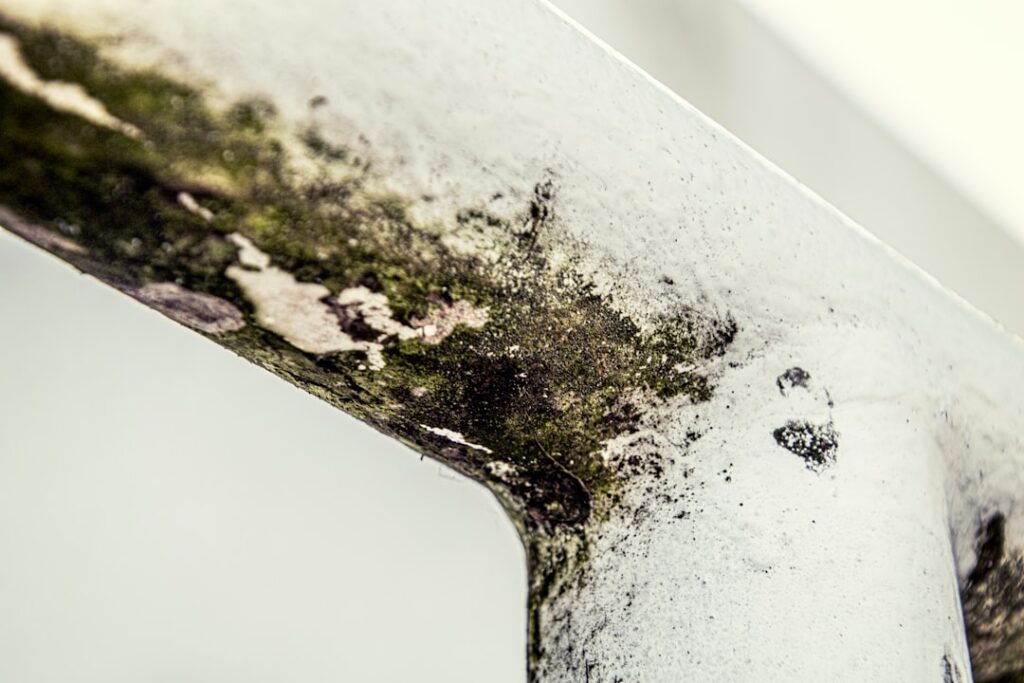
The mold is gone, the surface has been scrubbed, and yet a gray, black or brownish shadow is still there. Or a dark blotch has appeared on a ceiling, a window sill or a basement wall, and nobody is sure whether it is mold at all. A mold stain sits in an awkward middle ground: it can be leftover pigment from growth that has already been cleaned up, or it can be a sign that mold is still living in the material. The right response depends on which one it is, what the surface is made of, and whether the moisture that fed the growth has been fixed. This guide explains how to read a stain, how it differs from a plain water stain or mildew, how to lift it from common household surfaces, and when replacement is the more sensible choice. It summarizes EPA and CDC guidance current as of 2026 for general education. It is not medical advice, and large or recurring problems belong with a qualified mold professional.
Part of our Types of Mold guide — start there for the full picture →
Is this mold, asbestos, or water damage? Get a free instant screen
Upload a clear photo of the suspect area. You'll get an instant AI screening opinion and what to do next. This is screening guidance, not a professional determination.
Screening guidance only. AI can be wrong. Confirm asbestos, mold type, or lead with lab testing or a licensed professional before acting.
What a Mold Stain Actually Is
Mold colonies produce pigmented spores and structures, and as they grow they work their way into the surface they are feeding on. When the growth is cleaned off, some of that color can stay behind in the pores of grout, the grain of wood, the paper face of drywall or the fibers of fabric. EPA’s mold course lists “cosmetic damage, such as stains, to furnishings” among the effects of unchecked mold growth, alongside rotted wood and damaged drywall. In other words, staining is a known and expected consequence of mold, not a sign that a cleanup was done wrong.
EPA’s Brief Guide to Mold, Moisture and Your Home makes the same point from the homeowner’s side. It notes that mold may cause staining and cosmetic damage, and that it may not be possible to clean an item so that its original appearance is restored. The guide repeats the caveat in its section on how to know when a cleanup is finished: visible mold and moldy odors should be gone, but staining may remain. That distinction is the core of this article. A faint stain on a dry, odorless, structurally sound surface is often a cosmetic issue. A stain that is fuzzy, raised, spreading, damp or musty is usually a live mold problem.
Color alone does not settle the question. CDC describes mold as something that can look like spots of many different colors and can smell musty, and EPA’s mold course stresses that “black mold” is not a species or a specific kind of mold. Stains can be black, gray, green, brown, pink or blue depending on the organism and the material. For a closer look at color variations, the guides on whether mold can be brown and black spot mold cover the most common shades, and the mold types hub collects the rest.
Stain or Active Growth? How to Read the Surface
There is no single test that proves a stain is dead pigment rather than living mold, so it helps to look at several clues together.
- Texture. Active colonies often look fuzzy, velvety, powdery or slightly raised. A pure stain is flat and sits within the surface rather than on top of it.
- Moisture. Mold needs moisture to grow. EPA’s mold course calls moisture the most important factor influencing indoor mold growth. A stain on a surface that reads damp to the touch or on a moisture meter, or that sits near a leak, condensation or a wet wall, is far more likely to be active.
- Odor. EPA’s mold course explains that the musty smell associated with mold comes from microbial volatile organic compounds and that a moldy odor suggests mold is growing and should be investigated. A stain with a smell is not a cosmetic problem.
- Change over time. Photograph the stain with a coin or ruler for scale, then compare after a week or two. A stain that grows, darkens or reappears after cleaning points to active growth and an unresolved moisture source.
- Location. Staining in a shower, on a window sill or on a basement wall is in a place where moisture recurs. Staining on a ceiling or an interior wall may be coming from a hidden leak or from growth on the back side of the material.
A stain that passes all of these checks (flat, dry, odorless, stable over time, in a spot where the moisture source has been fixed) is most likely residual pigment. Any one of them failing is a reason to treat the area as active mold first and a cosmetic problem second.
It is also worth remembering that “dead” does not mean harmless. EPA’s mold course says mold does not have to be alive to cause an allergic reaction, and the Brief Guide notes that dead mold may still cause allergic reactions in some people, so it is not enough to simply kill mold; it must also be removed. That is why the focus stays on physically removing growth and fixing moisture rather than spraying something and walking away. The guide on sprays that kill mold covers what those products can and cannot do.
Mold Stain vs. Water Stain vs. Mildew
Three kinds of discoloration get confused constantly, and the distinction changes the response.
Water stains are mineral and tannin deposits left when water soaks into a material and evaporates. On ceilings they usually appear as tan, yellow or brown rings with a darker outer edge, sometimes in concentric bands from repeated wetting. They are flat and typically odorless once dry. A water stain is a moisture warning rather than mold itself, but the same leak that caused the ring can lead to growth on the back side of drywall or ceiling materials if it keeps recurring. The guide to ceiling water stains walks through finding the source.
Mildew is a common name for mold growing flat on a surface, typically in damp places like shower grout, window frames and fabric. EPA’s mold course notes that molds are also called fungi or mildew, so the line between the two is informal. In practice, “mildew” usually describes gray, white or light-colored surface growth that cleans off relatively easily, while “mold” describes darker or deeper growth. The guide to mildew stains covers removal from fabric and hard surfaces, and the comparison of black mold vs. mildew on wood addresses one of the trickiest materials.
Mold stains are the pigment that remains after growth has been cleaned or has died, or the visible face of growth that is still active. They tend to appear as clustered dots or irregular patches rather than smooth rings, and they often sit where moisture lingers: corners, behind furniture, on the cold side of walls and around fixtures.
A water stain with dark speckles inside it suggests both: a leak followed by growth.
When it is still unclear, CDC’s position is useful: if you see or smell mold, remove it, and you do not need to know the type of mold. The same approach works for an ambiguous stain. Fix the moisture, clean the surface, and see what comes back.
Removing Mold Stains From Common Surfaces
Before tackling any stain, two steps come first. The moisture source needs to be found and fixed, and any active growth needs to be removed. EPA’s Brief Guide puts it plainly: if mold is cleaned up but the water problem is not fixed, the mold problem will most likely come back. The guide also says areas smaller than about 10 square feet can usually be handled by a homeowner, while larger areas or significant water damage call for EPA’s commercial remediation guidance or an experienced contractor.
Basic protection matters even for small jobs. The Brief Guide recommends an N-95 respirator, gloves and goggles without vent holes, and it advises against touching mold or moldy items with bare hands. CDC adds that windows and doors should be opened for fresh air during cleanup.
The methods below are general approaches that many homeowners and cleaners use. Results vary with the material, the age of the stain and how deep the growth went, and product labels always take priority. Test any cleaner on a hidden spot first.
Grout and Tile
Grout is porous, so stains often sit below the surface. Scrubbing with detergent and water and a stiff nylon brush is the starting point; EPA’s Brief Guide recommends scrubbing mold off hard surfaces with detergent and water and drying completely. Where staining remains, some people use an oxygen-based cleaner or a diluted bleach solution. CDC says a bleach solution of no more than 1 cup of household laundry bleach per gallon of water can be used on hard surfaces, and warns never to mix bleach with ammonia or other cleaners because it produces a poisonous gas. Colored grout can lighten or fade with bleach, so testing first is wise. If staining persists after a couple of rounds, regrouting the worst lines is often more effective than continued scrubbing.
Caulk and Sealant
Silicone and acrylic caulk are soft enough that mold can grow into the bead, not just on it. A surface clean may lighten the color, but dark spots inside the caulk typically come back. Cutting out the old bead, cleaning and fully drying the joint, then applying fresh caulk is usually the more reliable fix. EPA’s Brief Guide says not to paint or caulk moldy surfaces, so the joint should be cleaned and dry before new sealant goes in.
Wood
Sealed or finished wood can often be cleaned with mild detergent and water, then dried. On raw wood, stains can penetrate the grain. Light sanding after cleaning sometimes removes remaining discoloration, but sanding moldy wood creates dust, so it should only happen after the growth is cleaned off, with a respirator and ideally with a HEPA vacuum on hand. Wood that is soft, crumbly or punky is a sign of rot, and EPA’s mold course notes that unchecked mold growth can rot wood. Structural or soft wood is a replacement question, not a stain question. The guide to hydrogen peroxide for mold removal discusses one commonly used option for wood and other surfaces.
Painted and Unpainted Drywall
Painted drywall in good condition can often be wiped with a damp cloth and mild detergent, taking care not to soak the paper face. Unpainted drywall is far more absorbent. EPA’s Brief Guide notes that absorbent or porous materials may have to be thrown away if they become moldy, because mold can grow into the empty spaces and crevices and may be difficult or impossible to remove completely. A stain on drywall that is soft, swollen, crumbling or recurring usually means the affected section should be cut out and replaced. The guide on brown mold on walls has more on wall-specific cases.
Fabric and Upholstery
Washable fabrics can often be laundered according to the care label, sometimes with an oxygen-based additive, and dried completely. Sunlight can help fade some stains on light-colored fabric. Upholstery, mattresses and heavy textiles are harder; CDC advises removing or replacing carpets and upholstery that have been soaked and cannot be dried right away. For valuable or sentimental items, EPA’s Brief Guide suggests consulting a specialist in restoration or cleaning. The guide to mold on fabric covers clothing, curtains and furniture in more detail.
Stain Removal Approach by Surface
The table below summarizes typical approaches and the point at which replacement usually makes more sense than more cleaning. It assumes the moisture source has been fixed and active growth has already been removed.
| Surface | Stain removal approach | When to replace |
|---|---|---|
| Ceramic tile and grout | Detergent scrub with nylon brush; oxygen cleaner or diluted bleach (no more than 1 cup per gallon) tested first | Grout that stays stained after repeated cleaning, or cracked and crumbling grout |
| Silicone or acrylic caulk | Surface clean may lighten; usually not fully effective | Dark spots inside the bead; cut out, dry the joint and recaulk |
| Finished wood | Mild detergent and water, then dry; refinish if the coating is damaged | Wood that is soft, swollen, delaminating or rotted |
| Raw wood and framing | Clean, dry, then light sanding with dust control if stain remains | Rot, softness or structural concern; consult a contractor |
| Painted drywall | Damp wipe with mild detergent, no soaking; dry fully | Soft, swollen, stained through, or recurring stains |
| Unpainted drywall | Limited; surface cleaning can damage the paper face | Usually replace the affected section if it was moldy |
| Washable fabric | Launder per label, oxygen additive, dry completely, sunlight for light fabrics | Persistent odor or growth after washing |
| Upholstery and mattresses | Professional cleaning for valuable pieces | Soaked items that could not be dried quickly |
| Concrete and masonry | Detergent scrub, rinse, thorough drying; oxygen cleaner for shadow | Rarely replaced; address water entry instead |
| Ceiling tiles and carpet | Cleaning is often unreliable on porous materials | EPA notes these may have to be thrown away if moldy |
Priming and Painting Over a Mold Stain
Stain-blocking primer is a legitimate final step for a cosmetic stain that will not clean out, but it is the last step, not the first. EPA’s Brief Guide is direct: do not paint or caulk moldy surfaces, clean up the mold and dry the surfaces before painting, and paint applied over moldy surfaces is likely to peel. Painting over active growth hides it for a while and traps the problem under a fresh coat.
A reasonable sequence looks like this:
- Find and fix the moisture source: a leak, condensation, poor ventilation or drainage.
- Remove active growth by scrubbing, or replace the material if it is porous and badly affected.
- Let the area dry completely. A moisture meter on drywall or wood removes guesswork.
- Wait and watch. A week or two without regrowth, odor or new spots is a good sign.
- Apply a stain-blocking primer suited to the surface, following the label.
- Topcoat with paint suitable for the room. CDC suggests adding mold inhibitors to paints before painting, and they are sold at paint and home improvement stores.
If the stain bleeds through after priming, or new spots form within weeks, the moisture problem has probably not been solved.
Does a Stain Mean Mold Is Still Alive?
Not necessarily. A stain left after a thorough cleanup on a surface that is now dry may simply be pigment. EPA’s Brief Guide treats that as an acceptable end state: visible mold and moldy odors should be gone, but staining may remain. On the other hand, a stain can absolutely mean active growth, especially if the surface is still damp or the stain is spreading.
Signs that a stain probably still involves living mold:
- It reappears or darkens after cleaning.
- The surface reads damp or the area has a known moisture source that has not been fixed.
- There is a musty odor nearby.
- The texture is fuzzy, powdery or raised.
- The material behind or beneath it is soft, swollen or delaminating.
Testing a stain to determine whether it is alive is rarely needed. CDC does not recommend routine mold testing and says that no matter what type of mold is present, it needs to be removed. EPA’s Brief Guide adds that if visible mold growth is present, sampling is usually unnecessary. Where testing does help is in confirming hidden growth, or verifying that a professional cleanup was successful.
CDC notes that exposure to damp and moldy environments may cause a variety of health effects, or none at all, and that people with asthma or mold allergies may have more severe reactions. Anyone with symptoms should talk with a physician.
Preventing New Stains
Most mold stains come back for the same reason they appeared: moisture that has not been controlled. EPA’s Brief Guide sets out a few priorities.
- Dry wet materials within 24 to 48 hours. EPA says that if wet or damp materials are dried within that window after a leak or spill, in most cases mold will not grow.
- Keep humidity in check. EPA recommends keeping indoor relative humidity below 60 percent, ideally between 30 and 50 percent. CDC suggests no higher than 50 percent. Along the Colorado Front Range, dry winter air keeps humidity low most of the year, so stains here tend to trace back to specific moisture sources such as plumbing leaks, ice dams, poorly vented bathrooms and summer basement dampness rather than whole-house humidity.
- Ventilate wet rooms. Run bathroom exhaust fans during and after showers and vent dryers outside. EPA’s Brief Guide notes that more ventilation and more frequent cleaning usually keep recurring bathroom mold to a minimum.
- Clean regularly with ordinary products. Regular cleaning with soap or detergent removes the organic film that mold feeds on. The guide on whether soap kills mold explains why detergent works better than people expect.
When to Call a Professional
Many mold stains are small, cosmetic jobs. Some are not. Professional help makes sense when:
- The stained or moldy area is larger than about 10 square feet, the threshold EPA’s Brief Guide uses.
- There has been a lot of water damage, or the water came from sewage or other contaminated sources.
- Stains keep returning despite cleaning and the moisture source cannot be found.
- There is a musty odor without visible growth, which can point to hidden mold behind drywall, under flooring or above ceilings.
- Someone in the home has asthma, a mold allergy or a weakened immune system.
A mold inspection focuses on finding moisture and growth, including in places that are hard to see, and a qualified remediator can remove affected materials safely. The mold inspection pillar explains what an inspection covers and how to choose an inspector.
References
- U.S. EPA. A Brief Guide to Mold, Moisture and Your Home
- U.S. EPA. Mold Cleanup in Your Home
- U.S. EPA. Mold Course Chapter 1: Introduction to Molds
- Centers for Disease Control and Prevention. Mold: About Mold
Frequently asked questions
Is a mold stain the same as mold?
Not always. A stain can be leftover pigment after growth has been cleaned off, or it can be the visible face of active growth. EPA notes that mold may cause staining that cannot always be cleaned away. A flat, dry, odorless stain is usually cosmetic, while a damp, fuzzy or spreading one is usually active mold.
Can stain-blocking primer cover a mold stain?
Only after the mold is cleaned off, the surface is completely dry and the moisture source is fixed. EPA advises against painting or caulking moldy surfaces and notes that paint applied over mold is likely to peel.
How can a mold stain be told apart from a water stain?
Water stains are usually tan or brown rings with a defined edge, often on ceilings. Mold stains tend to look like clustered dots or irregular patches. Dark speckles inside a water ring suggest a leak followed by mold growth.
Should a mold stain be tested?
Usually not. CDC does not recommend routine mold testing and says mold should be removed regardless of type. EPA adds that sampling is typically unnecessary when visible mold is present. Testing can help when hidden growth is suspected or to confirm a professional cleanup.
When should moldy materials be replaced instead of cleaned?
EPA notes that porous materials such as ceiling tiles and carpet may have to be thrown away if they become moldy. Drywall that is soft or swollen, caulk with dark spots inside the bead, and rotted wood are generally replacement jobs.
Stain keeps coming back after every scrub? Send us a photo and a note on where it shows up, and we can help work out whether it is pigment, active growth or a moisture source worth tracking down.
Mold removal & cleanup picks
For a small, contained patch (under ~10 sq ft) these EPA-friendly removers handle surface mold. Larger or recurring growth warrants a professional assessment first.
| Product | Why | Buy |
|---|---|---|
 RMR-86 Instant Mold Stain Remover RMR-86 Instant Mold Stain Remover | Fast-acting on stains; ventilate and wear PPE. | Amazon |
 Concrobium Mold Control Concrobium Mold Control | No-bleach formula that also helps prevent regrowth. | Amazon — $12.81 |
 Mold Armor Mold & Mildew Remover Mold Armor Mold & Mildew Remover | Widely stocked bathroom/surface remover. | Amazon — $22.98 |