Black Mold vs Mildew on Wood: How to Tell and What to Do
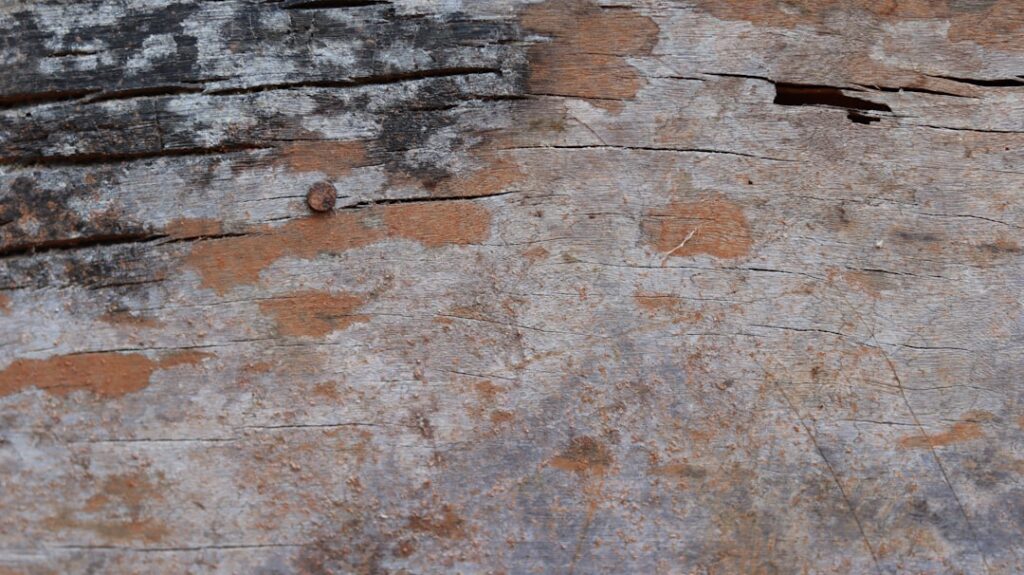
Dark spots on a deck board, a basement joist, a window sill or the back of a cabinet raise the same question: is this mildew that scrubs off, or mold that has worked into the wood? The answer shapes the job. Surface growth usually comes off with cleaning and drying. Growth that has penetrated, or wood that has started to rot, may need sanding, cutting out or replacement. And some dark marks on wood are not biological at all, but water, iron or tannin stains that no mold cleaner will touch. This guide explains how the terms are commonly used, simple ways to tell the possibilities apart, how to clean and when to replace, and how exterior decks and siding differ from interior framing. It summarizes EPA and CDC guidance current as of 2026 for Colorado Front Range homes. It is not medical advice; anyone with symptoms should talk with a physician, and large or hidden problems are best evaluated on site by a qualified inspector or remediation professional.
Part of our Black Mold & Your Health guide — start there for the full picture →
Is this mold, asbestos, or water damage? Get a free instant screen
Upload a clear photo of the suspect area. You'll get an instant AI screening opinion and what to do next. This is screening guidance, not a professional determination.
Screening guidance only. AI can be wrong. Confirm asbestos, mold type, or lead with lab testing or a licensed professional before acting.
Mildew vs Mold on Wood: What the Words Usually Mean
“Mildew” and “mold” are not precise scientific categories in everyday speech. Both are fungi, and the same organism can be called either one depending on who is describing it. In common usage, though, the words point to two different situations on wood, and that distinction is useful for deciding what to do.
Mildew as surface growth
People generally use “mildew” for flat, powdery or thin growth that sits on the surface. On wood it often looks gray, white, olive or speckled black, and it tends to appear in shaded, humid places with poor airflow: the north side of a fence, deck boards under planters, the bottom of a shower door frame, or furniture pushed against a cold exterior wall. It usually wipes or scrubs off fairly easily, leaving sound wood or finish behind. The guide to mildew stains covers the cosmetic marks it can leave on finished surfaces.
Mold as growth that penetrates
“Mold” is usually used for fuzzy, raised, slimy or thicker growth, and for growth that has worked into the material. Wood is porous, so on bare or weathered lumber, mold can grow into the surface fibers and leave staining that remains after the visible growth is cleaned. It usually signals more sustained moisture, such as a leak, condensation or chronic dampness. The term “black mold” is often used for any dark mold, though many species are dark and color alone does not identify one. The guide to mildew vs black mold covers the general comparison across materials, and black mold on wood focuses on dark growth specifically.
Agencies say the type does not change the response
For a homeowner, the label matters less than the moisture behind it. CDC states plainly that if you see or smell mold you should remove it and that you do not need to know the type of mold; it also does not recommend routine mold testing, noting there are no set standards for acceptable quantities in a home (CDC, About Mold). EPA notes that there are many types of mold and none of them grow without water or moisture (EPA, A Brief Guide to Mold, Moisture and Your Home). So the practical work is the same: clean the growth, dry the wood, and fix the water source. The distinction between mildew and mold mainly tells you how deep the cleaning may need to go and whether the wood itself is damaged.
Dark Stains on Wood: Five Common Causes
Before cleaning, it is worth ruling out the stains that only look like mold. Wood darkens for several reasons, and each one has a different fix.
1. Mildew
Thin, flat, powdery or speckled growth on the surface, often in a spotty pattern on shaded or humid surfaces. It may smell faintly musty. It usually wipes off with a damp cloth and a little detergent.
2. Mold
Raised, fuzzy, slimy or clustered growth, sometimes in more than one color, often spreading from a damp edge such as the end grain of a board, the bottom of a post or a sill under a leaky window. It tends to come back if moisture continues, and on porous wood it often leaves a shadow after cleaning. The guide to types of mold on wood describes common appearances, and a mold identification chart can help sort colors and textures, with the caution that appearance is never definitive.
3. Water stains
Water stains are usually rings, tide lines or streaks, darker at the edges where minerals and dissolved wood extractives collect as water evaporates. They are flat, have no texture, do not smear, and often follow a drip path from above. A water stain is a clue to a past or present leak even when there is no growth.
4. Iron and tannin stains
Many woods, especially cedar, redwood and oak, contain tannins. When iron from steel fasteners, tools, steel wool or rusty water reacts with tannins, it produces blue-black or gray-black streaks and spots, often centered on nail heads or under metal furniture feet. Tannin bleed without iron tends to look reddish-brown or tea-colored, often after rain on new cedar or redwood. These stains are chemical, not biological. They will not scrub away like mildew and do not respond to mold cleaners, but they often lighten with a wood brightener formulated for that purpose.
5. Rot and decay
Wood decay fungi do structural damage rather than just cosmetic staining. Rotted wood is soft, spongy, stringy or crumbly, may crack into cube-shaped pieces as it dries, and often darkens. A screwdriver pushed into sound wood meets firm resistance; in decayed wood it sinks in easily. Rot means the wood has been wet for a long time and may need repair or replacement, covered in the wood rot repair guide.
Quick Tests and a Comparison Table
No home test identifies a mold species, and none needs to. These checks simply help sort a stain into the right category so the cleaning method matches the problem.
The bleach spot test: a rule of thumb
A commonly shared test is to dab a small amount of diluted household bleach on the dark spot and watch for a few minutes. Mold and mildew stains often lighten, while dirt usually does not. It is a rule of thumb rather than a reliable test. Some stains lighten for reasons unrelated to mold, bleach can lighten wood and finishes on its own, and a spot that does not change can still be biological growth. If trying it, use a small, inconspicuous area, wear gloves and eye protection, ventilate, and never mix bleach with ammonia or other cleaners. CDC warns that mixing bleach with ammonia produces a poisonous gas (CDC).
Other simple checks
- Wipe test: a damp cloth with mild detergent removes much surface mildew; mold on porous wood often leaves a stain behind.
- Texture check: a magnifying glass shows whether the mark has fuzz, threads or raised clusters, or is flat and smooth like a stain.
- Probe test: a screwdriver or awl tests for softness that indicates decay.
- Pattern check: marks centered on fasteners suggest iron stains; rings and drips suggest water; spreading clusters suggest growth.
- Moisture reading: a pin-type moisture meter shows whether the wood is still wet, which matters more than the color.
| Look | Likely cause | Test | Fix |
|---|---|---|---|
| Flat, powdery gray, white or speckled black film | Mildew (surface growth) | Wipes off with a damp cloth and detergent | Clean, dry, improve airflow and sunlight, lower humidity |
| Fuzzy, raised or slimy dark clusters; stain remains after wiping | Mold growing into the wood surface | Wipe test leaves a shadow; moisture meter often reads high | Fix moisture, scrub, dry, sand stained surface if sound; seal or refinish after drying |
| Rings, tide lines or drip streaks with no texture | Water stain from a past or present leak | No fuzz under magnification; follows a drip path | Find and fix the leak; sand or bleach the stain cosmetically |
| Blue-black or gray streaks around nails or metal; reddish-brown bleed | Iron or tannin stain (chemical) | Centered on fasteners; does not change with a mold cleaner | Wood brightener made for iron and tannin stains; use corrosion-resistant fasteners |
| Darkened wood that is soft, spongy, stringy or cracked into cubes | Rot from decay fungi | Screwdriver sinks in easily | Cut out and repair or replace; correct the water source |
White fuzzy growth deserves its own look, since it is sometimes confused with efflorescence or powdery mildew; the guide to white mold on wood covers that case.
Cleaning Mildew and Mold From Wood
The cleaning sequence is similar for mildew and surface mold. Mold that has penetrated simply needs more mechanical removal.
Start with the water
EPA’s guidance starts with moisture: fix plumbing leaks and other water problems as soon as possible, dry all items completely, and scrub mold off hard surfaces with detergent and water (EPA, Mold Cleanup in Your Home). Cleaning without fixing the source usually means the growth returns. EPA also stresses drying water-damaged areas within 24 to 48 hours to prevent mold growth (EPA Brief Guide).
Basic steps
- Protect yourself. Wear gloves, eye protection and, for more than a light film, a well-fitting respirator. Avoid dry brushing that sends spores into the air.
- Contain indoor work. Close doors, and avoid running the HVAC system if mold may be near the air handler or ducts.
- Clean the surface. Scrub with water and a mild detergent using a soft brush or sponge. For mildew, this is often enough.
- Remove stained fibers if needed. On sound, dry wood with lingering stains, light sanding can remove the stained surface. Damp-wipe or HEPA-vacuum the dust rather than sweeping it.
- Dry completely. Use fans, dehumidifiers and heat as appropriate, and confirm with a moisture meter before refinishing.
- Refinish only when clean and dry. EPA advises not to paint or caulk moldy surfaces, noting that paint applied over mold is likely to peel.
The guide on how to kill mold on wood goes deeper into cleaner choices and technique, and the mildew remover guide compares product types for surface mildew.
About bleach and biocides
Bleach is popular, but it is not required. EPA states that using a biocide such as chlorine bleach is not recommended as a routine practice during mold cleanup, that a background level of spores will remain, and that those spores will not grow if the moisture problem is resolved (EPA). CDC lists soap and water, household products, or a bleach solution of no more than 1 cup of household laundry bleach per gallon of water as options, with ventilation and protective gear (CDC). On wood, bleach may lighten the surface stain more than it reaches growth inside the grain, and it can discolor finishes, so mechanical cleaning and drying matter more than the chemical.
Size limits for DIY
EPA suggests that most people can handle a moldy area of less than about 10 square feet themselves, roughly a 3-by-3-foot patch. For larger areas, a lot of water damage, contamination from sewage, or health concerns, EPA points to professional guidance and experienced contractors (EPA).
When to Replace Wood Instead of Cleaning It
Cleaning works for surfaces; it does not restore strength. Consider repair or replacement when:
- The wood is soft. A probe sinks in, edges crumble, or the board flexes more than its neighbors. That is decay, not just staining.
- Growth runs deep into porous material. EPA notes that absorbent or porous materials may have to be thrown away if they become moldy because mold can fill crevices and be difficult or impossible to remove completely. Particleboard, OSB edges and some engineered panels often fall into this group.
- Structural members are involved. Joists, rim boards, sill plates, deck ledgers and posts with decay need evaluation, since their strength affects safety.
- Staining keeps coming back after cleaning and drying, which suggests an ongoing water source or deeper growth.
- The piece is inexpensive and easier to replace than to clean thoroughly, such as a trim board or a deck board.
The wood rot repair guide linked above walks through epoxy consolidation, partial replacement and full replacement, and when each makes sense.
Should You Test the Stain?
Lab testing is a common question once dark growth appears, and it is usually not the most useful next step. EPA states that in most cases, if visible mold growth is present, sampling is unnecessary, and that no EPA or other federal limits have been set for mold or mold spores (EPA Brief Guide). CDC likewise says it does not recommend mold testing and that no matter what type of mold is present, it needs to be removed. A lab result naming a species does not change the cleaning steps on a deck board or a joist.
Where professional evaluation does help is in finding what cannot be seen: the extent of hidden growth inside a wall or under a subfloor, the moisture source behind recurring stains, and whether framing has lost strength. EPA notes that surface sampling may be useful to check whether an area has been adequately cleaned, and that sampling should be done by professionals with specific experience designing sampling protocols and interpreting results. For most homeowners looking at a stained board, a moisture meter reading and a probe test answer more practical questions than a swab kit.
Exterior Decks and Siding vs Interior Framing
Where the wood is changes both the likely cause and the right response.
Decks, fences and siding
Outdoor wood gets wet by design, so some mildew is normal, especially in shade. On the Front Range, intense sun and low humidity dry most surfaces quickly, which is why mildew and mold tend to cluster in specific spots: under planters and rugs, on north-facing boards, along ground contact, behind snow piles, and where downspouts or sprinklers keep wood wet. Gray weathering from sunlight is another look-alike; it is surface breakdown of the wood rather than growth.
- Clean with a deck cleaner or detergent and a soft brush; aggressive pressure washing can raise and damage the grain.
- Address iron stains around fasteners with a brightener and corrosion-resistant fasteners.
- Let the wood dry thoroughly before applying a water-repellent finish or stain.
- Correct the moisture pattern: move planters, redirect downspouts and sprinklers, trim shading plants, and keep snow from piling against siding.
- Probe posts, ledger areas and stair stringers for rot, since those are structural.
Interior framing, subfloors and attics
Indoors, wood should be dry, so any growth is a moisture finding. Common sources include plumbing leaks, roof leaks, poor attic ventilation, bath fans venting into the attic, condensation on cold surfaces, and foundation moisture in basements and crawlspaces. EPA suggests keeping indoor humidity below 60 percent, ideally between 30 and 50 percent (EPA). In attics, dark staining on roof sheathing often follows a pattern from exhaust fans or air leaks from the living space below.
Interior growth on framing is more likely to be hidden and more likely to need containment, since spores and dust can spread into living areas. EPA cautions that hidden mold can be released in large amounts when materials are disturbed and suggests considering an experienced professional for suspected hidden mold. The broader guide to mold on wood covers additional indoor locations, and the black mold hub gathers related guidance on dark growth across materials.
Preventing Mildew and Mold on Wood
Because no mold grows without moisture, prevention is mostly about water and airflow.
- Keep wood dry: fix leaks quickly, keep gutters and downspouts working, and slope soil away from the foundation.
- Dry fast after spills or leaks: aim for the 24 to 48 hour window EPA describes.
- Manage indoor humidity: use bath and kitchen fans that vent outside, and run a dehumidifier in a damp basement.
- Add airflow: pull furniture a few inches off exterior walls, and avoid storing items against cold basement walls.
- Protect exterior wood: keep finishes in good repair, avoid ground contact for untreated wood, and clean decks seasonally.
- Use the right fasteners: corrosion-resistant fasteners reduce iron staining on tannin-rich woods.
If dark stains keep returning in the same place, or a musty smell lingers after cleaning, the moisture source has not been found. That is the point where a mold inspection, a moisture survey, or a contractor evaluation of the roof, plumbing or drainage is worth the cost. The mold inspection pillar explains what an inspection covers and how it differs from mold testing.
References
- A Brief Guide to Mold, Moisture and Your Home — U.S. Environmental Protection Agency
- Mold Cleanup in Your Home — U.S. Environmental Protection Agency
- About Mold — Centers for Disease Control and Prevention
Frequently asked questions
How can you tell black mold from mildew on wood?
In common usage, mildew is flat, powdery growth on the surface that wipes off, while mold is fuzzy, raised or slimy and often grows into porous wood, leaving a stain after cleaning. Color alone does not identify a species, and CDC says you do not need to know the type to remove it.
Does the bleach test prove a stain is mold?
No. Dabbing diluted bleach on a spot and seeing it lighten is a rule of thumb, not a reliable test. Bleach can lighten wood on its own, and some growth does not change. Use gloves, ventilate, and never mix bleach with ammonia.
Can moldy wood be saved?
Often, if the wood is still firm. Fix the moisture source, scrub with detergent and water, sand stained surfaces if needed, and dry completely before refinishing. Soft, crumbly or structurally important wood usually needs repair or replacement.
What are black streaks around nails on a cedar deck?
Blue-black streaks centered on fasteners are usually iron stains, a reaction between iron and the tannins in the wood. They are not mold and will not respond to mold cleaners, but a wood brightener made for iron stains often lightens them.
When should a professional handle mold on wood?
EPA suggests most people can clean areas under about 10 square feet. Larger areas, significant water damage, sewage contamination, structural wood with rot, suspected hidden mold, or health concerns are good reasons to bring in an experienced professional.
Not sure whether the dark marks on your deck, joists or trim are mildew, mold or rot? Contact us and we can connect you with a Front Range inspector who can check the wood and track down the moisture source.