How to Kill Mold on Wood: A Plain-Language Guide
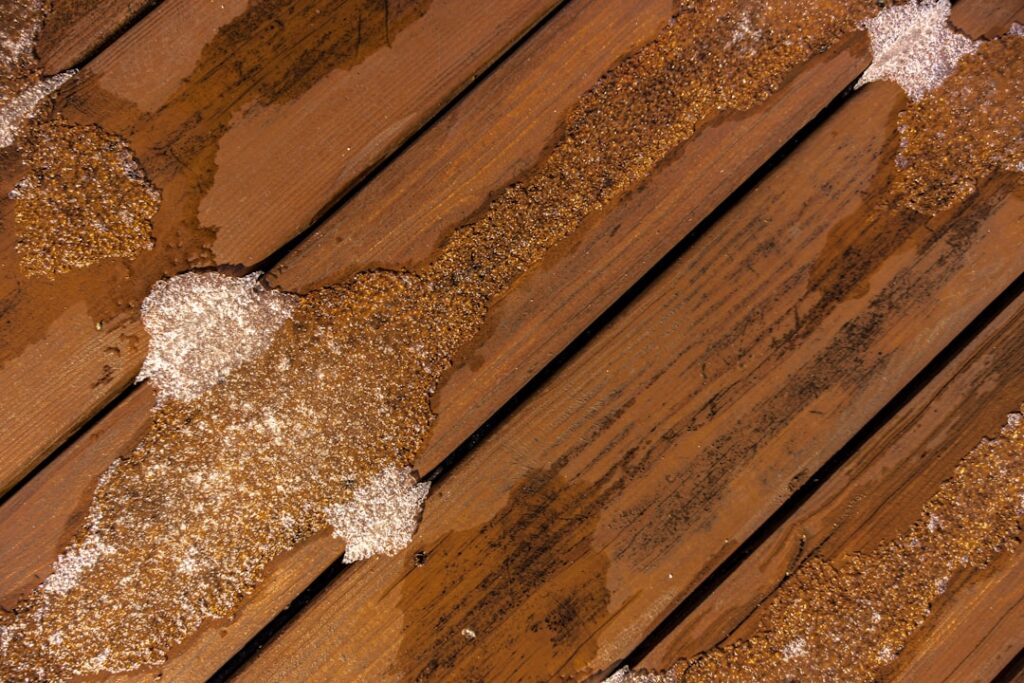
Mold on a stud, a deck board, or a piece of furniture calls for a different approach than mold on tile. Wood is porous and absorbs both moisture and the cleaner you apply, so the method matters. This guide walks through how to kill mold on wood step by step, matched to the type of wood involved. It summarizes EPA and CDC guidance current as of 2026 and is educational only. Consult a certified professional for large or structural contamination, since a webpage cannot judge whether a load-bearing member is sound enough to save.
Part of our Mold Removal & Remediation guide — start there for the full picture →
Is this mold, asbestos, or water damage? Get a free instant screen
Upload a clear photo of the suspect area. You'll get an instant AI screening opinion and what to do next. This is screening guidance, not a professional determination.
Screening guidance only. AI can be wrong. Confirm asbestos, mold type, or lead with lab testing or a licensed professional before acting.
How to kill mold on wood, step by step
For an area under about 10 square feet on sound wood, the core process is the same regardless of cleaner:
- Fix the moisture source. Stop the leak or lower the humidity first, or the mold returns.
- Gear up. N95 respirator, gloves, eye protection, and ventilation, since scrubbing wood releases spores.
- Contain and pre-dampen. Lightly mist the surface to keep spores down rather than dry-brushing.
- Apply the cleaner. Use detergent and water, vinegar, hydrogen peroxide, or an EPA-registered mold product matched to the wood type.
- Scrub. Work the cleaner in with a brush to lift growth from the grain.
- Wipe and HEPA-vacuum. Remove loosened mold rather than spreading it.
- Dry completely. Use fans; damp wood reinfects fast.
This guide covers the killing-and-removal procedure specifically. For deciding whether the wood can be saved at all, and for telling mold apart from rot, see our broader guide to mold on wood, and for the white-colored variety common in crawl spaces, the guide to white mold on wood.
Two details in that sequence trip people up most often, so they are worth flagging up front. The first is the temptation to skip the moisture step and go straight to scrubbing, which guarantees the mold returns to wet wood within weeks. The second is dry-brushing, which feels efficient but sends a heavy cloud of spores into the air and onto nearby surfaces; lightly misting the area first keeps those spores down and is one of the easiest ways to make the job both safer and cleaner. Getting these two habits right does more for the outcome than the choice of cleaner.
Which cleaner works best on wood?
Wood’s porosity rules out treating it like tile. The realistic options:
- Detergent and water. The EPA’s default. Physical scrubbing removes surface mold and avoids the regrowth risk that water-heavy bleach creates in porous wood.
- White vinegar. Acetic acid penetrates wood somewhat and kills many common molds. A reasonable choice for light growth on bare wood.
- Hydrogen peroxide. A 3 percent solution oxidizes mold, penetrates better than bleach, and is gentler on wood fibers.
- EPA-registered mold products. Labeled for the job with surface and safety instructions.
Chlorine bleach is the popular instinct and usually the wrong tool for wood. As our guide on whether bleach kills mold explains, bleach is mostly water that soaks into the wood while the chlorine stays at the surface and evaporates, often bleaching the stain while leaving living roots behind. For bare wood, vinegar or peroxide outperforms it.
Sanding deserves a specific warning, because it is a common instinct for wood. Sanding can physically remove growth that has penetrated the grain, and light sanding of sound, dried wood is sometimes used after cleaning to lift remaining surface mold and staining. But dry-sanding moldy wood without containment releases an enormous quantity of spores, far more than scrubbing, which is why the EPA cautions against aggressive dry handling of moldy material. If sanding is warranted, it should be done only after the area is contained, with an N95 respirator and eye protection, and ideally with a sander connected to a HEPA vacuum to capture the dust at the source rather than letting it spread through the home.
Framing and structural wood versus finished wood
The type of wood changes both the method and whether the piece is worth saving.
Bare framing, studs, joists, and subfloor
Unfinished structural wood caught early can often be cleaned and saved. Scrub with detergent and water or a peroxide solution, HEPA-vacuum, and dry thoroughly. Because these members are load-bearing, the key question is whether the mold stayed superficial or the wood has begun to soften and rot. Sound wood that probes firm can be treated; spongy, crumbly wood is a structural repair, not a cleaning job.
Finished, sealed, or painted wood
Furniture, trim, and flooring with a sealed surface are easier, since mold often sits on the finish rather than penetrating the wood. Wipe with detergent and water or vinegar, dry, and the finish frequently protects the wood beneath. Refinishing may be needed if the coating was breached.
Engineered and porous wood products
Particleboard, MDF, and OSB that absorbed water and grew mold usually cannot be saved. These products swell, lose strength, and hold mold deep in their structure. The EPA generally recommends discarding porous materials that cannot be fully cleaned, and these fall squarely in that category.
Why you must fix the moisture first
Killing the mold without correcting the moisture is a guaranteed repeat. Wood grew the mold because it was wet, and it will grow it again the moment it gets wet again. The EPA recommends indoor humidity between 30 and 50 percent and drying water intrusion within 24 to 48 hours, the window before mold typically starts.
For the wood surfaces most often affected, that means ventilating and dehumidifying crawl spaces and basements, fixing roof and plumbing leaks before they reach framing, keeping furniture off damp exterior walls, and improving foundation drainage. Front Range crawl spaces and unfinished basements are the usual repeat offenders, kept damp by spring snowmelt against the foundation and summer humidity. The broader mold inspection and testing hub covers tracing these recurring moisture sources.
After cleaning: sealing and preventing regrowth
Once the wood is clean, dead, and fully dry, a couple of finishing steps help keep mold away. On bare structural wood, some homeowners apply a mold-resistant primer or sealer to add a barrier, useful in crawl spaces and basements that cannot be kept perfectly dry. Lingering stains on otherwise sound wood can be lightened with an oxalic-acid wood brightener, which lifts discoloration without the uneven bleaching heavy chlorine causes.
The durable prevention, though, is environmental: keep the space ventilated, keep humidity in range, and address water intrusion promptly. A sealer buys margin, but it does not override chronic dampness.
Drying the wood thoroughly before any sealing step is non-negotiable, and it is where impatience causes failures. Sealing wood that still holds moisture traps that moisture inside, where it can feed mold beneath the coating, the opposite of the intended effect. Wood can look dry on the surface while remaining damp within, so giving it ample time with fans and good airflow, ideally confirmed with a moisture meter on a larger job, is what makes a sealer protective rather than counterproductive. In a humid crawl space or basement, a dehumidifier running during this drying phase speeds the process and signals whether the space can realistically be kept dry enough to keep the wood clear going forward.
When to call a professional
Bring in a professional when mold on wood covers more than about 10 square feet, when it is on structural framing you cannot confidently assess, when the wood feels soft or shows rot, when growth is widespread through a crawl space or hidden in walls, or when an occupant has asthma, a serious allergy, or a weakened immune system. A professional can contain the work, evaluate whether decay has compromised structural strength, identify the moisture source, and verify the cleanup. For load-bearing members or a real estate transaction, that independent judgment is worth the cost.
Common mistakes when killing mold on wood
A handful of errors account for most failed attempts. The first is treating wood like tile and reaching for chlorine bleach, which soaks the porous surface while leaving living growth behind. The second is skipping the moisture fix, which sends the mold straight back to wood that is still damp. The third is dry-scrubbing or dry-sanding without misting first, which fills the air and the surrounding surfaces with spores that simply land elsewhere and start new colonies.
Two more mistakes show up at the end of the job. Sealing or painting over wood that is still wet traps moisture and feeds mold beneath the new finish, so the wood must be fully dry first. And confusing a permanent stain with living mold leads people to scrub indefinitely at discoloration that is merely cosmetic; once the wood is clean and dead, a leftover gray shadow is a job for a wood brightener or primer, not more scrubbing.
The thread running through all of these is patience and sequence. Killing mold on wood is not difficult, but it rewards doing the steps in order: stop the water, protect yourself, remove rather than scatter the growth, dry thoroughly, and only then seal or treat stains. Homeowners who rush the sequence tend to repeat the whole job; those who follow it tend to do it once. When the wood is structural and its soundness is in question, that is the point to bring in a professional rather than guess, because the cost of misjudging a load-bearing member is far higher than the cost of an inspection.
Different cleaners for different wood jobs
Choosing among the cleaners gets easier with a few job-specific rules. For routine surface mold on bare framing in a crawl space or basement, detergent and water with thorough scrubbing is the workhorse, since physical removal does the heavy lifting and there is no fume concern in a confined space. For light mold on a piece of furniture or trim where appearance matters, white vinegar is gentle and effective and leaves no harsh residue. For growth that also needs the stain lightened, 3 percent hydrogen peroxide both kills and brightens in one step.
For exterior wood like decks and fences, where weathering and graying accompany the mold, a dedicated deck cleaner or oxalic-acid brightener restores the wood while clearing the growth. And for any job where the label of a commercial product matches the wood surface and lists clear dwell-time instructions, that product takes the guesswork out. The one constant across all of these is what not to use: water-heavy chlorine bleach, which underperforms on porous wood and can leave it both damp and uneven. Matching the cleaner to the specific wood job, rather than defaulting to a single product for everything, is a small decision that meaningfully improves the result and the longevity of the wood.
Drawing it all together, killing mold on wood is a methodical task rather than a difficult one. The wood’s porosity means the right approach differs from cleaning tile: stop the moisture, protect yourself, pick a cleaner suited to the wood type, scrub to physically remove growth rather than just bleach the color, dry the wood completely, and treat or seal only afterward. Sound wood caught early can usually be saved, while engineered products and rotted framing need replacement. Keeping the conditions dry going forward, with humidity in the EPA’s 30 to 50 percent range and prompt attention to leaks, is what makes the job a one-time effort. For load-bearing members whose soundness is uncertain, or for widespread growth in a crawl space, a professional brings the containment, structural judgment, and moisture diagnosis that protect both the home and the people in it. That combination of careful technique and knowing when to call for help is the whole of doing the job right.
More Questions About Mold on Wood
Does vinegar kill mold on wood?
Undiluted white vinegar can kill mold on bare and unfinished wood, and its mild acid soaks into the grain better than bleach.
Spray it on, let it sit about an hour, then scrub with a brush and wipe clean. Dry the wood thoroughly with fans or sunlight. Vinegar may dull some finishes, so test it on a hidden spot of furniture or trim. It works best on small, light patches. Heavy growth, deep staining or wood that feels soft needs sanding, stronger cleaners or replacement, and the moisture source must be fixed.
How do you kill white mold on wood?
White mold on wood is killed with the same methods as other molds: HEPA vacuum loose growth, scrub with detergent solution, vinegar or 3 percent hydrogen peroxide, and dry the wood thoroughly.
White fuzzy growth commonly appears on basement framing, crawl space joists and stored wooden furniture where humidity stays high. Because it can look like efflorescence or dust, check that it smears rather than crumbles. White mold on wood often covers large areas quickly, so crawl spaces and attics with widespread growth may need professional cleanup. Lowering humidity with a dehumidifier or vapor barrier keeps it from returning.
How do you kill mold on wood furniture?
Mold on wood furniture can usually be killed by cleaning the piece outdoors with a soft brush, a detergent solution or diluted alcohol, and then drying it completely.
Wear gloves and an N95 respirator, and HEPA vacuum loose growth first. Check drawers, backs and undersides, where mold often hides. Finished furniture usually cleans easily, while unfinished interiors may need vinegar or light sanding. Let the piece dry in a ventilated, sunny spot before bringing it back inside. Particleboard that has swollen or stays musty is often not worth saving, while valuable antiques may need a professional restorer.
Does sanding remove mold from wood?
Sanding can remove mold staining and shallow growth from wood after cleaning, but it should never be the first step, because dry sanding a moldy surface releases spores into the air.
Clean and treat the wood first, let it dry, then sand with a sander connected to a HEPA vacuum or sand by hand while wearing an N95 respirator. Contain the area with plastic sheeting indoors. Sanding works well on solid wood with surface staining but cannot fix rot or deep growth. Structural framing with heavy or penetrating growth may need replacement and is usually best left to a professional.
References
- Mold cleanup in your home — U.S. Environmental Protection Agency
- Mold cleanup and remediation guidance — Centers for Disease Control and Prevention
- A brief guide to mold, moisture and your home — U.S. Environmental Protection Agency
Frequently asked questions
What kills mold on wood best?
For bare wood, detergent and water with scrubbing, white vinegar, or 3 percent hydrogen peroxide work better than chlorine bleach, which soaks the wood while leaving roots behind. Match the cleaner to the wood type and always dry the surface fully afterward.
Can I save wood that has mold on it?
Sound bare framing and sealed finished wood with surface mold caught early can usually be cleaned and saved. Engineered products like particleboard and OSB that absorbed water, and any wood that has softened into rot, should be replaced.
Should I use bleach to kill mold on wood?
Bleach is usually the wrong choice for wood. It is mostly water that soaks into the porous surface while the chlorine evaporates, often bleaching the stain while living mold survives underneath. Vinegar or hydrogen peroxide penetrates and performs better on bare wood.
How do I keep mold from coming back on wood?
Fix the moisture first, keep humidity between 30 and 50 percent, ventilate crawl spaces and basements, and dry any water intrusion within 24 to 48 hours. A mold-resistant sealer on bare structural wood adds a barrier but does not replace moisture control.
Does mold on wood die when the wood dries?
Mold on wood does not reliably die when the wood dries; it usually goes dormant and can resume growing if moisture returns. Dead or dormant mold can still cause allergic reactions, so cleaning it off remains necessary even after drying.
Does borax kill mold on wood?
Borax can kill mold on wood and leaves a residue that discourages regrowth. Dissolve about one cup in a gallon of warm water, scrub it into the wood, wipe off excess and let it dry without rinsing. Store it away from children and pets.
Does mold on wood mean the wood is rotting?
Mold on wood does not always mean rot. Surface mold feeds mainly on dust and sugars, while rot fungi break down the wood itself, leaving it soft or crumbly. Probing with a screwdriver helps tell the difference, and rotted structural wood needs repair.
If mold keeps returning to Front Range framing or you are unsure whether a moldy joist is still structurally sound, get in touch through our contact page to connect with a vetted local inspector.
Mold removal & cleanup picks
For a small, contained patch (under ~10 sq ft) these EPA-friendly removers handle surface mold. Larger or recurring growth warrants a professional assessment first.
| Product | Why | Buy |
|---|---|---|
 RMR-86 Instant Mold Stain Remover | Fast-acting on stains; ventilate and wear PPE. | Amazon — $29.99 |
 Concrobium Mold Control | No-bleach formula that also helps prevent regrowth. | Amazon — $11.26 |
 Mold Armor Mold & Mildew Remover | Widely stocked bathroom/surface remover. | Amazon — $22.98 |