Air Purifiers, Filters & Odors: HEPA, MERV, Smoke & Smells
Air purifiers and furnace filters are the third leg of good indoor air, after cutting pollutants at the source and bringing in fresh air. This hub, part of our indoor air quality guide, covers portable air purifiers, HVAC and furnace filters, wildfire smoke, and the household odors people often hope a machine will fix. The U.S. Environmental Protection Agency puts the order plainly: the most effective ways to improve indoor air are to reduce or remove pollutant sources and ventilate with clean outdoor air, and filtration is a supplement to those steps rather than a replacement (EPA, Guide to Air Cleaners in the Home). Keep that order in mind as you read: a well-sized purifier can noticeably cut fine particles, pet dander and smoke, but it will not dry out a damp basement, remove radon or erase the odor from a urine-soaked subfloor. Prices below are typical ranges, not quotes, and we do not rank or recommend individual brands.
How air purifiers work: CADR, HEPA and room size
A portable air purifier is a fan pulling room air through one or more filters. For particles, the number that matters is the clean air delivery rate (CADR), measured in cubic feet per minute. EPA’s sizing chart works out to a minimum CADR of roughly two-thirds of the room’s floor area at an 8-foot ceiling, so a 300 sq ft bedroom calls for about 195 CFM, and vaulted or open-plan rooms need more. Our guide to choosing an air purifier walks through CADR, noise and operating cost, and if you are still skeptical, do air purifiers work? summarizes what the research does and does not show. EPA’s own reading is cautious: studies with portable HEPA units have found small improvements in some respiratory and allergy measures, not dramatic or universal ones.
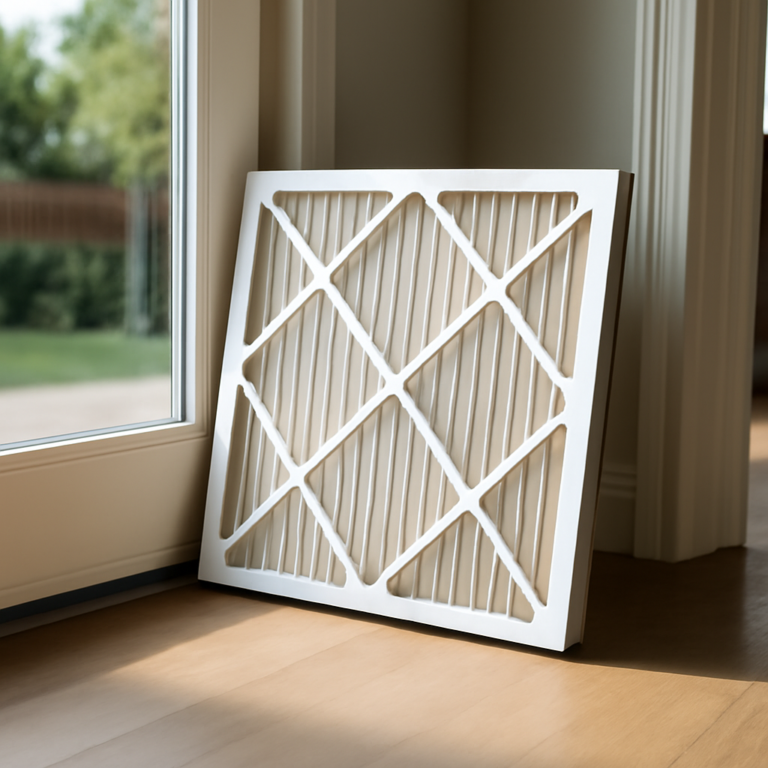
Most units reach a useful CADR with a HEPA filter. A true HEPA filter captures at least 99.97% of particles at 0.3 microns, the hardest size to catch; “HEPA-type” or “HEPA-like” on a box is marketing language with no fixed standard behind it. Our explainer on HEPA air purifiers covers that difference plus what HEPA cannot fix, and the broader HEPA filter guide compares HEPA in purifiers, vacuums and HVAC systems. For gases and odors, a particle filter does nothing; you need activated carbon, and EPA notes there is no widely used rating system for gas removal, so a thicker bed of carbon is the best rough proxy.
Where the unit sits matters almost as much as what is inside it. A purifier jammed behind a couch or in a corner moves far less air than its rating suggests, and one unit cannot clean a whole floor through closed doors. See where to place an air purifier for room-by-room spots. EPA also notes that higher fan speeds and longer run times filter more air. If the real complaint is dust on every surface, start with why is my house so dusty?, because leaky return ducts, a missing filter or dry winter air can matter more than any purifier.
Choosing a purifier by room and problem
Once you know the CADR you need, the use case narrows the field. Our roundup of air purifiers compared by room size is the starting point and lists rated CADR against the room it suits; the HEPA air purifier roundup separates true HEPA units from “HEPA-type” ones. For open living areas, the large-room purifier comparison focuses on high-CADR models, while bedrooms are a noise problem as much as a filtration one, which is why the bedroom purifier roundup looks at sound levels on low speed.
Allergy and pet households want strong particle capture and sealed housings. Compare options in the air purifiers for allergies, cat allergies and pet hair and odor roundups, and pair any purifier with a sealed-filter vacuum from our HEPA vacuum comparison, since dander settles into carpet faster than a machine can pull it from the air. Basements bring their own issue: the basement purifier roundup covers cool, musty spaces, but a musty basement is a moisture signal first. EPA states directly that portable air cleaners and HVAC filters cannot solve mold problems, which is why our air purifiers for mold page and the mold air purifier explainer both send readers to the mold inspection guide and our humidity control guide before any purchase. The same honesty applies to radon: do air purifiers help with radon? explains why a gas that comes up from the soil needs testing and mitigation, not filtration.
If you want filtration everywhere rather than room by room, look at the whole-house air purifier options (media filter cabinets and duct-mounted HEPA units), which only work while the blower runs.
Furnace filters, MERV ratings and airflow
A forced-air system already moves every cubic foot in the house through one filter slot, so the furnace filter is the cheapest whole-home air cleaner most people own. MERV (Minimum Efficiency Reporting Value) comes from an ASHRAE test method and describes how well a filter catches particles between 0.3 and 10 microns. Roughly, MERV 8 catches dust, lint and pollen; MERV 11 adds a meaningful share of fine particles; and MERV 13 captures at least half of the 0.3 to 1 micron range. EPA’s advice is to choose at least MERV 13 or as high a rating as your system fan and filter slot can accommodate, and to ask an HVAC technician if you are unsure. Our MERV rating guide explains how to step up without choking airflow, which can cause short cycling, frozen AC coils or a strained blower; the furnace short cycling guide covers what that looks like.
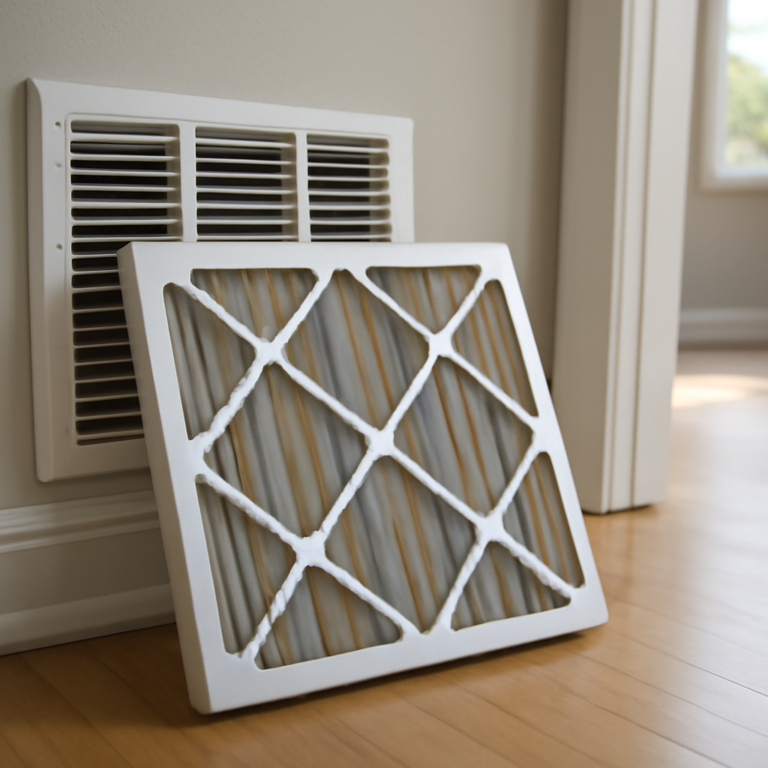
Fit matters as much as rating. A filter marked 16x25x1 is often a fraction of an inch smaller in real life, and gaps around the edge let air bypass the media entirely; furnace filter sizes explains nominal versus actual dimensions. For change intervals and costs, read furnace filter replacement, and compare common pleated, high-MERV and media options in our HVAC and furnace filter roundup. Typical costs run from a few dollars for a basic 1-inch pleated filter to roughly $20 to $60 for a 4- or 5-inch media filter, which usually lasts longer and restricts airflow less. Purifier filters have their own schedule: how often to change air purifier filters breaks down HEPA, carbon and pre-filter intervals, and replacement filters often cost $30 to $100 or more a year per unit, a running cost worth checking before buying.
Do air filters help with dust? They help with airborne dust but not with dust that has already settled, and they only filter while the blower runs, which EPA notes is often less than a quarter of the time in heating and cooling seasons. And UV lamps in ductwork mainly keep coils and drain pans cleaner rather than cleaning room air; UV light for HVAC covers what they do and why some lamp types can produce ozone. For mold-specific filter questions, see air filters for mold, and for the furnace itself, the heating and cooling guide.
Ionizers, ozone generators and other add-ons
Some air cleaners use electricity rather than filters. Ionizers charge particles so they stick to walls, floors and furniture or to a collector plate; EPA notes they may remove small particles such as those in tobacco smoke but do not remove gases or odors and may be relatively ineffective against larger particles such as pollen and dust allergens. Our explainer on what ionizers do covers the details. The bigger concern is ozone. EPA describes ozone as a lung irritant and warns that electrostatic precipitators, ionizers, some UV lamps and plasma units can emit it. EPA also points shoppers to the California Air Resources Board, which regulates ozone emissions from air cleaners sold in California and lists devices that meet its limit, and to the AHAM certification program; checking for CARB certification is a reasonable screen even if you live elsewhere.
Ozone generators are a different category: they make ozone on purpose and are often sold as odor machines. EPA’s review found that at concentrations that do not exceed public health standards, ozone is generally ineffective at controlling indoor pollution, and that some generators can exceed those standards even when used as directed. Our ozone generator guide explains why they are not safe in occupied rooms.
Wildfire smoke and tobacco smoke
Smoke is mostly fine particles plus a mix of gases, so it calls for both HEPA and carbon. Along the Colorado Front Range, summer smoke from western fires can push outdoor PM2.5 into unhealthy ranges for days at a time. EPA’s wildfire guidance is to prepare before the season: pick a room to serve as a clean room, have a properly sized portable air cleaner ready, upgrade the furnace filter to the highest MERV your system handles, and close windows and fresh-air intakes during smoke events. Our air purifiers for wildfire smoke roundup focuses on high-CADR units and filter cost, since heavy smoke loads filters quickly. Pair a purifier with a monitor from our air quality testing guide so you can see whether indoor PM2.5 actually drops.
Tobacco and cannabis smoke are harder because the gas phase and residue on surfaces linger. The purifiers for smokers roundup prioritizes heavy carbon beds, but no purifier makes indoor smoking safe for others in the home. If you bought a house that smells of smoke, smoke smell in house covers cleaning, sealing and repainting for cigarette, wildfire and fireplace odors.
Odors: find and remove the source first
Every odor is a source sitting somewhere, and filtration only treats the part that floats. Before buying anything, find it. A musty smell points to moisture and possibly mold; read musty odor and the smell of mold, and if it rises from below the floor, crawl space smells musty. Pet accidents soak into pad, subfloor and drywall, so cat urine smell in house explains enzyme treatment, sealing and when material has to come out. A skunk under the porch or in the crawl space needs exclusion and cleanup rather than masking, as skunk odor in house describes. A rotten-egg or sulfur smell near a gas appliance is not an odor project at all: leave and call the utility, per our gas leak smell guide.
Once the source is gone, products can deal with what remains. The carbon air purifiers for odors roundup covers units with substantial carbon, and the odor eliminator comparison sorts enzyme cleaners, absorbers and sprays by odor source. Air fresheners mask rather than remove, and EPA lists air fresheners among household sources of volatile organic compounds, so the air freshener roundup leans toward low-fragrance and absorbent options. Lingering kitchen and bathroom smells usually mean weak exhaust, which the ventilation guide covers.
Which device for which problem
A quick guide to matching the tool to the problem. Costs are typical ranges, not quotes.
| Problem | What helps | What it will not fix | Typical cost |
|---|---|---|---|
| Pollen, dander, fine dust | True HEPA purifier sized by CADR; MERV 11-13 furnace filter | Dust already settled on surfaces | $100-$400 unit; $30-$100/yr filters |
| Wildfire smoke | High-CADR HEPA + carbon unit in a clean room; highest MERV the system allows | Smoke entering through open windows or fresh-air intakes | $150-$500 unit; filters load fast |
| Cooking, pet or smoke odors | Heavy activated carbon filter after removing the source | Odor soaked into subfloor, drywall or fabric | $150-$500 unit |
| Musty smell or visible mold | Fix moisture, clean mold; filtration only as a supplement | The moisture source or the growth itself | Varies with the repair |
| Radon | Testing and a mitigation system | Purifiers do not meaningfully lower radon | See our radon guides |
| Whole-home particles | Media filter cabinet or HVAC-mounted cleaner | Particles while the blower is off | $20-$60 media filter; installed units vary |
| “Odor machines” | Avoid ozone generators in occupied rooms | Ozone at safe levels does little to pollutants | Not recommended |
References
- What is a MERV rating? — U.S. Environmental Protection Agency
- What are ionizers and other ozone generating air cleaners? — U.S. Environmental Protection Agency
- Ozone Generators that are Sold as Air Cleaners — U.S. Environmental Protection Agency
- Wildfires and Indoor Air Quality (IAQ) — U.S. Environmental Protection Agency
Frequently asked questions
What size air purifier do I need for my room?
Match the clean air delivery rate (CADR) to the room. EPA's sizing chart works out to a minimum CADR of about two-thirds of the floor area in square feet for an 8-foot ceiling, so a 300 sq ft room needs roughly 195 CFM. Choose more for high ceilings, open layouts or heavy smoke.
Is a HEPA-type filter the same as true HEPA?
No. True HEPA filters capture at least 99.97% of particles at 0.3 microns. HEPA-type, HEPA-like and similar labels have no fixed standard, so look for a stated true HEPA filter and a published CADR instead of the marketing term.
Will a higher MERV furnace filter hurt my HVAC system?
It can if the blower and filter slot are not designed for it. EPA suggests at least MERV 13 or as high as your system can accommodate. Watch for reduced airflow, short cycling or icing coils, and ask an HVAC technician if you are unsure. Deeper 4- or 5-inch media filters usually restrict airflow less.
Are ionizers and ozone generators safe?
EPA warns that ozone is a lung irritant and that ozone generators can exceed health standards even when used as directed. Some ionizers and electronic cleaners also emit ozone. Avoid devices that make ozone on purpose and look for units certified by the California Air Resources Board for low ozone emissions.
Can an air purifier get rid of odors in my house?
Only partly. A purifier with a substantial activated carbon filter can reduce lingering airborne odors, but it cannot remove the source. Find and clean or remove the cause first, such as pet urine in the subfloor, smoke residue on walls or moisture behind a musty smell.
Not sure whether a smell or dust problem in your home is a filtration issue or something an inspector should look at? Contact our team and we can point you in the right direction.
Smoke & odors

Best Air Freshener for Home (2026): 7 Picks Compared
Best Odor Eliminators (2026): 7 Picks Compared by Odor Source

Best Air Purifier for Smokers (2026): 6 Carbon + HEPA Picks

Best Air Purifier for Smoke (2026): 6 Picks for Wildfire Season
Best Air Purifier for Odors (2026): 6 Carbon Picks Compared

Skunk Odor in House: Crawl Spaces, Vents and Cleanup
Air purifier picks
Best Air Filter (2026): 5 HVAC and Furnace Filters Compared

Best Air Purifier for Basement (2026): 6 Picks Compared
Best Air Purifier for Large Room (2026): 6 Picks by Real CADR
Best Air Purifier for Bedroom (2026): 6 Quiet Picks Compared
Best Air Purifier for Cat Allergies (2026): 6 Picks Compared
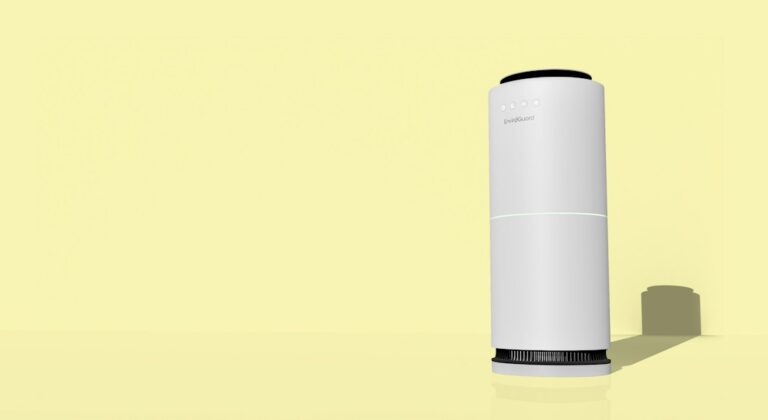
Best Air Purifier for Allergies (2026): 6 HEPA Picks Compared
Filters & MERV
How Often to Change Air Purifier Filters: HEPA, Carbon, Pre

Do Air Filters Help With Dust? What Filters Can and Cannot Do
Furnace Filter Sizes: Reading Nominal vs Actual Dimensions
MERV Ratings: Choosing a Furnace Filter Without Choking Airflow

UV Light for HVAC: Coil Lamps, Ozone and What They Do
HEPA Filter: Purifiers, Vacuums and HVAC Filters Explained
How purifiers work
Why Is My House So Dusty? Causes, Checks and Fixes

Where to Place an Air Purifier: Best Spots Room by Room
What Do Ionizers Do? How They Work, Ozone Risk and HEPA

Do Air Purifiers Work? What EPA Research Says They Can Do
How to Choose an Air Purifier: CADR, HEPA and Room Size

HEPA Air Purifiers: CADR, Room Size and What They Can’t Fix
Browse all 32 air purifiers, filters & odors guides » Back to the Indoor Air Quality at Home hub