Do Air Filters Help With Dust? What Filters Can and Cannot Do
Air filters do help with dust, but only with the dust that is floating in the air when it passes through the filter. A good furnace filter or a HEPA air purifier can noticeably cut down the fine haze that drifts through a room and settles on furniture, yet neither will clean the dust already lying on shelves, carpets and ceiling fans, and neither can keep up if the house keeps generating or letting in more. The honest answer to “do air filters help with dust” is that filtration is one part of a three-part plan: control the sources, ventilate sensibly, then filter what is left. This guide explains what household dust is, how furnace filters and portable air purifiers capture it, what MERV and CADR ratings mean, what typical upgrades cost and what to check when dust keeps coming back. It summarizes U.S. EPA guidance current as of 2026; anyone with asthma or allergy symptoms should talk with a physician about their own triggers.
Part of our Heating, Cooling & Ventilation guide — start there for the full picture →
The Short Answer: Yes for Airborne Dust, No for Settled Dust
Dust behaves in two very different ways. Fine particles stay suspended for long periods and move with the air, which gives a filter a chance to catch them. Heavier particles, such as sand, fibers and larger skin flakes, fall out of the air within minutes and settle on surfaces. Filters can only work on the first group.
| Dust situation | Will a better filter help? | What actually fixes it |
|---|---|---|
| Haze visible in sunbeams, dust that reappears on furniture within a day or two | Often yes, noticeably | Higher-MERV furnace filter, more fan run time, a HEPA purifier in the main room |
| Thick dust on floors, rugs and baseboards | Only slightly | Vacuuming with a HEPA vacuum, damp mopping, doormats, shoes off at the door |
| Dust after remodeling or drywall sanding | Helps, but filters clog fast | Containment during work, thorough cleanup, frequent filter changes afterward |
| Dust blowing out of supply registers | Partly | Check for duct leaks, a poorly fitting filter or construction debris in ducts |
| Dust plus a musty smell or dark spots on vents | No | Investigate moisture and possible mold |
That distinction explains why so many people feel disappointed after buying an expensive filter. The filter is doing its job on the air, but the floor and furniture are still collecting what falls before the air ever reaches the return grille.
What Household Dust Is Made Of
House dust is a mix, and the mix differs from home to home. Common ingredients include outdoor soil tracked in on shoes, pollen, fibers from carpets and clothing, pet dander, skin flakes, insect debris, dust mite material, cooking particles and soot. Along the Front Range, dry, windy weather and nearby construction can add a lot of fine outdoor soil, and wildfire smoke adds very fine particles in some summers.
The EPA’s Guide to Air Cleaners in the Home notes that indoor pollutants come both from outdoors and from indoor activities such as cooking, cleaning, building materials, consumer products and furnishings, and that common indoor contaminants include fine and coarse particulate matter, mold and pollen. It also notes that most people spend about 90 percent of their time indoors, which is why indoor dust deserves attention.
Some dust carries more concern than the rest. In homes built before 1978, dust from deteriorating lead paint can be a hazard, especially for young children, and it calls for testing and careful cleanup rather than just filtration. Our guide to lead paint dust explains the warning signs and the lead dust test article covers how wipe samples work.
Best Air Filter: our top 3 picks
| Product | Best for | Key features | Price | Buy |
|---|---|---|---|---|
| Filtrete 20x25x1 MERV 11 | Best overall 1-inch filter |
| $22.99as of Oct 20, 2026 1:21 am GMT+0000 | Buy now →Check current price |
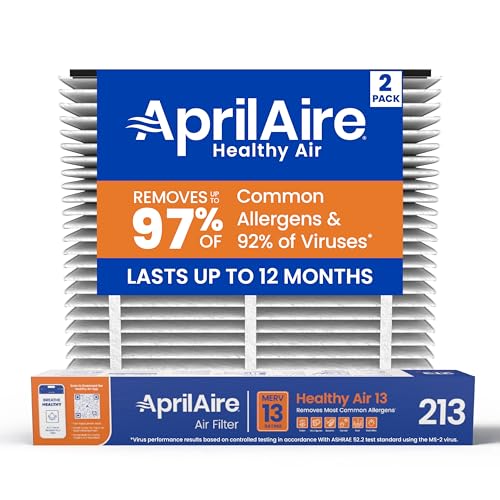
| AprilAire 213 MERV 13 | Wildfire smoke, 4-inch cabinets |
| $106.99as of Oct 20, 2026 1:21 am GMT+0000 | Buy now →Check current price |
| Amazon Basics 20x20x1 MERV 11 | A year of filters in one box |
| $35.87as of Oct 20, 2026 1:21 am GMT+0000 | Buy now →Check current price |


Prices are Amazon’s listed prices as of the time shown and change often; check Amazon for today’s price. As an Amazon Associate we earn from qualifying purchases.
How Furnace and HVAC Filters Capture Dust
A central forced-air system pulls air from the house through return grilles, passes it through a filter, heats or cools it, and pushes it back out through supply registers. Every pass is a chance to remove particles. The catch is that the filter only works when the blower is running.
EPA points out that HVAC systems in most homes run only when heating or cooling is needed, often less than 25 percent of the time during heating and cooling seasons. In spring and fall, when the system may hardly run at all, even an excellent filter does little. Setting the thermostat fan to “on” or using a circulate setting increases filtration time, though it also adds electricity use.
What MERV ratings mean
Furnace filters are commonly rated by MERV, the Minimum Efficiency Reporting Value. EPA’s explainer on what a MERV rating is says MERV reports a filter’s ability to capture particles between 0.3 and 10 microns, based on an ASHRAE test method, and that the higher the MERV, the better the filter is at trapping specific particle sizes.
| Filter rating (per EPA’s MERV table) | Capture of large particles (3–10 µm) | Capture of fine particles (0.3–1 µm) |
|---|---|---|
| MERV 1–4 (basic fiberglass) | Less than 20% | Not rated |
| MERV 8 | At least 70% | Not rated |
| MERV 11 | At least 85% | At least 20% |
| MERV 13 | At least 90% | At least 50% |
| HEPA (not a MERV grade) | — | At least 99.97% at 0.3 µm |
The cheap, see-through fiberglass filters many homes still use are designed mainly to protect the blower and coil, not to clean the air. Moving to a pleated MERV 8 filter is a meaningful step for visible dust. EPA’s general advice is to choose at least MERV 13, or the highest rating the system fan and filter slot can accommodate.
Fit and airflow matter as much as rating
A high-rated filter that leaves gaps around its edges lets dusty air bypass it entirely. EPA advises making sure the filter fits snugly so air does not leak around it and that it does not need to be bent or crushed to fit. Filters typically come in thicknesses from 1 to 5 inches. Thicker media filters hold more dust and usually restrict airflow less than a thin filter of the same rating.
EPA says most furnaces and HVAC systems can accommodate a MERV 13 filter without problems, provided the filter is replaced frequently, but notes it can be hard to tell for a given system and suggests consulting an HVAC technician. Warning signs that a filter is too restrictive include weak airflow at registers, a whistling filter slot, or a filter that bows inward.
How often to change the filter
EPA notes that manufacturers typically recommend replacement every 60 to 90 days, and that if filters look heavily soiled at replacement, they should be changed more often. Homes with pets, recent remodeling, dirt roads nearby or heavy wildfire smoke often need shorter intervals. Writing the install date on the filter frame takes the guesswork out of it.
Do Portable Air Purifiers Help With Dust?
A portable air purifier with a HEPA filter is the other main tool. It runs continuously in one room, regardless of whether the furnace is on, so it can make a visible difference in a bedroom or living room that the central system cannot. EPA describes portable air cleaners as designed to filter the air in a single room or area.
The rating to look at is CADR, the clean air delivery rate. EPA explains that some packaging lists separate CADRs for tobacco smoke, dust and pollen, which represent small, medium and large particles. For a dust complaint, the dust CADR is the relevant number, and for the finest particles, the smoke CADR is the best indicator. EPA’s sizing chart, which assumes 8-foot ceilings, suggests a minimum CADR of about 195 cfm for a 300-square-foot room, roughly two-thirds of the floor area as a rule of thumb.
Our guide on how to choose an air purifier covers room sizing, noise and filter costs, and it pairs well with our best air purifier roundup when it is time to compare models.
Source Control and Ventilation Come First
EPA’s guidance on air cleaners and air filters in the home is direct: the most effective ways to improve indoor air are to reduce or remove the sources of pollutants and to ventilate with clean outdoor air, and filtration is an effective supplement to those steps. For dust, source control is practical and cheap:
- Stop it at the door. Use doormats inside and out and take shoes off indoors. Tracked-in soil is a large share of floor dust in many homes.
- Vacuum with a sealed HEPA vacuum. A leaky vacuum blows fine dust back into the room.
- Dust with a damp cloth. Dry feather dusters mostly relaunch dust into the air.
- Wash bedding weekly in hot water. This reduces dust mite material where people spend the most hours.
- Reduce clutter and soft surfaces. Heavy drapes, piles of fabric and wall-to-wall carpet hold and release dust.
- Seal the house sensibly. Gaps around doors and windows let outdoor dust in on windy Front Range days.
- Use the range hood and bath fans. Cooking produces fine particles, and a hood vented to the outdoors removes them at the source. Our article on bathroom fans with lights covers ventilation fan basics.
Front Range Dust Factors
Several local conditions make dust a bigger complaint here than in humid regions:
- Dry air. Low humidity lets fine particles stay airborne and makes static cling pull dust onto screens and plastic surfaces. Very dry air also makes some fabrics shed more fibers.
- Wind and open ground. Chinook winds along the foothills and spring gusts on the plains carry soil into homes through any gap. Newer subdivisions with bare lots and active construction add more.
- Wildfire smoke. Smoke particles are much finer than ordinary house dust. EPA’s guidance on wildfires and indoor air quality notes that portable air cleaners and high-efficiency HVAC filters can remove smoke particles and that the two can be used together.
- Long heating seasons. Months of forced-air heating mean more filter run time in winter, which is good for filtration but also means filters load up faster.
- Unfinished basements and crawlspaces. Return ducts that leak in these spaces can pull in dusty, sometimes earthy-smelling air.
A Practical Dust Plan, Step by Step
Rather than buying everything at once, work through these steps in order and judge results after each one:
- Check the existing filter. Note its size, rating and condition. A basic fiberglass filter or a filter that does not fit snugly is the first thing to change.
- Upgrade to a pleated filter. Move to MERV 8 at a minimum, and to MERV 13 if the system handles it. Mark the date on the frame.
- Increase filtration time. Try the circulate or fan-on setting for a few weeks in shoulder seasons when the system rarely runs.
- Fix entry points. Add doormats, take shoes off and weatherstrip leaky exterior doors.
- Change cleaning tools. Switch to a sealed HEPA vacuum and damp microfiber cloths.
- Add a portable HEPA purifier in the bedroom or the room where dust bothers people most, sized by CADR.
- Reassess after a month. If dust is still heavy, look at duct leaks, the filter cabinet and outside sources with a professional.
Working through the list this way shows which step actually made the difference, so money goes to the parts of the problem that matter in that particular house.
Typical Costs of Dust-Control Upgrades
Costs vary with brand, size and local labor, so these are typical national ranges rather than quotes.
- Pleated MERV 8 to MERV 13 furnace filters: typically from under $10 to around $40 each for common 1-inch sizes, with 4- and 5-inch media filters costing more per filter but lasting longer.
- Adding a media filter cabinet to an existing furnace: usually a few hundred dollars installed, depending on the contractor and ductwork.
- Portable HEPA air purifier: roughly $100 to $400 for a bedroom or living-room unit, plus replacement filters.
- HEPA vacuum: a wide range, from budget models to several hundred dollars.
- Duct sealing: varies widely with access and scope; leaks in an unconditioned attic or crawlspace can pull in dusty air.
The main cost drivers are the size of the home, how many rooms need a portable unit, how often filters must be changed, and whether the HVAC system needs modification to accept a thicker filter.
What About Duct Cleaning?
Duct cleaning is often marketed as a dust fix. EPA’s page on whether you should have your air ducts cleaned states that knowledge about duct cleaning is in its early stages, that a blanket recommendation cannot be offered, and that duct cleaning has never been shown to actually prevent health problems. Situations where it may make sense include ducts with substantial visible mold growth, vermin infestation, or ducts clogged with excessive dust and debris that are actually releasing particles into the home.
If dust puffs from supply registers when the blower starts, the more common causes are a filter that does not seal, a missing filter, or leaks in return ducts that pull air from an attic, crawlspace or wall cavity. Fixing those usually does more than cleaning.
Dust or mold on vents?
Dark buildup on supply registers is usually dust, sometimes stuck to condensation in summer. Our article on telling black mold from dust on air vents explains how to tell them apart, and the guide on whether dust causes mold covers when dust becomes food for mold growth. EPA notes that air cleaners and furnace filters do not solve mold problems, because mold is caused by moisture.
When to Call an HVAC Pro or Inspector
Better filters and cleaning habits fix most dust complaints. Some patterns point to a problem worth having a professional evaluate:
- Dust returns within a day or two despite a good filter and regular cleaning
- Visible dust trails around supply registers or along carpet edges near walls, which can indicate air leakage
- A filter slot without a door, gaps around the filter, or a filter that has been installed backward
- Weak airflow, whistling, or a furnace that overheats after a filter upgrade
- Dust with a musty odor, or after water damage
- An older home where dust may include lead from deteriorating paint
An HVAC technician can check filter fit, blower settings and duct leakage. During a home purchase, an inspector looks at the furnace, filter and visible ductwork, and our heating, cooling and ventilation hub gathers related guides on furnaces, filters and fans.
See Our Picks
When filtration is the right next step, our roundups compare current models by room size, noise and filter cost:
- Best HEPA air purifiers for fine dust and smoke
- Best air purifiers for allergies for dust, pollen and pet dander
References
- Guide to Air Cleaners in the Home — U.S. Environmental Protection Agency
- What Is a MERV Rating? — U.S. Environmental Protection Agency
- Air Cleaners and Air Filters in the Home — U.S. Environmental Protection Agency
- Should You Have the Air Ducts in Your Home Cleaned? — U.S. Environmental Protection Agency
- Wildfires and Indoor Air Quality — U.S. Environmental Protection Agency
Frequently asked questions
Do air filters help with dust?
Yes, for dust that is airborne when the air passes through the filter. A pleated MERV 8 to MERV 13 furnace filter or a HEPA air purifier can reduce the fine dust that settles on furniture, but neither removes dust already on surfaces, so regular cleaning is still needed.
What MERV rating is best for dust?
A pleated MERV 8 filter is a clear step up from basic fiberglass for visible dust. EPA suggests at least MERV 13, or the highest rating your system fan and filter slot can handle, and recommends asking an HVAC technician if you are unsure.
Why is my house so dusty even with a new filter?
Common reasons include a filter that does not fit snugly, a blower that rarely runs, leaky return ducts pulling in attic or crawlspace air, tracked-in soil, and dry dusting that relaunches particles. Fixing fit and leaks often matters more than buying a higher rating.
Should the furnace fan run constantly to reduce dust?
Running the fan more increases how much air passes through the filter, which can reduce airborne dust. EPA notes that HVAC filters only work while the system runs, but longer run times also raise electricity costs, so many homes use a circulate setting instead of continuous operation.
Does duct cleaning reduce dust?
Sometimes, but EPA says a blanket recommendation cannot be offered and that duct cleaning has never been shown to prevent health problems. It may make sense when ducts are clogged with debris, have visible mold, or have vermin.
Dust that keeps coming back can point to duct leaks or ventilation problems in a Front Range home. Reach out to our team to connect with a local inspector who can take a closer look.