Lead Dust Test Kit: What Homeowners Need to Know
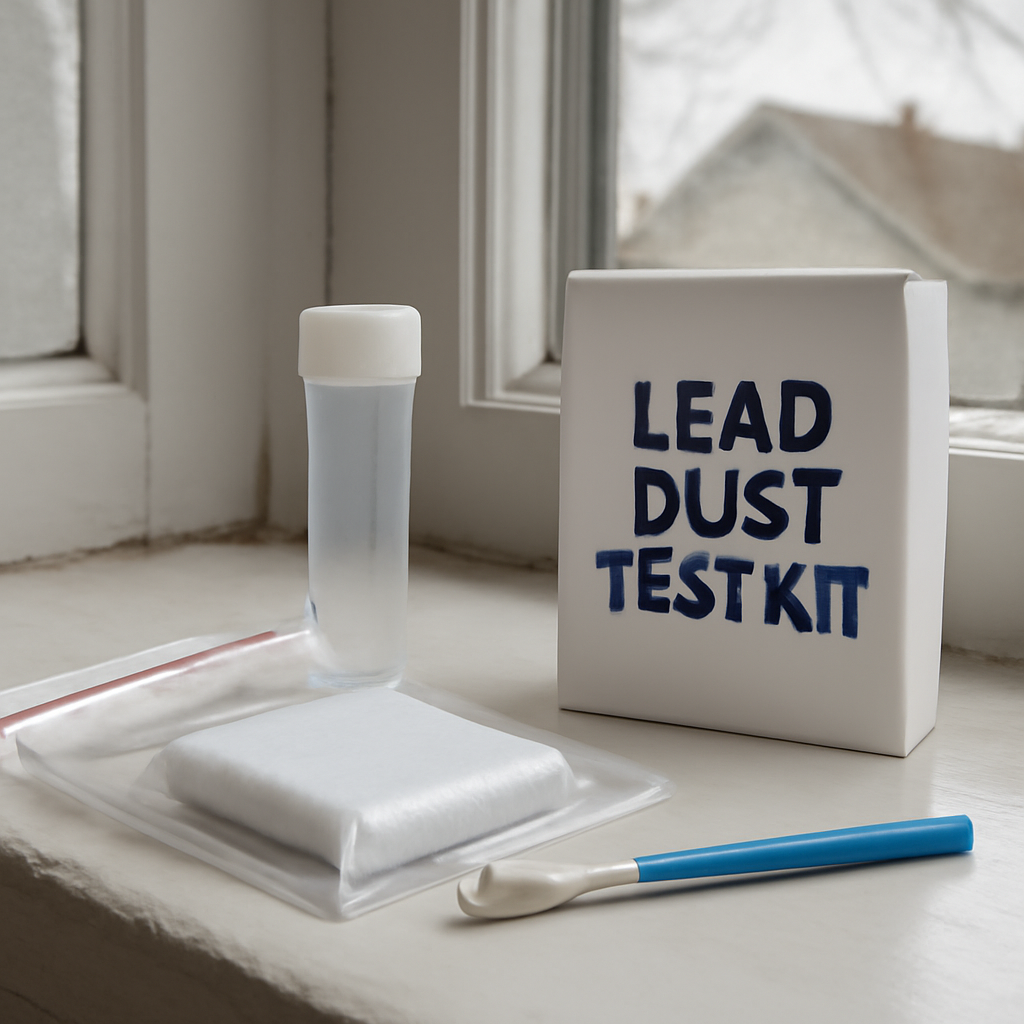
Lead dust is one of the most common and most overlooked ways children are exposed to lead in older homes. It settles on floors and windowsills, sticks to little hands, and ends up in mouths during normal play. A lead dust test kit lets homeowners collect wipe samples from those surfaces and check them against EPA dust-lead thresholds. This guide summarizes EPA, CDC, and HUD guidance current as of 2026 for Front Range homeowners. It is educational only; consult a certified lead professional for clearance decisions and a physician about any health concerns.
Asbestos or biohazard concern? Speak with a certified contractor.
📞 Call (877) 742-8496What Is a Lead Dust Test Kit?
A lead dust test kit is a sampling product used to detect lead in settled household dust, the fine, often invisible particles that collect on floors, windowsills, and window troughs. Most reliable kits work through wipe sampling: you wipe a measured area with a special pre-moistened cloth, seal it, and send it to a laboratory that reports the amount of lead per square foot of surface.
This is different from a spot test that checks whether a painted surface contains lead. Dust testing measures the hazard that actually reaches children, namely lead that has migrated from deteriorating paint or renovation work onto surfaces they touch and crawl across. A wall can contain lead paint that is perfectly intact and sealed, posing little immediate risk, while a windowsill that grinds paint into dust every time the window opens can be a real hazard. Because lead dust is the exposure pathway that matters most for young children, it is a central focus of our broader guide to asbestos and lead in pre-1978 housing.
How Wipe Sampling Works
Proper dust-wipe sampling follows a defined method so the lab result can be compared to a standard. The basic process:
- Define the area — mark a measured area, typically one square foot, using a template
- Wipe systematically — use the specialized wipe in overlapping S-shaped strokes in two directions
- Seal and label — place the wipe in the provided container and note the location and area sampled
- Send to a lab — an accredited laboratory measures lead and reports micrograms per square foot
The result only means something when the area is measured accurately, because the standard is expressed per square foot. Guess the area and the number becomes meaningless. This is why mail-in lab kits are far more dependable than instant color-change products for dust. Homeowners often pair dust testing with paint screening using a home lead test kit to understand both the source of the lead and where it is spreading.
EPA Dust-Lead Thresholds
The EPA sets dust-lead hazard standards and clearance levels that have been tightened over the years as the science has evolved. Homeowners should treat the published EPA values as the benchmark rather than memorizing a fixed figure, because the agency has revised them downward over time. The trend has consistently moved toward lower numbers for floors and windowsills, reflecting the understanding that no level of lead exposure is considered safe for children.
What matters for a homeowner is the principle, not a specific microgram figure that may be revised again: a lab result above the current EPA hazard standard for floors or windowsills indicates a dust-lead hazard that should be addressed. Windowsills are typically allowed a higher number than floors because floors are where crawling children have the most contact. Because the exact numbers can change, check the current EPA standard when interpreting your result, and lean on a certified professional for clearance after any renovation.
When a Lead Dust Test Makes Sense
Dust testing is most useful in specific situations rather than as a routine ritual:
- After renovation or repair in a pre-1978 home, to confirm cleanup was adequate
- When a child has an elevated blood lead level and you are hunting for the source
- Before moving young children into an older home
- When paint is chipping, peeling, or has been sanded
- On windowsills and troughs, where friction wears paint into dust
Renovation is a frequent trigger because disturbing old paint creates dust that ordinary cleaning leaves behind. Contractors working in pre-1978 homes must follow lead-safe practices under the rules explained in our guide to RRP requirements, and dust clearance testing is the independent check that those practices actually worked. A contractor’s word that the area is clean is not the same as a lab confirming it.
Limits of Consumer Test Kits
Consumer kits are a useful screening tool, but they have real limitations that homeowners should understand before relying on one. Instant color-change kits designed for paint are not reliable for measuring the low dust concentrations that matter, and they can give false reassurance. Improper sampling, such as guessing the area, contaminating the wipe with your fingers, or wiping the wrong surface, can produce misleading results in either direction.
For decisions that carry weight, post-renovation clearance, a child’s elevated blood lead level, or a real estate dispute, a certified lead professional collecting samples for an accredited lab is the dependable route. Think of a DIY dust kit as an early-warning screen. A clean result is reassuring, but a concerning result or a high-stakes situation calls for professional sampling and interpretation that will hold up if challenged.
What to Do If You Find Lead Dust
If a test shows lead dust above the EPA standard, do not dry sweep or vacuum with an ordinary vacuum, because that lifts the fine dust into the air and spreads it. Instead:
- Wet-wipe hard surfaces with a household cleaner and disposable cloths
- Use a HEPA vacuum for floors and carpets, which captures fine particles
- Keep children away from the affected area until it is cleaned and retested
- Identify and address the source, usually deteriorating paint or recent renovation dust
- Wash children’s hands and toys frequently, especially before meals
Cleaning without fixing the source is a temporary measure, because a friction surface like a window will keep generating dust. If a child may have been exposed, contact your physician about a blood lead test. Our guide to testing for lead poisoning at home explains how dust testing fits alongside blood testing in a complete picture.
Dust Testing in a Front Range Context
Older neighborhoods across Denver, Boulder, and Colorado Springs include plenty of pre-1978 homes where lead paint is part of the building’s history. For families moving into one of these homes with young children, a dust-wipe baseline before move-in and a clearance test after any painting or remodeling are practical, affordable steps. The cost of a lab-analyzed dust kit is modest compared with the lifelong consequences of childhood lead exposure, which makes testing one of the higher-value precautions a parent in an older home can take.
Where to Take Your Dust Samples
Where you wipe matters as much as how you wipe, because lead dust does not settle evenly across a home. The highest-priority surfaces are the ones children touch and the ones where paint grinds into dust through friction:
- Floors — especially in play areas and near entryways where dust tracks in
- Interior windowsills — the flat ledge where dust accumulates
- Window troughs — the channel where the sash slides, a friction point that generates dust
- Areas near recent renovation — where sanding or demolition disturbed paint
Windows deserve special attention because opening and closing a painted sash grinds the paint into fine dust that collects in the trough and on the sill. A floor sample shows what a crawling child contacts directly, while a window sample reveals an active source. Sampling several locations gives a fuller picture than a single wipe, since a clean floor does not rule out a dusty windowsill a few feet away. If you are screening before moving young children into a home, prioritize the rooms where they will sleep and play.
Lead Dust Versus Lead Paint Testing
It is easy to confuse the two kinds of lead testing, but they answer different questions, and a complete picture often needs both. Paint testing asks whether a surface contains lead. Dust testing asks whether lead is actually reaching the surfaces people touch. A home can have lead paint that is fully intact and sealed under newer coats, posing little immediate hazard, while another home with less lead paint but deteriorating, friction-worn surfaces has a real dust problem.
For decision-making, dust testing usually tells you more about present-day risk, because it measures exposure rather than mere presence. Paint testing helps you locate and prioritize the source once a dust hazard is confirmed. Used together, paint testing finds where the lead is and dust testing shows whether it is escaping into the living environment. A certified risk assessor combines both, plus a visual assessment of paint condition, to build a complete hazard profile rather than relying on a single number from one method.
When to Call a Professional
Engage a certified lead inspector or risk assessor for post-renovation clearance, when a child has elevated blood lead, when you need legally defensible results, or when a DIY test comes back concerning. A professional collects samples to protocol, interprets them against current EPA standards, and can pinpoint the source rather than just confirming a problem exists. For Front Range families in older homes, that combination of accurate sampling and source control is what actually reduces a child’s exposure over the long term.
What Your Dust Test Result Tells You
When your lab report comes back, it lists lead in micrograms per square foot for each surface you sampled, which you compare against the current EPA hazard standard for that surface type. A result below the standard suggests the area is not currently a dust-lead hazard, while a result above it indicates lead is reaching surfaces people touch and should be addressed. Because floors and windowsills have different standards, read each line against the right benchmark rather than applying one number to everything. A single elevated windowsill alongside clean floors still points to an active source worth fixing, since a child who touches that sill carries the lead elsewhere. The report is most useful when you treat it as a map of where lead is escaping, guiding both cleanup and the search for the underlying paint source.
Building a Lead-Safe Routine in an Older Home
A single dust test is a snapshot, but families living in older homes benefit from treating lead-dust control as an ongoing habit rather than a one-time event. Friction surfaces like windows keep generating dust as long as lead paint remains, so cleaning and monitoring become part of regular home care, especially where young children live.
Simple practices that keep dust exposure low over time include:
- Wet-mopping hard floors regularly rather than dry sweeping
- Wiping windowsills and troughs with disposable cloths during cleaning
- Washing children’s hands before meals and naps, and cleaning toys often
- Using a HEPA vacuum on carpets and upholstery
- Addressing chipping or peeling paint promptly with lead-safe methods
- Retesting after any repair or renovation that disturbed painted surfaces
These habits do not replace fixing the underlying source, but they meaningfully reduce day-to-day exposure while you plan larger repairs. For Front Range families in pre-1978 homes, pairing periodic dust-wipe checks with this kind of routine turns lead from an invisible worry into something you actively manage. The goal is to keep the dust that children actually contact as low as possible, and consistent cleaning combined with occasional testing is a practical, affordable way to do that.
References
- Lead Dust and Soil Hazard Standards — U.S. Environmental Protection Agency
- Preventing Lead Exposure in Children — Centers for Disease Control and Prevention
- Lead Hazard Control and Healthy Homes — U.S. Department of Housing and Urban Development
- Lead Exposure and Prevention Resources — Colorado Department of Public Health and Environment
If you are on the Front Range and want professional dust-wipe clearance after a renovation or to track down a lead source, contact us here for a vetted local referral.