Water Lead Test Kit: What Homeowners Need to Know
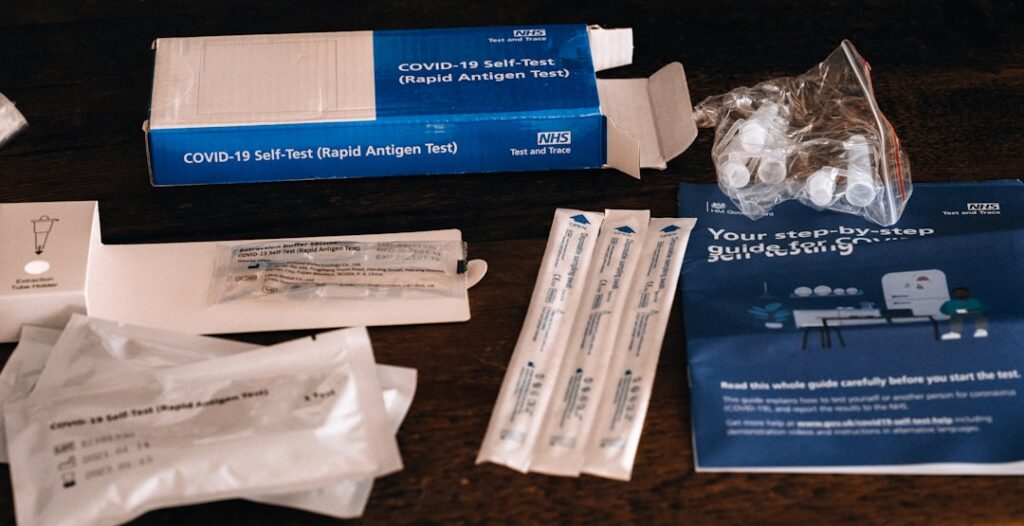
Lead in drinking water rarely comes from the source; it usually leaches from lead service lines, older solder, and brass fixtures inside the home’s own plumbing. A water lead test kit lets a homeowner check tap water for lead, either with an instant strip or by collecting a sample for laboratory analysis. Because lead has no taste, smell, or color in water, testing is the only way to know. This guide explains how the kits work, which type to trust, how to sample correctly, and what the EPA’s action level means. This guide summarizes EPA and CDC guidance current as of 2026 and is educational only; consult your physician about exposure concerns and a certified laboratory for testing decisions.
Part of our Lead Paint & Lead Testing guide — start there for the full picture →
Asbestos or biohazard concern? Speak with a certified contractor.
📞 Call (877) 742-8496What a water lead test kit measures
A water lead test kit checks the concentration of dissolved lead in tap water, typically reported in parts per billion. Two broad categories exist. Instant test strips give a rapid color-change reading at home but have a relatively high detection threshold and limited precision. Mail-in laboratory kits, where the homeowner collects a sample bottle and ships it to an accredited lab, provide a far more accurate numerical result.
For a meaningful answer, the laboratory route is generally preferred, because lead can be harmful at low concentrations that home strips may not reliably detect. The EPA has stated that there is no known safe level of lead exposure, which makes precise measurement valuable. The broader context of household lead hazards appears in the asbestos and lead hazard guide.
A water test is distinct from testing paint or dust for lead. Water testing measures what comes out of the tap; the related but separate process of checking other household sources is covered in the lead poisoning test guide.
Strips versus laboratory kits
Instant strips appeal because they are cheap and immediate, but their limitations matter. Many consumer strips cannot reliably detect lead at the low levels that public-health guidance treats as significant, so a “pass” on a strip does not guarantee water is safe. They can be a rough screen but should not be the basis for a health decision.
Laboratory kits cost more and take days to return results, but they deliver a quantified concentration an instant strip cannot. For a decision that affects what a household drinks, especially with infants or young children present, the lab kit’s accuracy is worth the wait and the cost. The general trade-offs between do-it-yourself kits and lab analysis mirror those in the D-Lead test kit guide for surfaces.
Choosing an accredited lab
For mail-in testing, the lab matters. Homeowners should use a laboratory certified for drinking-water analysis, which many state health or environmental agencies list. Some public water systems and local health departments also offer or subsidize lead testing. An accredited lab follows validated methods and reports results against EPA reference levels.
Many public water utilities will test a customer’s tap water on request, sometimes at no charge, and provide a sampling kit with instructions. This is often the most reliable route for a homeowner, because the utility uses an accredited lab and standardized protocols. Checking with the local water provider before buying a commercial kit can save money and yield a more authoritative result, particularly in older service areas where the utility is already monitoring for lead.
How to sample tap water correctly
Sampling technique strongly affects the result. The standard approach for detecting lead from plumbing is a “first-draw” sample: water that has sat motionless in the pipes for at least six hours, typically collected first thing in the morning before any tap is run. This captures water that has had the longest contact with lead-bearing components. Some protocols also collect a flushed sample after running the tap to compare.
Homeowners should follow the kit’s exact instructions for which tap to use, how long water must sit, and how to fill the bottle without aerating or contaminating it. Sampling the wrong way, such as flushing the line first, can produce a falsely low reading that misses lead leaching during stagnation. The careful, documented approach professionals use is described in the lead inspection guide.
What the results mean
The EPA’s action level for lead in public water systems is 15 parts per billion, but that is a regulatory trigger for system-wide action, not a safety threshold for an individual. Because there is no known safe level of lead, public-health guidance treats any detectable lead as a reason to reduce exposure, particularly for pregnant women and young children. A result above the action level warrants prompt steps; a lower detectable result still merits attention.
Practical responses range from using certified lead-reducing filters and flushing taps before use to replacing lead-bearing fixtures or, ultimately, the service line. Renters and owners alike can act on filtration immediately while planning larger fixes. For homes where lead is found in multiple sources, a comprehensive look at testing and remediation is covered in the lead and asbestos testing guide.
Where lead in tap water comes from
Knowing the source helps a homeowner target the fix. Lead rarely originates at the treatment plant or in the water main; it leaches from the home’s own plumbing as water sits in contact with lead-bearing components. The biggest single contributor is a lead service line, the pipe connecting the home to the water main, common in housing built before lead lines were phased out. Lead solder used to join copper pipes before 1986 and brass fixtures and valves containing small amounts of lead are the other major sources.
Because the lead enters during stagnation, hot water and longer standing times increase leaching. This is why guidance recommends never cooking or mixing infant formula with hot tap water in homes with lead concerns, and why flushing the tap before use can reduce, though not eliminate, exposure. Identifying whether a home has a lead service line, sometimes possible by scratching and testing the visible pipe where it enters the home, narrows down which fix will have the largest effect.
Filters and longer-term fixes
For immediate protection, a filter certified to reduce lead under the relevant NSF/ANSI standards is the fastest step, available as faucet-mounted, pitcher, or under-sink units. Filters must be maintained on schedule, since a spent cartridge stops working. Longer-term solutions address the source: replacing lead-bearing fixtures, and ultimately replacing a lead service line, which utilities increasingly help fund or coordinate. A homeowner can layer these, filtering now while planning the larger replacement, rather than waiting for a single comprehensive fix.
When to test your water
Testing is especially worthwhile in homes built before 1986, when lead solder and high-lead brass were still permitted, and in any home served by a lead service line. Families with infants, young children, or pregnant members have the strongest reason to test, since lead is most harmful to developing bodies. A water lead test kit is also sensible after plumbing work that disturbed older pipes or fixtures.
For renters or buyers who want documentation rather than a self-collected screen, or where a result will inform a real estate decision, a professional sample collection and an accredited lab report carry more weight. When uncertainty is high or a child’s health is involved, consulting a professional and a physician is the conservative path.
How lead in water affects health
Lead is a cumulative toxin, and the body has no use for it. In children, exposure is linked to effects on developing brains and nervous systems, and public-health agencies emphasize that no level of lead exposure is considered safe for young children. In adults, chronic exposure is associated with elevated blood pressure and kidney effects, and lead crosses the placenta, which is why pregnant women are a priority group for reducing exposure.
Because the effects are cumulative and often silent, families cannot rely on symptoms to signal a problem. A child with elevated blood lead may show no obvious signs, which is why testing the water, and where indicated the child’s blood lead through a physician, is the only reliable way to know. This guide does not provide medical advice; concerns about exposure or symptoms should go to a doctor, while the water-source question is answered by testing the tap.
What to do after a positive result
A confirmed lead result calls for a layered response rather than a single fix. The fastest protective step is to switch to a certified lead-reducing filter or bottled water for drinking and cooking, especially for infants and young children, while longer-term measures are planned. Running the tap until the water turns cold before use can flush water that has been stagnating against lead-bearing components, though it does not eliminate the source.
The durable fix targets the source identified by the testing. Replacing brass fixtures and faucets known to contain lead addresses one contributor; replacing pre-1986 solder joints addresses another. The largest single source, a lead service line, is the most involved to replace, and many utilities now run programs to help locate and replace these lines. A homeowner can sequence these steps, filtering immediately and budgeting for the larger replacements, rather than waiting to act until everything can be done at once.
Retesting and verifying the fix
Testing is not a one-time event when a problem is found. After installing a filter or making plumbing changes, retesting confirms that the chosen measure actually lowered the lead concentration. A filter that is not maintained, or a partial fix that left a lead service line in place, may leave lead higher than expected, and only a follow-up test reveals it. Homeowners should retest after any significant plumbing work and periodically thereafter, especially in homes with known lead-bearing components.
Verification matters most where children or pregnant household members are present, since the goal is to reduce their exposure to the lowest achievable level. Pairing water testing with guidance from a physician about blood-lead screening for young children gives a complete picture: the water test identifies the household source, while medical testing addresses the health side. Treating the water lead test kit as the start of an ongoing monitoring habit, rather than a single check, is how families confirm that their drinking water stays as safe as the fixes intend.
Choosing the right testing approach
The right approach depends on what is at stake. For a quick, low-cost screen with no children in the home, an instant strip can offer a rough first look, though its limited sensitivity means a passing result is not a guarantee. For any decision affecting drinking water, especially with infants, young children, or a pregnancy, a mail-in kit analyzed by an accredited laboratory, or testing offered by the local water utility, gives the accurate, quantified result that protects health.
Where documentation matters, such as a real estate transaction or a dispute with a landlord, a professionally collected sample and an accredited lab report carry more weight than a self-collected screen. Matching the method to the stakes, a strip for casual curiosity, a lab kit for a health decision, and professional collection for documentation, ensures the result is reliable enough for the use it serves. When uncertainty is high or a child’s exposure is in question, combining water testing with a physician’s guidance is the conservative and complete response.
References
- Basic Information About Lead in Drinking Water — U.S. EPA
- Lead in Drinking Water — CDC
- Lead Hazard Reduction Resources — U.S. HUD
Homeowners along the Front Range who want a certified professional to collect and interpret water samples can get in touch with a vetted local inspector here.
Lead paint test kits
Instant swab kits flag lead on painted surfaces in minutes — useful before a renovation in any pre-1978 home.
| Product | Why | Buy |
|---|---|---|
 3M LeadCheck Swabs 3M LeadCheck Swabs | EPA-recognized instant swabs. | Amazon — $15.00 |
 Lead Test Kit (lab-based) Lead Test Kit (lab-based) | Mail-in for a documented result. | Amazon — $35.00 |