Asbestos & Lead in Your Home: The Pre-1978 Housing Hazard Guide

Explore by topic
Pre-1978 housing is the through-line that ties asbestos and lead together. Both materials were used heavily in U.S. homes built before federal regulation tightened in the late 1970s, both pose health risks that show up over years rather than hours, and both are controlled today through a mix of federal rules, state licensing, and homeowner disclosure obligations. This pillar exists for the homeowner, buyer, or seller trying to understand what is actually in the walls of an older property — and what to do about it.
InspectandTest is an independent editorial team. We are not licensed asbestos inspectors, lead abatement contractors, or industrial hygienists. This hub synthesizes guidance from the U.S. Environmental Protection Agency, the Department of Housing and Urban Development, the Centers for Disease Control and Prevention, OSHA, and state-level licensing agencies. For decisions that involve disturbing confirmed asbestos or lead, follow your state’s licensure requirements and engage an accredited professional.
Is this mold, asbestos, or water damage? Get a free instant screen
Upload a clear photo of the suspect area. You'll get an instant AI screening opinion and what to do next. This is screening guidance, not a professional determination.
Screening guidance only. AI can be wrong. Confirm asbestos, mold type, or lead with lab testing or a licensed professional before acting.
Why asbestos and lead get grouped together
Both materials were ubiquitous in residential construction through the middle of the twentieth century. Asbestos was added to insulation, vinyl flooring, popcorn ceilings, joint compound, roofing shingles, siding, pipe wrap, and HVAC ductwork — anywhere a builder needed cheap heat resistance or fiber reinforcement. Lead was used in paint as a pigment and durability aid, in solder for copper plumbing, in glazing on bathtubs and tile, and in some types of imported ceramic dinnerware that ended up in old kitchens.
Federal action came in waves. The Toxic Substances Control Act (TSCA) of 1976 and the Clean Air Act asbestos amendments restricted asbestos use throughout the late 1970s and 1980s, with the EPA’s 1989 partial ban (later largely overturned in court but reinstated in part in 2024) marking the practical end of new asbestos in most building products. Lead-based paint for residential use was banned by the Consumer Product Safety Commission in 1978. Lead in plumbing solder followed in 1986. The two timelines bracket the same era — which is why “pre-1978” is the rule of thumb used by inspectors, real estate professionals, and federal disclosure law.
Where asbestos lives in older homes
Asbestos shows up in fewer places than people fear, but in some surprising ones. The materials most likely to contain regulated asbestos in pre-1989 homes:
- Vinyl floor tile and the mastic underneath. Nine-inch and twelve-inch tiles from the 1950s through 1980s frequently contain chrysotile asbestos, as does the black tar mastic used to glue them down.
- Popcorn ceilings (acoustic ceiling texture). Spray-applied texture installed before 1978 commonly contains asbestos. Texture installed after 1978 generally does not, but the building’s permit history is more reliable than the ceiling’s appearance.
- Pipe insulation. White corrugated paper-style pipe wrap and the white plaster-like insulation on hot-water and steam pipes are classic asbestos materials. They are often the highest-priority remediation in basements.
- Joint compound and texture coats on drywall. Pre-1980 joint compound mixes regularly contained asbestos.
- Cement siding (Transite) and roofing shingles. Asbestos-cement siding boards have a distinctive imitation wood-grain pattern; roofing shingles look like ordinary slate or asphalt at distance.
- HVAC ductwork insulation and gaskets. Older furnaces and boilers often have asbestos gasket material around access doors and inside the heat exchanger compartment.
- Vermiculite attic insulation. A specific source — the Libby, Montana mine — contaminated most pre-1990 vermiculite insulation with tremolite asbestos. If your attic has loose, pebble-like grey-tan insulation, treat it as suspect until proven otherwise.
Asbestos becomes dangerous when fibers become airborne — a process called “friability.” Intact vinyl tile under a layer of laminate is low-risk. The same tile pulverized by a renovation saw is the highest possible risk. The single most important practical rule: do not disturb suspect material until you have either tested it or hired a licensed inspector.
Where lead lives in older homes
Lead exposure in older homes comes from three main sources:
- Lead-based paint. Used in residential interiors and exteriors through 1978. Intact paint under newer layers is low-risk; chipping, peeling, or chewing-surface paint is the high-risk pattern. Friction surfaces — windows, doors, drawer slides — generate fine lead dust as paint wears against itself, which is the dominant exposure route in occupied homes.
- Lead in plumbing. Lead solder in copper joints, lead service lines from the water main to the meter, and brass fixtures with permitted lead content all contribute. The EPA’s Lead and Copper Rule and the 2014 Reduction of Lead in Drinking Water Act tightened limits, but service lines installed before the 1986 federal solder ban are the main residential concern.
- Lead in soil. Lead from exterior paint chips and from leaded gasoline (banned 1996) accumulated in soil around older homes and along busy roads. Garden plots near a pre-1978 home’s foundation can have elevated lead.
Lead exposure is most damaging in children, where it interferes with neurological development at extremely low blood-level concentrations. The CDC’s blood lead reference value, last updated in 2021, is 3.5 µg/dL — half the previous threshold. There is no safe level of lead exposure in children.
The pre-1978 rule and federal disclosure
Title X — the Residential Lead-Based Paint Hazard Reduction Act of 1992 — is the federal disclosure framework. It requires sellers and landlords of housing built before 1978 to do three things before sale or lease:
- Disclose any known lead-based paint hazards.
- Provide the EPA’s pamphlet Protect Your Family From Lead in Your Home.
- Give buyers a 10-day window to conduct a lead-based paint inspection or risk assessment at their own expense.
The disclosure form attaches to the sales contract or lease and is enforceable under federal law. Buyers can waive the 10-day inspection window in writing but cannot waive the disclosure itself. There is no federal asbestos disclosure equivalent — but most state material-defect disclosure laws require disclosing known asbestos contamination, which means the existence of a positive lab report typically triggers a state-level disclosure obligation regardless of federal silence.
Identifying the hazards: visual cues vs lab confirmation
Visual identification is suggestive but never definitive. Asbestos fibers are microscopic and visually indistinguishable from cellulose, fiberglass, or other fibers in building materials. Lead-based paint can look identical to non-lead paint at a glance. The right sequence is:
- Visual screening to identify suspect materials based on age, location, and appearance.
- Lab confirmation via polarized light microscopy (asbestos) or laboratory atomic absorption / XRF analysis (lead).
- Decision-making based on confirmed results.
Our companion guide on choosing an asbestos testing kit walks through the consumer-kit options, what NVLAP accreditation means, and how to read your lab results. For lead, the analog is a pre-purchase lead inspection by an EPA-certified Lead Risk Assessor — typically $300 to $700 for a single-family home.
When DIY testing is appropriate
For asbestos, homeowner sampling of a single intact material is reasonable when state law permits, the material has not been damaged, and the homeowner can follow the safety protocol. For lead paint, consumer test kits using sodium sulfide or rhodizonate are widely available but produce false negatives often enough that EPA recommends professional XRF testing for any decision that depends on the result. The exception is exterior surfaces with visible chipping; here a $20 kit confirming lead is sufficient to trigger child-protective measures while you book a professional assessment.
For both materials, hire a professional when:
- You are testing a rental, multi-family, or commercial property — federal and state rules require accredited inspectors.
- The material is damaged, friable, or has been disturbed.
- You are planning a renovation that will exceed your state’s homeowner exemption thresholds.
- You will be transferring ownership and want documented results that survive scrutiny later.
Abatement: removal vs encapsulation
Once a hazard is confirmed, two paths are available. Removal physically takes out the material; encapsulation seals it in place. Removal ends the hazard but is more expensive and disruptive. Encapsulation is cheaper but requires periodic inspection and limits future renovation flexibility — a wall that has been encapsulated cannot be drilled into without re-triggering the full hazard.
For asbestos, removal is required when the material is friable, damaged, or in the path of planned renovation. Encapsulation is appropriate for intact non-friable material that will not be disturbed. State licensure governs both; do not hire any contractor who is not on your state’s official asbestos contractor list. The licensure check takes two minutes on the state agency website and prevents both bad work and uninsured liability.
For lead paint, the EPA’s Renovation, Repair and Painting (RRP) Rule requires firms working in pre-1978 housing to be EPA-certified, follow lead-safe work practices, and use a certified renovator. The certification number should appear on every estimate, contract, and invoice — confirm it on the EPA’s Search for Certified Firms tool before signing.
Typical cost ranges in 2026
Use these ranges as a sanity check on quotes. Costs vary widely by metro and by access; quotes outside these ranges in either direction warrant a second opinion.
- Asbestos test (DIY kit, single sample, NVLAP lab): $30 to $50
- Asbestos test (licensed inspector, residential scope): $300 to $800
- Asbestos abatement (residential, 100 to 500 sq ft): $1,500 to $5,000
- Asbestos abatement (whole home, multiple materials): $5,000 to $30,000
- Lead inspection (XRF, single-family home): $300 to $700
- Lead paint risk assessment with sampling: $400 to $1,000
- Lead paint encapsulation (per square foot): $0.50 to $1.50
- Lead paint full abatement (per square foot): $8 to $15
- Lead service line replacement: $2,000 to $15,000 (varies dramatically by length and access)
HUD’s Office of Lead Hazard Control and Healthy Homes administers grants that subsidize lead abatement for income-qualifying homeowners; many states administer asbestos grant programs through their environmental or health agencies. Check eligibility before paying out of pocket.
The homeowner decision tree
If your home was built before 1978 and you are planning a renovation:
- Identify suspect materials in the renovation scope.
- Test them — yourself for intact material in single-family owner-occupied housing where state law allows, or via a licensed inspector for everything else.
- If positive, consult your state’s contractor list and get three quotes against a written scope of work.
- Verify license numbers and insurance on the state agency website.
- Confirm post-abatement air clearance testing is in scope.
- Disclose anything you confirmed during a future sale, per your state’s material-defect rules.
If you are buying:
- Use the federally mandated 10-day lead inspection window for any pre-1978 property.
- For homes built before 1989, ask your home inspector to flag suspect asbestos materials in the report; budget $25 to $75 for follow-up lab analysis on materials in your renovation plans.
- Request the seller’s disclosure of any known asbestos remediation — and get the lab reports from any prior testing in writing.
Frequently asked questions
Which homes are most likely to contain asbestos and lead?
Homes built before 1978 are presumed to contain lead-based paint under federal disclosure rules, and homes built before about 1989 commonly contain asbestos in multiple building materials. The risk is highest in homes built between 1930 and 1978, where both materials were used extensively in everyday construction. Houses built after 1989 may still contain asbestos in imported products and certain niche materials, but the probability drops sharply.
Do I have to disclose asbestos and lead when selling my home?
Federal law (the Residential Lead-Based Paint Hazard Reduction Act, Title X) requires sellers and landlords of pre-1978 housing to disclose known lead hazards and provide the EPA's lead pamphlet. There is no equivalent federal disclosure requirement for asbestos, but most states require disclosure of any known material defect — which means if you have a positive lab report, your state likely requires disclosure. Specific obligations vary; check with a real-estate attorney in your state before listing.
What's the difference between asbestos abatement and encapsulation?
Abatement physically removes the asbestos-containing material, ending the hazard. Encapsulation seals the material in place with a specialized coating that prevents fibers from becoming airborne; the material stays but is treated as managed in place. Encapsulation is cheaper (often a third to half the cost of removal) and appropriate when the material is intact and the disturbance risk is low. Removal is required when material is friable, damaged, or in the path of planned renovation.
How much does it cost to test and remove asbestos or lead from a home?
Testing: a homeowner kit runs $30 to $50 per sample; a licensed inspector with lab analysis runs $300 to $800 for a typical residential scope. Lead paint testing via XRF analyzer is similar or slightly higher. Abatement: asbestos removal in most U.S. metros runs $20 to $65 per square foot, with whole-home projects from $5,500 to $30,000 depending on scope. Lead paint abatement runs $8 to $15 per square foot for full removal, less for encapsulation. Both can be partially covered by state grants (HUD lead-hazard control programs) for income-qualifying homeowners.
Can I disturb asbestos in my own home if it's not friable?
Federal law generally permits owner-occupied single-family homeowners to handle their own asbestos-containing materials as long as they meet OSHA worker-protection requirements (which technically do not apply to non-employees) and follow state and local rules. Many states impose stricter limits — for instance, requiring even homeowners to use licensed contractors above certain square-footage or linear-footage thresholds. Even where it is legal, it is rarely advisable: the safety equipment cost approaches what a small professional job costs, and DIY mistakes have lifelong health consequences.
Guides in this topic
The cluster guides under this pillar go deeper on specific decisions. We are publishing them on a rolling basis — start with the testing kit decision, which most homeowners reach first.
References
- Learn About Asbestos — U.S. Environmental Protection Agency
- Protect Your Family from Sources of Lead — U.S. Environmental Protection Agency
- Renovation, Repair and Painting (RRP) Program — U.S. Environmental Protection Agency
- HUD Office of Lead Hazard Control and Healthy Homes
- Lead Poisoning Prevention — Centers for Disease Control and Prevention
- Asbestos and Your Health — Agency for Toxic Substances and Disease Registry
- OSHA Asbestos Standard — Occupational Safety and Health Administration
- Title X Lead-Based Paint Disclosure — U.S. Environmental Protection Agency
Explore all guides in this topic

Lead Paint Years: The 1978 Ban, Older Homes and Testing
Lead paint years explained: the 1978 federal ban, why pre-1950 homes carry the most risk, pre-1978 disclosure…

Asbestos Pipe Wrap: Identify, Test and Manage It Safely
How to recognize asbestos pipe wrap such as aircell and magnesia block, why damaged wrap is friable, how sampl…
How to Clean Up Asbestos Safely (and When Not to Try)
How to clean up asbestos debris without spreading it: what EPA says never to do, how OSHA classes the work, wh…

Lead Testing Guidelines: Paint, Dust, Soil, Water and Blood
Lead testing guidelines for paint, dust, soil, water and blood: which test fits which situation, what EPA and…
Asbestos Building Inspector: Hiring One or Becoming One
What an asbestos building inspector does, when a survey is needed before renovation or demolition, how EPA MAP…
Disposing of Asbestos Roof Sheets: A Homeowner Guide
Disposing of asbestos roof sheets safely means removing them intact, keeping them wet, wrapping and labeling,…
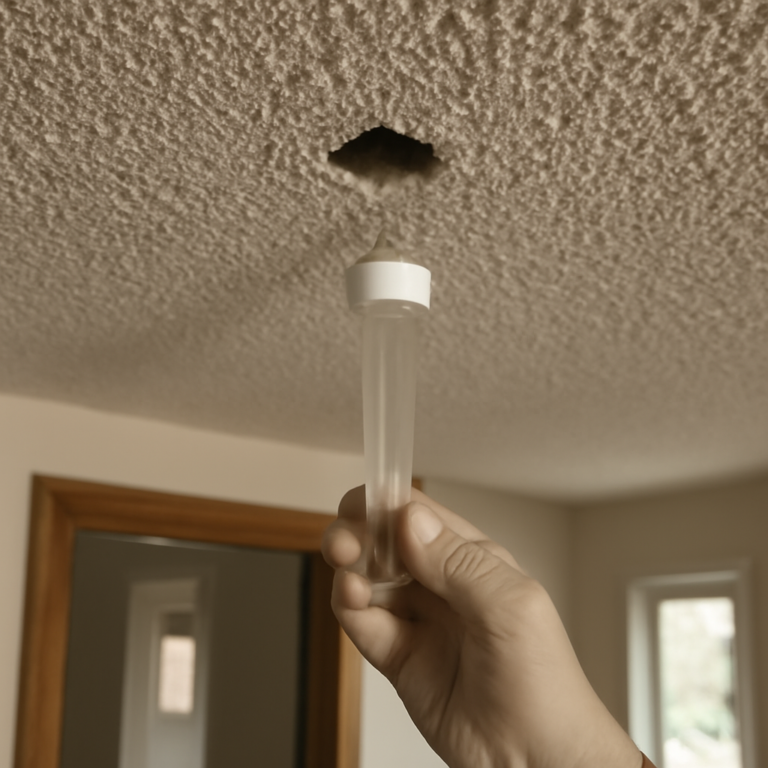
Asbestos Test for a Popcorn Ceiling: Steps and Results
How an asbestos test popcorn ceiling job works: why older texture is suspect, safe wet sampling or a pro, PLM…

How to Test for Asbestos in Your Home: Step-by-Step
How to test for asbestos in your home: spot suspect materials, choose a pro or careful DIY sample, pick an acc…
How to Test a Sample for Asbestos: Collection to Lab Result
What happens to a test sample for asbestos: who should collect it, safe sampling steps, PLM or TEM lab analysi…

Asbestos Pronunciation: How to Say It and What It Means
Asbestos pronunciation made simple: as-BES-tus, plus the word's Greek roots, the six regulated minerals, and w…
Will Insurance Cover Asbestos Removal? Coverage Explained
Will insurance cover asbestos removal? Usually only when a covered loss like a fire or burst pipe disturbs it.…
What to Do If Your House Has Lead Paint: A Calm Plan
What to do if your house has lead paint: keep it intact, clean dust wet, protect kids, test blood if worried a…

Asbestos Insulation Board: How to Spot It and What to Do
Asbestos insulation board and millboard turn up near old furnaces, flues and ceilings. Learn where it hides, w…

Pediatric Lead Test: What Parents Should Know
A pediatric lead test measures lead in a child's blood. Learn finger-stick vs venous tests, CDC's 3.5 µg/dL re…
Lead Based Paint Remediation: Abatement vs Controls
Lead based paint remediation explained: interim controls vs permanent abatement, certified firms vs RRP renova…

Friable Asbestos: Definition, Examples and Risks
Friable asbestos crumbles under hand pressure and sheds fibers easily. See how EPA defines it, common househol…
Black Mastic Asbestos: Identify, Test and Manage It
Black mastic asbestos can hide under old floor tiles. Learn how to test the glue, why TEM is often advised, an…

Asbestos in Attic: Materials, Risks and What to Do
Asbestos in attic spaces: how to spot vermiculite, old duct wrap and boards, why EPA says not to disturb them,…
Vermiculite Removal: Process, Risks and Cost Drivers
Vermiculite removal explained: why EPA says leave it alone, how pros use containment and negative air, why tes…
Asbestos Siding Removal Cost: What Drives the Price
Asbestos siding removal cost depends on wall area, stories, shingle condition, disposal fees and new siding. S…
Asbestos Landfill: How to Find One and Prepare a Load
Finding an asbestos landfill takes a call first. Learn packaging, friable vs non-friable rules, waste records,…
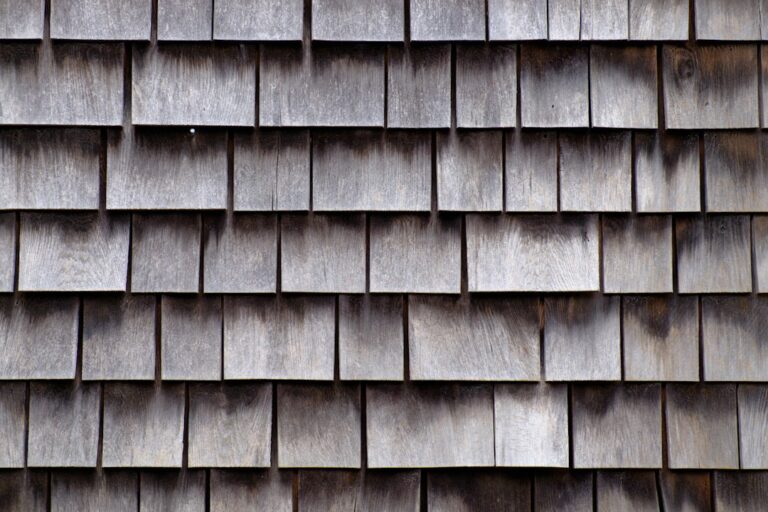
What Does Asbestos Siding Look Like? How to Spot It
What does asbestos siding look like? See the size, edges and textures of cement shingles, how they differ from…

Can You Paint Over Lead Paint? When It Works and When It Fails
Can you paint over lead paint? Regular paint is not a permanent fix. Learn when intact surfaces can be repaint…

When Was Asbestos Used in Homes? Timeline and Products
When was asbestos used in homes? See the rough timeline from the 1920s to the 1980s, the 1989 rule and 2024 ch…