Black Mold vs Dust: How to Tell the Difference at Home
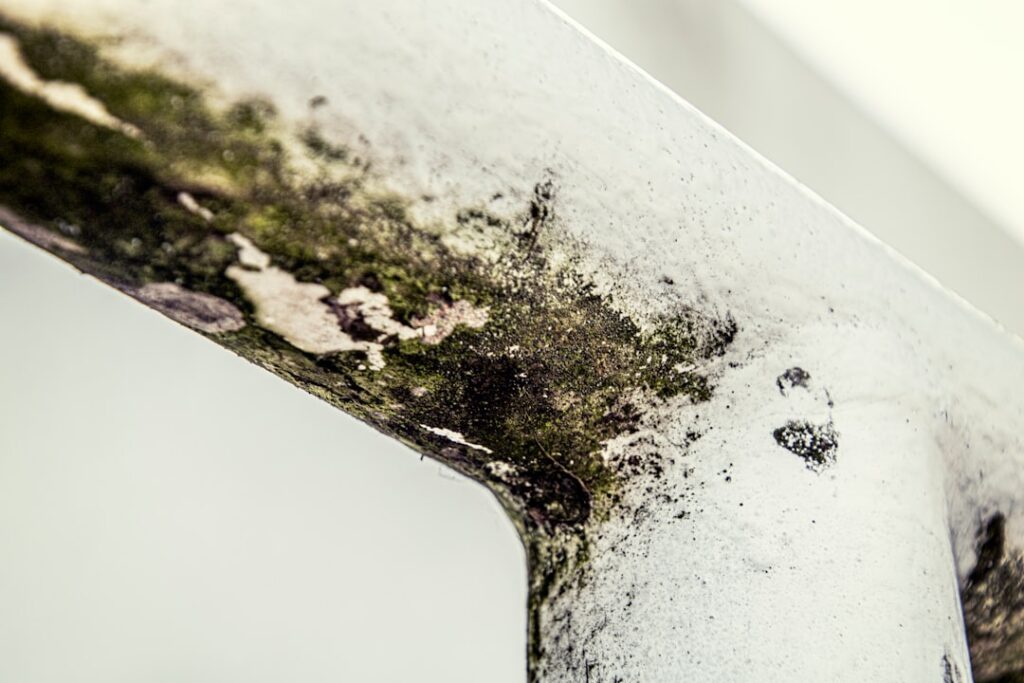
Dark specks on a ceiling, a gray film around a supply vent, or black smudges in a closet corner all raise the same question: is this mold, or just dirt? The answer matters, because dust is a housekeeping job while mold is a moisture problem that comes back until the water source is fixed. The two can look surprisingly alike from a few feet away, and they sometimes occur together. This guide walks through the simple checks that separate black mold vs dust in most homes: a careful wipe test, the pattern of the marks, smell, and location. It also covers soot and “ghosting” from candles and air leaks, explains how dust can become food for mold once it gets damp, and describes when testing is worth paying for. It draws on EPA and CDC mold guidance for general education only. It is not medical advice, and anyone with health concerns about mold exposure should talk with a doctor.
Part of our Black Mold & Your Health guide — start there for the full picture →
Is this mold, asbestos, or water damage? Get a free instant screen
Upload a clear photo of the suspect area. You'll get an instant AI screening opinion and what to do next. This is screening guidance, not a professional determination.
Screening guidance only. AI can be wrong. Confirm asbestos, mold type, or lead with lab testing or a licensed professional before acting.
The Quick Answer: Dust Wipes Away, Mold Tends to Stay and Return
In most homes, the fastest way to tell dust from mold is to look at how the marks respond to a gentle wipe and whether they come back. Dust is loose material sitting on top of a surface. It usually lifts off cleanly onto a damp cloth, leaves the paint or wood looking normal underneath, and does not reappear in the same spot within days unless the room is simply dusty. Mold is a living growth that is attached to, and often partly inside, the material it is feeding on. It tends to smear, leave a stain or shadow behind, and regrow in the same place once moisture returns.
That rule of thumb is useful but not perfect. Light, early mold growth on a smooth painted surface can wipe off quite easily, and heavy, greasy dust or soot can smear and stain just like mold. So the wipe test works best as one clue among several, not as a final verdict. Pattern, smell and location usually settle the question when they all point the same way.
It also helps to drop the idea that “black mold” is one specific, uniquely dangerous organism. EPA’s mold course notes that “black mold” is not a species or specific kind of mold, and that molds come in many colors. CDC says that if mold is seen or smelled, it should be removed, without needing to identify the type. For a homeowner, the practical question is not “which mold is this?” but “is this growth, and where is the moisture coming from?” Our guides on black mold vs regular mold and black mold vs black mildew cover the naming confusion in more depth.
Black Mold vs Dust: The Side-by-Side Clues
The table below compares the checks that most often separate the two. No single row is decisive. When three or four rows point toward mold, it is worth treating the area as a moisture problem.
| Clue | Dust | Mold |
|---|---|---|
| Wipe test with a damp cloth | Usually lifts cleanly; surface underneath looks normal | Often smears or leaves a stain or shadow; may look embedded in paint or paper |
| Return after cleaning | Builds back slowly and evenly with normal household activity | Tends to regrow in the same spot within days or weeks if moisture remains |
| Pattern | Even film, heaviest on horizontal surfaces and tops of objects | Spots, clusters or blotches that grow outward; often concentrated where surfaces get damp |
| Texture under a flashlight | Flat, powdery, fibrous; may include lint or pet hair | Can look slightly raised, fuzzy, velvety or speckled; may have soft edges |
| Smell | Usually no distinct odor, or a stale “dusty” smell | Often a musty, earthy odor, especially in closed rooms or after rain |
| Location | Tops of furniture, shelves, ceiling fan blades, around vents with high airflow | Bathrooms, window frames, cold exterior corners, behind furniture, near leaks |
| Link to moisture | Appears regardless of humidity | Appears where condensation, leaks or high humidity are present |
The rest of this guide explains each clue, the look-alikes that confuse the picture, and what to do once there is a likely answer.
How to Do the Wipe Test Safely and Read the Result
The wipe test is simple, but a few details make it more reliable and reduce the chance of stirring up spores if the marks do turn out to be mold.
Step by step
- Protect yourself first. Put on disposable or household rubber gloves and safety glasses. If the patch is larger than a hand or there is a musty smell, add an N-95 respirator. EPA lists gloves, goggles and an N-95 respirator as basic protection when working around mold.
- Use a damp, not dry, cloth. A dry cloth or duster can launch both dust and spores into the air. Lightly dampen a white paper towel or microfiber cloth with water and a drop of household detergent.
- Wipe a small test area. Use one gentle pass over a few square inches, then look at both the cloth and the surface in good light.
- Bag the cloth. Put used towels into a plastic bag and seal it before carrying it through the house.
- Mark and watch. Put a small piece of painter’s tape next to the cleaned spot or take a dated photo. Check it again over the next one to three weeks.
Reading the result
If the cloth comes away gray and fuzzy, the surface looks clean and normal, and the spot stays clean for weeks, the marks were most likely dust. If the cloth shows black or dark green smudges, the surface still shows a faint stain, ring or “shadow,” and the specks reappear in the same pattern, mold is the more likely answer. A stain that will not wipe off at all may be a pigment left in paint by past mold growth, or it may be a water stain; our guide to mold stains explains how to tell those apart.
Pattern: Where the Marks Sit Says a Lot
Dust settles from the air under gravity. That means it collects most heavily on horizontal, upward-facing surfaces: the tops of door frames, picture frames, shelves, baseboards, ceiling fan blades and the upper edges of cabinets. On those surfaces it tends to form an even layer with no sharp edges. It does not usually cluster into round spots, and it rarely forms dense patches on the middle of a vertical wall or on the underside of a shelf.
Mold follows moisture, not gravity. It shows up as dots, clusters or blotches that spread outward from a starting point, often with denser centers and lighter edges. It commonly appears on vertical surfaces and on ceilings because those are where condensation and leaks occur. EPA’s mold course lists bathroom tile and grout, basement walls, areas around windows and the spaces around sinks as common sites for indoor mold growth, and it names roof leaks, condensation from high humidity or cold spots, and slow plumbing leaks as common moisture sources.
A useful pattern test is to ask whether the marks line up with something that gets wet or cold. Spots that follow the line of a window frame, a cold exterior corner, a bathroom ceiling above the shower, or the outline of a stain from a past leak point strongly toward mold. A gray layer that is equally thick across every shelf in a room points toward dust. Spots that look like scattered pepper on a painted bathroom ceiling are a classic early mold pattern; our guide to black mold on a bathroom ceiling covers that situation in detail.
Smell and Location: The Clues Dust Cannot Fake
The smell test
Dust rarely has a strong odor of its own. A musty, earthy or damp-basement smell is one of the most useful signs that mold is growing somewhere nearby. CDC notes that mold can smell musty, and EPA’s mold course explains that some compounds produced by growing mold have strong or unpleasant odors and can be the source of the “moldy odor” often associated with mold growth. The course adds that a moldy odor suggests that mold is growing in the building and should be investigated.
The smell test works best when the room has been closed for a few hours. Open a closet or cabinet first thing in the morning, or step into a bathroom that has been shut overnight, and note any musty note before airing it out.
Location: vents, ceilings and corners
Three locations cause most of the confusion.
- Vents and registers. Dark rings around ceiling or wall supply vents are often dust being deposited where moving air slows and swirls. This is sometimes called “dirty vent” streaking. It is usually even and fuzzy, follows the edge of the grille, and wipes off. Mold at a vent is more likely when cold supply air causes condensation on the grille or the surrounding drywall, for example with air conditioning in a humid space, or when there is a musty smell from the duct. Spots that are clustered, recur quickly, or sit on the grille’s inside surfaces deserve a closer look.
- Ceilings. Dust rarely sticks to a ceiling in quantity unless it is greasy or carried by a draft. Spots on a ceiling, especially in a bathroom or along an exterior wall, are more often mold or soot. Ceiling spots that follow a straight line may be soot ghosting, described below.
- Corners and behind furniture. EPA’s Brief Guide lists the surface of walls behind furniture, where condensation forms, among the places mold can hide. Dark spotting in a cold exterior corner, low on a wall behind a dresser or bed, or inside a closet on an outside wall points toward mold far more than dust.
Soot, Ghosting and Other Black Look-Alikes
Not every black mark is dust or mold. Several other materials produce dark deposits that are easy to misread.
Candle soot and combustion residue
Burning candles, especially scented ones with long or untrimmed wicks, can release fine black soot. So can oil lamps, incense, gas fireplaces that are poorly adjusted, and some other combustion sources. Soot is greasy and fine, so it tends to smear into a gray-black streak when wiped rather than lifting off cleanly. That smearing is why soot is often mistaken for mold. Soot tends to appear in a broad haze, concentrated above or downwind of the source and around areas of strong airflow, rather than in distinct clusters. It typically has no musty smell, though it may smell faintly of smoke or wax.
Ghosting along framing and air leaks
“Ghosting” describes dark lines or shadows that appear on ceilings and walls, often in straight rows that match the framing behind the drywall, or as dark streaks at the edges of carpet and under doors. It usually happens when fine particles such as soot and dust are deposited on cooler surfaces or filtered out by air moving through small gaps. Lines that follow ceiling joists or wall studs, dark rings around electrical outlets and light fixtures on exterior walls, and streaks along carpet edges are typical. These marks are tied to temperature differences and air leakage, not necessarily to mold.
Ghosting is still worth noting, though, because the same cold spots and air leaks that pull in soot can also produce condensation. If a straight-line pattern also smells musty, feels damp, or is growing into fuzzy clusters, mold may be developing alongside the deposits.
Other common look-alikes
- Water stains. Brown or yellow rings with darker edges from a past leak. These are part of the paint or ceiling material and do not wipe off.
- Mildew. A term often used for flat, early-stage surface mold, commonly gray or black in bathrooms. EPA’s mold course notes that molds are also called fungi or mildew. See our guide on mildew stains.
- Tannin or knot bleed. Brownish stains that come through paint over wood.
Why Dust Can Become Mold Food When It Gets Damp
The question “is it mold or dust?” sometimes has an awkward answer: both. EPA’s Brief Guide explains that it is impossible to get rid of all mold and mold spores indoors, because some spores will always be found floating in the air and in house dust. The mold course makes the same point and adds that those spores will not grow if moisture is not present.
Dust itself is a mix of skin flakes, fibers, pollen, soil and other organic material. EPA’s mold course states that mold can grow on virtually any organic substance and that most buildings are full of organic materials mold can use as food, listing paper, cloth, wood, plant material and soil. CDC goes a step further and names dust directly, stating that mold can grow in dust as well as in paints, wallpaper, insulation, drywall, carpet, fabric and upholstery.
Put together, those statements explain a pattern that many homeowners notice: dust that sits harmlessly for months in a dry room can start to grow mold once it is in a damp spot. Common examples include dust on the cold glass and frames of windows in winter, the film on a bathroom exhaust fan grille, dust on top of a bathroom cabinet near the shower, and the dirt layer inside a humid closet. The dust supplies food and spores; moisture supplies the trigger.
This has two practical consequences. First, regular cleaning in damp areas removes some of the food that mold could use. Second, and more important, controlling moisture is what stops the process. EPA recommends keeping indoor humidity below 60 percent, ideally between 30 and 50 percent, and notes that relative humidity can be measured with an inexpensive meter. A small hygrometer in a problem room shows whether humidity is likely to support growth.
Colorado homes and the dry-climate trap
Front Range homes spend much of the year in dry air, which can make mold seem unlikely and lead people to assume dark marks are always dust. Moisture problems in this climate tend to be local rather than whole-house: a bathroom without a working exhaust fan, condensation on cold windows and exterior corners during winter cold snaps, a slow leak under a sink, or a humidifier set too high. Marks that cluster in one of those spots deserve a closer look even if the rest of the house is dry.
What to Do Once You Know Which It Is
If it is dust or soot
Clean it with a damp cloth and mild detergent, working from top to bottom. A vacuum with a good filter helps on textured surfaces. For soot, reduce the source: trim candle wicks, burn fewer candles, and have fuel-burning appliances checked if soot appears without an obvious cause. For ghosting along framing and outlets, sealing air leaks and improving insulation can reduce the deposits over time.
If it is likely mold
Start with the moisture. EPA’s cleanup guidance is clear that the water problem must be fixed or mold will come back. Then clean small areas on hard surfaces. EPA advises scrubbing mold off hard surfaces with detergent and water and drying them completely, and notes that absorbent or porous materials such as ceiling tiles and carpet may have to be thrown away if they become moldy. CDC says mold can be removed from hard surfaces with household products, soap and water, or a diluted bleach solution, and warns never to mix bleach with ammonia or other cleaners. Our guide on whether soap kills mold explains why removing growth matters more than “killing” it.
EPA suggests that if the moldy area is less than about 10 square feet, in most cases a homeowner can handle the job, while larger areas or significant water damage call for professional help. Do not paint over spots that may be mold; EPA advises against painting or caulking moldy surfaces because the paint is likely to peel.
People with asthma, allergies, lung disease or weakened immune systems should avoid doing mold cleanup themselves where possible. CDC notes that people with asthma or mold allergy may have severe reactions, and that people with weakened immune systems or chronic lung disease may develop lung infections from mold.
When a Mold Test Is Worth It
For visible spots that clearly behave like mold, testing usually adds little. EPA’s Brief Guide states that in most cases, if visible mold growth is present, sampling is unnecessary, and that no federal limits exist for mold or mold spores. The right response to visible growth is the same regardless of species: fix the moisture and clean or remove the material.
Testing becomes more useful in a few specific situations:
- The wipe test, pattern and smell disagree. A lab analysis of a tape or swab sample can show whether a dark deposit is fungal growth, soot or plain dust.
- There is a musty smell but nothing visible. EPA notes that hidden mold may be suspected when a building smells moldy but the source cannot be seen. Hidden growth behind drywall or under flooring is a job for careful inspection, not a surface swab.
- Checking a cleanup. EPA says surface sampling may be useful to determine whether an area has been adequately cleaned or remediated.
EPA also advises that mold sampling should be done by professionals with specific experience in sampling protocols and interpreting results. Do-it-yourself kits vary widely in what they can tell you, especially settle-plate kits, which will almost always grow something because spores are present in every home. Our guide to affordable mold tests compares the main options and their limits. For a broader overview of inspection options, see the mold inspection guide, and for more on dark-colored growth specifically, the black mold hub collects related articles.
References
- U.S. EPA. A Brief Guide to Mold, Moisture and Your Home
- U.S. EPA. Mold Cleanup in Your Home
- U.S. EPA. Mold Course Chapter 1: Introduction to Molds
- Centers for Disease Control and Prevention. About Mold
Frequently asked questions
What is the quickest way to tell black mold from dust?
Wipe a small area with a damp cloth while wearing gloves and eye protection. Dust usually lifts cleanly and the surface looks normal, while mold often smears or leaves a stain and tends to return in the same spot if moisture remains. Combine that with smell and location for a more reliable answer.
Can dust turn into mold?
Dust does not become mold, but it can feed mold. Mold spores are normally present in house dust, and CDC notes mold can grow in dust. When dusty surfaces stay damp from condensation or leaks, growth can start.
Why are there black rings around ceiling vents?
Most dark rings around supply vents are dust or soot deposited where air slows at the grille edge, and they usually wipe off. Mold is more likely if the grille or nearby drywall gets condensation, the spots recur quickly, or there is a musty smell.
Are black lines on the ceiling along the joists mold?
Straight lines that follow framing are usually ghosting, a buildup of soot and dust on cooler spots or where air leaks through. They are not necessarily mold, but if the lines smell musty or develop fuzzy clusters, moisture may be involved.
Should dark spots be tested before cleaning?
Usually not. EPA says sampling is generally unnecessary when mold is visible, because the fix is the same: correct the moisture and clean or remove the material. Testing helps when the clues conflict, when there is a musty smell with nothing visible, or for real estate documentation.
Still not sure whether those dark marks are dust, soot or mold? Reach out to our team with a few photos and a note on where the spots appear, and we can help sort out what you are looking at and whether a closer inspection makes sense.