Black Mold Vs Regular Mold: A Decision-Tree Comparison
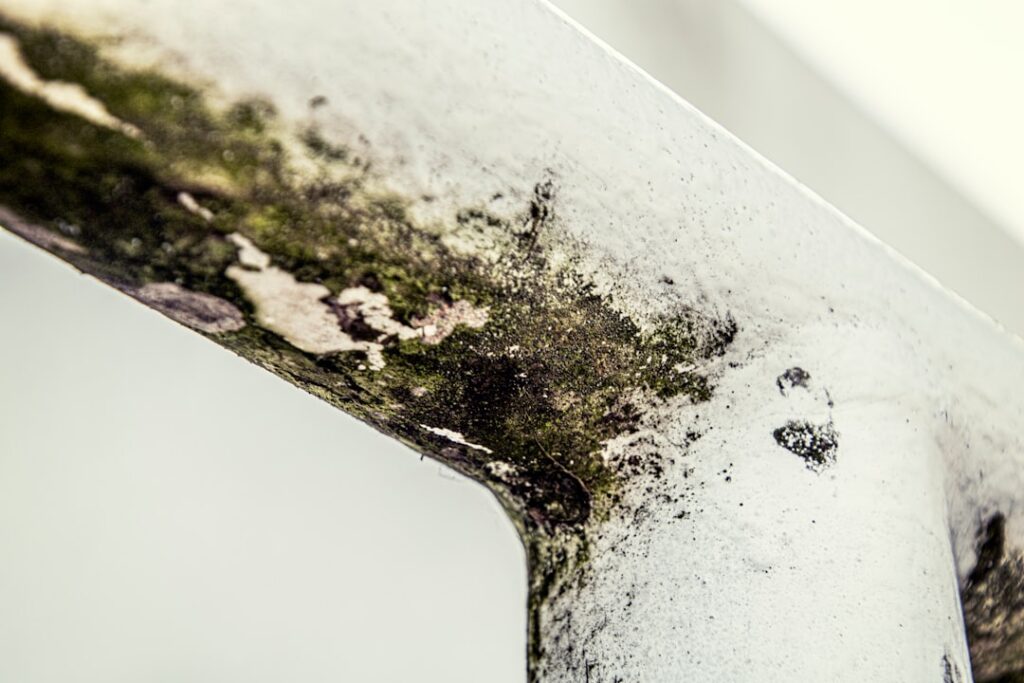
Most homeowner searches for black mold vs regular mold expect a side-by-side species chart with a verdict on which one is more dangerous. That chart exists in this guide, but it sits at the bottom of the decision tree, not the top. The more useful comparison is contextual: when you find a dark mold patch, the substrate it grew on, the moisture source that fed it, and the patch size tell you what to do far more reliably than the species name. This guide summarizes EPA and CDC guidance current as of 2026 — consult a certified mold inspector for testing decisions and your physician for symptom evaluation. By the end you should know how to triage any mold finding without waiting on a lab report.
Part of our Black Mold & Your Health guide — start there for the full picture →
Is this mold, asbestos, or water damage? Get a free instant screen
Upload a clear photo of the suspect area. You'll get an instant AI screening opinion and what to do next. This is screening guidance, not a professional determination.
Screening guidance only. AI can be wrong. Confirm asbestos, mold type, or lead with lab testing or a licensed professional before acting.
Black Mold Vs Regular Mold: The Practical Answer First
The most consequential difference between the two categories is not species — it is moisture history. So-called black mold (most often Stachybotrys chartarum) requires sustained wetting of cellulose-rich material for weeks to colonize, which means its presence is a signal that a chronic moisture source has been feeding the building assembly. Regular mold, a broad colloquial category covering Cladosporium, Aspergillus, Penicillium, and several others, can colonize within 24 to 72 hours of a single wetting event and frequently grows on shower grout, window stools, and damp basement boxes without indicating a chronic leak.
From a remediation standpoint, that distinction reframes the question. A small Cladosporium patch on bathroom grout is a cleaning task. A Stachybotrys-style colony on drywall paper near a plumbing wall is a moisture investigation task that happens to also involve cleaning the visible growth. The species identity is downstream of the moisture story.
The Decision Tree: What To Do With Any Dark Mold Finding
The framework below works without a lab report. It treats every finding the same way and lets the physical context drive the response.
Step 1 — Identify the Substrate
Porous and cellulose-rich materials behave differently from non-porous ones. Drywall paper, gypsum core, framing lumber, insulation, carpet, ceiling tile, and wallpaper are porous. Mold roots into them and cannot be cleaned off — affected sections need to be cut out and replaced. Glazed tile, sealed grout, painted metal, glass, and finished stone are non-porous and can usually be cleaned in place with a detergent solution. This single question — porous or not — determines roughly 70 percent of the remediation scope.
Step 2 — Trace the Moisture Source
Mold cannot grow without a moisture source. The EPA Mold Course is explicit that remediation that does not address the moisture problem will fail within months. Walk the affected area and identify the water input: a plumbing leak, a roof leak, a window flashing failure, a humidifier overflow, condensation on cold surfaces, or rising damp from a slab. If you cannot identify it, that is itself a finding — assume hidden moisture and pause until an inspector with a meter and infrared camera maps it.
Step 3 — Measure the Affected Area
The EPA’s residential threshold is roughly 10 square feet of contiguous growth. Below that, with a clear moisture source and non-porous substrate, careful homeowner cleanup is reasonable. Above that — or any size on porous structural material — professional remediation is the standard recommendation. The threshold exists because containment, negative-air machines, and HEPA filtration become necessary as the spore load during disturbance scales with colony size.
Step 4 — Assess Occupant Vulnerability
Households with infants, older adults, asthmatic occupants, or immunocompromised residents should lower their threshold for professional involvement regardless of species. The CDC frames this explicitly: vulnerable populations warrant a more cautious response to any indoor mold finding, even one that would otherwise be a DIY cleanup task.
Step 5 — Sample Only When the Result Changes Action
Lab sampling is most useful when species identity will change the remediation plan or when an insurance or legal claim requires species documentation. For most homeowner findings under 10 square feet on non-porous surfaces, sampling is optional. For larger findings or hidden growth, sampling supplements the visual and moisture diagnosis but does not replace it.
The Species Reference: When Names Actually Matter
Now the chart that most people came looking for. Treat it as background, not as a remediation determinant.
Cladosporium
The most common indoor mold globally. Olive-green to black-brown, powdery to velvety texture, grows on damp window stools, bathroom grout, and refrigerator gaskets. Allergenic for many people, not classified as a mycotoxin producer. Routinely shows up at low levels in air samples in healthy homes.
Aspergillus
A genus with dozens of species, some yellow, green, or black. Aspergillus niger reads as dark and powdery on damp drywall and bathroom surfaces. Some species produce aflatoxins under specific conditions, mostly relevant to stored grain rather than residential surfaces. Common in HVAC ducts and dust.
Penicillium
Blue-green to grey-green, fast-growing on damp building materials. Allergenic. Often co-colonizes water-damaged sites alongside Cladosporium and Aspergillus.
Stachybotrys chartarum
The species most associated with the term “toxic black mold.” Dark green-black, slick or slimy in active growth, requires sustained wet cellulose to colonize. Produces trichothecene mycotoxins under specific conditions. Its presence reliably indicates a chronic moisture problem in the building assembly.
Chaetomium
Cotton-like white growth that turns olive to grey-black as it matures. Associated with severe water damage and sometimes co-occurs with Stachybotrys. Treated as a serious water-damage indicator by inspectors.
Alternaria
Dark grey-green to brown-black, velvety, common in damp showers and around windows. Strongly allergenic. Frequently flagged in homes with chronic condensation rather than active leaks.
Why a Comparison Table Alone Misleads Homeowners
Side-by-side tables comparing “black mold” and “regular mold” tend to imply that the homeowner action depends on which species is present. In practice, two findings of identical species can call for very different responses based on size, substrate, and moisture source — while two findings of different species in identical contexts call for nearly identical responses. The EPA’s residential remediation guidance does not differentiate by species; it differentiates by area, substrate, and moisture control.
That said, the comparison table format is useful when you want a quick reference for what colors and textures might signal which species, and when species identity will inform an insurance or legal action. For most homeowner triage, the decision tree above is the higher-leverage framework. For an alternative framing focused on toxic-versus-regular categories, our overview of toxic mold vs regular mold walks through the toxin question specifically.
What the Decision Tree Does to Cost
Following the decision tree saves money in two ways. First, it stops homeowners from spending on lab fees that do not change the remediation plan. A $300 air sample that confirms Cladosporium in a bathroom does not change what you would have done anyway. Second, it prevents the most expensive failure mode in mold work: remediation that ignores the moisture source. Front Range remediation contractors routinely see homes where a previous contractor removed visible growth, the family paid four or five figures, and the colony returned within six months because the leak was never fixed.
Typical Front Range pricing reference points: a credentialed mold inspection runs roughly $400 to $700 depending on home size and sampling. A small remediation on a non-porous surface in one room might run $1,500 to $3,000. A larger remediation involving drywall removal, framing treatment, containment, and post-remediation clearance can run $5,000 to $15,000 or more. Skipping the moisture diagnosis to save on the inspection fee is a false economy.
How to Hire the Right Professional for Each Tier
For non-porous, under-10-square-foot findings with a clear moisture source, no professional is required. For uncertain findings, hire a mold inspector first — not a remediation contractor. The inspector’s job is to diagnose; the contractor’s job is to execute. Mixing those roles in a single company creates a conflict of interest where the diagnostician benefits from finding more work. Many credentialed inspectors will not perform remediation on homes they inspect to preserve their independence.
When you do need a remediation contractor, look for IICRC S520 certification, written scope of work, third-party post-remediation clearance testing, and references for similar-scope projects. Our parent mold inspection and testing hub covers the hiring workflow in more detail.
Common Contexts That Map Each Finding to a Likely Species
Even without lab work, the context of a finding tends to predict species reasonably well. These pattern-matches are not diagnostic, but they help homeowners frame what they are likely looking at.
Bathroom Grout and Caulk
Dark staining along shower grout lines and along the silicone caulk where the tile meets the tub is almost always Cladosporium or Aspergillus, sometimes co-colonized with Penicillium. The moisture source is intermittent splash and condensation; the substrate is biofilm and soap residue on a non-porous tile face. This is the classic “regular mold” finding and a routine cleaning task.
Drywall Below a Window or Around a Plumbing Wall
Dark patches on the drywall paper of a wall that backs a window, an under-sink plumbing wall, or a basement perimeter wall raise the probability of Stachybotrys or co-colonization with Chaetomium. The moisture source is typically chronic — a slow leak, a flashing failure, or vapor drive — and the substrate is cellulose paper that has been wet for weeks or longer.
Attic Sheathing
Dark mold on the underside of roof sheathing usually involves Cladosporium and Aspergillus, sometimes Penicillium, fed by condensation from inadequate attic ventilation or by bathroom-fan exhaust dumped into the attic. The visual pattern is often a speckled or feathered staining across multiple sheathing panels rather than a single concentrated colony.
Basement Storage Boxes and Books
Damp basements grow Penicillium and Cladosporium readily on stored cardboard, fabric, and paper. The remediation here is partly humidity control and partly disposing of irreversibly colonized items. Lab work is rarely necessary.
What Insurance and Disclosure Rules Actually Require
Homeowner insurance coverage for mold varies widely and increasingly excludes mold damage outside of a covered water event. Reading the policy before a finding becomes urgent saves expensive surprises. When mold damage stems from a sudden covered event — a burst pipe, a roof torn open by hail — most policies cover both the water damage and the resulting mold remediation, often up to a sub-limit. When mold stems from a long-term seepage or maintenance issue, coverage is rare.
Disclosure rules also vary by state. Colorado does not require a specific mold-disclosure form, but the standard residential contract requires disclosure of known material defects, which courts have repeatedly held to include known mold or known water-damage history. For sellers in the Front Range, documenting any remediation work with a written scope, photographs, and a post-remediation clearance report protects against later disputes.
Putting the Comparison Together: A Short Worked Example
Consider two homeowner findings to see the framework in action. Homeowner A finds a four-inch dark smear on the silicone caulk around the bathtub. The substrate is non-porous silicone, the moisture source is obvious (shower splash and condensation), the area is well under 10 square feet, and the household has no vulnerable occupants. Action: clean with a detergent solution, replace the caulk if heavily colonized, run the bathroom fan during showers. No sampling. No professional needed. Likely species: Cladosporium or Aspergillus, but irrelevant to the action.
Homeowner B finds a dinner-plate-sized dark patch on the drywall paper of a basement wall, with a musty smell, soft drywall under finger pressure, and no obvious moisture source. The substrate is porous, the moisture source is hidden, the area is borderline, and the household includes an asthmatic teenager. Action: stop and call a credentialed mold inspector. The inspector maps moisture, identifies the source (often slab vapor drive or perimeter seepage), samples to inform scope, and writes a remediation plan. Likely species: could include Stachybotrys or Chaetomium, but the action is driven by substrate, hidden moisture, and occupant vulnerability — not the species name.
The two findings look superficially similar (both are “dark mold spots”), but the decision tree assigns them to very different response paths. That is the practical core of the black-mold-versus-regular-mold question.
Documentation Habits That Protect Homeowners Either Way
Regardless of which side of the comparison your finding lands on, three documentation habits pay off later. Dated photographs of the finding, taken with a coin or ruler for scale and including a wider context shot of the room, protect against memory drift and create a baseline against which you can compare recurrence. A written log of the moisture-source diagnosis, the steps taken, and the date of completion supports insurance claims and future buyer disclosures. Preservation of any sampling reports, contractor scopes of work, and post-remediation clearance certificates in a single folder makes the eventual home sale much smoother.
For findings that involved a professional contractor, ask for a post-remediation clearance test performed by an independent third party rather than the remediation company itself. The third-party clearance is the only step that confirms the cleaning actually worked and that spore counts have returned to baseline. Skipping it because the contractor “looks satisfied” is a common source of post-sale disputes when a buyer’s inspector finds residual contamination later. These small steps turn the comparison from an abstract category question into a concrete, defensible record of what was found, what was done, and what the result was.
References
- Mold Remediation in Schools and Commercial Buildings — U.S. Environmental Protection Agency
- Basic Facts About Mold and Dampness — U.S. Centers for Disease Control and Prevention
- Mold and Indoor Air Quality — Colorado Department of Public Health and Environment
- Mold Inspection Standards — International Association of Certified Home Inspectors
- Mold Health Effects Research — National Institute of Environmental Health Sciences
Frequently asked questions
Is black mold actually more dangerous than regular mold?
Under specific sustained-wet conditions, Stachybotrys chartarum can produce mycotoxins not made by most common indoor molds. In practice, however, the EPA's residential remediation guidance treats both categories similarly: area, substrate, and moisture control drive the response more than species.
Do I need to test the mold to know what to do about it?
Usually no. The decision tree based on substrate, moisture source, area, and occupant vulnerability gives you the action plan without a lab report. Sampling adds value when species identity changes the plan or when an insurance or legal claim requires species documentation.
What size patch can I clean myself versus calling a professional?
The EPA uses roughly 10 square feet as a useful threshold for residential settings. Below that, on non-porous surfaces with a clear moisture source, homeowner cleanup is reasonable. Above that or any size on porous structural material warrants a credentialed remediation contractor.
Why does the moisture source matter more than the species name?
Mold cannot grow without sustained moisture. Removing visible growth without correcting the leak or condensation source guarantees recurrence, usually within a few months. The species name does not change that — the moisture diagnosis does.
Front Range homeowners weighing a dark mold finding can connect with a vetted local mold inspector through our contact page for a moisture-first diagnosis before any sampling or remediation work.