Affordable Mold Test Options, From Free Checks to Pro Sampling
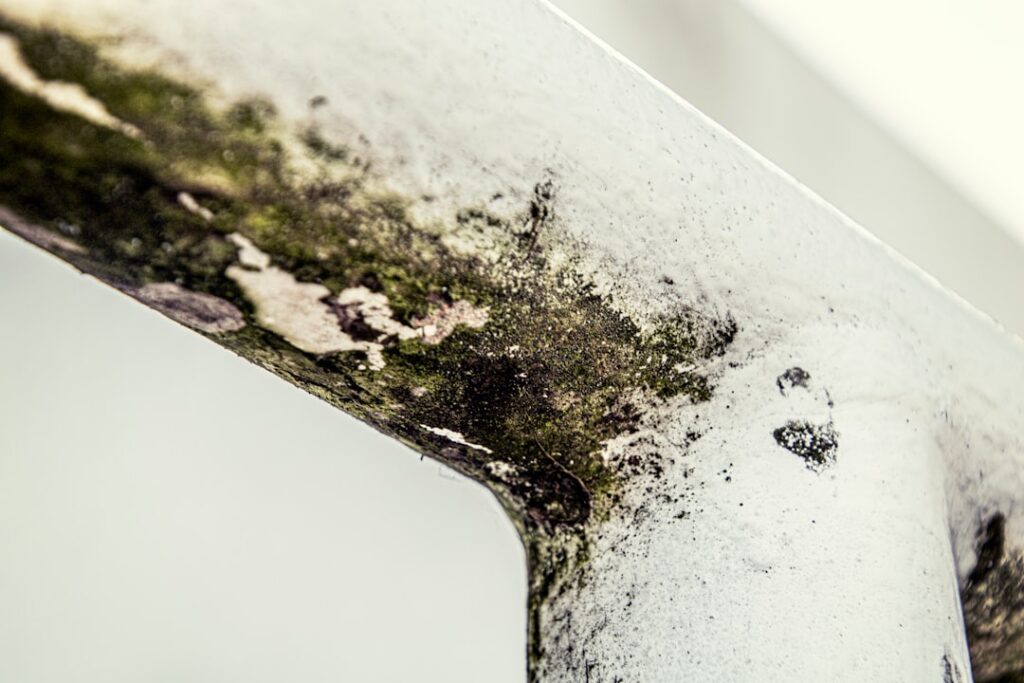
A musty smell in the basement or a gray smudge behind the washing machine tends to send people straight to the store for a kit. Before spending anything, it helps to know what each level of testing can and cannot tell you. An affordable mold test is not simply the cheapest product on the shelf. It is the least expensive step that actually answers the question in front of you, and sometimes that step costs nothing at all. This guide walks through the options from free to most informative: a visual and odor check, a hygrometer, settle plates, tape and swab lab kits, air-pump kits and professional sampling. It also covers what EPA and CDC say about when sampling is worth doing. Price ranges are rough, vary by region and lab, and are general information rather than medical or remediation advice.
Part of our Mold Testing & Inspection guide — start there for the full picture →
Is this mold, asbestos, or water damage? Get a free instant screen
Upload a clear photo of the suspect area. You'll get an instant AI screening opinion and what to do next. This is screening guidance, not a professional determination.
Screening guidance only. AI can be wrong. Confirm asbestos, mold type, or lead with lab testing or a licensed professional before acting.
What an Affordable Mold Test Should Answer
Most homeowners are really asking one of four questions. Is this stain mold? Is there mold somewhere that cannot be seen? Is the air in the house unusual? Did the cleanup work? Each question points to a different method, and the cheapest method that fits the question is the affordable one. Buying a test that answers a different question is the most common way people waste money.
Federal guidance sets an important starting point. EPA’s page on mold testing says that in most cases, if visible mold growth is present, sampling is unnecessary, and that because no EPA or other federal limits have been set for mold or mold spores, sampling cannot be used to check a building’s compliance with federal mold standards (EPA, Mold Testing or Sampling). CDC goes further and states that it does not recommend mold testing, noting that health effects differ from person to person, that good sampling can be expensive, and that there are no set standards for acceptable quantities of different kinds of mold in a home (CDC, Mold).
Put plainly, if mold can already be seen, the most affordable path is usually to skip the lab, fix the moisture source and clean or remove the growth. Testing earns its cost when the problem is hidden, when the source is unclear, when health concerns are involved, or when someone needs documentation that a cleanup worked.
Questions to settle before buying anything
- Can the suspected growth be seen? If yes, identification rarely changes what needs to be done.
- Is there a smell, a past leak or staining with no visible growth? That suggests hidden mold, where investigation matters more than a kit.
- Is someone in the home sensitive, asthmatic or immune-compromised? That raises the value of professional help.
- Is a sale, lease dispute or remediation sign-off involved? Documentation from a qualified professional usually carries more weight than a home kit.
Free and Nearly Free: Visual Check, Odor and a Hygrometer
The cheapest test is a careful look and a deliberate sniff. Mold needs moisture, so the search starts where water shows up: under sinks, around toilets, behind the washer, at window sills that collect condensation, in bathrooms with weak exhaust fans, along basement walls and in crawl spaces. Look for fuzzy or slimy growth, staining, peeling paint, warped trim and swollen drywall. Mold comes in many colors, not only black, and the mold identification chart shows common appearances alongside look-alikes such as soot, dirt and efflorescence.
Odor is a legitimate signal. EPA’s Brief Guide says hidden mold may be suspected if a building smells moldy but the source cannot be seen, or if there has been water damage and residents are reporting health problems (EPA, A Brief Guide to Mold, Moisture and Your Home). The same guide lists hidden locations such as the back side of drywall, wallpaper or paneling, the top side of ceiling tiles, the underside of carpets and pads, and areas inside walls around leaking or condensing pipes.
Why a hygrometer is the best low-cost buy
A hygrometer measures relative humidity, and humidity drives mold growth far more than any spore count. EPA recommends keeping indoor humidity below 60 percent, ideally between 30 and 50 percent, and notes that relative humidity can be measured with a small, inexpensive instrument (EPA lists roughly $10 to $50) sold at many hardware stores. CDC advises keeping humidity no higher than 50 percent all day long.
A hygrometer does not detect mold. What it does is show whether a room has the conditions mold needs. A basement that sits at 70 percent through the summer is a mold risk whatever a kit says today, and a dehumidifier there will likely do more good than any test. Placing a hygrometer in two or three rooms for a week usually reveals the problem spaces. Keep the hygrometer away from windows, exterior doors, supply registers and direct sun, and give it some time to settle after moving it between rooms.
Along the Colorado Front Range, dry outdoor air can make homeowners assume humidity is never an issue. Indoor moisture still builds up from showers, cooking, humidifiers, slab basements and plumbing leaks. Spot readings in bathrooms, basements and closets on exterior walls are worth taking.
DIY Kits: Settle Plates, Tape Lifts and Air Pumps
Home mold kits fall into three broad groups. They differ in cost, in what they collect and, most importantly, in how the results can be read. The DIY mold test kit guide covers step-by-step use. The focus here is value.
Settle-plate (petri dish) kits
Settle-plate kits are usually the lowest-priced kits, often in the rough range of $10 to $25. A dish of growth medium is left open for a set time, then covered and watched for colonies. The appeal is obvious: results appear on the kitchen counter within days and cost very little.
The limits are significant. Mold spores are present in nearly all indoor and outdoor air, so an open dish of nutrients almost always grows something. A positive plate mostly confirms that the air contains spores, which is true of virtually every home. Plates also favor species that grow readily on that medium, collect only what happens to settle by gravity, and give no meaningful concentration. The black mold on a petri dish guide explains why a dark colony on a plate is not proof of a household problem. Some settle-plate kits offer paid lab identification, which adds cost without fixing the core sampling limitations.
Tape-lift and swab lab kits
Tape-lift and swab kits target a specific visible spot. Clear tape is pressed to a stain, or a swab is rubbed across it, and the sample is mailed to a laboratory. The kit itself is often inexpensive, but lab analysis is usually a separate fee, so the total commonly lands somewhere in the rough range of $30 to $100 per sample depending on the lab and the level of analysis.
These kits answer one narrow question well: is this particular stain mold, or something that looks like it? EPA’s mold course notes that most microbiology laboratories need only a little of the suspected mold on a clear strip of sticky tape to determine, using a microscope, whether it is actually mold. That can be worth paying for when the stain might be soot, dirt, paint or mineral deposits. A tape lift cannot reveal hidden mold, cannot describe air quality and, if the spot is obviously mold, rarely changes the next step.
Air-pump kits
Some consumer kits include or rent a small pump that draws air through a collection cassette, which then goes to a lab. Costs vary widely, often in the rough range of $50 to $200 or more when lab fees for several cassettes are included. Air sampling is the method most closely tied to hidden mold questions, but it is also the hardest to do well. Results depend on proper flow rates, timing, house conditions and, critically, an outdoor comparison sample. The air mold tester guide covers the difference between pump-and-cassette samplers and consumer air monitors, and the air sampling for mold guide explains how professionals set up these samples.
A home air kit used without an outdoor control sample, or run during vacuuming or a windy day with windows open, can produce numbers that are hard to interpret. Paying for one cassette and skipping the outdoor sample is a false economy.
Comparing Affordable Mold Test Options
The table below summarizes the options. Costs are rough, hedged ranges that vary by region, lab and kit, and should be treated as a general guide rather than quotes.
| Option | Rough cost (varies) | What it tells you | Limits |
|---|---|---|---|
| Visual and odor check | Free | Where moisture and visible growth are; whether a musty smell suggests hidden mold | Cannot see inside walls, under floors or above ceilings |
| Hygrometer | About $10 to $50 (EPA estimate) | Whether rooms stay humid enough to support mold | Measures humidity, not mold |
| Settle-plate kit | Often about $10 to $25, more with lab ID | That spores in the air can grow on the medium | Nearly always grows something; no outdoor comparison or reliable concentration |
| Tape-lift or swab lab kit | Often about $30 to $100 per sample with lab fee | Whether a specific stain is mold and roughly what kind | Only the spot sampled; says nothing about hidden areas or air |
| DIY air-pump kit | Often about $50 to $200+ with lab fees | Spore types and counts in a short air sample | Snapshot only; easy to misread without outdoor control and proper setup |
| Professional inspection with sampling | Commonly a few hundred dollars, more for many samples | Moisture sources, hidden growth, targeted samples with interpretation | Higher cost; quality depends on the inspector’s experience |
Reading across the rows, the cheapest options answer the most common question, which is where moisture is coming from. The more expensive options answer narrower questions in more detail. Value comes from matching the row to the question.
Professional Mold Inspection With Sampling
A professional mold inspection is mainly a moisture investigation. An experienced inspector looks at the building, the plumbing, the HVAC system and past water events, then uses tools such as moisture meters, hygrometers and sometimes thermal cameras to find damp areas behind finishes. Sampling, if done at all, is targeted at a specific question. The mold testing cost guide breaks down typical pricing factors, including the number of samples, lab turnaround and whether a written report or clearance letter is included.
EPA’s testing page says sampling for mold should be conducted by professionals with specific experience in designing mold sampling protocols, sampling methods and interpreting results, and that analysis should follow methods recommended by professional organizations such as AIHA and ACGIH. That is the main thing a professional adds that a kit cannot: a sampling plan built around the question, plus interpretation in context.
What a reasonable professional visit includes
- A walk-through of the areas of concern and the likely moisture sources.
- Moisture readings on walls, floors and ceilings near suspect areas.
- Humidity readings in key rooms.
- Sampling only where it answers a question, often with an outdoor air control sample if air samples are taken.
- A written summary that ties findings to recommended next steps, such as repair of the leak and cleanup or removal of affected materials.
A visit that pushes many air samples while skipping the moisture investigation is a warning sign. Sample count alone does not equal value. The broader inspection cost guide can help put a mold-specific visit in context with other inspection fees.
When Paying for a Pro Is Worth It
Federal guidance leans against routine testing, but it also describes situations where a professional evaluation makes sense. Spending more is usually justified in three situations.
Suspected hidden mold
EPA’s Brief Guide says investigating hidden mold problems may be difficult and will require caution when it involves disturbing potential sites of growth, giving the example that removing wallpaper can release a large amount of spores if mold is growing underneath. It advises that anyone who believes there may be a hidden mold problem consider hiring an experienced professional. A persistent musty smell, a history of leaks, or staining that keeps returning after cleaning are the common triggers. The guide on how to test for mold inside walls explains the methods used to look behind finishes with less disruption.
Health concerns
CDC notes that exposure to damp and moldy environments may cause a variety of health effects, or none at all, and that some people experience a stuffy nose, sore throat, coughing or wheezing, burning eyes or skin rash. People with asthma or mold allergies may have severe reactions, and immune-compromised people and people with chronic lung disease may develop lung infections from mold. Testing a house does not diagnose anyone, and CDC states that sampling and culturing cannot be relied on to know whether someone might become sick. Still, when someone in the home is vulnerable, a thorough professional search for hidden moisture is often money well spent, alongside medical advice from a physician.
Post-remediation clearance
EPA’s testing page notes that surface sampling may be useful to determine whether an area has been adequately cleaned or remediated. EPA’s mold course adds that after remediation, the types and concentrations of mold in indoor air samples should be similar to those in the local outdoor air. Clearance testing is one of the clearer cases for paying for professional sampling, especially after larger projects. It is best done by someone independent of the remediation contractor, so the person checking the work is not the one who did it.
When a kit or a free check is enough
- Small, visible growth on a hard surface, such as a shower corner or window sill, where cleaning and better ventilation are the obvious fix.
- Curiosity about whether a stain is mold or soot, where a single tape lift may settle it.
- Routine monitoring of humidity in a basement or bathroom, where a hygrometer does the work.
EPA also advises consulting larger remediation guidance when there has been a lot of water damage or mold covers more than 10 square feet, which is a practical threshold for calling in help regardless of testing.
Common Mistakes That Make Cheap Tests Expensive
Low-priced testing becomes costly when it leads to the wrong decision. A few patterns show up repeatedly.
- Treating a positive settle plate as a diagnosis. Because spores are everywhere, a plate that grows colonies is the expected result, not evidence of a problem. Acting on it alone can lead to unnecessary cleanup spending.
- Testing visible mold instead of removing it. CDC notes that no matter what type of mold is present, it needs to be removed. Paying a lab to name a visible patch usually delays the cleanup without changing it.
- Skipping the outdoor comparison. Indoor air numbers mean little without a local outdoor sample taken at the same time. EPA’s mold course lists omitted outdoor control samples among the problems that can occur during sampling.
- Taking too few samples. EPA’s course also lists too few samples and inconsistent protocols as common problems, and says that if sampling cannot be done properly, it is preferable not to sample at all.
- Ignoring humidity. A clean test result on a dry week does not protect a basement that runs humid all summer.
- Painting over growth. EPA advises against painting or caulking moldy surfaces; paint over mold is likely to peel and hides the problem.
The home mold test kit guide looks at how specific kit types perform, and the mold test kits for home guide covers what to look for on the packaging, such as lab accreditation and whether lab fees are included.
A Low-Cost Testing Plan, Step by Step
For most homes, the most affordable approach follows a simple order, spending money only when the previous step leaves a real question open.
- Look and smell. Check the wet-prone areas listed above, including closets on exterior walls and behind appliances. Note musty odors and any stains.
- Measure humidity. Place a hygrometer in suspect rooms for several days. Aim for EPA’s range of 30 to 50 percent and stay under 60 percent.
- Fix obvious moisture. Repair leaks, run exhaust fans that vent outside, dry wet materials within 24 to 48 hours and reduce condensation.
- Clean small visible growth. EPA advises scrubbing mold off hard surfaces with detergent and water and drying completely, and notes that absorbent materials such as ceiling tiles and carpet may have to be thrown away if they become moldy.
- Use a tape lift only if identity matters. If a stain might not be mold, one lab sample can settle it.
- Call a professional for hidden, recurring or health-related problems. This is where the higher spend buys real information.
This order keeps most households in the free and low-cost tiers, and sends the harder cases to someone who can investigate properly. The mold testing hub collects related guides on sampling methods and kits, and the main mold inspection section covers moisture sources, cleanup and when an inspection makes sense.
Front Range notes
Colorado homes often have finished basements built on slabs, which can trap moisture behind carpet and drywall where it stays out of sight. Swamp coolers, whole-house humidifiers and winter window condensation are other common local moisture sources. Spring snowmelt and summer storms also produce short, intense water events at window wells and foundation edges. When a musty smell shows up in a finished basement after any of these, a moisture investigation tends to be worth more than a shelf kit.
References
- U.S. EPA, Mold Testing or Sampling
- U.S. EPA, A Brief Guide to Mold, Moisture and Your Home
- U.S. EPA, Mold Course Chapter 3: Finding Mold and Moisture
- CDC, Mold
Frequently asked questions
What is the most affordable mold test?
A careful visual and odor check is free, and a hygrometer costs little. Together they find where moisture is building up, which matters more than identifying a species. EPA says sampling is usually unnecessary when mold is visible.
Are cheap petri dish mold kits accurate?
They reliably grow something, because mold spores are in nearly all indoor and outdoor air. That makes a positive plate weak evidence of a household problem. They also lack an outdoor comparison and give no reliable concentration.
Is a tape-lift mold test worth the money?
It can be when a stain might be soot, dirt or paint rather than mold. A lab can usually confirm under a microscope whether the sample is mold. It cannot find hidden growth or describe air quality.
When should a professional mold inspection be paid for?
When mold is suspected but not visible, when someone in the home has health concerns, or when clearance after remediation is needed. EPA suggests hiring an experienced professional for hidden mold problems.
Are there legal limits for mold in a home?
No. EPA states that no federal limits have been set for mold or mold spores, and CDC notes there are no set standards for acceptable quantities in a home. Results are interpreted by comparison and context.
Smell mold but cannot find it? Reach out to a Front Range inspector for a moisture-first investigation before buying more kits.