Mold Identification Chart: Colors, Textures and Locations
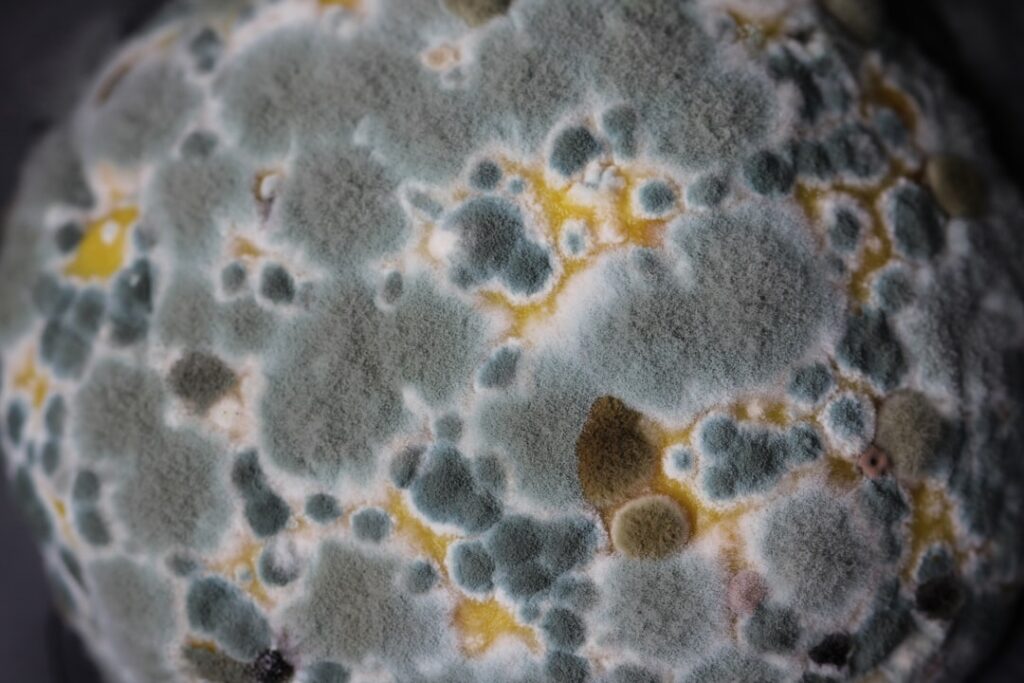
Spotting mold at home usually triggers one question right away: what kind is it? A mold identification chart is a handy way to narrow that down by comparing color, texture and where the growth appears. Charts like the one below are useful for learning the vocabulary and understanding why certain molds turn up in certain places. They are far less useful for making decisions, because many molds look alike and the same mold can look different on different materials. This guide presents a descriptive chart of commonly discussed indoor molds, explains the limits of identifying mold by sight, and covers what federal agencies say about whether the type matters. It is educational only. Confirming a genus or species requires a laboratory, and health questions belong with a physician.
Part of our Types of Mold guide — start there for the full picture →
Is this mold, asbestos, or water damage? Get a free instant screen
Upload a clear photo of the suspect area. You'll get an instant AI screening opinion and what to do next. This is screening guidance, not a professional determination.
Screening guidance only. AI can be wrong. Confirm asbestos, mold type, or lead with lab testing or a licensed professional before acting.
What a Mold Identification Chart Can and Cannot Tell You
A chart matches visible features to the molds that are commonly associated with them. It can help explain why a fuzzy blue-green spot on old bread is often called Penicillium, or why dark growth on wet drywall paper raises questions about Stachybotrys. It cannot confirm either one. The EPA’s mold course states that molds come in many colors, including white, and that “black mold” is not a species or specific kind of mold, and neither is “toxic mold.” Color is a clue, not an identification.
There are several reasons for the gap:
- Many molds share colors. Dozens of genera can look green, gray, brown or black.
- Color changes with age. Many molds start white or pale and darken as they produce spores.
- The material matters. Growth on drywall, wood, grout, fabric and food can look different even when it is the same organism, and stains from the material can change the apparent color.
- Mixed growth is common. The EPA course notes that more than one type of mold is often found growing in the same area.
- Lighting and moisture affect appearance. Wet growth can look darker and slimy; dry growth can look powdery or sooty.
Keep those limits in mind while reading the chart below. For a broader overview of how molds are named and grouped, see our guides to names of mold and types of mold.
Mold Identification Chart: Common Indoor Molds
The chart below summarizes how several commonly discussed household molds are typically described. These are general descriptions drawn from common usage, not diagnostic criteria. Any of these genera can look different from what is listed, and many other molds can match the same description.
| Genus (commonly associated) | Typical color | Typical texture | Where it is often reported |
|---|---|---|---|
| Cladosporium | Olive green, brown, gray or black | Velvety or powdery, often in small spots | Window frames and sills, bathroom surfaces, painted surfaces, fabrics, HVAC areas; also very common outdoors |
| Penicillium | Blue-green or green, sometimes with a white edge | Fuzzy or velvety | Water-damaged materials, wallpaper, carpet, insulation, spoiled food |
| Aspergillus | Varies widely: green, yellow, gray, white, brown or black | Powdery to fuzzy | Dust, damp walls, HVAC components, stored food, water-damaged materials |
| Stachybotrys | Dark greenish-black | Slimy or wet when active; sooty or powdery when dry | Chronically wet high-cellulose materials such as drywall paper, ceiling tiles, cardboard |
| Alternaria | Dark olive, brown or gray-black | Velvety, sometimes with fine hair-like texture | Showers, under sinks, around windows, damp areas with condensation |
| Chaetomium | White or gray at first, darkening to olive or brown | Cottony | Water-damaged drywall, wallpaper, wood and other cellulose materials |
| Mucor and Rhizopus | White to gray, sometimes with dark dots | Fluffy, cotton-like, fast-spreading | Damp areas, around condensation, food and soil |
| Trichoderma | White at first, often turning green | Wooly or tufted | Wet wood, damp drywall, carpet and paper products |
| Fusarium | White, pink, reddish or purple tones | Cottony | Water-damaged carpet and fabrics, damp areas, plant material and food |
| Aureobasidium | Pink, cream or brown early; can turn black | Smooth or slimy early, later leathery | Painted or caulked surfaces, wood, window frames |
The CDC lists Cladosporium, Penicillium and Aspergillus as the most common indoor molds, which is why those three appear at the top of most charts. Deeper profiles are in our guides to Cladosporium, Penicillium chrysogenum and Stachybotrys. The mold types hub collects the rest.
Reading the chart by color
Many people start from color rather than genus. A rough color-first reading looks like this:
- Black or very dark: Could be Cladosporium, Alternaria, Aspergillus, Stachybotrys, or several others. Dark color alone does not point to any one of them.
- Green or blue-green: Often associated with Penicillium, Aspergillus, Cladosporium or Trichoderma.
- White or gray: Many molds look white early on, including Mucor, Chaetomium and Trichoderma. White material on masonry may not be mold at all, but mineral salt deposits.
- Pink, red or orange: Sometimes associated with Fusarium or Aureobasidium. Pink film in showers is frequently bacterial rather than fungal.
- Yellow: Some Aspergillus species; yellow growth in gardens or mulch is often a slime mold, which is a different kind of organism.
Our mold colors guide walks through each color group with more context.
Reading the chart by location
Location is often more informative than color, because it tells you about moisture. The EPA mold course lists bathroom tile and grout, basement walls, areas around windows, and around sinks as common sites for indoor mold growth. Growth on drywall paper after a long leak points to a different set of conditions than spotting on a window frame from winter condensation. Neither tells you the species, but both tell you where to look for the water.
Petri Dish Charts and Lab Photos
Many mold identification charts online are built from photos of mold growing in petri dishes. The EPA’s own mold course includes an image of mold growing in petri dishes alongside its discussion of mold colors. These photos look very different from mold on a wall. In a lab, a sample is placed on a nutrient medium, called agar, and allowed to grow into colonies under controlled conditions. Colony color, shape, edge pattern, surface texture and the color on the underside of the dish are all features that trained analysts use, along with microscope examination.
Petri dish photos are useful for understanding how culture-based testing works and for recognizing why lab reports list specific genera. They are not a reliable tool for identifying growth on a home surface, because the same mold can look quite different on agar than on drywall or wood. Settle plates exposed to room air also capture whatever spores happen to land, and those spores are present in nearly all indoor air. Our dedicated guides to the petri dish mold identification chart and petri dish mold identification photos cover culture plates in more detail.
Why Visual Identification Is Unreliable
Even experienced inspectors do not name a mold by looking at it. Federal guidance gives several reasons why sight alone falls short, and why it usually does not need to be the goal.
Appearance does not reveal toxicity
The EPA mold course explains that some, but not all, molds may produce potentially toxic byproducts called mycotoxins under some conditions, and that the amount and types produced depend on many environmental and genetic factors. It states that no one can tell whether a mold is producing mycotoxins just by looking at it. A chart that labels one color “toxic” and another “harmless” oversimplifies what the agencies actually say.
Health effects depend on the person
The CDC says exposure to damp and moldy environments may cause a variety of health effects, or none at all, and that the health effects of mold are different for different people. Some people experience a stuffy nose, sore throat, coughing or wheezing, burning eyes or skin rash, and people with asthma or mold allergies may have severe reactions. The EPA course adds that dead or alive, mold can cause allergic reactions in some people. None of that depends on matching a color to a chart.
Look-alikes are common
Several things look like mold but are not. Efflorescence on concrete and brick is a white salt deposit. Soot from candles or combustion appliances leaves dark streaks along ceilings and walls. Pink or orange film in showers is often bacterial. Dirt, water staining and rust also get mistaken for mold. A musty smell is a better hint that growth is present; the EPA notes that a moldy odor suggests mold is growing and should be investigated.
Apps and photo tools have the same limits
Phone apps that suggest a mold type from a photo rely on the same visual features as a printed chart, with the same blind spots. They can be a starting point for research, but they cannot confirm a genus or tell you whether growth is a health concern. See our guide to mold identification apps for a closer look.
Does the Type of Mold Change What You Should Do?
For most homeowners, no. The CDC states that if you see or smell mold you should remove it, and that you do not need to know the type of mold. It adds that if mold is growing in your home, you need to clean up the mold and fix the moisture problem. The EPA’s Brief Guide to Mold, Moisture and Your Home takes the same practical line: the key to mold control is moisture control.
That means the response to a suspected Cladosporium spot on a window frame and a suspected Stachybotrys patch on drywall is fundamentally the same process:
- Find and fix the water source. Leak, condensation, high humidity or ground moisture.
- Assess the size. The EPA says areas under about 10 square feet can usually be handled by a homeowner, while larger areas or significant water damage call for professional remediation guidance.
- Protect yourself. The EPA suggests an N-95 respirator, gloves and non-vented goggles.
- Clean or remove. Scrub hard surfaces with detergent and water and dry completely. Porous materials such as ceiling tiles and carpet may have to be thrown away if moldy.
- Confirm it stays dry. The EPA says the cleanup is not finished until the water or moisture problem has been fixed and there is no visible mold or moldy odor.
The chart is most useful as background knowledge. The moisture source is what actually determines the next step. For a general overview of the identification process, see our mold identification guide.
How Mold Is Identified in a Lab
When the genus or species genuinely matters, identification happens in a laboratory. The EPA’s guidance on mold testing and sampling says that in most cases, if visible mold growth is present, sampling is unnecessary. It also says sampling should be done by professionals with specific experience in designing sampling protocols, sampling methods and interpreting results, and that analysis should follow methods recommended by the American Industrial Hygiene Association (AIHA), the American Conference of Governmental Industrial Hygienists (ACGIH) or other professional organizations.
Common sample types
- Tape lifts and swabs: Surface samples taken from visible growth. A lab examines them under a microscope to identify spore types and fungal structures. The EPA notes surface sampling may be useful to determine whether an area has been adequately cleaned.
- Bulk samples: A small piece of the material itself, such as drywall or carpet, sent for analysis.
- Air samples: A pump draws a measured volume of air through a cassette, which the lab examines for spore types and counts. Results are usually compared with an outdoor sample taken at the same time. Our guide to air sampling for mold explains the process.
- Culture samples: Material is grown on agar so the lab can identify living colonies, which is where petri dish photos come from.
What lab results can and cannot answer
A lab report can name the genera present and, depending on the method, give counts or relative amounts. It cannot, by itself, say whether a home is safe. The EPA states that no federal limits have been set for mold or mold spores, and that there are no EPA regulations or standards for airborne mold contaminants. The CDC adds that there are no set standards for acceptable amounts of mold in a home and that it does not recommend routine mold testing, in part because sampling and culturing cannot predict whether someone will become sick.
Testing can still make sense in specific situations: suspected hidden mold behind walls, a real-estate transaction or insurance claim that needs documentation, or confirming that remediation was effective. In those cases, a qualified professional who designs the sampling around a clear question is worth more than a test run without one. Our mold inspection pillar explains what a professional inspection involves. Homeowners who want to collect a sample on their own can browse our mold test kit collection, keeping in mind that results need careful interpretation.
Common Household Spots and What They Usually Suggest
Because location says more about moisture than color says about species, it helps to read a chart alongside the places mold typically turns up in a Front Range home. The notes below describe what each spot usually suggests about water, not which mold is present.
Bathroom ceilings, grout and caulk
Small dark or pinkish spots on grout, caulk lines and ceilings above the shower are among the most common finds. They usually point to humidity from showers that is not being exhausted. The EPA notes that places that are often or always damp can be hard to keep completely free of mold, and that running a fan or opening a window, along with more frequent cleaning, usually keeps recurring bathroom mold to a minimum. Spotting that returns quickly after cleaning is a sign the ventilation needs attention.
Window frames and sills
Speckled black or gray growth along window frames, sills and the edges of glass is closely tied to winter condensation. Cold glass meets warm indoor air, water collects, and it returns night after night. The EPA mold course names areas around windows as common sites of indoor growth and notes that a little condensation can be enough for mold to grow. Lowering indoor humidity and improving air movement near the glass usually matter more than the identity of the spots.
Basement walls and stored items
White, gray or green fuzz on cardboard boxes, the bottom plates of framed walls, or furniture stored against foundation walls usually reflects high humidity in a cool space. White crystalline deposits on the concrete itself may be efflorescence rather than mold. Both point to moisture moving through or around the foundation.
Drywall after a leak
Dark, sometimes slimy growth on the paper face of drywall, especially low on walls or around plumbing, tends to follow longer-running leaks. This is the setting most often linked to Stachybotrys in charts, but many molds can grow there. The EPA notes that mold can fill the crevices of absorbent or porous materials, making them difficult or impossible to clean completely, so replacing affected drywall is often part of the fix.
Attics and roof sheathing
Gray, black or white staining on roof decking often comes from warm, moist air leaking up from the house and condensing on cold sheathing, or from roof leaks. A careful look at bath fan ducts, attic ventilation and air sealing is usually more useful than a color comparison.
HVAC components
Growth near air handler drain pans, on duct insulation or around supply registers is worth taking seriously because the system can spread spores. The EPA advises against running an HVAC system that is known or suspected to be contaminated with mold and points homeowners to its guidance on duct cleaning before taking further action.
Using a Mold Identification Chart Sensibly
A chart earns its place when it is used for the right job. A few practical habits help:
- Use it to learn, not to decide. It explains common names on lab reports and in articles, which makes conversations with inspectors easier.
- Note location and moisture first. Write down where the growth is, how big it is, and any nearby leaks or condensation. That information drives the response.
- Photograph before cleaning. Photos help with insurance, landlord communication and later comparison if growth returns.
- Treat all visible mold the same way. The CDC’s guidance not to worry about the type applies to every color in the chart.
- Get lab analysis only for a reason. Hidden mold, legal or transaction needs, or clearance after remediation are the common ones.
- Talk to a physician about symptoms. Health concerns belong with a medical professional, not with a color chart.
References
- Mold — Centers for Disease Control and Prevention
- Mold Course Chapter 1: Introduction to Molds — U.S. Environmental Protection Agency
- Mold Testing or Sampling — U.S. Environmental Protection Agency
- A Brief Guide to Mold, Moisture and Your Home — U.S. Environmental Protection Agency
Frequently asked questions
Can a mold identification chart tell what kind of mold I have?
Only loosely. A chart matches color, texture and location to molds commonly associated with them, but many molds look alike and change color as they grow. Confirming a genus or species requires laboratory analysis.
Is black mold always Stachybotrys?
No. The EPA notes that black mold is not a species or specific kind of mold. Many dark molds, including Cladosporium, Alternaria and some Aspergillus, can look black.
Do I need to know the type of mold before cleaning it?
No. The CDC states that you do not need to know the type of mold. If mold is growing, clean it up and fix the moisture problem. The EPA suggests professional help for areas larger than about 10 square feet.
What are the most common indoor molds?
The CDC lists Cladosporium, Penicillium and Aspergillus as the most common indoor molds. Others, such as Alternaria, Chaetomium and Stachybotrys, are also found in damp or water-damaged homes.
When is mold testing worth it?
The EPA says sampling is usually unnecessary when mold is visible. Testing can help with suspected hidden mold, real-estate or insurance documentation, or confirming that remediation worked, and it should be designed and interpreted by an experienced professional.
Trying to make sense of mystery growth or a lab report? Drop us a line and we can put you in touch with an independent Front Range inspector who can focus on the moisture source rather than the color.
DIY mold test kits
A test kit can confirm whether a suspect patch is mold and (with lab analysis) what type — though visible mold over ~10 sq ft generally warrants a professional.
| Product | Why | Buy |
|---|---|---|
 DIY Mold Test (lab included) DIY Mold Test (lab included) | Surface + air-sampling options. | Amazon — $49.99 |
 Healthful Home 5-Minute Mold Test Healthful Home 5-Minute Mold Test | Rapid screening strips. | Amazon — $35.47 |
 Mold Test Plates (DIY petri dishes) Mold Test Plates (DIY petri dishes) | Settle-plate style sampling you culture at home. | Amazon — $22.99 |