Black Mold Test: What Homeowners Need to Know
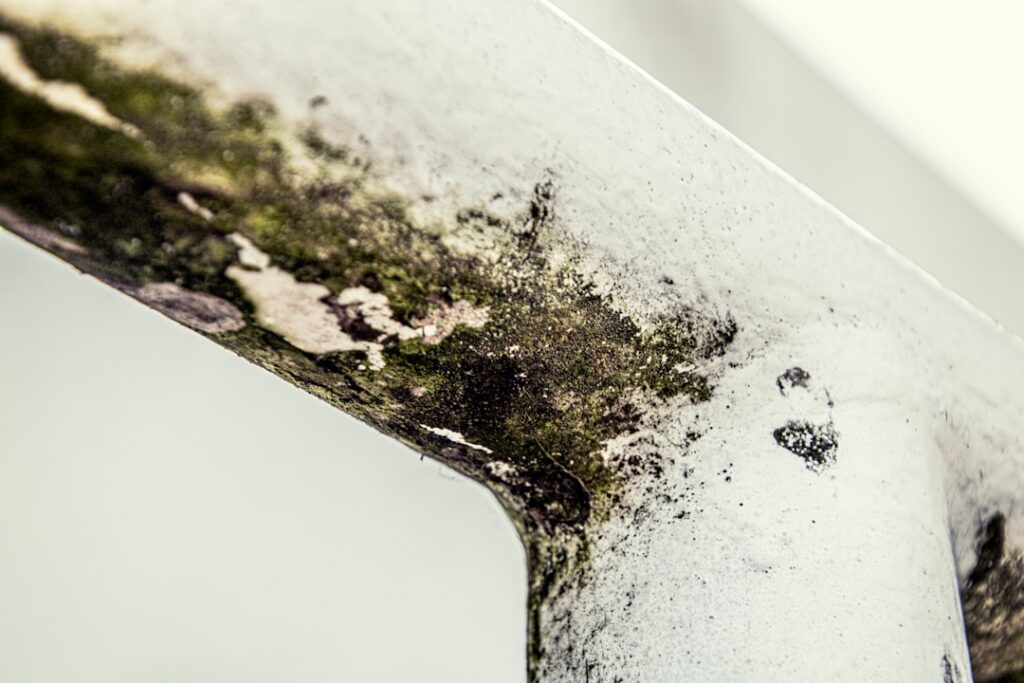
Spot a dark patch on the wall and the next thought is often, should this be tested? A black mold test promises certainty about what is growing and whether it is dangerous, but the answer is more layered than the kit boxes suggest. Sometimes testing is genuinely useful, and sometimes it is money better spent on cleanup. This guide summarizes EPA and CDC guidance current as of 2026 and is educational only. Consult your physician about any symptoms and a certified professional for testing and removal decisions, since interpreting results properly takes expertise a webpage cannot replace.
Part of our Black Mold & Your Health guide — start there for the full picture →
Is this mold, asbestos, or water damage? Get a free instant screen
Upload a clear photo of the suspect area. You'll get an instant AI screening opinion and what to do next. This is screening guidance, not a professional determination.
Screening guidance only. AI can be wrong. Confirm asbestos, mold type, or lead with lab testing or a licensed professional before acting.
Do you actually need a black mold test?
Here is the point the agencies make clearly and the marketing tends to bury: for visible mold, testing is usually unnecessary. The EPA states that sampling is generally not needed before cleanup, because the response is the same regardless of species. If mold is visible, it should be removed and the moisture corrected, and knowing whether it is Stachybotrys or Cladosporium rarely changes that work.
Testing earns its cost in narrower situations: confirming suspected hidden mold behind walls or under floors when there is a musty smell but nothing visible, documenting a problem for a landlord dispute or real estate transaction, verifying that remediation actually cleared the contamination, or guiding a physician treating a patient with a known mold sensitivity. Outside those cases, paying to identify a visible black patch often delays the cleanup that needs to happen anyway. For the cleanup itself, our guide on how to get rid of mold walks through the EPA process.
The logic behind the agencies’ position is worth unpacking, because it runs counter to intuition. People naturally want to know exactly what they are dealing with before acting, and a test promises that knowledge. But the action does not change with the answer. Whether a sample comes back as Stachybotrys, Cladosporium, or Penicillium, the EPA’s response is identical: remove the visible growth, discard ruined porous materials, and correct the moisture. Spending several hundred dollars to learn a species name that does not alter the plan is, in most cases, money that would do more good funding the cleanup itself. The exceptions are the specific situations above, where the test answers a question other than “what should I do about this visible patch.”
Types of black mold tests
Testing falls into a few categories with very different reliability.
DIY mold test kits
Hardware-store kits usually include a settling plate or a swab and tape lift. The settling-plate kits ask you to expose a petri dish to the air, incubate it, and watch mold grow. The trouble is that mold spores are present in essentially all indoor and outdoor air, so a plate will almost always grow something, producing a “positive” result that proves little about whether there is a problem. Without a comparison outdoor sample and laboratory analysis, these kits offer limited reliable information, a limitation consumer and industry sources note repeatedly.
DIY sampling with lab analysis
A step up are kits where you collect a sample, surface tape lift or swab, and mail it to an accredited lab for analysis. These can identify the genera present and are more meaningful than a settling plate, though sample collection technique affects accuracy, and air sampling done properly requires a calibrated pump rather than an open dish.
Professional inspection and sampling
A qualified mold inspector or industrial hygienist uses calibrated air sampling pumps, surface sampling, moisture meters, and sometimes thermal imaging, and compares indoor results against an outdoor baseline taken the same day. This comparison is what gives air results meaning, since indoor spore types and counts are judged relative to what is normal outside. This is the most reliable route, and the one that holds up in a dispute. The broader mold inspection and testing hub covers what a professional assessment includes.
What black mold test results mean
Results are often misread, so a few principles help. There is no federal regulatory threshold for “safe” indoor mold spore counts; the EPA has not established numeric standards. Instead, interpretation rests on comparison. Indoor air results are evaluated against an outdoor baseline: if indoor spore types and concentrations resemble or fall below outdoor levels, that suggests no significant indoor amplification, while indoor counts much higher than outdoors, or the presence of water-damage indicator molds, suggests an indoor source.
A species identification tells you what is growing but not, by itself, how sick anyone will get, since individual sensitivity varies enormously. A positive result for Stachybotrys does not mean a health catastrophe, and a result without it does not mean the home is problem-free. This is exactly why the agencies favor finding and fixing moisture over chasing numbers, and why professional interpretation matters more than the raw lab printout.
Spore counts come with their own interpretation traps. Counts fluctuate with weather, season, recent activity in the home, and even whether a window was open, so a single number is a snapshot rather than a verdict. Outdoor levels rise and fall through the year, which is why the outdoor baseline must be taken the same day as the indoor sample to be meaningful. A result that looks alarming in isolation may be unremarkable once compared to what was drifting outside that afternoon. Conversely, a low count taken right after cleaning can give false reassurance, since cleaning temporarily suppresses airborne spores without addressing a hidden source. These nuances are why a raw lab report in a homeowner’s hands so often leads to either needless panic or false comfort, and why interpretation by someone who understands the comparison is the part that gives testing its value.
How to test for black mold properly
If testing is warranted, doing it well improves the odds of a meaningful result:
- Decide the purpose first, hidden-mold confirmation, dispute documentation, or post-remediation verification, since it shapes the method.
- For air sampling, use or hire someone with a calibrated pump and always pair indoor samples with a same-day outdoor baseline.
- Sample under normal conditions rather than after cleaning, which can temporarily suppress counts.
- Use an accredited laboratory for analysis.
- Have the results interpreted by a professional who understands the indoor-versus-outdoor comparison.
For most homeowners with a visible dark patch, the more practical path is to skip testing and go straight to cleanup and moisture repair, reserving testing for the specific situations where it adds real value. Our overview of how to tell whether something is mold helps decide whether a visual call is enough.
When to hire a professional instead of testing yourself
Professional involvement makes sense when the stakes or the complexity rise. Hire a pro when there is a musty smell but no visible source, when contamination may exceed about 10 square feet, when you need documentation for a landlord or buyer dispute, when you want to verify a completed remediation, or when an occupant has asthma, a serious allergy, or a weakened immune system. A professional brings the calibrated equipment, the outdoor-comparison method, and the interpretation experience that turn raw data into an actionable answer.
On the Front Range, where finished basements, crawl spaces, and swamp coolers create hidden moisture, a professional moisture assessment frequently uncovers the source faster than air testing alone. Spending on finding and fixing the water usually beats spending on a test that only confirms what a musty smell already suggested.
A sensible decision path for homeowners
Pulling the pieces together gives a clear way to decide. If mold is visible, skip the test in most cases and go straight to cleanup and moisture repair following EPA guidance, since the test would not change what needs doing. If there is a strong musty smell but nothing visible, a professional moisture and mold assessment is more useful than a DIY air kit, because it can locate the hidden source rather than just confirm spores exist.
If the purpose is documentation for a dispute, a real estate transaction, or verification that a remediation worked, use professional sampling with an outdoor comparison and accredited lab analysis, since those situations demand reliable, defensible data. And if someone in the home has a diagnosed mold sensitivity, let their physician guide whether species information would help their care. Matching the testing decision to the actual purpose, rather than testing reflexively out of worry, is what keeps the spending focused on solving the problem. A settling-plate kit from a hardware store rarely fits any of these purposes well, which is why it tops few professional recommendations.
What a black mold test actually costs
Cost shapes the decision as much as accuracy. A hardware-store settling-plate kit is inexpensive but, as noted, of limited reliability, so its low price reflects low value rather than a bargain. A mail-in kit with accredited lab analysis costs more and returns more meaningful information, though sample-collection technique still affects the result. A professional assessment with calibrated air sampling, an outdoor baseline, and interpretation is the most expensive option and the most defensible, particularly when the result needs to hold up in a dispute or a real estate negotiation.
Weighing those costs against the alternative clarifies the choice. For visible mold, the cleanup needs to happen regardless of any test, so testing money often competes directly with remediation money. Spending several hundred dollars to confirm what a homeowner can already see, then still having to pay for the cleanup, is rarely the best allocation. Reserving testing budget for the situations where it answers a real question, locating hidden growth, documenting a dispute, or verifying a completed remediation, keeps the spending purposeful. When the choice is between testing a visible patch and simply cleaning it, the cleanup almost always delivers more value per dollar, which is the practical reason the agencies steer homeowners toward action over analysis for visible mold.
Testing during a home purchase
One situation where the testing question takes on real weight is a real estate transaction. A buyer who notices staining, a musty smell, or signs of past water damage during a walkthrough has a legitimate reason to want objective information before closing, since mold and its underlying moisture problem can represent significant repair costs. Here, professional sampling and a moisture assessment can document the condition and inform negotiation, and the cost is small relative to the price of the home and the potential repairs.
The most useful approach in a purchase is to focus the investigation on moisture and hidden growth rather than on simply confirming that some mold exists, which is true of virtually every building. An inspector using moisture meters and, where warranted, sampling can distinguish a minor surface issue from evidence of chronic water intrusion behind walls or in a crawl space. That distinction is what a buyer actually needs to know. A seller’s reassurance or a quick visual glance does not carry the same weight as an independent assessment, which is why a buyer with genuine concerns is usually better served commissioning their own evaluation than relying on a settling-plate kit or a verbal assurance. The decision still follows the same principle, match the test to the question, but in a transaction the question of hidden moisture is often worth answering before money changes hands.
The recurring theme across every scenario is that a black mold test is a tool for answering a specific question, not a default first step. For visible mold, clean it. For a musty smell with no source, assess for hidden moisture. For a dispute, a transaction, or remediation verification, use professional sampling with an outdoor comparison. And let a physician guide testing tied to a diagnosed sensitivity. Matching the method to the purpose, and resisting the urge to test reflexively out of worry, keeps the effort and the money aimed at solving the actual problem rather than at confirming what is already known.
References
- Mold cleanup in your home — U.S. Environmental Protection Agency
- Basic facts about mold and dampness — Centers for Disease Control and Prevention
- A brief guide to mold, moisture and your home — U.S. Environmental Protection Agency
Frequently asked questions
Do I need to test for black mold?
Usually not for visible mold. The EPA says sampling is generally unnecessary because the cleanup is the same regardless of species. Testing is most useful to confirm hidden mold, document a dispute, verify remediation, or guide care for someone with a mold sensitivity.
Are DIY mold test kits reliable?
Settling-plate kits are largely unreliable because mold spores exist in nearly all air, so they almost always grow something. Mail-in lab kits are better, and professional sampling with a calibrated pump and a same-day outdoor comparison is the most reliable.
What do black mold test results mean?
There is no federal safe-level standard for indoor mold, so results are interpreted by comparing indoor samples to an outdoor baseline. Indoor counts much higher than outdoors, or water-damage indicator molds, suggest an indoor source. Species ID does not predict how sick someone will get.
Should I test before cleaning visible black mold?
Generally no. For a visible patch, going straight to cleanup and moisture repair is usually the better use of money. Reserve testing for hidden mold, disputes, post-remediation verification, or medical guidance.
If a musty smell in your Front Range home suggests hidden mold but you cannot find it, reach out through our contact page to connect with a vetted local inspector who can test and interpret the results properly.