Black Mold Phlegm: What Homeowners Need to Know
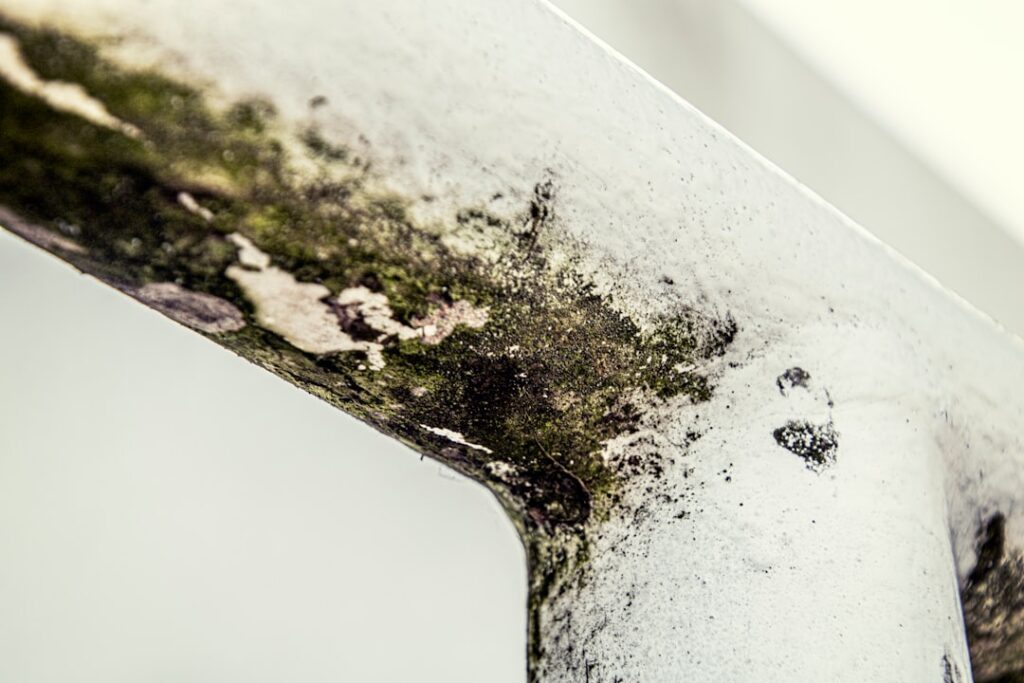
Homeowners searching “black mold phlegm” are usually asking a medical question through a home-side keyword. This guide summarizes EPA, CDC, and NIEHS guidance on residential mold for homeowners current as of 2026. It is explicitly not medical advice. Any household member experiencing respiratory symptoms — including persistent productive cough, blood in sputum, fever, shortness of breath, chest tightness, or worsening asthma — should consult a physician. A clinician is the only person who can evaluate symptoms, interpret tests, and recommend treatment. The home-side conversation that follows covers what the homeowner can actually do: investigate whether indoor conditions might be contributing, fix the moisture source, and document for the medical visit.
Part of our Black Mold & Your Health guide — start there for the full picture →
Is this mold, asbestos, or water damage? Get a free instant screen
Upload a clear photo of the suspect area. You'll get an instant AI screening opinion and what to do next. This is screening guidance, not a professional determination.
Screening guidance only. AI can be wrong. Confirm asbestos, mold type, or lead with lab testing or a licensed professional before acting.
The medical question belongs to a clinician
Phlegm, sputum production, and respiratory symptoms generally need clinical evaluation rather than internet research. The reasons are practical. Many conditions produce phlegm — viral and bacterial infections, allergies, asthma, GERD, smoking, bronchitis, sinusitis, and others. A physician differentiates by history, examination, and selected testing. Mold sensitivity exists; mold infections in immune-compromised people exist; mold-related respiratory irritation exists per CDC guidance. But “I have phlegm and there is mold somewhere in my house” does not establish a clinical diagnosis. The clinician makes that determination.
What homeowners can usefully do for the medical visit is document the indoor environment so the physician has accurate context. Useful items include the home’s age and known moisture or leak history, whether visible mold has been seen and where, whether a musty smell is present and where, whether symptoms improve when the patient is away from the house for several days, whether other household members or pets are affected, and any recent water events. None of this replaces the clinical evaluation; all of it shortens the conversation.
What CDC and EPA actually say about indoor mold and respiratory symptoms
CDC guidance on indoor mold lists upper respiratory tract symptoms including coughing, wheezing, and throat irritation as outcomes reported with exposure in otherwise healthy people. People with asthma and people with mold allergies may have stronger reactions. People with immune-compromising conditions or chronic lung disease may develop more serious infections. The agency does not publish a residential exposure threshold above which symptoms are predicted; the public health recommendation is to prevent and remediate indoor mold growth.
EPA’s “A Brief Guide to Mold, Moisture, and Your Home” makes the same point: indoor mold cannot be entirely eliminated, but indoor mold growth can be controlled by controlling moisture. NIEHS notes that residential mold and health science continues to evolve, particularly around mycotoxin questions, but the operational recommendation remains stable — remove the mold, fix the moisture, evaluate symptoms clinically.
Home-side response when phlegm is part of the household picture
If a household member is experiencing phlegm production and has seen a physician (or has an appointment scheduled), the home-side work proceeds in parallel. The goal is to remove the indoor environment as a possible contributor while the clinician handles the medical evaluation.
Step one: identify the moisture source
Mold cannot establish indoors without moisture. The first task is finding where moisture is accumulating. Five typical Front Range sources are listed below. None require lab equipment to spot.
The first is bathroom ventilation: a fan that vents into the attic instead of outdoors, a fan that has never been cleaned, or a bathroom with no fan at all. The second is basement humidity above 60 percent on a hygrometer. The third is slow plumbing leaks under sinks, behind toilets, at washing-machine connections, or at refrigerator water lines. The fourth is roof and flashing failures producing intermittent leaks into walls and attics. The fifth is HVAC condensate problems, particularly clogged condensate drains that spill water into equipment closets or finished ceilings below. The mold inspection and testing pillar walks through each in more detail.
Step two: assess visible growth
Where moisture has been present, look for visible growth. EPA’s residential scale: under 10 square feet of affected surface on hard non-porous materials is generally homeowner-cleanable with appropriate PPE. Larger areas, hidden growth, HVAC contamination, or sewage-related water damage warrant a professional remediation contractor following IICRC S520 standards.
Step three: remove the indoor contributor
Source moisture repair plus cleanup plus removal of unsalvageable porous materials is the EPA-endorsed approach. Saturated drywall, carpet pad, and upholstered furniture generally cannot be reliably cleaned and should be removed. Hard, non-porous surfaces are cleanable with detergent and water.
Step four: verify and observe
After source repair and cleanup: does the affected area stay dry? Does the musty smell dissipate? Does indoor humidity stay in the 40-50 percent range? Do the household member’s symptoms — as evaluated by the physician — improve over the days and weeks following remediation? The clinician interprets the symptom side; the homeowner observes the environment side.
What blood in phlegm means in a home context
Blood-streaked or bloody phlegm (hemoptysis) is a clinical situation that warrants prompt medical attention regardless of any concerns about indoor mold. It is not a finding for which a homeowner should be investigating the house first. Many serious causes — bronchitis, pneumonia, pulmonary embolism, cancer, tuberculosis, severe sinusitis — must be ruled out clinically. Mold-related causes are possible in specific clinical contexts (e.g., aspergillosis in immune-compromised patients) but are far from the most common explanations.
The home-side mistake to avoid: do not delay a medical visit to investigate indoor mold first. Address both fronts in parallel. The medical evaluation is the controlling factor on the symptom side.
Black mold and immune-compromised household members
If anyone in the home is undergoing chemotherapy, is post-transplant, has HIV/AIDS with low CD4 counts, has cystic fibrosis, has uncontrolled diabetes, or has any other condition that compromises immune function, the home-side mold response shifts toward conservative. Even small visible mold problems warrant professional remediation rather than family DIY work. Air quality during remediation matters more — containment, HEPA filtration, and possibly temporary relocation of the immune-compromised member during work are reasonable. CDC’s mold guidance specifically calls out the immune-compromised population as warranting greater caution.
This is not paranoia; it is risk-stratification. The relevant medical decisions belong to the immune-compromised person’s clinical team. The home-side decisions about scope and contractor are coordinated with that medical context. Our health issues from black mold guide covers the sensitivity factor in more detail.
What an environmental assessment can and cannot tell you
Homeowners sometimes ask whether an “environmental mold test” can confirm whether their indoor air is causing the phlegm. The honest answer is that air sampling characterizes the indoor environment relative to outdoor air, but it does not establish clinical causation for any individual symptom. The CDC explicitly does not recommend routine air sampling as a basis for medical decisions. Sampling has utility for specific scope decisions — confirming hidden growth before demolition, post-remediation clearance for contract purposes, or documenting baseline for insurance — but it is not a substitute for clinical evaluation. The black mold in air guide covers air sampling in more depth.
Documenting indoor conditions for the medical visit
A short factual summary helps the physician. Useful information includes:
- Onset: When did the phlegm or related symptoms begin? Did anything in the home change around that time — a leak, new HVAC behavior, finished basement project, new humidifier use?
- Pattern: Are symptoms worse at home, worse at work, worse during certain weather, worse in specific rooms, or improved during absences from the house of more than two or three days?
- Other household members: Are children, partners, elderly relatives, or pets exhibiting any related symptoms?
- Visible mold: Has visible mold been found? Where, how large, on what substrate?
- Smell: Is a musty smell present? In which rooms, with which weather, with HVAC on or off?
- Water history: Any leaks, floods, ice dams, slab moisture events, or chronic humidity problems in recent months or years?
- Home age and construction: Pre-1978, 1978-2000, post-2000 affects what materials and likely failure modes are present.
This is documentation, not diagnosis. The clinician decides whether allergy testing, pulmonary function testing, imaging, or specialist referral is warranted based on the clinical picture.
The realistic home-side plan
The home-side plan for a household where a member is experiencing phlegm and indoor mold is a question:
- Schedule the medical visit and bring documentation of indoor conditions.
- Identify and stop the moisture source feeding any visible or suspected mold.
- Scope the cleanup — DIY for under 10 square feet on hard surfaces, professional remediation for larger or hidden situations, immune-compromised households default to professional.
- Verify the indoor environment over the following weeks: dry, no musty smell, humidity 40-50 percent.
- Let the physician interpret the symptom trajectory.
That sequence respects the boundary between what a homeowner controls (the environment) and what a clinician decides (the medical evaluation).
Specific symptom patterns the physician evaluates
The physician will be considering several patterns when evaluating phlegm in the context of indoor mold exposure. Homeowners can document these patterns to help.
The “home better, away worse” pattern
Symptoms that improve significantly during multi-day absences from the home and return on return is a clinically meaningful observation. Vacations, business travel, or temporary stays elsewhere provide natural exposure-reduction tests. The pattern doesn’t prove indoor causation, but it raises the question for the clinician to investigate.
The “household cluster” pattern
When multiple household members develop similar symptoms within a similar timeframe, a shared environmental exposure becomes more likely. Pets affected too — coughing dogs, sneezing cats — adds to the picture. Single-occupant symptoms in a multi-occupant household are less suggestive of environmental causation.
The “specific room or activity” pattern
Symptoms worse after time in specific rooms, after using the HVAC system, after spending time in the basement, or during specific weather conditions point toward locality-specific exposure. The clinician interprets; the homeowner documents the pattern.
Cleanup verification when respiratory symptoms are part of the picture
For households where a member has been experiencing phlegm and indoor mold may be involved, the verification phase after remediation deserves attention.
Post-remediation verification typically includes visual confirmation that affected areas have been properly cleaned or replaced, moisture readings confirming dry conditions, absence of musty smell, indoor relative humidity at 40-50 percent, and in some larger projects third-party clearance air testing performed by an independent industrial hygienist. The verification window is typically 30 days from completion, with periodic re-checks if conditions are weather-variable.
Parallel to the environmental verification, the physician interprets symptom trajectory. Improvement in symptoms following remediation supports (but does not prove) the indoor environmental contribution; persistence of symptoms despite documented environmental improvement points toward non-mold causes that the clinician investigates further. The two evaluations run in parallel and inform each other without one determining the other.
References
- Basic facts about mold and dampness — Centers for Disease Control and Prevention
- A brief guide to mold, moisture, and your home — U.S. Environmental Protection Agency
- Mold and indoor air quality guidance — American Lung Association
Frequently asked questions
Can black mold cause phlegm?
CDC guidance recognizes upper respiratory irritation including cough and increased mucus production among reported symptoms with indoor mold exposure. Whether any specific phlegm production is caused by mold is a clinical determination by a physician, not a homeowner research project.
What should I do first if I have phlegm and mold in my home?
Schedule a medical appointment and proceed with the home-side moisture source investigation in parallel. Both happen at once. Do not delay the medical visit to investigate the house first.
Will mold cleanup improve respiratory symptoms?
That depends on whether indoor mold was contributing to the symptoms, which a physician evaluates. Source moisture repair and cleanup remove the indoor environmental contributor, which is the home-side action regardless of the symptom interpretation.
If a household member’s symptoms are persisting and indoor mold may be a factor, Front Range homeowners can connect with a vetted local inspector through our contact page for a moisture and source assessment alongside the medical evaluation.