Mold or Black Mold: What Homeowners Need to Know
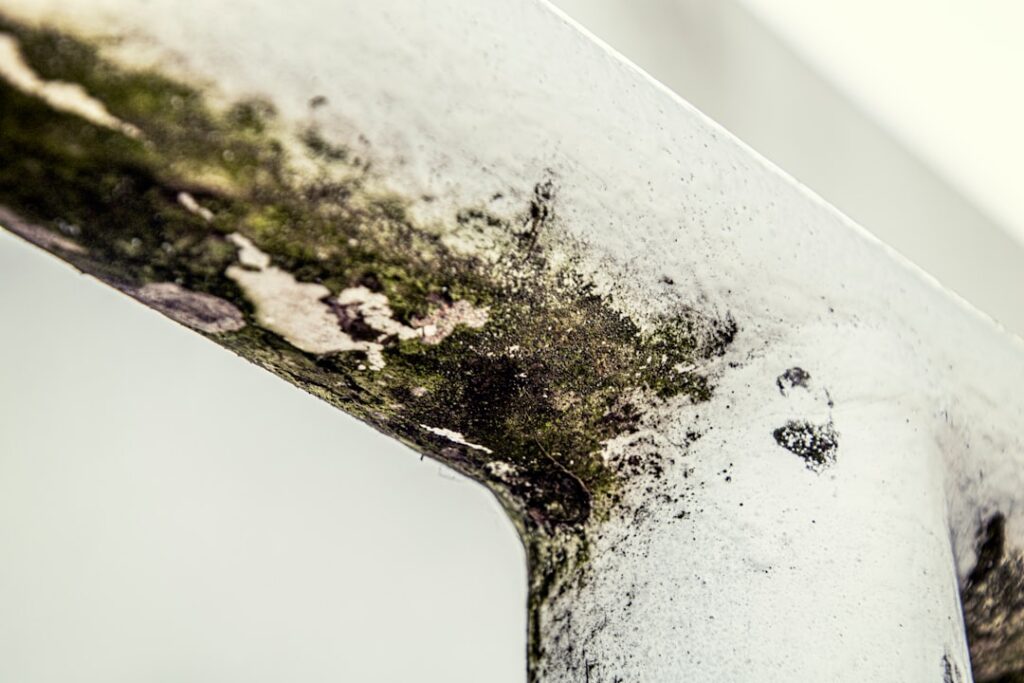
The phrase “mold or black mold” comes up almost every time a homeowner spots a dark patch in a basement, bathroom, or behind a kitchen cabinet. The two words sound like opposites, but they really describe different layers of the same problem. All mold is a fungus that lives on damp organic material. The label “black mold” is a colloquial shorthand the public has attached to one species in particular: Stachybotrys chartarum. This guide summarizes EPA and CDC guidance current as of 2026 — consult a certified mold inspector for testing and your physician for symptom evaluation.
Part of our Black Mold & Your Health guide — start there for the full picture →
Is this mold, asbestos, or water damage? Get a free instant screen
Upload a clear photo of the suspect area. You'll get an instant AI screening opinion and what to do next. This is screening guidance, not a professional determination.
Screening guidance only. AI can be wrong. Confirm asbestos, mold type, or lead with lab testing or a licensed professional before acting.
What Is the Real Difference Between Mold and Black Mold?
Generic household mold is an umbrella term for thousands of fungal species. The most common ones inside homes are Cladosporium, Aspergillus, Penicillium, and Alternaria. They show up in shades of green, brown, gray, pink, and yes, sometimes black. Stachybotrys chartarum is one specific species inside that broad category. The EPA notes that Stachybotrys is greenish-black, slimy when wet, and almost always tied to materials that have stayed soaked for a week or more.
So when a homeowner asks whether they have mold or black mold, the more accurate question is: do I have a common opportunistic mold or do I have Stachybotrys? A wall splotch can be one of dozens of species without being the so-called toxic variety. The risk profile changes with the species, the size of the growth, and the people exposed.
Why the Public Started Calling Stachybotrys ‘Black Mold’
The phrase came out of widely reported indoor air quality cases in the 1990s. Coverage focused on dark, slimy growth in flooded buildings, and the term stuck. The CDC has since pushed back against the idea that Stachybotrys alone causes a unique disease pattern. Their public statement notes that no specific mold species has been definitively linked to acute idiopathic pulmonary hemorrhage outside of one cluster decades ago. The point is not that Stachybotrys is harmless. The point is that other molds can also irritate airways and that color alone is a weak diagnostic.
Front Range homeowners in Denver, Boulder, and Adams counties tend to encounter mold less often than humid coastal regions because the climate is dry. But unvented bathrooms, leaking water heaters, and finished basements after spring snowmelt still create the saturated conditions any mold needs.
Best At Home Mold Test Kit: our top 3 picks
| Product | Best for | Key features | Price | Buy |
|---|---|---|---|---|
| Varify 6-Pack | All-round DIY plate kit |
| $15.99as of Nov 4, 2026 4:10 am GMT+0000 | Buy now →Check current price |
| KAYENQO 12-Test | Testing many rooms |
| $28.99as of Nov 4, 2026 4:10 am GMT+0000 | Buy now →Check current price |
| Detekt Indoor Air Quality Kit | HVAC vents |
| $39.99as of Nov 4, 2026 4:10 am GMT+0000 | Buy now →Check current price |


Prices are Amazon’s listed prices as of the time shown and change often; check Amazon for today’s price. As an Amazon Associate we earn from qualifying purchases.
Visual Clues That Lean Toward Black Mold
Stachybotrys chartarum has a few recurring physical features that make it stand out from generic mold. It tends to be a deep greenish-black or olive-black, never bright. The colony often looks slimy or wet at its edges, with a faint sheen when light hits it sideways. It usually grows on cellulose-rich material that has been chronically wet — paper-faced drywall, soaked baseboards, the back of saturated wallpaper, or wet ceiling tiles. Once the surface dries out, the colony can darken further and look almost soot-like, which is one reason homeowners sometimes mistake old furnace soot or chimney staining for mold.
By contrast, the most common dark-colored household molds homeowners confuse with Stachybotrys include:
- Cladosporium — olive-green to dark brown, powdery rather than slimy, common on bathroom grout and window frames.
- Aspergillus niger — yes, “niger” means black; a fuzzy black-and-yellow growth on damp walls and stored food.
- Alternaria — dark green to black, velvety, often under sinks and around showers.
- Mildew — flat, powdery, gray-to-black, typical on tile grout and caulk.
None of these are Stachybotrys. Several can still trigger allergic reactions. The takeaway is that black-colored and Stachybotrys are not synonyms. Walking into a basement and announcing that the dark patch is “black mold” is, more often than not, premature labeling rather than a useful diagnosis.
When Color Alone Is Not Enough
A homeowner cannot reliably distinguish species by sight. Even experienced inspectors send samples to accredited labs for confirmation. The EPA’s A Brief Guide to Mold, Moisture, and Your Home explains that visible mold should be removed regardless of species, because remediation steps are similar across species and because lab identification rarely changes the cleanup decision. If a growth is smaller than about ten square feet and the surface is non-porous, homeowners can usually clean it themselves with detergent and water. Anything larger, anything on drywall, or anything tied to a chronic leak typically warrants a professional.
If a homeowner still wants species-level confirmation — for insurance, a real estate negotiation, or peace of mind — a certified industrial hygienist or mold inspector can collect a tape lift or bulk sample and send it to a lab accredited by AIHA. Lab turnaround in Colorado is usually three to seven business days. For a deeper walkthrough of what professional testing involves, see our mold inspection and testing hub.
Health Considerations: What Both Categories Have in Common
Regardless of whether the growth turns out to be a generic mold or Stachybotrys, the CDC lists similar symptom categories for sensitive groups. These include stuffy nose, wheezing, itchy eyes, and skin irritation. People with asthma, allergies, or compromised immune systems may react more strongly. The CDC and the World Health Organization both stress that exposure should be reduced regardless of species. There is no safe threshold for mold exposure that applies cleanly across all people.
Reactions vary widely. One household member can live alongside a small bathroom mold patch with no symptoms while another wakes up congested every morning. That variability is normal. It is also why removing the source of moisture matters more than testing the species. Mold cannot grow without sustained dampness. Fixing the leak, lowering the humidity, and improving ventilation are the durable answers.
NIEHS researchers have repeatedly noted that the most consistent finding across decades of indoor mold studies is the link between dampness and respiratory symptoms — not the link between a single species and a specific illness. That framing matters for two reasons. It supports a moisture-first response over a species-first response, and it pushes back on the over-marketed idea that a lab result will tell a homeowner whether their family is “at risk.” Risk depends on dampness, dose, and personal sensitivity.
For homeowners with children, older adults, or anyone with an existing respiratory diagnosis, the prudent baseline is conservative: do not delay cleanup waiting for test results, and treat any visible growth as worth addressing. A physician should evaluate any new or worsening respiratory symptoms in the context of the home environment.
How Homeowners Should Respond to a Suspicious Dark Patch
The practical workflow looks roughly the same whether the growth is generic mold or possible Stachybotrys. First, identify the moisture source. A persistent stain almost always points to a slow plumbing leak, a roof leak, condensation on cold supply lines, or inadequate bathroom ventilation. Second, contain the area: close the door, run a HEPA air cleaner if available, and avoid disturbing the colony with a vacuum or brush. Disturbed colonies release spores into the air.
Third, decide whether the cleanup is DIY-scale. The EPA’s ten-square-foot rule is a useful threshold. Below that, a homeowner can usually wipe the surface with a detergent solution, dry it thoroughly, and monitor for return. Above that, or if the affected material is porous (drywall, carpet, insulation), most professionals recommend full removal with containment. For thermal imaging or borescope guidance on hidden moisture, our home inspection tools guide covers what consumer-grade devices can and cannot detect behind walls.
Fourth, address the root cause. Even perfect remediation is temporary if humidity is not controlled below sixty percent. Front Range basements often need a standalone dehumidifier in summer, particularly during monsoon season. Bathroom fans need to be vented to the outside, not the attic, and finished basements often benefit from a small humidistat-driven exhaust fan as well.
When to Bring in a Certified Professional
Several scenarios push the situation past DIY territory. Visible mold larger than ten square feet, mold tied to sewage or contaminated water, mold inside the HVAC system, or mold in a home where a resident has severe asthma or immune compromise. Real estate transactions can also benefit from a third-party inspection report. ASHI and InterNACHI both maintain directories of inspectors who hold mold-specific credentials such as the IICRC AMRT designation. A homeowner working with a certified inspector also has documentation that holds up in insurance claims and disclosure disputes, which a phone-camera photo of a wall stain usually does not.
A professional inspection typically includes a moisture mapping pass with a pin meter, a thermal scan of suspect walls, a visual inventory of every suspect surface, and air or surface sampling if the client requests it. Reports usually cost between three hundred and seven hundred dollars in the Denver metro depending on home size and sampling. Remediation itself is a separate scope, and any inspector who offers both the test and the cleanup creates a conflict of interest worth flagging.
Why the “Mold or Black Mold” Question Often Misses the Real Issue
Most homeowners who type “mold or black mold” into a search bar are really asking a different question: how worried should I be? That is a reasonable question, and it is not best answered by species identification. It is best answered by three variables: how big the colony is, how long the moisture has been present, and who in the household is most sensitive. A pinky-nail spot of Stachybotrys in a vacation cabin is almost certainly less consequential than a square yard of Cladosporium in the bedroom of a child with asthma.
The CDC and the EPA both frame mold risk in terms of exposure dose and individual susceptibility, not species. That framing matters because it pushes homeowners toward the right action — fix the water, remove the material, ventilate the space — rather than the wrong action, which is to spend money on lab work that does not change the cleanup plan. Homeowners comparing this guide with our explainer on whether all black mold is the same will see the same theme: identifying the species is rarely the deciding factor in what to do next.
Two other realities reinforce that framing. First, mold spores are everywhere outdoors and indoors at low background levels; the question is never whether they exist but whether they are growing actively on wet material. Second, after remediation, indoor air sample counts can stay elevated for days as residual spores settle. That makes “before and after” testing less useful than it sounds.
References
- Mold and Health — U.S. Environmental Protection Agency
- About Mold — Centers for Disease Control and Prevention
- A Brief Guide to Mold, Moisture, and Your Home — U.S. Environmental Protection Agency
- Mold Health Topics — National Institute of Environmental Health Sciences
Frequently asked questions
Is all dark mold actually black mold?
No. Many common molds appear black or dark green without being Stachybotrys chartarum, the species the public calls 'black mold'. Cladosporium, Aspergillus niger, and Alternaria are all dark-pigmented species that show up in homes regularly.
Can I tell mold and black mold apart by sight?
Not reliably. Even trained inspectors send samples to accredited labs for species confirmation. Stachybotrys tends to be greenish-black and slimy on chronically wet cellulose, but other species mimic that look closely.
Should I test the mold or just remove it?
The EPA advises removing visible mold regardless of species because the cleanup process is similar. Testing makes sense for insurance, real estate disputes, or homes where occupants have severe respiratory conditions.
What humidity level prevents mold growth?
The EPA recommends keeping indoor relative humidity below sixty percent, ideally between thirty and fifty percent. A dehumidifier in finished basements and proper bathroom venting are the most reliable controls.
Front Range homeowners trying to figure out whether a suspect patch is generic mold or Stachybotrys can reach out through our contact page to connect with a vetted local inspector for sampling and remediation guidance.