Black Mold Versus Mold: What Homeowners Need to Know
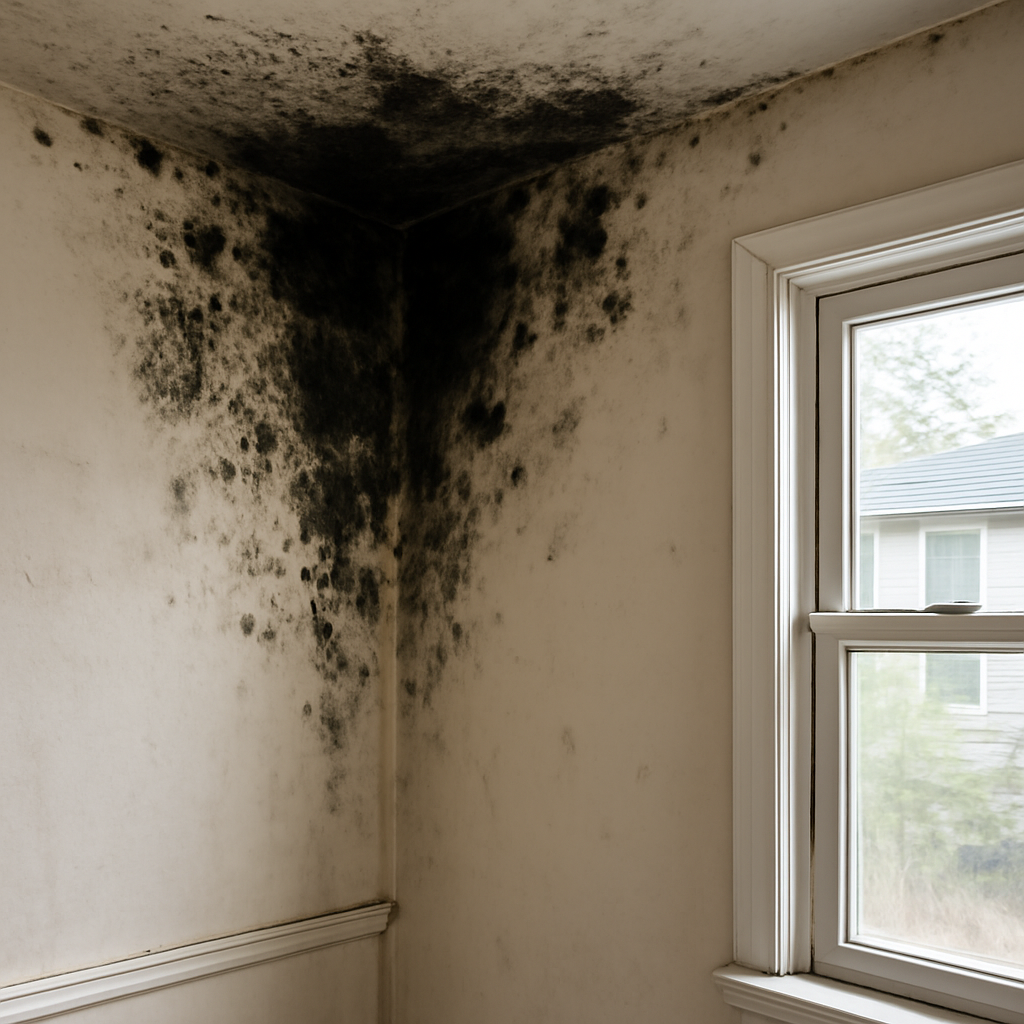
The phrase “black mold versus mold” gets typed into search bars because homeowners feel the difference matters more than the lab evidence sometimes supports. Versus framing implies two clearly separate categories — a dangerous one and an ordinary one — when the underlying biology is a spectrum of fungal organisms with overlapping appearances and overlapping health profiles. This guide unpacks the taxonomy honestly, explains where the “black” label is and is not meaningful, and translates EPA and CDC guidance into decisions homeowners actually make. As a health-adjacent topic, treat the information here as a framework rather than a diagnosis — consult a certified inspector for sampling and your physician for any symptoms.
Is this mold, asbestos, or water damage? Get a free instant screen
Upload a clear photo of the suspect area. You'll get an instant AI screening opinion and what to do next. This is screening guidance, not a professional determination.
Screening guidance only. AI can be wrong. Confirm asbestos, mold type, or lead with lab testing or a licensed professional before acting.
Is “black mold” actually a distinct category from “mold”?
No species is officially named “black mold.” The phrase is a popular label for Stachybotrys chartarum, plus several other dark-pigmented species that consumers cannot tell apart by sight. “Mold” is the umbrella term for thousands of filamentous fungi that grow on damp organic material. Inside that umbrella, dozens of species can produce dark colonies — Stachybotrys is one, but Aspergillus niger, Cladosporium, Alternaria, and Aureobasidium can all read as “black” to a homeowner. The versus framing collapses meaningful biological variation into a binary that mycologists do not use.
The CDC has stated repeatedly that no specific species — Stachybotrys included — has been proven to cause unique health effects beyond those of other indoor molds. The EPA’s mold guidance treats all visible indoor fungal growth as requiring remediation regardless of color. Those two positions are the official starting point for any honest comparison.
Where the boundary actually sits in lab taxonomy
Mycology classifies organisms by morphology, reproductive structures, and increasingly by DNA sequencing rather than color. Stachybotrys chartarum sits in the family Stachybotriaceae. Aspergillus niger sits in the family Trichocomaceae. These two organisms are no more closely related than a dog and a deer, yet both produce black colonies on water-damaged drywall. Color reflects pigment chemistry — primarily melanin variants that protect spores from UV — rather than taxonomic kinship. A lab report distinguishes them by spore morphology under microscope, not by colony color. The parent mold inspection hub covers how the major indoor genera get separated in a typical lab workup.
Visual differences a homeowner can sometimes see
Some practical contrasts hold up reasonably well in the field, with important caveats. Stachybotrys tends to look slimy and wet-shiny on active growth; most other indoor “black” molds look matte, powdery, or fuzzy. Stachybotrys grows on highly cellulosic substrates — drywall paper, ceiling tile, wallpaper, cardboard, hay — and rarely on tile, glass, or hard plastics. Cladosporium grows on almost anything cool and damp, including refrigerator gaskets, window sills, and HVAC coils. Aspergillus niger favors warm, humid surfaces and frequently appears in bathrooms and around food storage. None of these markers is conclusive — they narrow the probability, not the identification.
Health risk: where the comparison actually lives
Stachybotrys produces a family of mycotoxins called trichothecenes, including satratoxins. Trichothecenes are well-characterized in laboratory toxicology studies and in agricultural contexts where livestock have consumed contaminated feed. The harder question is whether airborne exposure to indoor Stachybotrys colonies in a typical residential setting produces unique illness. The NIH-funded literature is mixed. A 2004 Institute of Medicine review found insufficient evidence to link any single indoor mold species to unique health effects beyond the asthma exacerbation, allergic rhinitis, and upper-respiratory irritation associated with damp indoor environments generally.
The CDC’s current stance is the same: damp buildings cause respiratory problems; no single species is the proven culprit. Practically, that means a homeowner facing visible dark mold should treat it as a remediation question regardless of whether a lab later identifies it as Stachybotrys, Aspergillus, or a mixed community. The remediation decision is driven by area, location, and occupant health — not by the species name.
When the versus framing genuinely matters
Three situations actually warrant species-level identification. Litigation and insurance claims often require lab confirmation because adjusters and courts look for documented organisms, not just visible growth. Pre-existing respiratory illness in an occupant — particularly asthma, COPD, or immunocompromise — shifts the risk calculus, and a species identification can inform medical decisions. Real estate transactions sometimes need a written species report to settle a buyer-seller dispute over remediation scope. Outside these three contexts, the versus question matters less than the area and the moisture source.
How testing settles the question
Three sampling methods are common. Surface samples — tape lifts and swabs — collect material directly from a visible colony and identify the dominant organism on that patch. Air samples collect spores from the breathing space and quantify counts by genus. ERMI testing on settled dust produces a numeric index across 36 species. For the versus question specifically, a tape lift from the visible colony delivers the cleanest answer. Air samples answer a different question — what spores are floating in the air a person actually breathes. The two methods complement each other and are often run together for moderate-to-large remediation jobs.
What changes in remediation depending on species
For colonies under ten square feet, remediation protocol is essentially the same regardless of species: containment with plastic sheeting and tape, HEPA-filtered negative air, drywall removal where growth is on cellulose, antimicrobial wipe-down of adjacent framing, and post-remediation verification testing. For larger jobs, Stachybotrys identification can push the project toward more aggressive containment because the spores carry more residual mycotoxin even after the organism dies. The IICRC S520 standard — which most professional remediators follow — does not require different procedures by species, but does require more rigorous decontamination of personal protective equipment when toxigenic species are confirmed.
Where homeowners go wrong on the versus question
Three common mistakes show up repeatedly. The first is bleaching a Stachybotrys colony on drywall and assuming the problem is solved; bleach kills surface hyphae but the cellulose paper layer hosts deeper growth that returns within weeks. The second is paying for species identification before fixing the moisture source; without a dry substrate, the colony returns whatever the lab named it. The third is assuming a non-Stachybotrys species means no action is needed; Aspergillus and Penicillium have their own well-documented links to occupant respiratory symptoms in damp buildings. Treating “mold versus black mold” as a question with stakes attached can lead to inaction when the right move is the same in both cases: fix the water, remove the growth.
Front Range patterns worth knowing
Colorado homes show a slightly different mix than Gulf Coast or Pacific Northwest housing stock. Stachybotrys is less common as a primary indoor isolate because outdoor humidity is low and surface drying is rapid. Cladosporium and Penicillium dominate Front Range indoor air samples in most homes that test in the absence of a known water event. When Stachybotrys does appear, it usually points to a specific moisture event — a burst pipe, a roof leak that ran for days, an evaporative cooler that overflowed. That specificity makes the source easier to identify and remediate than in climates where ambient humidity sustains broad colonization. The homeowner guide on dangerous black mold covers the species-specific risk in more depth.
How to think about the decision tree
Start with the moisture source — find it and stop it. Then assess the area; under ten square feet on non-porous surfaces is homeowner territory with N95 protection and appropriate cleaners. Above that threshold, in HVAC systems, or with symptomatic occupants, hire a certified remediator. Test only if the situation involves litigation, insurance, real estate, or vulnerable occupants. The species name rarely changes the action plan for a typical residential job; the area and the water source do.
Why marketing language has muddied the comparison
Remediation companies that bill by the species often emphasize the “black mold” label because it pushes urgency in a homeowner conversation. Test labs that sell add-on species panels likewise have a financial interest in framing the question as one that requires their analysis. Independent inspectors who do not also remediate tend to give the calmer answer: the species matters for documentation, not for whether the work needs to happen. Reading any quote for the version of mold being described — “toxic black mold” versus “indoor fungal growth” — gives a reasonable read on whether the provider is selling fear or selling work.
Consumer-facing news coverage has reinforced the same framing. High-profile lawsuits from the late 1990s and early 2000s tied Stachybotrys to severe illness in a handful of cases, and the headlines outpaced the subsequent peer-reviewed literature that questioned those links. Homeowners reading current news still encounter the older framing because it spreads faster than the careful follow-up science.
How spore counts factor into the decision
An air sample reports spores per cubic meter by genus. A typical outdoor baseline in Colorado runs 200 to 2,000 spores per cubic meter total, dominated by Cladosporium and Alternaria. Indoor counts higher than outdoor for the same genus suggest an indoor source. Stachybotrys outdoors is essentially zero in most non-agricultural environments, so any detectable indoor Stachybotrys count is a positive signal regardless of magnitude. Aspergillus and Penicillium indoors above outdoor baseline by a factor of three or more is the threshold most labs flag for further investigation. These numbers translate the versus question into something measurable — outdoor comparison samples taken on the same day give the result actionable context.
What homeowners can do this week
If a dark patch appeared recently, the immediate steps are the same regardless of species. Identify and stop the water source. Photograph and measure the patch. Avoid disturbing it. Decide based on area and occupant health whether to clean or to call a professional. Test only if the answer to “what species” actually changes a decision — for litigation, insurance, or vulnerable occupant context. For most Front Range homeowners with a small patch and a clear water source, fixing the moisture and removing the affected drywall ends the question without ever needing a species name.
Homeowners who skip the moisture step almost always see regrowth within four to twelve weeks, whatever the species. The fungal community in a damp wall cavity reseeds quickly from outdoor air once the underlying conditions return. A successful remediation outcome — measured by no visible regrowth at six months — depends far more on whether the moisture source was actually fixed than on whether the original colony was Stachybotrys or Cladosporium. That single observation reframes the versus question in the most practical way possible: the comparison matters less than the water.
References
- Mold and Health — U.S. Environmental Protection Agency
- About Mold — Centers for Disease Control and Prevention
- Mold Inspection Standards — InterNACHI
- Mold and Indoor Air Quality — National Institute of Environmental Health Sciences
Front Range homeowners weighing the testing decision can connect with a vetted inspector through our contact page for a neutral second opinion before scheduling remediation.