Mold Versus Black Mold: A Terminology Guide for Homeowners
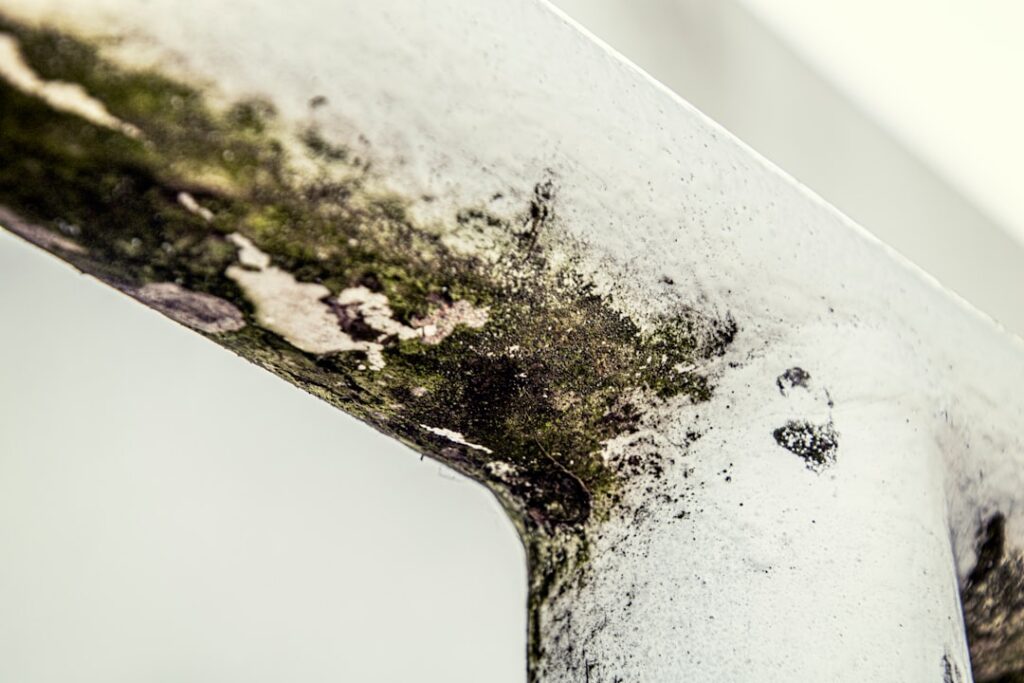
“Mold versus black mold” is less a comparison and more a terminology question — the same way “fruit versus apples” is. Mold is the broad biological category covering tens of thousands of fungal species; black mold is a colloquial label that usually refers to Stachybotrys chartarum specifically but is also applied to any dark-colored fungal growth. Understanding the relationship clarifies what cleanup decisions actually depend on. This guide summarizes EPA and CDC guidance current as of 2026 — consult a certified mold inspector for testing decisions and your physician for symptom evaluation. The framework below sorts out the parent-category-and-subset distinction and shows why the cleanup approach often matters more than the species ID.
Part of our Black Mold & Your Health guide — start there for the full picture →
Is this mold, asbestos, or water damage? Get a free instant screen
Upload a clear photo of the suspect area. You'll get an instant AI screening opinion and what to do next. This is screening guidance, not a professional determination.
Screening guidance only. AI can be wrong. Confirm asbestos, mold type, or lead with lab testing or a licensed professional before acting.
Mold as the Parent Category
Mold is a kingdom-level biological grouping — Fungi — and within it, the molds are filamentous fungi that grow in colonies visible to the naked eye. Estimates put the total number of mold species at 50,000 to 100,000+ depending on classification methodology. Most are environmental organisms that play roles in decomposition and ecosystem nutrient cycling.
Indoor mold is a much smaller subset. The genera that most often appear in homes include Cladosporium, Penicillium, Aspergillus, Alternaria, Stachybotrys, Chaetomium, and Fusarium. Each of these contains many species, with varying growth requirements, color profiles, and health implications.
The shared traits across all indoor mold: they need a substrate to grow on, sustained moisture to establish, and a temperature range typical of indoor environments. Remove any one of those requirements and the colony dies. The substrate cannot be removed from a home, and temperature is fixed by the conditions humans need; moisture is therefore the homeowner’s leverage point.
Black Mold as a Colloquial Subset
“Black mold” is not a species or a genus. It is a color-based descriptor that the public usually associates with Stachybotrys chartarum but applies broadly to any dark-colored fungal growth. The popular fear of “toxic black mold” derives from Stachybotrys specifically, which produces mycotoxins under the right growing conditions on cellulose substrates.
The problem with the term is that several non-Stachybotrys species also produce dark colonies. Aspergillus niger (a black mold), some Cladosporium species (olive-green-to-near-black), Alternaria (dark olive-brown), and many others can be visually indistinguishable from Stachybotrys to the eye. A homeowner seeing dark mold cannot know from visual assessment whether they are looking at Stachybotrys or a less concerning species.
Lab sampling can identify the genus and sometimes the species. Tape-lift sampling is the most common homeowner-accessible method: a sticky tape sample is pressed against the colony, packaged, and sent to a lab for $75 to $150 per sample. Air sampling and bulk sampling are also available through certified mold inspectors. Our how do you identify black mold lab workflow guide covers when sampling adds value to the homeowner decision.
Why the Distinction Often Doesn’t Change the Response
For most homeowner findings, the cleanup approach depends on patch size, substrate, moisture source, and occupant susceptibility — not on species identification. A small patch on a non-porous surface is DIY-cleanable regardless of species. A large patch on cellulose substrate with sustained moisture is professional remediation regardless of species.
The species ID becomes important in a narrow band of cases: insurance claims where documentation matters, real-estate disclosures where lab results are requested, physician evaluations of unexplained respiratory symptoms, and edge cases where remediation aggressiveness would differ between (for example) Cladosporium and confirmed Stachybotrys. Outside these cases, spending the lab fee and waiting the few days for results is often not worth the delay.
The pragmatic homeowner question is not “is this Stachybotrys” but “what cleanup approach matches this finding.” That question is answerable from visual assessment combined with moisture-source diagnosis.
The Six Visual Indicators That Differentiate Risk
If species ID is not being pursued, six visual and contextual indicators do most of the work in placing a finding on the risk spectrum.
Substrate. Cellulose (drywall paper, ceiling tile, wallpaper, untreated wood) supports Stachybotrys when wet; non-porous surfaces do not. Mold on cellulose is higher-risk than mold on tile or glass.
Moisture history. Sustained wetness (weeks to months) favors Stachybotrys establishment. Sudden one-time wetting followed by quick drying tends to produce lighter Cladosporium, Penicillium, or Aspergillus.
Texture. Slimy or wet-looking colonies are likely actively growing on wet substrate. Dry, crusty, or powdery colonies are likely older or desiccated.
Patch size. Under ten square feet on accessible substrate is the EPA homeowner threshold; larger patches are professional regardless of species.
Smell. Strong persistent musty or earthy odor suggests active MVOC production by a significant colony.
Occupant symptoms. Respiratory, allergic, or other symptoms in residents that started or worsened after the mold appeared indicate measurable exposure regardless of species.
A finding that scores high across these indicators warrants aggressive response. One that scores low across them is typically a low-severity finding even if it appears dark in color.
What “Black Mold” Searches Usually Mean
Homeowners search “black mold” for three common reasons. First, they have found dark growth and want to know if it is dangerous. Second, they have heard about toxic black mold and want to assess whether their visible mold is that specific species. Third, they are post-cleanup and want to confirm whether the residual dark staining indicates ongoing problems.
Each reason has a different practical answer. For the first, the six indicators above apply and the cleanup decision follows. For the second, lab sampling is the only definitive answer, but the cleanup decision often does not depend on it. For the third, the residual staining is usually cosmetic pigment from the dead colony rather than living growth; verify with a moisture-meter check on the substrate and a two-week monitoring window.
For broader mold inspection workflow, the mold inspection and testing hub covers when independent inspection adds value and what sampling options exist.
The Cleanup Approach for Each Severity Tier
Regardless of whether the finding is called “mold” or “black mold,” the cleanup tier matches the indicators rather than the term.
Low tier (DIY). Under 4 square feet on non-porous substrate, identifiable and addressable moisture source, healthy occupants. PPE: N95 respirator, gloves, glasses. Product: EPA-registered antimicrobial or 3% hydrogen peroxide. Containment: closed door, window-fan exhaust. Verification: visual, moisture meter, two-week monitoring.
Moderate tier (DIY with caution or hire out). 4 to 10 square feet, mixed substrate, identifiable moisture source, household includes susceptible occupants. PPE: P100 respirator, Tyvek suit. Containment: plastic sheeting with zipper-door entry, HEPA air scrubber. Verification: same as low tier plus optional post-cleanup air sampling.
High tier (professional). Over 10 square feet, cellulose substrate, sustained moisture, slimy or persistent appearance, occupant symptoms, or any HVAC involvement. Professional IICRC S520 remediation: full containment with negative pressure, full PPE, drywall and porous-material removal, antimicrobial treatment of framing, HEPA air scrubbing, written scope, post-remediation clearance testing.
The terminology used to describe the finding does not change which tier applies; the indicators do.
Species That Often Show Up Looking Like “Black Mold”
Four genera commonly produce dark colonies in Front Range homes, and they tend to land in different niches.
Cladosporium. The most common dark mold worldwide. Grows on grout, caulk, window frames, and exterior surfaces. Olive-green to dark-brown to near-black. Allergenic but not a toxin producer. Many “I found black mold in the bathroom” findings are Cladosporium, and they respond to standard cleanup with hydrogen peroxide or bleach on non-porous surfaces.
Aspergillus niger. The “black mold” of food spoilage; also grows on damp paper, leather, and some building materials. Aspergillus as a genus includes hundreds of species with varying risk profiles; A. niger specifically is widely encountered and only occasionally produces ochratoxins. Cleanup follows the standard substrate-based workflow.
Alternaria. Common allergen, grows on damp surfaces, soil, and outdoor materials. Often appears as dark olive-green to nearly-black velvety patches. Linked to asthma exacerbation. Not a toxin producer at clinically significant levels.
Stachybotrys chartarum. The textbook “toxic black mold.” Slimy black-to-dark-green when actively growing, dry and crusty when desiccated. Requires sustained moisture and cellulose substrates. Produces mycotoxins implicated in respiratory and neurological symptoms with prolonged exposure. Less common than public discussion implies, but the species that justifies the popular fear of black mold.
What Changes When Stachybotrys Is Confirmed
If lab sampling confirms Stachybotrys specifically, three aspects of the response shift.
Containment becomes mandatory regardless of size. Stachybotrys spores carry mycotoxins, and disturbance during cleanup aerosolizes them. Full negative-pressure containment with HEPA exhaust applies even to smaller patches that would otherwise be in the homeowner-DIY range.
PPE upgrades from N95 to P100 minimum. Half-face elastomeric respirator with HEPA-rated cartridges, full Tyvek suit, gloves taped to sleeves, and full-face protection. No facial-hair exception; the seal matters.
Porous-material removal expands. Any colonized drywall, insulation, ceiling tile, or untreated wood is removed and bagged in 6-mil plastic, double-bagged at the containment exit. Surface cleaning of porous materials is not appropriate for confirmed Stachybotrys.
Front Range remediation pricing for confirmed Stachybotrys typically runs at the high end of each size tier because the containment, PPE, and disposal costs are higher. A 30-square-foot Stachybotrys basement job might run $3,500 to $6,000 where a non-Stachybotrys finding of the same size would run $2,000 to $4,000.
When Search Phrasings Vary But Meaning Doesn’t
Homeowners search a wide range of phrasings that all land at the same practical question. “Mold versus black mold,” “black mold vs mold,” “what’s the difference between mold and black mold,” “is black mold different from regular mold” — all map to the parent-category-versus-subset terminology question and to the practical follow-up about how to respond. The answers do not vary by phrasing, and the response decision tree is identical regardless of the search wording that led the homeowner here.
The phrasing that matters more is what the homeowner describes when calling an inspector or remediator. “Dark patch on basement drywall, started after the spring snow-melt, smells musty” is the kind of description that lets a professional triage the call. “I think I have black mold” leaves the professional asking the same questions to fill in the details. Skipping the colloquial label and describing the indicators directly speeds the conversation and tends to produce better triage.
References
- Mold and Health FAQ — Centers for Disease Control and Prevention
- A Brief Guide to Mold, Moisture, and Your Home — U.S. EPA
- Mold Health Effects and Exposure — National Institute of Environmental Health Sciences
- Mold and Dampness — American Lung Association
Frequently asked questions
Is black mold a different species from regular mold?
Black mold is a colloquial color-based descriptor, not a species or genus. Mold is the broad biological category covering tens of thousands of fungal species. The term 'black mold' usually refers to Stachybotrys chartarum but is applied to any dark-colored fungal growth.
How can I tell if my mold is the toxic kind?
Visual assessment cannot reliably distinguish Stachybotrys from other dark molds. Lab sampling is the only definitive method. For most homeowner cleanups, the response depends on substrate, patch size, and moisture history rather than on species identification.
Does the cleanup approach differ for mold versus black mold?
Not in most cases. The cleanup tier (DIY, DIY-with-caution, or professional) is determined by patch size, substrate, moisture history, and occupant susceptibility — not by the term used to describe the finding. The same indicators apply regardless of color.
When is lab sampling worth the cost?
When an insurance claim or real-estate disclosure depends on documented species ID, when a physician requests environmental testing for unexplained symptoms, or when remediation aggressiveness would differ meaningfully between (for example) Cladosporium and confirmed Stachybotrys.
Front Range homeowners trying to sort out whether their dark-mold finding warrants lab sampling can request a vetted independent inspector through our contact page for a walkthrough and recommendation.