Black Hairy Mold: What Homeowners Need to Know
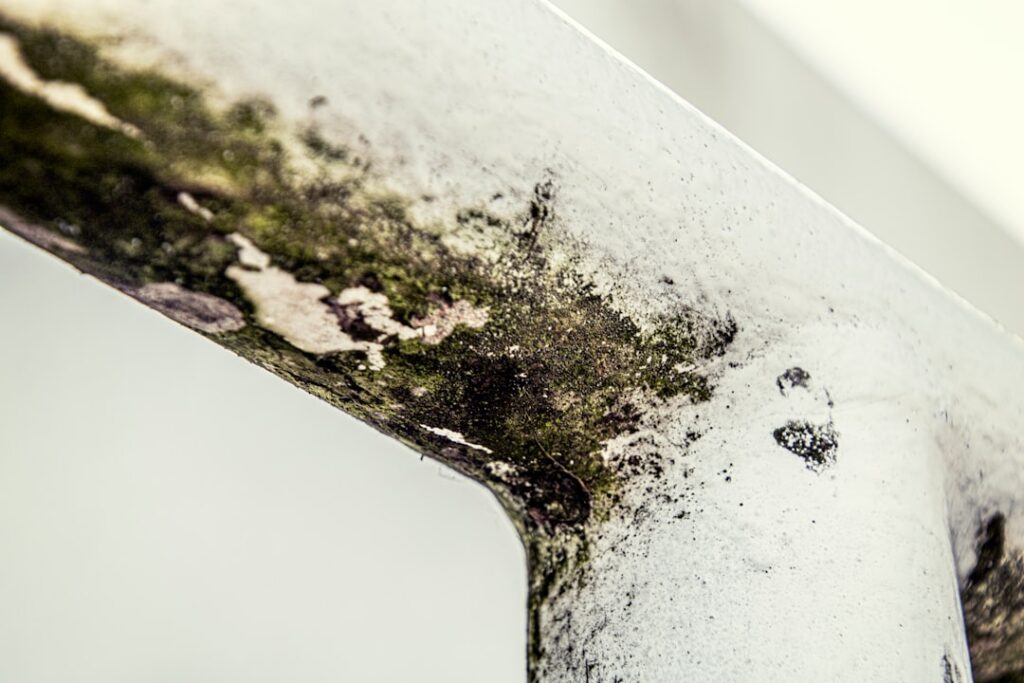
“Black hairy mold” describes a specific visual signature — dark, fibrous, with raised filamentous structures that look like fine hair growing out of the patch. This appearance points to a different fungal life stage and often a different species than the slimy, wet-shiny black mold most homeowners associate with the term. Recognizing the hairy texture as its own diagnostic category helps separate active Aspergillus and Penicillium colonies from Stachybotrys, and helps homeowners pick the right next step. As a health-adjacent topic, treat this as a framework rather than a diagnosis — consult a certified inspector for sampling and your physician for any symptoms.
Is this mold, asbestos, or water damage? Get a free instant screen
Upload a clear photo of the suspect area. You'll get an instant AI screening opinion and what to do next. This is screening guidance, not a professional determination.
Screening guidance only. AI can be wrong. Confirm asbestos, mold type, or lead with lab testing or a licensed professional before acting.
What “hairy” means biologically
The hair-like fibers visible on a black hairy mold colony are aerial hyphae and sporulating structures that extend upward from the substrate surface. Aspergillus niger produces the most distinctly hairy appearance among common indoor black molds — its conidiophores form upright stalks topped with spore-bearing heads that read as visible texture to the naked eye. Penicillium species in dark variants produce similar structures. Early-stage Stachybotrys chartarum can show aerial hyphae before the slime layer develops, giving a transitional hairy appearance during the first two to three weeks of growth. Mature Stachybotrys usually shifts away from hairy and toward slimy as the polysaccharide biofilm thickens.
Which species produce the hairy signature most often
Three species dominate the homeowner encounters with black hairy mold. Aspergillus niger appears on bathroom tile, kitchen surfaces, food storage areas, and HVAC components. Its conidiophores produce a black, distinctly hairy appearance that can persist for months on stable substrate. Penicillium species in dark variants — less common than the green-blue varieties — appear on damp wood, leather, and paper. Mucor and Rhizopus, less commonly, produce gray-to-black growth with a visible fuzzy or hairy texture on bread, fruit, and organic waste in damp conditions. None of these species carries the toxigenic reputation of Stachybotrys, but Aspergillus niger in particular has its own well-documented links to occupant respiratory symptoms and to opportunistic infections in immunocompromised individuals.
How to tell hairy from slimy in real conditions
Angled flashlight light reveals texture more accurately than overhead room light. A hairy colony casts visible shadows along the length of the fibers; a slimy colony catches highlights as wet shine. A smartphone macro photograph confirms the distinction — hairy colonies show discrete linear structures protruding from the surface, while slimy colonies show a continuous wet film. Touch is unreliable and ill-advised; both textures release spores or biofilm when disturbed. The visual cues alone, taken under appropriate lighting, separate the two patterns reliably for most homeowner observations.
What hairy texture indicates about action
Active hairy texture indicates active sporulation. The colony is currently releasing spores into the air at high rates. For Aspergillus niger on a small bathroom tile patch, the action is cleanup with N95, gloves, and an appropriate cleaner. For Aspergillus niger on drywall, in HVAC components, or over ten square feet, the action is professional remediation. For ambiguous hairy patches where species is unclear, sampling resolves the question; air or surface samples can distinguish Aspergillus from early-stage Stachybotrys. The parent mold inspection hub covers the sampling approach.
Common locations for black hairy mold
Five locations account for the majority of homeowner encounters. Bathroom tile grout near showers — particularly grout lines that have lost sealer integrity — supports Aspergillus niger with classic hairy appearance. Refrigerator gaskets and freezer door seals support dark Penicillium species. HVAC return air grilles and supply boots develop fine hairy growth from dust accumulation combined with condensation. Wooden basement framing in homes with chronic dampness shows dark hairy growth on the substrate side facing the wall cavity. Food storage areas — pantries, root cellars, bread boxes — show hairy growth on stored organic material when humidity rises seasonally. Front Range basements with evaporative cooler runoff often combine multiple of these locations into a single home assessment.
Health implications of hairy black mold
Aspergillus niger and related species produce mycotoxins including ochratoxin A in some growth conditions. Airborne exposure in routine residential settings is associated with the same range of damp-building symptoms — nasal congestion, sinus irritation, cough, eye irritation, exacerbation of asthma — that the CDC links to indoor mold exposure generally. For immunocompromised occupants, Aspergillus species carry an additional risk of invasive aspergillosis, a serious pulmonary infection that develops when inhaled spores germinate inside lung tissue. This risk is rare in healthy occupants but warrants more aggressive remediation when household members are receiving chemotherapy, taking immunosuppressants, or living with conditions like cystic fibrosis. The homeowner guide on dangerous black mold covers vulnerable-occupant thresholds.
Cleaning hairy mold on non-porous surfaces
For Aspergillus niger on bathroom tile, glass, or sealed wood under ten square feet, homeowner cleanup is appropriate. Wear N95, gloves, and eye protection. Wet the patch lightly with a detergent solution before scrubbing to reduce spore aerosolization. Use a scrub pad and detergent — quaternary ammonium products outperform bleach for fungal kill on tile grout. Wipe with disposable cloths and dispose immediately in a sealed bag. Re-inspect after seven days; if regrowth appears, the underlying moisture source has not been addressed and professional assessment is warranted. The best-way-to-clean-mold guide covers cleaning agents in more depth.
When hairy growth means call a professional
Five conditions push the decision toward professional involvement. Area larger than ten square feet, regardless of species. Growth on porous substrate — drywall, ceiling tile, paper-faced insulation — where surface cleaning cannot reach underlying hyphae. Visible growth inside HVAC ducts or on HVAC components beyond what hand cleaning can address. Occupants with respiratory conditions, immunocompromise, or unexplained symptoms. Persistent regrowth after two homeowner cleanup attempts, indicating an unidentified moisture source. Any one of these conditions tips the balance toward bringing in a certified inspector before further cleanup work.
Hairy mold and the moisture-source question
The same moisture-source logic that applies to all indoor mold applies to black hairy mold specifically. Aspergillus tolerates lower moisture conditions than Stachybotrys — material moisture content of 20 to 30 percent supports Aspergillus growth, while Stachybotrys typically needs 35 percent or higher. This means Aspergillus often appears in conditions that homeowners do not recognize as “wet” — bathroom areas with consistent humidity but no visible leaks, kitchens with steam from cooking, basements with seasonal humidity swings. Pinless moisture meter readings in these areas often surprise homeowners who assumed the surfaces were dry.
How early-stage Stachybotrys can mimic hairy mold
For the first two to three weeks of growth, Stachybotrys colonies often display aerial hyphae before developing the mature slime layer. During this window, a homeowner observing the patch sees a hairy appearance that does not match the textbook Stachybotrys description. Over the following one to two weeks, the slime develops and the appearance shifts. Homeowners who note the hairy stage and then return to a slimy patch three weeks later have observed the same colony at two life stages, not two different species. The fuzzy-versus-other-textures guide covers the stage transitions in more detail.
Front Range patterns for hairy mold
Colorado housing stock shows Aspergillus niger most commonly in bathroom grout in homes ten or more years old, where original sealer has degraded. Penicillium dark variants appear in older Denver bungalow basements and crawl spaces with chronic dampness. Evaporative cooler condensation produces a hairy black growth on duct boots that homeowners often discover during seasonal cooler servicing. Newer construction in Douglas and El Paso Counties shows Aspergillus less frequently than older housing because tile sealers and grout systems have improved, but garage-adjacent walls and basement utility rooms remain common locations.
The action sequence for hairy black mold
Photograph the patch with scale reference and angled-light texture detail. Identify the substrate — porous or non-porous changes the next step. Identify the moisture source within ten feet — leak, humidity, condensation, food spillage. Decide on cleanup versus professional assessment based on area, substrate, and occupant health. For homeowner cleanup, wear N95 and gloves, wet the patch before scrubbing, use appropriate detergent or quaternary ammonium cleaner, dispose in sealed bag, re-inspect at one week. For professional assessment, contain the area and avoid disturbance until inspector arrives.
How hairy texture changes between substrates
The same Aspergillus niger colony can look quite different depending on what it grows on. On glossy tile, the hairy texture stands out sharply because the smooth background contrasts with the fibers. On grout, the hair partially merges with the porous grout texture and reads more as a fuzzy mass than as distinct fibers. On painted drywall, hairy texture is muted because the paint surface restricts aerial hyphal growth. On wood — particularly unfinished basement framing — the hairy texture often appears patchy and irregular, following grain patterns and any embedded moisture. Reading the texture in the context of the substrate is more useful than relying on a single textbook description.
Why bleach often fails on hairy mold
Homeowners sometimes try bleach as the default response to any visible mold, and the results on hairy mold are particularly disappointing. The hypochlorite in bleach is consumed quickly by the organic material in the colony before it can fully penetrate the substrate. Aspergillus niger on grout often shows visible color reduction within minutes of bleach application — the dark pigmentation fades — but the underlying hyphae and spores in the porous grout remain viable. The colony returns within days to weeks. Quaternary ammonium compounds, hydrogen peroxide products, and tile-specific antimicrobial cleaners outperform bleach for both initial kill rate and long-term suppression on grout, tile, and porous masonry surfaces.
The aspergillus-specific testing question
If sampling is warranted, Aspergillus genus identification is straightforward in lab work. Both surface and air samples reliably distinguish Aspergillus from other indoor genera. Species-level identification — separating A. niger from A. fumigatus or A. flavus — requires either DNA sequencing or specific culture techniques and is not standard on consumer-grade test panels. For most homeowner contexts, genus-level identification is sufficient because remediation procedures are the same across the Aspergillus genus. Species identification matters mainly for medical contexts involving immunocompromised occupants where invasive aspergillosis risk varies between species.
Documenting the transition from hairy to slimy
For homeowners who have observed a patch over multiple weeks, photographing the texture changes provides useful evidence for any subsequent professional assessment. A hairy appearance in week one followed by a slimy appearance in week three is consistent with maturing Stachybotrys and shifts the risk profile upward. A persistent hairy appearance over six or more weeks is more consistent with stable Aspergillus or Penicillium growth that is unlikely to transition. This timeline information helps inspectors quote sampling scope accurately and helps homeowners decide whether the urgency is increasing.
References
- Mold Cleanup in Your Home — U.S. Environmental Protection Agency
- About Mold — Centers for Disease Control and Prevention
- Mold Inspection Standards — InterNACHI
- Mold and Indoor Air Quality — National Institute of Environmental Health Sciences
Front Range homeowners with persistent hairy black growth can reach a vetted local inspector through our contact page for assessment and moisture investigation.