What Is the Best Way to Clean Mold: 2026 Method Scorecard
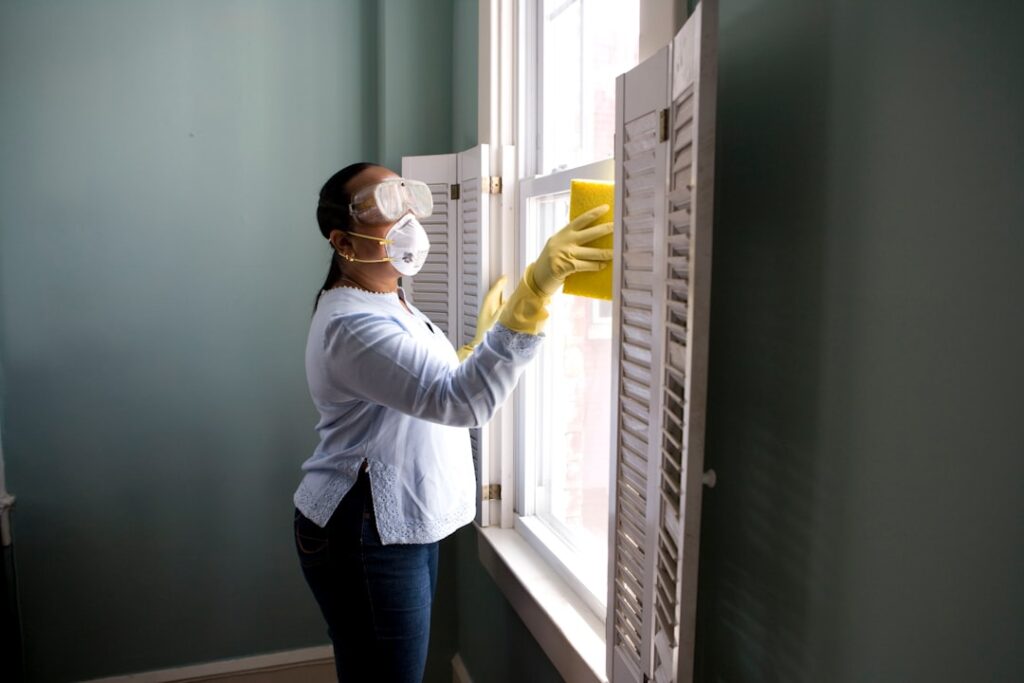
Search results for the best way to clean mold range from cautious EPA fact sheets to viral cleaning videos featuring industrial bleach and table fans. The gap between what actually works and what just looks like it works is wide, and homeowners often end up cleaning the same wall three times because the first attempt only removed the visible color. This guide ranks the popular methods on a real scorecard — effectiveness on porous surfaces, effectiveness on non-porous surfaces, safety, regrowth risk, and cost — so the choice of product matches the substrate and the size of the problem. This guide summarizes EPA and CDC guidance current as of 2026 — consult a certified mold inspector for testing decisions and your physician for symptom evaluation.
Part of our Mold Removal & Remediation guide — start there for the full picture →
Is this mold, asbestos, or water damage? Get a free instant screen
Upload a clear photo of the suspect area. You'll get an instant AI screening opinion and what to do next. This is screening guidance, not a professional determination.
Screening guidance only. AI can be wrong. Confirm asbestos, mold type, or lead with lab testing or a licensed professional before acting.
What Is the Best Way to Clean Mold on a Hard Surface
For non-porous surfaces under roughly 10 square feet, the EPA recommends the same basic sequence regardless of the cleaning agent: contain the area, scrub with detergent and water, dry thoroughly, and verify visually that the staining is gone. The choice of cleaning agent matters less than the mechanical scrubbing and the moisture control afterward. A bathroom tile colony killed with hot soapy water and a stiff brush will not return if the relative humidity stays under 60 percent; the same colony hit with bleach will return in weeks if the shower keeps fogging the same corner.
The single biggest mistake homeowners make is treating the visible color as the problem. Mold growing on glazed tile is annoying. Mold growing into the grout, the caulk bead, or the paper face of drywall behind the tile is a different problem and a different cleanup. The best surface cleaner cannot reach a colony that has migrated under the substrate.
Method-by-Method Scorecard
HEPA Vacuum Plus EPA-Registered Antimicrobial: Best Overall
The professional remediation industry uses a two-step sequence that ranks first on effectiveness across substrates. A HEPA vacuum equipped with a filter rated to capture 0.3-micron particles physically removes settled spores, dust, and fine debris that no liquid cleaner can dissolve. The follow-up application of an EPA-registered antimicrobial — typically a quaternary ammonium compound or a stabilized hydrogen peroxide formulation — then kills residual organisms on the surface. Score: best for any colony over a few square feet, best for restoration work, best for verifiable clearance.
The catch is cost. A consumer-grade HEPA vacuum runs three to six hundred dollars and the antimicrobials are sold through restoration suppliers rather than retail stores. For a single bathroom corner this is overkill; for a basement wall after a slow leak it is the only method that produces a defensible result.
Three Percent Hydrogen Peroxide: Strong Runner-Up
Drugstore hydrogen peroxide at three percent kills most household molds on contact and decomposes into water and oxygen, which leaves no residue and no fume. Spray it on, leave it ten minutes, scrub with a brush, wipe dry. It penetrates slightly better than bleach on porous surfaces because it remains active even after the water carrier evaporates. Effectiveness on non-porous surfaces ranks high; on paper-faced drywall it kills surface growth but cannot reach hyphae embedded in the paper. Score: very good for tile, glass, sealed wood, and grout cleanup; fair on drywall paper; safe to use with normal household ventilation.
White Vinegar: Solid for Non-Porous Surfaces
Five percent acetic acid kills roughly 80 percent of common mold species on contact according to studies cited by extension service publications. On tile, glass, sealed countertops, and grout it works well and costs almost nothing. On porous surfaces the acid neutralizes quickly as it penetrates the substrate and loses effectiveness within millimeters. Score: good and cheap for small non-porous jobs; not adequate for drywall, plaster, or framing. The strong smell dissipates as the vinegar dries.
Chlorine Bleach: Mostly Cosmetic on Porous Surfaces
Household chlorine bleach kills mold on contact when applied to non-porous surfaces, and it bleaches the dark pigment regardless of whether the underlying organism dies. The latter property is the trap. Bleach applied to drywall paper makes the visible stain disappear within minutes while leaving the colony intact below the surface — sometimes deeper than before, because the water carrier has wicked into the substrate. The EPA explicitly notes that bleach is not generally recommended for routine cleanup of mold on porous materials. Score: acceptable for sealed tile and glass; poor for drywall, plaster, wood, or anything with a porous face. Adds a regrowth risk if surface moisture remains.
Chlorine Dioxide Foggers: Professional-Only
Chlorine dioxide gas penetrates porous substrates and kills mold at depths no liquid can reach, which is why restoration crews use it on contents and structures that cannot be removed. It is also corrosive to metals, hazardous to breathe, and regulated as a pesticide by EPA. Score: highly effective when applied by a licensed remediator with proper containment and PPE; entirely inappropriate as a DIY method despite the existence of consumer-marketed products.
Baking Soda Paste: Useful for Light Surface Mold
A paste of baking soda and water scrubbed into grout or caulk lifts surface mold mechanically and leaves a mildly alkaline residue that discourages immediate regrowth. It is not a true biocide. Score: fine for light bathroom colonies under one square foot; insufficient for anything embedded.
Tea Tree Oil, Grapefruit Seed Extract, Borax: Mixed
Tea tree oil at one teaspoon per cup of water has antifungal activity in laboratory studies but is expensive at scale and difficult to verify in field use. Borax kills surface mold and discourages regrowth in dry conditions; it is also a skin irritant and should not be left on surfaces children or pets contact. Score: useful niche tools; not the best choice for a typical homeowner cleanup.
Why the Method Matters Less Than the Moisture
Every method on the scorecard will fail if the moisture source remains. A bathroom corner that fogs to 90 percent humidity every shower will grow mold back within weeks regardless of whether the previous colony was killed with bleach, peroxide, or a HEPA-and-antimicrobial sequence. The same is true of basement walls drawing capillary moisture from grade, of attic sheathing condensing under inadequate ventilation, and of kitchen drywall behind a leaking dishwasher line. The CDC and EPA both emphasize that mold control is fundamentally moisture control, and the cleaning step is only effective once the source has been addressed. Homeowners who clean repeatedly without fixing the moisture are running on a treadmill.
Inside the moisture window, ventilation also matters. Running a bathroom exhaust fan for twenty minutes after every shower drops surface humidity below the regrowth threshold for most species. A dehumidifier in a finished basement set to 50 percent relative humidity does the same for the lower level. Front Range homeowners typically have less ambient humidity to fight than coastal regions, but snowmelt against foundations, sump-pit conditions, and tightly sealed new construction all create local microclimates where mold thrives despite the dry exterior air.
Matching the Method to the Substrate
The single most useful filter is whether the surface is porous or non-porous. Glazed tile, sealed stone, glass, metal, and finished hardwood are non-porous; almost anything else in residential construction is porous to some degree. The substrate-by-substrate guidance is straightforward.
Tile and glass: vinegar or three percent peroxide, scrubbed in, wiped dry. Bleach works but adds no advantage over peroxide and carries a respiratory load. Grout and caulk: peroxide first, baking soda paste second, replacement if the colony has grown into the bead. Most caulk failures past the cosmetic stage cannot be cleaned; the bead needs to come out and a new bead installed after the substrate dries. Painted drywall with surface mold: peroxide spray, wipe, dry, then verify by looking for staining at the paper edge or behind switch plates. If the paper has lifted, the drywall needs to come out. Plaster: peroxide on the surface, then a paint-grade primer designed for stained walls; if the plaster is soft or stained through, a section needs to be cut and replaced. Framing lumber: HEPA vacuum, antimicrobial wipe, sand if pigment persists, then encapsulating sealer per EPA guidance. The lumber itself rarely needs replacement unless rot has advanced beyond surface discoloration.
The decision is also a size threshold. The EPA suggests a homeowner-DIY ceiling of roughly ten square feet. Above that, the dust load during scrubbing exceeds what a respirator and basic containment can handle safely, and a certified remediator with proper engineering controls becomes the right answer. A quick framework for choosing between cleanup approaches is laid out in the 5-step IICRC method overview, which mirrors the professional standard.
What the Best Way to Clean Mold Looks Like in Practice
For a typical bathroom corner — one to two square feet, painted drywall or tile, no visible substrate damage — the practical best is hydrogen peroxide three percent. Spray, wait, scrub, wipe dry, increase ventilation. Cost: under five dollars. Time: twenty minutes. Effectiveness: high if the moisture source is addressed.
For a basement wall — five to ten square feet, painted concrete or paper-faced drywall, with a known moisture intrusion event — the practical best is a two-step sequence of HEPA vacuum followed by EPA-registered antimicrobial, then evaluation of whether the drywall paper has been compromised. Cost: a few hundred dollars in equipment or a remediator visit; some homeowners rent HEPA vacuums from restoration supply shops. Time: half a day. Effectiveness: high if the moisture intrusion has been resolved.
For anything larger, or anything where the substrate has soft spots, lifted paper, or visible water staining on framing, the practical best is no longer DIY. A licensed remediator brings containment barriers, negative-air machines, full-face PPE, and post-remediation verification protocols that no homeowner kit replicates. Homeowners working through borderline cases can consult the broader mold inspection and testing hub for the criteria that push a job from DIY into professional territory.
When to Call a Professional Remediator
The clearest triggers are size, location, and substrate damage. Anything over ten square feet of visible growth, anything inside an HVAC system, anything behind walls that have been wet for more than 48 hours, and anything where occupants report ongoing respiratory symptoms warrants a remediator and a third-party post-remediation verification. The verification step matters because cleaning that looks clean is not the same as cleaning that passes a tape-lift sample. Remediators document the process with photos, moisture readings, and either tape-lift or air samples after the work is complete.
The other trigger is health. Immunocompromised occupants, infants, pregnant residents, and adults with asthma or chronic respiratory conditions should not be in the room during DIY cleanup of anything beyond a few square inches. The dust released during scrubbing carries spores and mycotoxins at concentrations higher than the static colony itself, which is why containment matters in professional work.
References
- Mold Cleanup in Your Home — U.S. Environmental Protection Agency
- Mold Cleanup and Remediation Guidance — Centers for Disease Control and Prevention
- Mold Remediation in Schools and Commercial Buildings — U.S. Environmental Protection Agency
- Mold Inspection Standards — International Association of Certified Home Inspectors
Frequently asked questions
Is bleach really the best mold cleaner?
No. Bleach kills mold on non-porous surfaces but lightens pigment on porous materials without killing the underlying colony. The EPA does not recommend it for routine cleanup of mold on porous substrates like drywall or wood.
Does vinegar kill mold as well as commercial cleaners?
On non-porous surfaces like tile and glass, five percent white vinegar kills roughly 80 percent of common household mold species. On porous surfaces it loses effectiveness within millimeters because the acid neutralizes as it penetrates.
How big a mold patch can a homeowner clean safely?
The EPA suggests a practical DIY ceiling of about ten square feet. Above that, the dust load during cleanup typically exceeds what household PPE and containment can handle, and a licensed remediator becomes the safer choice.
Why does mold keep coming back after cleaning?
Almost always because the moisture source remains. Mold control is fundamentally moisture control, and any cleaning method will fail if relative humidity at the surface stays above roughly 60 percent or if liquid water keeps reaching the substrate.
Front Range homeowners weighing whether a mold job is DIY-sized or remediator-sized can reach out through our contact page for a connection to a vetted local inspector who can scope the project before any cleaning begins.