Can You Smell Black Mold? What the Odor Tells You
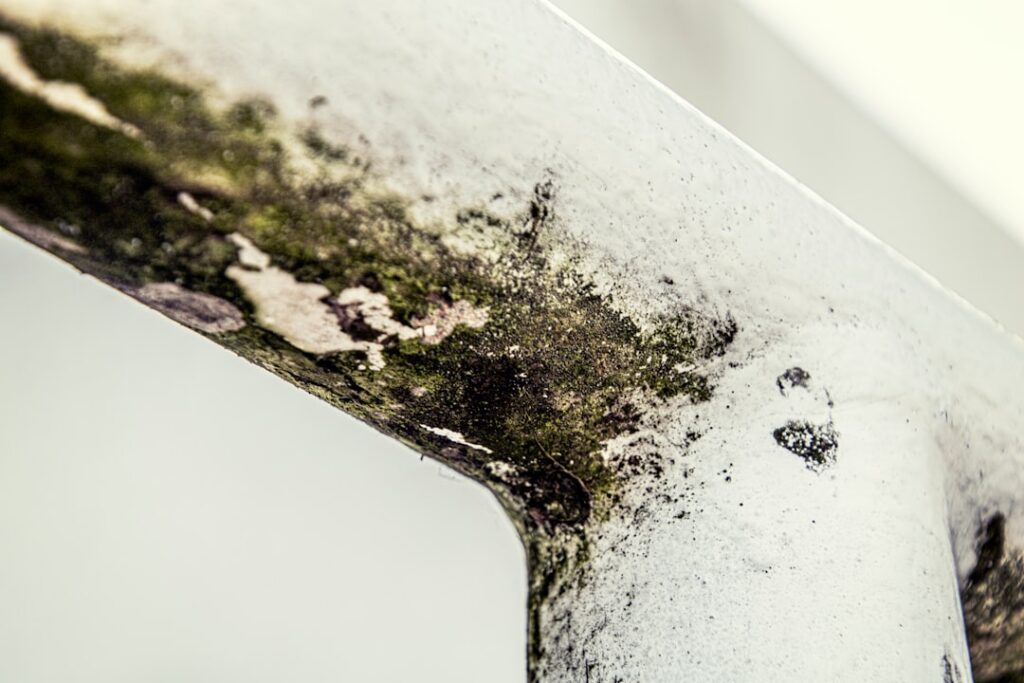
A persistent musty, earthy smell in a basement, bathroom, or closet is one of the most common reasons homeowners suspect a hidden problem, and the question of whether you can smell black mold comes up constantly. The short answer is that you often smell the byproducts mold releases as it grows, even when you cannot see any growth. That odor is a useful early warning, but it is not a diagnosis. This guide summarizes EPA and CDC guidance current as of 2026; it is not medical advice, and anyone experiencing health symptoms should consult a physician while a certified professional handles testing and remediation decisions.
Is this mold, asbestos, or water damage? Get a free instant screen
Upload a clear photo of the suspect area. You'll get an instant AI screening opinion and what to do next. This is screening guidance, not a professional determination.
Screening guidance only. AI can be wrong. Confirm asbestos, mold type, or lead with lab testing or a licensed professional before acting.
Can You Smell Black Mold?
Yes, mold commonly produces a noticeable odor, usually described as musty, damp, earthy, or like wet cardboard. The smell comes from microbial volatile organic compounds, or MVOCs, that mold releases as it metabolizes and grows. The EPA notes that a musty smell is a sign mold may be present even when none is visible, which is why odor is treated as a reason to investigate rather than ignore.
The strength of the odor is also not a reliable measure of how much mold is present or how serious the problem is. A small colony in a confined, poorly ventilated space can produce a strong smell, while a larger one in a drafty area may register faintly. So while the presence of a musty odor is meaningful, its intensity is a poor gauge of scale. The smell tells you to investigate; it does not tell you the size of what you will find, which is why a physical search and moisture readings matter more than how strong the odor seems on a given day.
One important clarification: the smell does not identify the species. “Black mold” in everyday speech usually refers to Stachybotrys, but many molds appear dark and many produce similar odors. The EPA and CDC both emphasize that the color or smell cannot tell you which mold you have, and that all indoor mold growth should be addressed regardless of type. The mold inspection and testing hub explains why visual and moisture clues matter more than odor alone.
What the Smell Actually Indicates
A musty odor indicates active microbial growth somewhere moisture is present. It points to a condition, dampness feeding fungi, more than to a specific organism. Because MVOCs are gases, the smell can travel through wall cavities and ductwork, so the strongest odor is not always directly over the growth.
Sometimes the smell is the only clue, because the mold is inside a wall, under flooring, above a ceiling, or in the HVAC system. A strong, localized musty smell that intensifies in humid weather or after running the air conditioner is a classic sign of hidden growth. Our explainer on black mold in an air conditioner covers why cooling systems are a frequent hidden source of that odor.
The Health Context Around Mold Odor
The CDC and EPA describe a consistent set of indoor mold effects: nasal congestion, throat irritation, coughing, wheezing, and eye or skin irritation in otherwise healthy people, with more pronounced reactions in those who have asthma, mold allergies, or weakened immune systems. The research consensus, summarized by NIEHS and others, does not support the more dramatic claims that smelling a particular mold causes severe systemic illness in the general population.
What matters practically is that any indoor mold growth should be removed and its moisture source corrected, and that exposure response varies by individual. Smelling mold is not a medical emergency, but it is a prompt to find and fix the dampness. If you or a household member develops persistent respiratory symptoms, the appropriate step is to consult a physician rather than to assume a diagnosis from an odor.
How to Find Mold You Can Smell but Not See
Tracking down a smell takes a systematic search. Start in the rooms where the odor is strongest and check the usual moisture magnets: under sinks, behind toilets, around tubs and showers, along basement walls, inside closets on exterior walls, and around windows. Look for water staining, peeling paint, bubbling drywall, and warped flooring, which often accompany hidden growth.
Use your senses methodically. The smell typically strengthens as you get closer to the source. A moisture meter can reveal damp areas behind walls and under floors that look dry on the surface; homeowners who want to do this themselves can review how to read a moisture meter. Check the HVAC system, including the drain pan and ducts, since a moldy cooling system spreads odor throughout the house. If the smell persists and no source appears, that is the point to bring in a professional.
Work through the usual hidden-growth locations in order. Behind and beneath kitchen and bathroom cabinets where slow plumbing leaks hide; inside wall cavities below windows and around tub and shower surrounds; under flooring near exterior doors and appliances; in the crawl space or basement, which the stack effect can carry odor up from; and inside the HVAC system, where the coil, condensate pan, and duct interiors are common culprits. Closets on exterior walls, the back of furniture pushed against cool walls, and the area around a water heater also deserve a look. Because odor migrates, the strongest smell marks the general zone, while the actual growth may sit just inside the nearest wall or floor cavity, which is where a moisture meter earns its keep.
Does the Smell Ever Go Away on Its Own?
A common hope is that a musty smell will simply fade with time or a few open windows. It rarely does, because the odor is a byproduct of active growth, and as long as the moisture and the mold remain, the smell keeps being produced. Airing out a room or running a fan masks it temporarily by diluting the air, but the underlying source continues, and the smell returns once the room is closed up again.
Air fresheners, scented candles, and ozone gadgets are even less helpful, since they cover or chemically alter the odor without touching the mold, and some, like ozone generators, carry their own health cautions. The only reliable way to make a mold smell go away for good is to find the dampness, dry it, and remove the growth. Once the moisture source is corrected and the mold is gone, the musty odor dissipates and stays gone. Treating a persistent smell as a signal to investigate, rather than a nuisance to mask, is what actually resolves it.
Should You Test the Air?
The EPA generally does not recommend routine air sampling for homeowners, because there are no federal standards for acceptable indoor mold levels and a visible source plus a musty smell already tells you remediation is needed. Sampling has a role in specific situations: confirming whether a problem exists when nothing is visible, defining the extent of contamination, or verifying that cleanup succeeded.
When testing is warranted, it should be performed by a qualified professional who follows a defined protocol, not by guessing from a store-bought petri dish that grows whatever spores are normally in the air. If you suspect hidden growth and cannot locate it, an inspection that combines moisture mapping with targeted sampling gives a far clearer picture than odor alone.
Why Some People Smell It and Others Do Not
A frequent source of household disagreement is when one person insists a room smells musty and another notices nothing. This is normal and has several explanations. Individual sensitivity to odors varies widely, and sensitivity to the specific microbial compounds mold produces differs from person to person. People who spend all day in a home can experience olfactory fatigue, where the nose adapts to a constant smell and stops registering it, which is why a visitor often notices a musty odor the residents no longer detect.
Allergies, congestion, smoking history, and age all affect the sense of smell as well, so a household member with reduced olfactory function may genuinely not perceive an odor that bothers others. The practical implication is that if anyone reliably smells mustiness, especially a visitor with a fresh nose, it is worth investigating regardless of whether everyone agrees. The smell not being universal does not mean it is imaginary; it means perception varies. Trust the most sensitive nose in the household as an early-warning system rather than dismissing a report because not everyone shares it.
Other Smells That Get Mistaken for Mold
Not every unpleasant household odor is mold, and chasing the wrong source wastes time. A sewer-gas smell, sulfur or rotten eggs, usually points to a dry P-trap or a plumbing vent problem rather than mold. A sweet, chemical odor can come from off-gassing materials or a refrigerant issue. Stale, stuffy air in a closed-up room may simply be poor ventilation. Decaying organic matter, a dead rodent in a wall, or pet accidents in carpet produce their own distinct smells.
The musty, earthy, wet-cardboard quality is the signature of mold and dampness specifically, and it tends to be strongest in humid weather, near water-prone areas, and when the HVAC runs. If the smell is sharp, sweet, or sulfurous instead, the cause is likely something other than mold. When in doubt, the presence of accompanying signs, water staining, visible growth, condensation, recent leaks, helps confirm whether dampness is the real culprit. Identifying the smell correctly is the first step toward fixing the right problem.
How Mold Odor Relates to Hidden Moisture
Because the compounds that produce mold odor are gases, the smell is essentially a messenger from a damp space you may not be able to see. That makes it a genuinely useful diagnostic signal when read correctly. A musty smell that appears or strengthens during a specific activity, after rain, when the air conditioner runs, when the shower is used, points toward the moisture pathway feeding the growth.
The practical takeaway aligns with EPA guidance: a persistent musty odor is a reason to investigate dampness, not a value to test for. Homeowners who treat the smell as a prompt to find and fix water, rather than as something to mask with air fresheners or cover with a candle, address the actual problem. Masking the odor leaves the mold growing and the moisture in place, which is why deodorizing without remediation always fails in the end. The smell returns because the conditions that created it were never corrected.
When to Call a Professional
Call a remediation or inspection professional when you smell mold but cannot find the source, when the affected area you do find exceeds about 10 square feet, when the smell follows flooding or sewage backup, when growth keeps returning, or when household members have asthma, allergies, or compromised immunity. A persistent musty odor with no visible cause is exactly the scenario where professional moisture mapping pays off.
A qualified inspector can trace the odor to its origin, define the contaminated area, and recommend a remediation approach before any demolition. That prevents both ignoring a real problem and tearing into walls based on a guess, and it ties the cleanup to the moisture fix that makes the smell, and the mold, go away for good.
References
- A Brief Guide to Mold, Moisture and Your Home — U.S. Environmental Protection Agency
- About Mold and Health — Centers for Disease Control and Prevention
- Mold and Indoor Air Quality — National Institute of Environmental Health Sciences
If a musty smell lingers and you cannot find the source along the Front Range, get in touch through our contact page to connect with a vetted inspector who can trace the odor and the moisture behind it.