Black Mold in an Air Conditioner: Causes and Cleanup
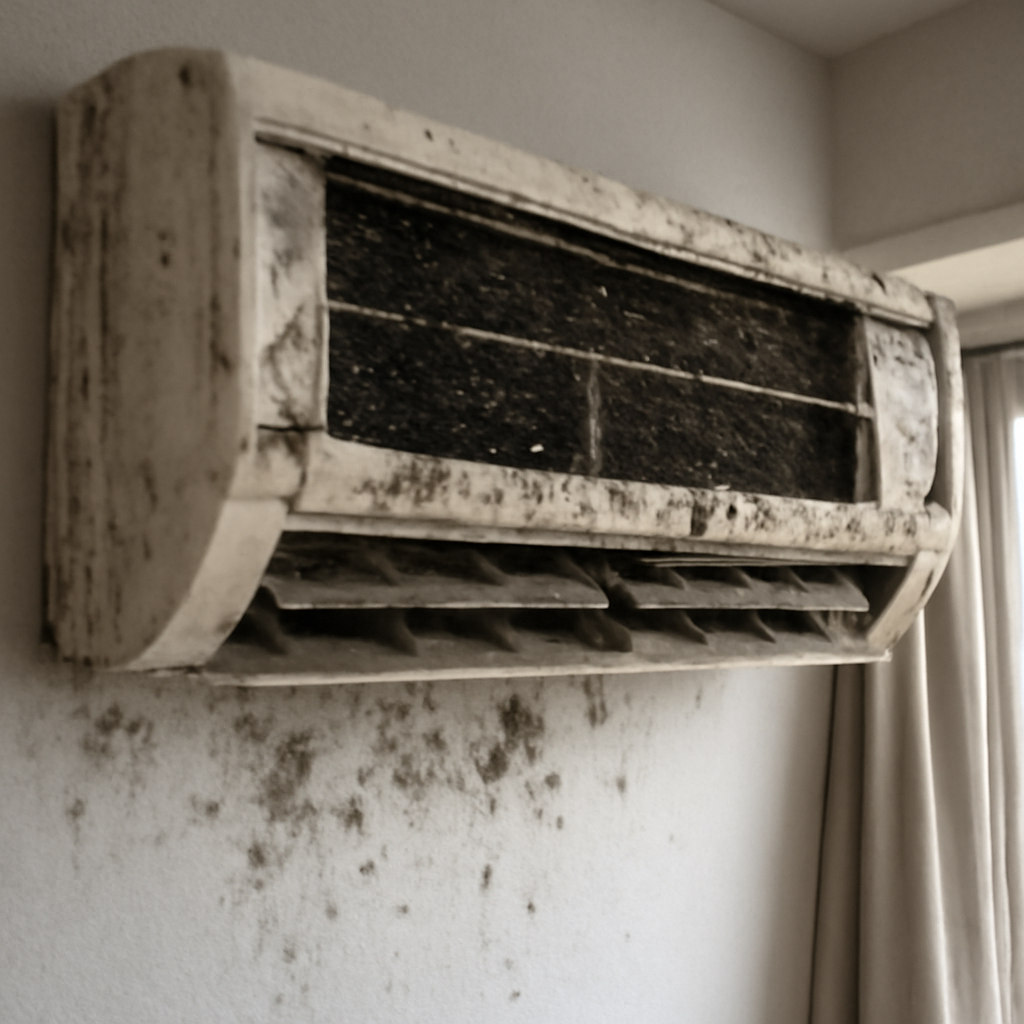
An air conditioner is a moisture machine by design: it pulls humidity out of the air, and that condensed water collects on the coil, in the drain pan, and along ductwork. Black mold in an air conditioner takes advantage of that constant dampness combined with the dust the system filters, and because the unit blows air through living spaces, mold inside it can spread spores throughout the home. Addressing it protects both the equipment and indoor air. This guide summarizes EPA and CDC guidance current as of 2026; it is not medical advice, and anyone with symptoms should consult a physician while a certified professional handles deeper HVAC contamination.
Is this mold, asbestos, or water damage? Get a free instant screen
Upload a clear photo of the suspect area. You'll get an instant AI screening opinion and what to do next. This is screening guidance, not a professional determination.
Screening guidance only. AI can be wrong. Confirm asbestos, mold type, or lead with lab testing or a licensed professional before acting.
Why Black Mold Grows in an Air Conditioner
The cooling process condenses water on the evaporator coil, which drips into a drain pan and out through a condensate line. When the drain clogs, the pan stays full, or the coil and ducts hold residual moisture, mold finds the dampness and the trapped dust it needs. Window units, mini-splits, and central systems all share this vulnerability, just in different components.
The problem compounds when a unit sits unused. An air conditioner left off for days or a season holds residual moisture on the coil and in the housing, and without airflow to dry it, mold gets an uninterrupted head start. This is why the first hot day of the year, when a long-idle system kicks on, so often comes with a burst of musty odor: the unit is blowing out what grew during the off period. Running the fan periodically and cleaning before storage both help prevent that.
A musty smell when the system runs, visible dark growth on the vents or unit, and worsening allergy symptoms indoors are the common signs. While “black mold” suggests a specific species, the EPA and CDC note that color does not identify the organism, and that all indoor mold should be removed regardless. The mold inspection and testing hub explains why a moldy cooling system is treated as both an air-quality and a moisture problem.
Health Reasons to Address AC Mold Promptly
A moldy air conditioner is more than an equipment issue, because it actively distributes whatever grows inside it into the air the household breathes. The CDC and EPA describe consistent indoor mold effects, congestion, coughing, wheezing, and eye, throat, or skin irritation, with stronger reactions in people who have asthma, mold allergies, or weakened immune systems. When the source is the cooling system, the blower pushes spores into every room it serves, so the exposure is not confined to one spot.
A useful diagnostic pattern is symptoms that worsen when the AC runs and improve when it is off or when occupants are away from the home. That timing points toward the system as a source and underscores why cleaning the unit, not just masking the smell, matters. Anyone with persistent respiratory symptoms should consult a physician rather than assume a cause, but the home remedy is consistent: clean accessible components, address any deeper contamination in the coil or ducts, and remove the standing water and humidity that let mold grow, so the conditioned air stays clean.
Signs Your AC Has Mold
Several clues point to mold in the system. A persistent musty or earthy odor that intensifies when the unit turns on is the most reliable. Visible greenish-black growth on the vents, blower, or inside a window unit’s housing confirms it. Some occupants notice congestion, coughing, or eye irritation that improves when they leave the house and returns when the AC runs.
Mold on the register face alone may be surface condensation, while a smell that fills the whole house signals growth deeper in the coil, blower, or ducts. Distinguishing the two matters, and our guide to black mold on vents covers how to tell a surface register problem from in-system contamination.
How to Clean a Window or Portable AC Unit
A window or portable unit is the most homeowner-accessible. Unplug it first. Wear an N95 respirator and gloves, and work outdoors or in a ventilated space.
Remove and Wash the Filter and Cover
Take out the filter and wash it in warm soapy water, or replace it if it is disposable. Remove the front grille and wash it too.
Clean the Coil, Pan, and Interior
Wipe accessible coil fins gently (they bend easily) and scrub the drain pan and housing with a detergent solution or white vinegar. A dedicated coil cleaner suits the fins. Clear the drain channel so water flows freely.
Dry Before Reassembly
Let all components dry fully before reassembling and running the unit. Reinstall the filter only when dry.
Central Systems and When It Is Beyond DIY
Central air is a different matter. The evaporator coil sits inside the air handler, the condensate pan and line are often hard to reach, and mold can grow on the coil, in the blower, and along duct interiors and insulation. A homeowner can clear a clogged condensate line and replace the filter, but cleaning a moldy coil and moldy duct insulation generally requires HVAC service and, for ducts, professional duct cleaning.
Moldy porous duct insulation usually cannot be cleaned effectively and must be replaced. Because a contaminated central system recirculates spores through every room, the EPA suggests professional involvement for HVAC mold, especially when growth is extensive. This mirrors the limits homeowners hit with mold reaching into ductwork: surface components are DIY, the system interior is not.
Preventing Mold in Your AC
Prevention centers on managing the moisture the system creates. Change or clean filters on schedule (typically every one to three months) so dust does not accumulate as mold food. Keep the condensate drain line clear; pouring a small amount of vinegar through the drain access periodically helps prevent clogs and slime. Make sure the unit is sized correctly, since an oversized system short-cycles and leaves the coil damp without dehumidifying properly.
Keep indoor humidity in the EPA’s 30 to 50 percent range, run the system enough to keep air moving rather than letting it sit damp, and have central systems professionally serviced annually. For window units, run the fan a few minutes after cooling to dry the interior, and store them clean and dry in the off-season. In Colorado’s dry climate, recurring AC mold often points to a specific drainage or sizing issue rather than ambient humidity.
An annual professional tune-up does more for mold prevention than most homeowners realize. A technician cleans the evaporator coil where mold and biofilm accumulate, flushes and checks the condensate drain, inspects the pan and float switch, and verifies the system is dehumidifying properly rather than short-cycling. Catching a marginal drain or a dirty coil during a routine visit heads off the standing water and damp surfaces that grow mold. Pairing that service with diligent filter changes and humidity control covers the major drivers, and it is far cheaper than remediating a contaminated system and replacing moldy duct insulation after the fact.
Mini-Splits and Window Units: Their Own Quirks
Ductless mini-split systems have become popular, and they bring a specific mold tendency. The indoor head units contain a blower wheel and an evaporator coil that stay damp, and their condensate drains downhill through a thin line that can clog. Mold and a sour, musty smell when the unit runs are common complaints, and the cure is periodic cleaning of the blower wheel, the coil, and the drain pan, which is more involved than swapping a filter and often calls for a technician familiar with the design. Cleaning the easily removable filters monthly slows the buildup between deeper services.
Window and portable units share the dampness problem but are simpler to access. The water that condenses inside should drain to the outside, so a unit tilted the wrong way or with a blocked drain hole pools water in the housing and grows mold. Running the fan-only mode for several minutes after the compressor stops helps dry the interior, and removing the front grille periodically to wash the filter and wipe the coil keeps growth in check. Storing window units clean and bone dry in the off-season, ideally sealed against dust, prevents the head start mold gets over a damp summer of disuse.
The Condensate Drain: A Frequent Culprit
The condensate system deserves special attention, because a clogged drain is behind a large share of AC mold problems. As the coil pulls humidity from the air, water drips into a pan and flows out through a condensate line. Over time, algae and biofilm clog that line, the pan backs up and stays full, and the standing water becomes a reservoir that grows mold and feeds it into the airstream. Many central systems have a safety float switch that shuts the unit off when the pan overflows, which is the first sign many homeowners get.
Maintaining the drain is straightforward and prevents a lot of trouble. Locate the condensate drain line and its access tee, and periodically flush it with a small amount of vinegar to discourage the slime that causes clogs. Keep the pan clean and confirm it drains fully. For window units, make sure the unit is tilted slightly so water drains to the outside rather than pooling inside the housing. A clear, draining condensate system removes the standing water that mold needs, which is often the single most effective step against recurring AC mold.
Sizing, Run Time, and Why They Matter for Mold
An air conditioner that is too large for the space causes more mold than an undersized one, which surprises many homeowners. An oversized unit cools the room quickly and shuts off before it has run long enough to pull much humidity out of the air, a pattern called short-cycling. The coil stays damp, the indoor humidity stays high, and both conditions favor mold. A correctly sized system runs longer, steadier cycles that actually dehumidify, leaving the coil and the home drier.
Run time interacts with this. A unit that sits idle for long stretches lets moisture linger on the coil and in the ducts, while one that moves air regularly stays drier. In humid weather, running the system, or a separate dehumidifier, enough to hold indoor humidity in the EPA’s 30 to 50 percent range matters more than chasing the coldest possible temperature. In Colorado’s dry climate, recurring AC mold despite low ambient humidity often points back to a sizing or drainage problem rather than the outdoor air, which is why those mechanical factors are worth checking when growth keeps returning.
When to Call a Professional
Call an HVAC or remediation professional when mold is on the central system’s coil or in the ducts, when a musty smell fills the house when the system runs, when growth recurs after cleaning, when it covers more than about 10 square feet, or when household members have asthma, allergies, or weakened immunity. Moldy duct insulation, a contaminated coil, and recurring condensate problems all call for professional equipment and expertise.
A qualified inspector or HVAC technician can determine whether mold is confined to accessible surfaces or has reached the system interior, find the moisture or drainage cause, and recommend cleaning, component replacement, or duct work. That keeps a quick filter swap from masking a contaminated system that spreads spores every time it cycles.
References
- Should You Have the Air Ducts in Your Home Cleaned? — U.S. Environmental Protection Agency
- About Mold and Health — Centers for Disease Control and Prevention
- Mold Cleanup in Your Home — U.S. Environmental Protection Agency
If a musty smell follows your AC through the house in a Front Range home, get in touch through our contact page to connect with a vetted inspector who can assess the system and its moisture source.