Black Mold in Air Conditioner: Causes and Cleanup
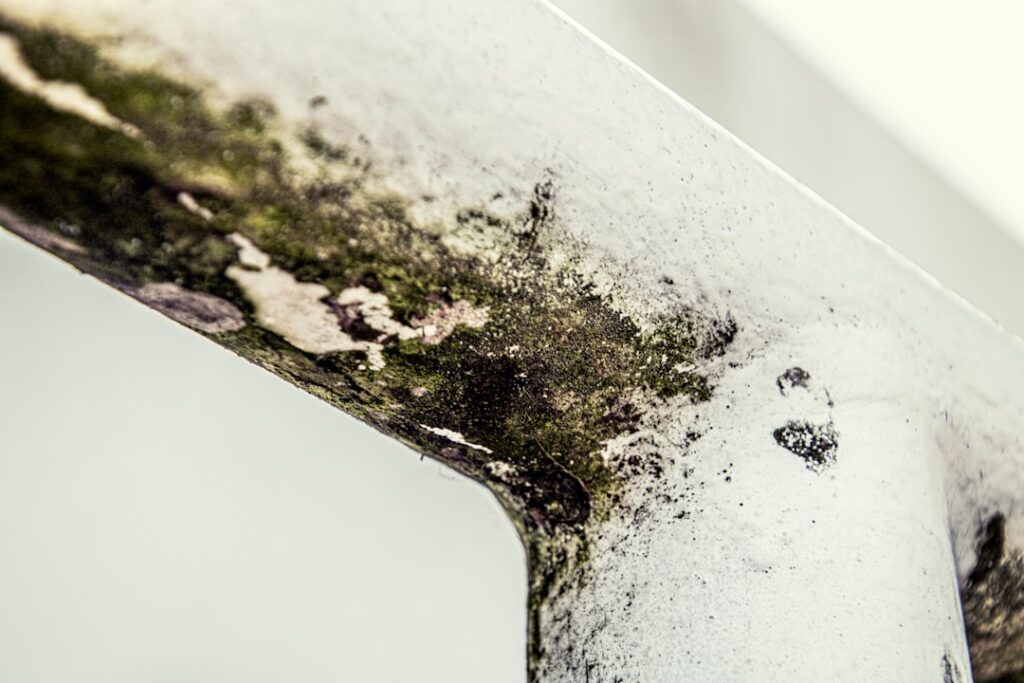
An air conditioner is a near-perfect place for mold: it is dark, it stays damp, and it moves air through the whole house. Finding black mold in an air conditioner — a window unit, a mini-split head, or a central system’s coil and ducts — means spores can be distributed everywhere the system blows. That makes it worth handling promptly and correctly. This guide summarizes EPA and CDC guidance current as of 2026 to explain why AC mold grows, how to clean it safely, and when the job belongs to a professional — consult your physician for symptoms and a certified professional for testing decisions.
Part of our Black Mold & Your Health guide — start there for the full picture →
Is this mold, asbestos, or water damage? Get a free instant screen
Upload a clear photo of the suspect area. You'll get an instant AI screening opinion and what to do next. This is screening guidance, not a professional determination.
Screening guidance only. AI can be wrong. Confirm asbestos, mold type, or lead with lab testing or a licensed professional before acting.
Why does black mold grow in air conditioners?
Air conditioners create the exact conditions mold needs. As the unit cools air, water condenses on the evaporator coil and collects in a drain pan. Dust pulled from the home settles on damp surfaces and provides food. When the system cycles off, those wet surfaces sit warm and still — ideal for spore growth. The EPA notes that mold grows wherever moisture, organic material, and time come together, and an AC interior supplies all three in abundance.
Specific failure points make it worse: a clogged condensate drain that lets the pan overflow, a dirty filter that loads the coil with dust, oversized equipment that short-cycles and never dries out, and high indoor humidity. In humid spells, a central system’s ductwork can also collect condensation if ducts run through unconditioned space like an attic or crawl space. The dark growth people call “black mold” in these units is usually a mix of common indoor molds; as always, color does not confirm the species, and the cleanup is the same regardless of what it turns out to be.
Which parts of the AC grow mold first
Knowing where mold starts in an air conditioner makes it easier to catch and clean. The evaporator coil is ground zero — it is the coldest, wettest surface in the system, and dust drawn across it provides food. From the coil, growth spreads to the drain pan directly below, which stays wet whenever condensate collects, and to the blower wheel and housing that move air past the coil. In a window unit, the foam gaskets and the front grille catch growth because they hold moisture and trap dust. In a central system, ductwork downstream of the coil can host growth where condensation forms, particularly in runs through hot attics. Because these components sit in sequence along the airflow, mold on the coil tends to seed everything past it, which is why cleaning only a visible register without reaching the coil rarely solves the problem.
How to tell if your AC has mold
The clearest signs are a persistent musty or earthy smell that intensifies when the system runs, visible dark or greenish growth on vents, registers, or the unit’s interior, and allergic symptoms — congestion, coughing, eye irritation — that appear when the AC is on and ease when it is off. The CDC links these kinds of symptoms to indoor mold exposure in sensitive individuals, and an AC that spreads spores room to room can make a sensitive person feel worse throughout the house rather than in one spot.
For window and portable units, you can often see growth directly on the front grille, the foam gasket, and the evaporator fins. In central systems the mold may be hidden on the coil, in the blower housing, or inside ducts, where a flashlight and a look behind a few register covers can reveal staining. Our guide to early signs of black mold in air vents covers what to look for around registers before the problem spreads through the system.
Is mold in an air conditioner dangerous?
The concern with AC mold is distribution. A unit with mold can spread spores throughout every room it serves, raising overall exposure rather than confining it to one damp corner. The CDC and EPA note that indoor mold can trigger respiratory and allergic symptoms, with stronger effects in people who have asthma, allergies, or weakened immune systems. That elevated-distribution risk is why the EPA specifically flags HVAC contamination as a situation where homeowners should consider professional help rather than a quick wipe-down. None of this is medical advice — anyone with persistent symptoms should see a physician.
How to clean mold from a window or portable AC unit
For a window or portable unit, mold cleanup is within reach for most homeowners. Work outdoors or in a ventilated space, and protect yourself with an N-95 respirator, gloves, and eye protection as the EPA recommends for mold work.
- Unplug the unit and move it where overspray and rinse water are not a problem.
- Remove and clean or replace the filter. Disposable filters with visible mold should be replaced, not cleaned.
- Open the housing per the manual and access the coil, fan, and drain pan.
- Scrub non-porous surfaces with detergent and water. The EPA notes detergent and water is generally sufficient for hard surfaces; bleach is not required and produces fumes.
- Clear the drain so condensate flows freely and the pan does not pool.
- Dry the unit completely before reassembly and reuse. Foam gaskets that are saturated and moldy should be replaced, since porous material rarely cleans fully.
If a unit is small, heavily contaminated, and inexpensive, replacement is sometimes more practical than a deep cleaning that may not fully reach the mold inside it.
When central AC mold needs a professional
Central systems are a different matter. The EPA advises hiring a qualified professional when mold is inside HVAC equipment or ductwork, because spores can be distributed system-wide and the components are not easy to reach or clean safely. A trained HVAC or remediation contractor can clean the evaporator coil and blower, treat or replace contaminated ductwork, correct the condensate drainage, and address humidity. Duct cleaning alone is not a fix if the coil and the moisture source are left untouched — the system will recontaminate the freshly cleaned ducts.
Because HVAC mold often signals a larger humidity or moisture issue in the home, an inspection can be worthwhile before committing to extensive cleaning. Our parent hub on mold inspection and testing explains how professionals assess HVAC-related mold and decide whether sampling is justified, and our overview of professional mold remediation services covers what a contractor should provide and how to judge a quote.
Preventing AC mold from coming back
Prevention is mostly maintenance plus humidity control. Specific steps that work:
- Change filters regularly — every 1–3 months for central systems — to keep dust off the coil.
- Keep the condensate drain clear. Flushing the line periodically prevents the overflow that feeds mold.
- Run the fan briefly after cooling or use a unit’s built-in dry cycle to dry the coil between runs.
- Keep indoor humidity below 60%, ideally 30–50%, per EPA guidance, using a dehumidifier if needed.
- Schedule annual HVAC service so a technician cleans the coil and checks drainage before problems start.
- Insulate ducts in unconditioned spaces so they do not sweat and feed mold from the outside in.
For window units, dry the interior at the end of cooling season and store it in a dry place rather than a damp garage or shed, where it will pick up moisture over the winter. A unit that dries between cycles and gets routine cleaning rarely develops the persistent growth that started this search. The same humidity discipline that keeps an AC clean also protects the rest of the home from mold. A UV light installed near the coil of a central system is another option some homeowners use to discourage growth on that cold, damp surface, though it supplements rather than replaces filter changes and drain maintenance — it does nothing for a clogged condensate line or a dirty filter loading the coil with food for mold. The throughline for any AC, window unit or central system, is that mold needs the moisture the equipment naturally produces, so the homes that stay clear of it are the ones where filters, drains, and humidity are managed as routine, not addressed only after a musty smell appears.
Window units vs. central systems: different problems
The two AC types behave differently when mold appears, and treating them the same leads to wasted effort. A window or portable unit is a self-contained box: the mold, the coil, the drain pan, and the filter are all within arm’s reach once the housing is open. That accessibility is why the EPA’s DIY threshold comfortably covers most window-unit cleanups — you can see the whole problem and reach every part of it.
A central system spreads its components across the home. The coil sits in or near the air handler, the condensate drains through hidden lines, and the ductwork threads through walls, attics, and crawl spaces. Mold in a central system is rarely confined to one visible spot, and spores ride the airflow into every conditioned room. That is the core reason the EPA treats central-HVAC mold as professional territory: you cannot clean what you cannot reach, and a partial cleaning leaves a reservoir that recontaminates the rest. A homeowner who scrubs a visible register but ignores the coil feeding it has not solved anything.
The role of the condensate drain
One component deserves special attention because it causes so many AC mold problems: the condensate drain. As the coil pulls water out of the air, that water must flow out through a drain line and pan. When the line clogs with the algae and slime that thrive in standing condensate, the pan backs up, the coil area stays wet, and mold follows quickly. On central systems a backed-up pan can also overflow into the home, creating water damage and a second mold problem. Clearing the line — many homeowners flush it with a cup of distilled vinegar periodically — is one of the highest-value, lowest-cost maintenance habits for preventing AC mold.
Does duct cleaning solve the problem?
Homeowners often ask whether duct cleaning alone will fix AC mold, and the EPA’s guidance is nuanced. Cleaning ducts can help when there is documented mold growth inside them, but it does not address the source — the coil, the drain, and the humidity that fed the growth. The EPA is explicit that duct cleaning has not been shown to prevent health problems on its own, and that cleaning ducts without correcting the moisture condition simply lets the mold return. If a contractor proposes duct cleaning as a standalone cure, ask how they will address the coil and the condensate drainage; a complete approach treats the whole system, not just the most visible part of it. For homeowners weighing what a contractor should deliver, our overview of professional remediation explains how a proper scope ties the duct, coil, and moisture work together rather than selling one piece in isolation.
References
- Mold Cleanup in Your Home — U.S. Environmental Protection Agency
- Should You Have the Air Ducts in Your Home Cleaned? — U.S. Environmental Protection Agency
- About Mold and Your Health — Centers for Disease Control and Prevention
- Mold and Dampness in the Home — American Lung Association
Frequently asked questions
Why does my air conditioner smell musty?
A musty smell that strengthens when the AC runs usually means mold or mildew on the coil, in the drain pan, or in ductwork. Condensation plus dust and warmth feed growth. Cleaning the unit and clearing the condensate drain typically resolves it.
Can I clean mold out of my AC myself?
For a window or portable unit, yes — unplug it, replace the filter, scrub non-porous parts with detergent and water while wearing an N-95 respirator and gloves, clear the drain, and dry fully. The EPA recommends a professional for mold inside central HVAC equipment or ducts.
Is mold in an air conditioner dangerous?
The main risk is distribution: the unit can spread spores through every room it serves, raising exposure. The CDC links indoor mold to respiratory and allergic symptoms in sensitive people. Anyone with persistent symptoms should consult a physician.
How do I keep mold from coming back in my AC?
Change filters every one to three months, keep the condensate drain clear, run the fan to dry the coil between cycles, keep indoor humidity below 60 percent, and schedule annual HVAC service. Window units should be dried and stored somewhere dry off-season.
If your AC keeps growing mold or you suspect a wider humidity problem in a Front Range home, you can connect with a vetted local inspector through our contact page to find the underlying cause.