Mold in Air Conditioner Symptoms: A Homeowner Guide
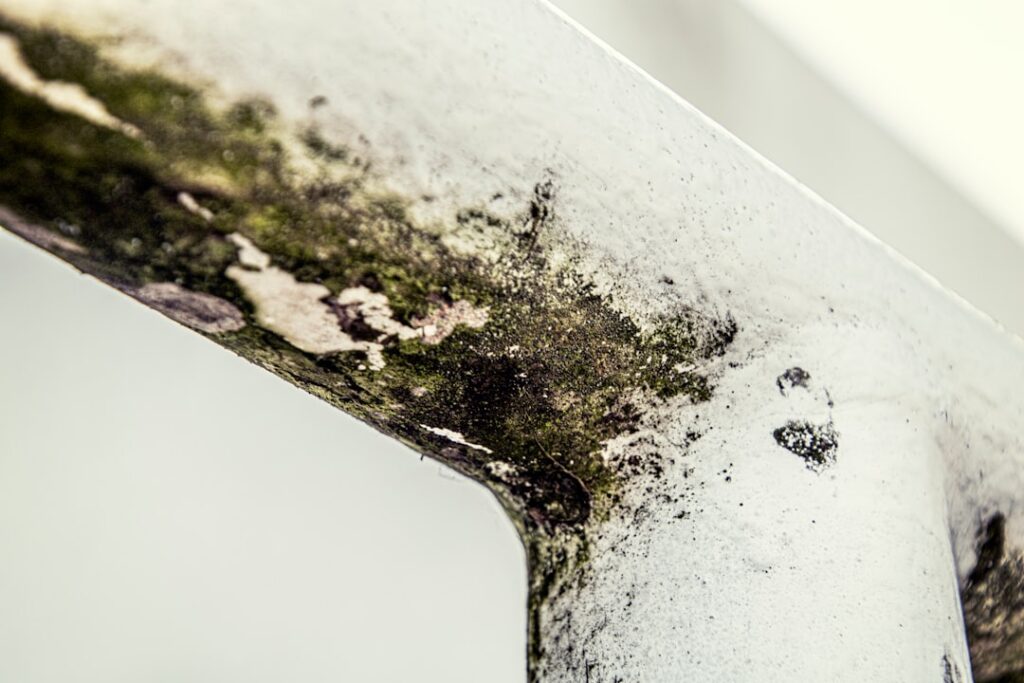
An air conditioner is one of the most overlooked places mold can take hold, yet it is one of the most consequential, because the system blows whatever grows inside it straight into the rooms where people sleep and work. Recognizing mold in air conditioner symptoms early lets homeowners act before a small colony becomes a whole-home air-quality problem. The signals range from a musty smell when the unit kicks on to allergy-like reactions that flare indoors. This guide summarizes EPA and CDC guidance current as of 2026; it is educational only, and decisions about cleaning or remediation belong with a certified professional, while health symptoms belong with your physician.
Part of our Black Mold & Your Health guide — start there for the full picture →
Is this mold, asbestos, or water damage? Get a free instant screen
Upload a clear photo of the suspect area. You'll get an instant AI screening opinion and what to do next. This is screening guidance, not a professional determination.
Screening guidance only. AI can be wrong. Confirm asbestos, mold type, or lead with lab testing or a licensed professional before acting.
What Are the Symptoms of Mold in an Air Conditioner?
The most reliable early sign is smell. A musty, earthy, or stale odor that appears specifically when the AC turns on strongly suggests mold growing on the coils, in the drain pan, or inside the ductwork. The unit is essentially circulating spores along with the cooled air.
Occupant symptoms tend to track with system use. The CDC notes that mold exposure can trigger nasal congestion, sneezing, coughing, throat irritation, watery eyes, and, in sensitive individuals or those with asthma, more pronounced respiratory reactions. A telling pattern is symptoms that worsen when the air conditioning runs and ease when it is off or when occupants leave the home. Visible signs include dark or fuzzy growth around vents, on the blower, or in the drain pan, and excess condensation or standing water near the unit. None of these alone is proof, but together they build a strong case.
Why Mold Grows in Air Conditioners
Air conditioners create the exact conditions mold loves: moisture, moderate temperatures, and a supply of dust to feed on. As warm indoor air passes over cold evaporator coils, water condenses, and that condensation collects in a drain pan. If the pan or condensate line clogs, water pools and stagnates, becoming a breeding ground.
Dust and organic debris that accumulate on coils and inside ducts provide nutrients. Add the dark, enclosed interior of the unit, and growth follows quickly. Systems that run intermittently leave damp surfaces that never fully dry, and oversized units that cycle on and off too fast fail to dehumidify properly, leaving humidity high. The EPA’s core principle applies directly: where moisture lingers, mold grows. Homeowners can learn what reduces airborne spores in our guide on what kills mold spores in the air.
Health Effects to Watch For
Reactions vary widely between people. Many experience only mild allergy-type symptoms, while those with asthma, allergies, or weakened immune systems may have stronger responses. The CDC and American Lung Association describe common effects including coughing, wheezing, nasal and sinus congestion, eye irritation, and skin irritation.
Symptoms that consistently improve away from home and return upon entry deserve attention. That said, these symptoms overlap with seasonal allergies and other causes, so they are a prompt to investigate, not a diagnosis. Anyone with persistent or severe respiratory symptoms should consult a physician rather than self-diagnose based on a suspected AC mold problem. The home-side response is to confirm and address the moisture and growth.
How to Confirm the Source
Before assuming the AC is the culprit, inspect it. Turn off the system and look at the supply vents, the blower compartment, the evaporator coils, and the drain pan. Dark speckling, slime, or a visible film, combined with a musty odor concentrated near vents, points to the unit.
For central systems, mold can hide deep in ductwork where homeowners cannot see it. A flashlight at the nearest register may reveal growth on duct walls. If the odor is strong but nothing is visible, the growth may be inside the ducts or coil housing, which usually requires professional inspection. Window and portable units are easier to open and assess directly. When the source is unclear, the mold inspection and testing hub explains how a professional locates hidden growth.
Cleaning Mold From an Air Conditioner
For small window or portable units, a homeowner can often clean the accessible parts. Unplug the unit, remove and wash the filter, and clean reachable surfaces, coils, and the drain pan with a suitable cleaner, wearing gloves and an N-95 respirator. Dry everything thoroughly before reassembly.
Central systems are more involved. Cleaning coils and a clogged condensate line is sometimes within reach, but mold inside ductwork generally exceeds DIY scope because the contaminated surfaces are extensive and hard to access. The EPA’s ten-square-foot guideline applies, and ducts often surpass it. Our guide on what to spray on black mold covers safe cleaning agents for the surfaces you can reach. Never run a system with active mold growth while occupants are home if it can be avoided.
How AC Mold Affects Indoor Air Quality
An air conditioner with mold does something uniquely problematic: it actively distributes spores rather than letting them settle. Because the system pulls air across contaminated coils or through moldy ducts and pushes it into living spaces, a relatively small colony can raise the airborne spore level throughout the home. This is why AC mold often produces symptoms that track so closely with system use.
The American Lung Association notes that elevated indoor mold can aggravate asthma and allergies, and a forced-air system amplifies exposure by spreading spores room to room. Running a HEPA air purifier helps capture circulating spores, but it treats the symptom; the lasting fix is cleaning the source and controlling the moisture that fed it. Until the system itself is addressed, the purifier is fighting a source that keeps re-supplying the air. Homeowners can read more about reducing circulating spores in our guide on what kills mold spores in the air, which explains why source removal must come first.
Preventing Mold in Your AC System
Prevention centers on moisture and maintenance. Change filters regularly so dust does not feed growth. Keep the condensate drain line clear and the pan draining freely; a clogged line is a leading cause of standing water. Have the system serviced annually so coils stay clean and the unit dehumidifies efficiently.
Control indoor humidity overall, keeping it below 60 percent, so the conditions that favor mold never establish. Ensure the unit is correctly sized; an oversized system short-cycles and leaves humidity high. After the cooling season, run the fan periodically to dry interior surfaces. These habits keep the system from becoming a spore distributor and protect the air everyone breathes.
Cleaning a Window or Portable Unit Step by Step
For a window or portable air conditioner showing signs of mold, a careful homeowner can usually handle the cleaning. Start by unplugging the unit and moving it to a well-ventilated area or outdoors. Wearing gloves and an N-95 respirator, remove the front panel and the filter. Wash the filter in warm water with a little detergent, and if it is heavily contaminated, replace it rather than struggling to salvage it.
Next, inspect the coils, fins, and the drip tray. Spray accessible surfaces with a suitable cleaner, let it dwell, then wipe and scrub gently so as not to bend the fins. Clean the drip tray thoroughly, since standing water there is a common growth site. Allow every component to dry completely before reassembling, because reassembling a damp unit simply restarts the cycle. Once back together, run the unit on a dry setting for a while to evaporate residual moisture. Going forward, regular filter changes and periodic cleaning keep the unit from becoming a spore source again. If growth is extensive or keeps returning, the unit may be beyond cleaning and worth replacing.
The Role of the Condensate Drain
The single most common origin of air conditioner mold is the condensate system. As the AC cools, water condenses on the evaporator coil and drips into a pan, then flows out through a drain line. When that line clogs with algae, dust, or biofilm, water backs up and pools in the pan, creating a stagnant reservoir that mold colonizes within days. From there, the system blows spores into the living space.
Homeowners can prevent much of this with simple maintenance. Keep the drain line clear, pouring a small amount of appropriate cleaner through the access point periodically, and check that the pan drains fully rather than holding standing water. A line that drips outside the pan or a pan that never empties signals a blockage. Addressing the condensate system is often the difference between a one-time cleaning and a recurring mold problem, because it removes the standing water that feeds growth. An HVAC technician can clear a stubborn clog and confirm the system drains as designed.
Window Units vs. Central Systems
The type of system shapes both the symptoms and the fix. Window and portable units are self-contained, so mold tends to concentrate in the visible filter, fins, and drip tray, and a homeowner can often open the unit, clean accessible parts, and dry them. Because the contaminated area is small and reachable, these units are frequently within DIY range.
Central air systems are a different matter. They circulate conditioned air through ductwork that reaches every room, so mold on the evaporator coil or inside the ducts can distribute spores house-wide, and the symptoms appear in multiple rooms at once rather than near a single unit. The coil sits in an enclosed air handler that is awkward to access, and ductwork interiors are largely out of reach. This is why central-system mold more often requires professional HVAC and remediation involvement, while a window unit’s mold can usually be handled with a careful cleaning and better maintenance going forward.
Distinguishing AC Mold From Other Causes
Not every musty smell or allergy flare-up traces to the air conditioner, so a little investigation prevents misdirected effort. If the odor appears only when the AC runs and fades when it is off, the unit is a strong suspect. If the smell is constant regardless of the system, the source may be elsewhere, such as a damp basement, a bathroom, or a hidden leak, and cleaning the AC will not solve it.
Symptom timing offers another clue. Reactions that worsen specifically during AC use point toward the system, while symptoms tied to a particular room suggest a localized source there. Because mold symptoms overlap with seasonal allergies, dust, and other irritants, ruling out the obvious alternatives matters before committing to an HVAC cleaning. When the picture is unclear, an independent inspection through the mold inspection and testing hub can determine whether the AC is the true source or merely circulating spores from a larger problem the house is hiding.
When to Call a Professional
Call an HVAC or remediation professional when mold is visible inside ductwork, when the affected area exceeds about ten square feet, when growth keeps returning after cleaning, or when occupants have respiratory conditions. Duct and coil-housing contamination requires specialized cleaning and containment to avoid spreading spores throughout the home.
A professional can also confirm whether the AC is the true source or merely circulating spores from a larger problem elsewhere in the house. Pairing an HVAC inspection with an independent mold assessment gives the clearest picture and prevents repeatedly cleaning a unit that keeps getting re-contaminated from another source.
References
- About Mold and Health — Centers for Disease Control and Prevention
- A Brief Guide to Mold, Moisture and Your Home — U.S. Environmental Protection Agency
- Should You Have the Air Ducts in Your Home Cleaned? — U.S. Environmental Protection Agency
- Mold and Indoor Air Quality — American Lung Association
Frequently asked questions
What does mold in an air conditioner smell like?
It usually produces a musty, earthy, or stale odor that becomes noticeable when the unit turns on. If the smell consistently appears with AC use and fades when it is off, mold in the coils, drain pan, or ducts is a likely cause.
Can mold in my AC make me sick?
Mold exposure can trigger coughing, congestion, throat and eye irritation, and stronger reactions in people with asthma or allergies, according to the CDC. Symptoms that worsen when the AC runs and ease when away from home warrant investigation and a doctor's input for health concerns.
Can I clean mold from my air conditioner myself?
For small window or portable units, you can often clean the filter, accessible coils, and drain pan with gloves and an N-95 respirator. Mold inside central-system ductwork usually exceeds safe DIY scope and needs a professional.
How do I keep mold from coming back in my AC?
Change filters regularly, keep the condensate drain clear, service the system annually, and control indoor humidity below 60 percent. Proper sizing and periodic fan-only runs help interior surfaces dry between cooling cycles.
If a musty AC smell has you worried about your air, a clear assessment helps. Front Range homeowners can reach out through our contact page to connect with a vetted inspector.