Mold Testing Cost: Kits, Lab Fees and Pro Sampling
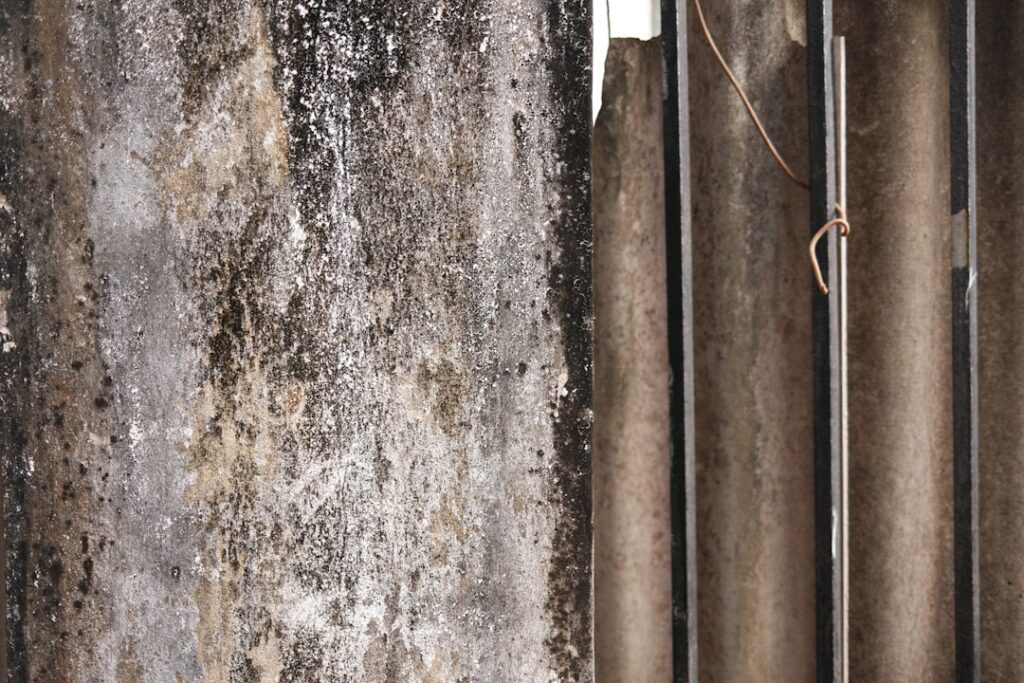
People pricing mold testing often get quotes that seem impossible to compare. One company quotes a figure per sample, another quotes a flat fee for an inspection with “testing included,” and a hardware store sells a kit for the price of a takeout dinner. They are all describing different products. This guide breaks the mold testing cost question into its parts: do-it-yourself kits, lab analysis fees, a professional visual inspection, air samples, surface and tape samples, dust-based tests, and post-remediation clearance. It also covers the more useful question that sits underneath the price, which is whether testing is worth paying for at all. The EPA and CDC both take a fairly skeptical view of routine sampling, and knowing why can save money. Price ranges here are typical market quotes, not published standards, and they vary by company, lab turnaround, home size and region, including along the Colorado Front Range.
Part of our Mold Testing & Inspection guide — start there for the full picture →
Is this mold, asbestos, or water damage? Get a free instant screen
Upload a clear photo of the suspect area. You'll get an instant AI screening opinion and what to do next. This is screening guidance, not a professional determination.
Screening guidance only. AI can be wrong. Confirm asbestos, mold type, or lead with lab testing or a licensed professional before acting.
Why Mold Testing Quotes Vary So Much
The single biggest source of confusion is that “mold testing” is used for at least three different services. The first is a lab analyzing one sample. The second is a technician collecting a set of samples and sending them to a lab. The third is a full mold inspection, where the main value is a trained person looking for moisture and growth, with sampling as an optional add-on. A low per-sample price and a high flat inspection fee can both be fair, because they are not buying the same thing.
Several factors push a quote up or down:
- Number of samples. Air sampling usually needs at least one outdoor comparison sample in addition to indoor samples, so a “single room” job is rarely one sample.
- Type of sample. Air, surface, tape-lift, bulk, wall-cavity and dust samples are priced differently and answer different questions.
- Lab turnaround. Standard turnaround is usually cheaper than rush or same-day analysis.
- Size and access. Large homes, crawl spaces, attics and finished basements take longer to assess.
- Credentials and reporting. A written report interpreted by an industrial hygienist typically costs more than a bare lab printout.
- Travel. Rural and mountain addresses may carry a trip charge.
It also helps to separate testing from inspection costs. Our guide to mold inspection cost covers the visit fee in more detail, while this page focuses on what sampling and lab work add. For the broader context of how mold assessment fits into a home inspection, see our mold inspection pillar guide.
Mold Testing Cost by Method
The table below collects typical price bands that homeowners commonly see quoted. Treat every figure as a rough, hedged range rather than a fixed rate. Local pricing, lab contracts and the scope of each visit vary, and some companies bundle items that others itemize.
| Test or service | Typical price range (hedged) | What it tells you | Main limitation |
|---|---|---|---|
| DIY settle-plate or swab kit (kit only) | Roughly $10–$50 | That mold spores can grow in a dish, which is almost always true | No volume control, no outdoor comparison; results are hard to interpret |
| DIY kit lab analysis fee | Often $30–$100+ per sample on top of the kit | Genus-level identification of what grew | Still lacks a proper baseline; the kit price rarely includes it |
| Professional visual inspection (no samples) | Often $200–$600, depending on home size | Where moisture and growth are, and why | No lab confirmation of genus or spore counts |
| Air sample (spore trap), per sample | Commonly $75–$200 each when added to a visit | Airborne spore types and counts compared with outdoors | A snapshot in time; counts swing with activity and weather |
| Surface swab or tape-lift, per sample | Commonly $50–$150 each | What is growing on a specific surface | Says nothing about airborne levels or hidden growth |
| Wall-cavity or bulk sample | Commonly $100–$250 each | Whether growth is present behind a finish or inside a material | Requires a small hole or material removal |
| ERMI-type settled-dust DNA test | Often a few hundred dollars per test (hedged; varies widely) | A profile of mold DNA in settled dust | Reflects history, not current conditions; no federal benchmark for homes |
| Post-remediation clearance (visual plus samples) | Often $300–$800 for a typical project | Whether a cleaned area looks and samples comparable to unaffected areas | Only meaningful if done by someone independent of the remediator |
A typical professional “inspection with testing” visit for a single-family home ends up as a visual inspection plus three to five samples, which is why many all-in quotes fall somewhere between a few hundred dollars and around a thousand. Larger homes, multiple problem areas, or a request for an industrial hygienist’s formal report can push the total higher.
DIY kits and lab fees
Home mold kits are the cheapest entry point and the most misunderstood. Most settle-plate kits work by leaving an open dish of growth medium in a room. Because mold spores are present in nearly every indoor and outdoor space, something almost always grows. That result says very little about whether a home has a moisture problem. The CDC notes that there is always some mold around, and that mold enters homes through doors, windows, vents and HVAC systems.
Many kits also advertise a low sticker price but charge a separate lab fee to identify what grew. Add that fee to the kit cost before comparing it with a professional sample. Our guide to the at-home mold test kit walks through how these products work and where they fall short, and where to get a mold test kit covers retail options. For homeowners who still want to try one, kits are listed in our mold test kit shop. A kit can be a reasonable curiosity check, but it should not drive decisions about tearing out walls or buying a house.
Professional visual inspection
The most useful part of most professional visits is the inspection itself rather than the samples. An experienced inspector checks for staining, musty odors, past leaks, condensation, poor ventilation and hidden moisture with tools such as moisture meters and, in some cases, thermal cameras. Finding the water source is what actually determines the repair. Sampling without that context tends to produce numbers that nobody can act on.
Air samples
Air sampling with spore traps is the most common professional test. A calibrated pump pulls a measured volume of air through a cassette, and a lab counts and identifies the spores. At least one outdoor sample is normally collected as a baseline, because indoor numbers only make sense when compared with the outdoor air at the same time. Read more about how this works and what can skew results in our guide to air sampling for mold.
Surface and tape samples
Surface swabs and tape lifts identify what is growing on a particular spot. They are cheaper than air samples and can help when the question is “what is this stain?” They cannot tell how much mold is in the air, and they can only describe the patch that was sampled.
ERMI-type dust tests
Dust-based DNA tests, sometimes marketed under the ERMI name or similar labels, analyze settled dust for the genetic signatures of selected mold species. Some homeowners use them when they suspect a long-standing problem. Be cautious with them. Settled dust can reflect years of history, including growth that has already been fixed, and there is no federal residential standard to compare the results against. Treat any score as one input among several rather than a verdict.
Post-remediation clearance
Clearance testing checks whether a remediated area is clean before walls are closed and the containment comes down. The EPA notes that surface sampling may be useful to determine if an area has been adequately cleaned or remediated. Clearance usually includes a visual inspection plus a small number of air or surface samples. It is one of the few situations where paying for sampling almost always makes sense, provided the person doing it does not work for the remediation company.
When Mold Testing Is Worth It, and When It Is Not
Federal guidance is clear that sampling is not the default first step. The EPA states that in most cases, if visible mold growth is present, sampling is unnecessary. It also notes that no EPA or other federal limits have been set for mold or mold spores, so sampling cannot be used to check a building’s compliance with federal mold standards. The CDC goes further on home testing: it states that it does not recommend mold testing, explaining that health effects differ between people, that good sampling can be expensive, and that there are no set standards for acceptable quantities of mold in a home. Both agencies point back to the same practical answer: remove the mold and fix the moisture.
That does not mean testing is never useful. It means the money should buy an answer to a specific question. Situations where sampling often earns its cost include:
- A musty smell with no visible growth. When an odor points to hidden mold, an inspection with targeted samples can help locate it before walls are opened. The EPA’s homeowner guide notes that mold can hide on the back of drywall, under carpet pads, inside walls around leaking pipes, and in ductwork.
- Post-remediation clearance. Confirming that a cleanup was completed before rebuilding is a common, defensible use of sampling.
- Real estate transactions. A buyer may want documentation of conditions, especially after signs of past water damage in a basement or crawl space.
- Landlord-tenant or insurance disputes. A neutral, documented assessment can carry more weight than photos alone.
- Medical guidance. When a physician has asked for information about a home environment, a professional assessment can support that conversation, though sampling cannot diagnose illness.
Situations where testing is usually not worth the money include:
- Small, visible growth. A patch on a bathroom ceiling or under a sink needs cleaning and a moisture fix, not a lab report. The EPA notes that areas under about 10 square feet can, in most cases, be handled by the homeowner.
- Trying to identify “black mold.” Color does not determine risk, and the CDC advises that if you see or smell mold you should remove it; you do not need to know the type. Our guide to names of mold explains the common genera if curiosity still wins.
- A clear moisture source is already known. If the leak is obvious and the stain is visible, budget for the repair and cleanup instead.
Readers who want the background on visual signs, sampling methods and when a lab result adds value can find more on our mold testing hub.
Independence From Remediation Companies
One of the most practical cost decisions has nothing to do with lab fees. It is who does the testing. When the same company tests for mold and then quotes the remediation, it has a financial stake in finding a problem. That does not make every combined company dishonest, but it creates a conflict that is easy to avoid.
Many homeowners choose an independent inspector or industrial hygienist for assessment and clearance, and a separate contractor for the cleanup. Some states license mold assessors and remediators separately and bar one firm from doing both on the same job. Colorado is not generally known for a dedicated statewide mold licensing program, so it often falls to the homeowner to ask the question directly. The EPA advises that sampling should be conducted by professionals with specific experience in designing sampling protocols, sampling methods and interpreting results, and that analysis should follow methods recommended by professional bodies such as the American Industrial Hygiene Association.
Questions worth asking before booking:
- Does the company also perform remediation, or refer to a remediator it has a financial relationship with?
- Which lab analyzes the samples, and is it accredited for mold analysis?
- Will outdoor or unaffected-area comparison samples be collected?
- Does the report explain the moisture source, or only list spore counts?
- Who interprets the results, and what credentials do they hold?
For complex or contested cases, an industrial hygienist is often the right fit. Our guide to hiring a mold hygienist explains what that role adds and how fees usually compare with a general inspector.
Bundling Mold With Other Testing
Older homes sometimes raise more than one question at once. If water-damaged drywall, ceiling texture or flooring is going to be removed, the same visit may need to consider asbestos as well as mold, because disturbing older materials can carry its own risks. Combining services can reduce trip charges and coordinate sampling with demolition plans. Our guide to mold and asbestos testing covers how those visits are usually scoped. Ask for each service to be itemized so the totals can be compared with single-service quotes.
A few other bundles are common:
- Home inspection plus mold add-on. Some general home inspectors offer limited mold sampling as an add-on during a purchase inspection. It may be cheaper than a separate visit, but scope is often narrower.
- Moisture mapping plus sampling. When a leak has spread, moisture readings across a floor or wall can show where growth is likely before any sample is taken.
- Radon and mold in basements. Basements on the Front Range often prompt both questions. They are separate tests with separate equipment, but scheduling them together can save a trip.
How to Keep Mold Testing Costs Under Control
Paying for the right test, once, is cheaper than paying for the wrong test twice. A few practical habits help:
- Start with the question. Decide what the result needs to answer: where hidden growth is, whether cleanup worked, or what documentation a buyer or landlord needs. If nobody can say what decision the result will change, the sample may not be needed.
- Fix moisture first. The EPA states that the key to mold control is moisture control and that drying water-damaged areas within 24 to 48 hours usually prevents growth. A dehumidifier, a repaired gutter or a fixed supply line can be cheaper than a full sampling package.
- Ask for an itemized quote. Compare the visual inspection fee, per-sample charges, lab turnaround and report fees separately.
- Avoid unnecessary samples. More samples are not always better. A well-placed indoor sample plus an outdoor baseline can answer more than a dozen poorly placed ones.
- Budget for clearance. If remediation is likely, include an independent clearance visit in the overall plan instead of treating it as an afterthought.
- Keep reports. Records of inspection, remediation and clearance can help with insurance claims and future home sales.
Testing is also only a small slice of the total bill when cleanup is needed. Our guide to mold remediation cost covers what removal and rebuilding typically involve, so the testing budget can be set in proportion to the likely project.
Reading the Results Without Overpaying
A lab report usually lists spore types and counts for each sample. The numbers are easy to misread. Indoor counts are generally compared with the outdoor baseline, both for total spores and for the mix of types. An indoor sample that shows a different dominant type than outdoors, or markedly higher counts, may point to an indoor source. Because there are no federal numeric limits, interpretation depends on the professional’s judgment, the sampling conditions and the visual findings.
Several things can distort results:
- Recent cleaning, vacuuming or renovation, which can stir up settled spores.
- Open windows or HVAC changes shortly before sampling.
- Outdoor weather, since rain, wind and season all change outdoor spore levels.
- Sampling only one room without a comparison sample.
If a report lists spore counts but does not connect them to a moisture source or a recommendation, ask for clarification before paying for more samples. A good report reads like a diagnosis, not a spreadsheet. Readers comparing professionals can also review our notes on choosing a certified mold inspector, including which credentials are common and what they cover.
Health Questions and Testing
Many people look into testing because someone in the household feels unwell. The CDC explains that exposure to damp and moldy environments may cause a variety of health effects, or none at all. For some people, mold can cause a stuffy nose, sore throat, coughing or wheezing, burning eyes, or skin rash, and people with asthma or mold allergies may have more severe reactions. The CDC also notes that health effects differ between people, which is part of why it does not rely on sampling to predict who might become sick.
Testing a home cannot diagnose a health condition. Symptoms belong with a physician, who can decide whether information about the home is helpful. In the meantime, the CDC’s prevention advice is low-cost: keep indoor humidity no higher than 50 percent, use exhaust fans that vent outdoors, fix leaks in roofs, walls and plumbing, and dry out flooded areas fully and quickly.
References
- Mold Testing or Sampling — U.S. Environmental Protection Agency
- Mold — Centers for Disease Control and Prevention
- A Brief Guide to Mold, Moisture and Your Home — U.S. Environmental Protection Agency
- Mold Cleanup in Your Home — U.S. Environmental Protection Agency
Frequently asked questions
How much does mold testing cost?
It depends on what is being bought. DIY kits often cost roughly $10 to $50 plus separate lab fees, professional air or surface samples are commonly quoted at about $50 to $200 each, and a full inspection with several samples often lands between a few hundred dollars and around a thousand. These are hedged market ranges, not fixed rates.
Is mold testing worth it if mold is visible?
Usually not. The EPA says that in most cases sampling is unnecessary when mold growth is visible, and the CDC advises removing mold without needing to know its type. Money is usually better spent finding and fixing the moisture source.
Should the mold tester and the remediator be different companies?
It is generally a good idea. A company that tests and then quotes the cleanup has a financial interest in the result. Many homeowners hire an independent inspector or industrial hygienist for assessment and clearance and a separate contractor for removal.
Are there federal limits for mold spore counts?
No. The EPA states that no federal limits or threshold values have been set for airborne mold or mold spores. Results are interpreted by comparing indoor samples with outdoor or unaffected areas alongside a visual inspection.
When is post-remediation clearance testing needed?
It is commonly used after a larger cleanup to confirm the work area is clean before walls are closed. The EPA notes that surface sampling may help determine whether an area has been adequately cleaned or remediated.
Not sure which test, if any, fits your situation? Send us a note and we can help you scope an independent Front Range mold assessment before you spend money on samples.