Black Mold Test Kits: What Homeowners Need to Know
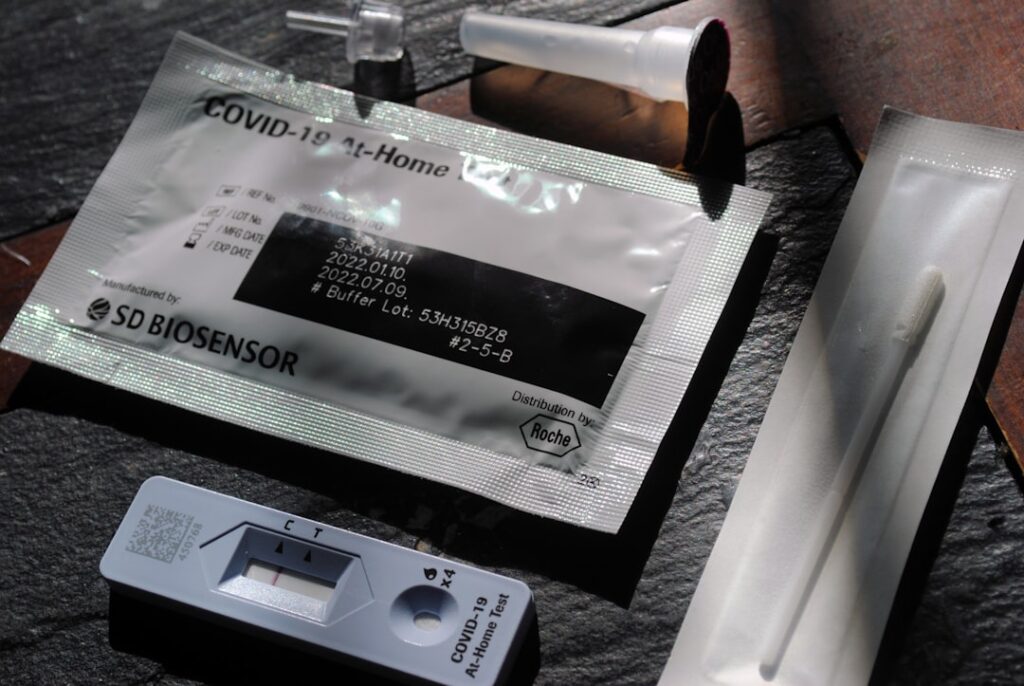
Black mold test kits form a small product catalog organized around one organism: Stachybotrys chartarum, the toxigenic species responsible for the term “black mold” in popular use. Multiple kit formats target this genus, and the catalog rewards a careful shopper who understands what each format actually delivers. This guide summarizes EPA and CDC guidance current as of 2026, treating sampling and identification as informational rather than diagnostic. Homeowners with documented health symptoms or active water damage should consult a physician and a certified remediation contractor before relying on any consumer kit as a primary decision tool. The framework below catalogs the product types and shows where each one fits in a homeowner’s testing decision.
Is this mold, asbestos, or water damage? Get a free instant screen
Upload a clear photo of the suspect area. You'll get an instant AI screening opinion and what to do next. This is screening guidance, not a professional determination.
Screening guidance only. AI can be wrong. Confirm asbestos, mold type, or lead with lab testing or a licensed professional before acting.
What the catalog actually covers
Black mold test kits cluster into five product types in the consumer market. Tape-lift kits target visible black-pigmented growth on drywall, grout, or trim and ship the sample to a lab for microscopic identification. Surface-swab kits cover larger contact areas (HVAC components, basement framing) and ship for culture or PCR analysis. Settle-plate kits expose nutrient agar to room air and either ship to a lab or incubate at home for visual reading. ERMI dust kits collect a vacuum dust sample and use PCR to identify 36 species against a national HUD baseline, including Stachybotrys among other toxigenic organisms. Mycotoxin kits, the most specialized tier, test for the actual toxic metabolites produced by certain mold species, not the mold itself.
Pricing tracks the catalog. Visual-only Petri dish kits run $10 to $25. Tape-lift, swab, and lab-analyzed settle plates run $30 to $150. ERMI dust kits run $250 to $350. Mycotoxin testing runs $300 to $600 per sample and usually requires lab pre-coordination. Each tier answers a different question, and the right kit depends on which question the homeowner needs answered first.
Why Stachybotrys specifically gets its own product category
Stachybotrys chartarum produces macrocyclic trichothecenes, a class of mycotoxin associated with significant water damage and chronic respiratory exposure. The organism grows on cellulose-rich materials (drywall paper, fiberboard, certain wallpapers) that have been continuously wet for at least 7 to 10 days. CDC notes in its Stachybotrys page that the link between the organism and specific health conditions is not as direct as some popular reporting has suggested, but the agency also recommends cleanup and moisture remediation regardless of identification. EPA’s mold cleanup guidance treats Stachybotrys patches the same as other indoor genera from a cleanup-method standpoint, with the same protective gear and the same moisture-control imperative.
The reason kit products name Stachybotrys explicitly is search-volume reality: more homeowners search “black mold test” than “Cladosporium test,” even though the latter is far more common in indoor air. Naming the marketing category around Stachybotrys captures the search demand. The kit chemistry inside the package usually identifies whatever genus grew, not just Stachybotrys, so the name on the box is more about audience targeting than product specialization.
Tape-lift kits for visible black patches
Tape lifts are the most direct match for a homeowner who can see a black patch and wants to confirm what it is. The kit includes one or more clear adhesive cards, a return mailer, and a chain-of-custody slip. The user peels the adhesive backing, presses the sticky surface against the visible growth for several seconds, peels it off, and seals it inside the labeled envelope. The lab places the tape under a microscope and identifies the spores or hyphal fragments captured. Stachybotrys produces a distinctive dark septate hyphae with characteristic conidia in clusters, which a trained microbiologist can identify quickly.
Tape lifts work best on flat, hard surfaces. They underperform on porous textiles, fiber insulation, or rough masonry where spores embed below the adhesive’s reach. A black patch on textured stucco, for example, may yield a poor lift. A black patch on smooth painted drywall yields excellent capture. Reading the package directions for substrate compatibility matters more than reading the brand name.
Surface-swab kits for hidden or textured growth
Surface-swab kits use a sterile cotton or polyester tip on a plastic stick. The user rubs the tip across the suspected growth in a defined pattern (typically a one-inch square scribed twice), then breaks the stick into a labeled vial filled with stabilizer fluid. The lab plates the swab onto a nutrient medium or extracts DNA for PCR identification. Swabs cover more surface area than tape lifts and recover material from textured surfaces better. They are also the preferred format for sampling HVAC components, where black growth often appears on coil fins or drip pan surfaces that a tape lift cannot reach.
Cross-contamination is the main risk with swabs. Handling the tip with bare fingers deposits skin cells, lotion, and oils on the medium. The lab will still identify any fungal growth, but the report may include bacterial colonies or yeast that crowd the result. Wearing disposable gloves and avoiding any contact between the tip and a non-target surface (countertop, fingers, the inside of the user’s nose during handling) keeps the sample clean.
Settle plates for ambient air sampling
A settle plate is a small Petri dish containing nutrient agar. The user opens the dish indoors for 60 minutes, closes the lid, and either mails the dish to a lab or incubates it at room temperature for 3 to 7 days and reads the colony count visually. Settle plates measure what was airborne and what gravity dropped into the dish during the open window. They are the most common consumer-tier product and are well-suited to ambient air screening when no visible patch is available to sample directly. The black mold air test kit guide covers this format in more depth for the Stachybotrys-specific use case.
ERMI dust kits for whole-house profiling
ERMI (Environmental Relative Moldiness Index) kits use PCR to quantify 36 indoor fungal species from a single vacuumed dust sample. The user vacuums a defined area (typically 6 square feet across multiple rooms) using a special collection sock that attaches to a household vacuum hose. The lab amplifies fungal DNA from the dust and reports concentrations of each species against a national HUD baseline. Stachybotrys chartarum is one of the 26 “Group 1” species (water-damage indicators) on the panel. ERMI is the most rigorous consumer-accessible format and the only one that produces a quantitative score comparable across houses.
Mycotoxin kits for the actual toxic metabolites
Mycotoxin testing is a separate category from mold testing. The lab measures the actual toxic compounds (trichothecenes, ochratoxin, aflatoxin, gliotoxin) rather than the organisms that produce them. This matters because a house can have low fungal counts but high mycotoxin loads if the organism is producing toxins actively or if metabolites have settled into dust. Mycotoxin kits typically use urine, dust, or bulk-material samples sent to a specialty lab. Most consumer mycotoxin kits are dust-based and cost $300 to $600 per sample. The is-there-a-test-for-black-mold reference guide covers the relationship between mold identification and mycotoxin detection.
Which kit to pick for which situation
Visible black patch on smooth drywall: tape lift. Visible growth on HVAC components or textured surfaces: surface swab. Musty air with no visible growth: settle plate or ERMI dust. Whole-house screening before a real estate transaction: ERMI dust plus a professional inspector. Documented health symptoms with no visible source: mycotoxin testing under physician guidance. Each scenario maps to a different kit, and matching the scenario is more important than chasing the lowest price. NIEHS notes in its mold topic overview that the cleanup decision is largely independent of species identification, so a homeowner who can see the patch and reach it safely usually does not need the highest-priced format to act on the patch.
Front Range moisture context
Colorado homes face specific moisture pressures that change the typical Stachybotrys exposure profile. Dry winter air masks indoor humidity from showers and cooking. Basement footings catch snowmelt that can wet drywall paper for the 7-to-10-day window Stachybotrys requires. Swamp coolers in summer raise second-story humidity, particularly in rooms with poor exhaust ventilation. Rim joists at the basement ceiling can condense in winter and grow colonies invisible until renovation exposes them. The parent mold inspection and testing guide covers the moisture-source workflow in more detail. For documented Stachybotrys testing protocols, the whole-home Stachybotrys testing guide walks through layout decisions for a typical Front Range house.
How to actually run a black mold kit
Open the kit indoors with HVAC running normally. Do not pre-clean the patch you intend to sample; aggressive cleaning aerosolizes spores and contaminates the entire room. Wear disposable gloves and avoid touching the sampling surface to skin, clothing, or other surfaces between handling and sealing. For tape lifts, press the adhesive against the patch for a full five seconds before peeling, and avoid scrubbing back and forth, which can smear material rather than capture intact spore structures. For swabs, scribe a defined pattern with even pressure rather than randomly poking the tip at the surface. For settle plates, place the open dish at counter height in the middle of the room, away from registers, doors, and pets.
Label every sample with the room, the wall or surface, the approximate height, the date, and the time. Most lab reports tie genus profiles to micro-location, and missing metadata reduces the value of the report. Mail same-day where possible; samples that incubate inside a mailer for several days may grow to uncountable density or, in the opposite extreme, dry out and lose viable cells before reaching the lab. Most labs return PDF reports within 7 to 14 business days, with rush service available for $40 to $80 extra.
What the lab report means and what it does not
A consumer lab report names the dominant genera, gives a relative concentration on a four- or five-point scale, and flags any genus on the toxigenic list. The report does not diagnose health risk. It does not say “your house is unsafe.” It does not say “your symptoms are caused by this organism.” The interpretive step belongs to a physician for the health side and to a remediation contractor for the building side. CDC and NIEHS both note that the cleanup plan rarely changes based on species identification, which means a visible patch that you can reach safely should be cleaned regardless of what the lab reports about the genus involved.
When to skip a consumer kit
Skip the consumer kit when the visible patch exceeds ten square feet, when the patch is suspected behind a finished wall, when an occupant has been diagnosed with a mold-related condition, or when the test result will support a real estate transaction or insurance claim. Those situations call for an inspector working under InterNACHI or IAC2 protocols, with samples collected under chain-of-custody, an AIHA-accredited lab analysis, and a written report formatted for legal defensibility.
References
- Stachybotrys chartarum facts — Centers for Disease Control and Prevention
- Mold cleanup in your home — U.S. Environmental Protection Agency
- Mold topic overview — National Institute of Environmental Health Sciences
- Mold and moisture for Colorado homeowners — Colorado Department of Public Health and Environment
Homeowners on the Front Range who want help choosing a kit or a referral to a remediation contractor for confirmed Stachybotrys growth can reach out through our contact page for a vetted local connection.