Mold Exterminator: What Homeowners Need to Know in 2026
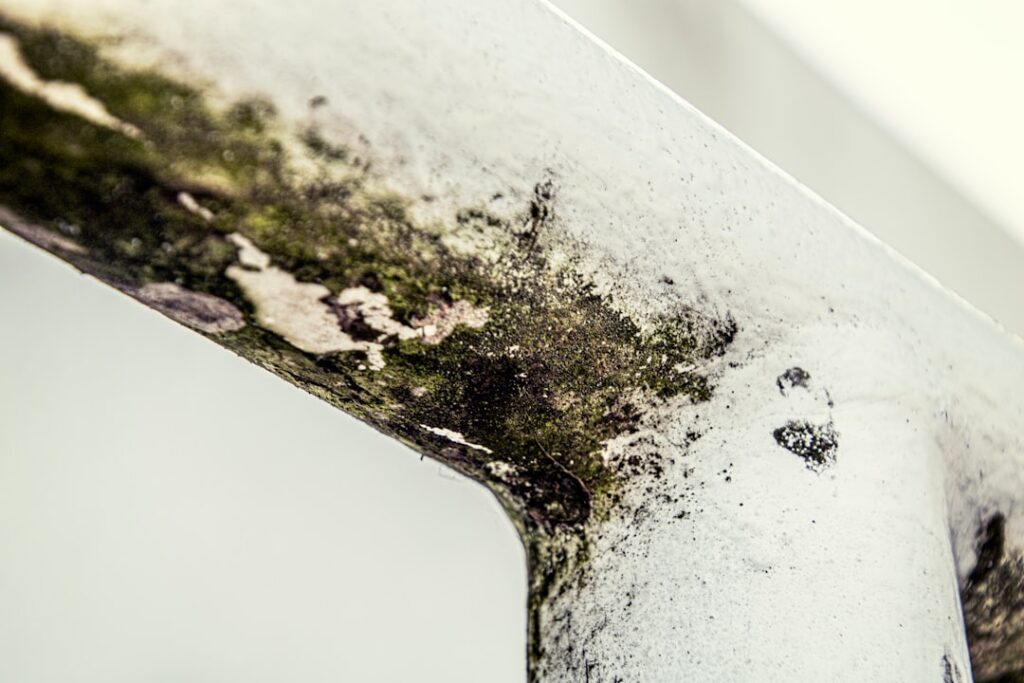
The phrase “mold exterminator” enters search engines hundreds of times a month, and the framing reveals a common misunderstanding about how mold problems are actually solved. Mold is not pest-controlled the way termites or rodents are; it is removed and the underlying moisture condition is corrected. A serious remediation contractor will not use the word “exterminator” on their own materials. This guide summarizes EPA and CDC guidance current as of 2026 and walks through what the right professional actually does — consult your physician for symptoms and a certified professional for testing decisions specific to your home.
Is this mold, asbestos, or water damage? Get a free instant screen
Upload a clear photo of the suspect area. You'll get an instant AI screening opinion and what to do next. This is screening guidance, not a professional determination.
Screening guidance only. AI can be wrong. Confirm asbestos, mold type, or lead with lab testing or a licensed professional before acting.
What a “mold exterminator” actually is
Companies that market themselves as mold exterminators are almost always mold remediation contractors. The work involves containing the affected area with polyethylene barriers, putting the space under negative pressure with HEPA-filtered air machines, physically removing contaminated porous materials, cleaning non-porous surfaces with appropriate antimicrobials or detergents, HEPA-vacuuming residual spores, and verifying the result through post-remediation testing. None of those steps resembles pesticide application.
The pest-control framing causes harm because it suggests that a sprayed chemical can solve the problem. The EPA is explicit that biocides and disinfectants are not a substitute for physical removal of moldy materials, and that no chemical alone resolves a mold problem if the source of moisture remains. A homeowner who hires a true pest-control company expecting mold remediation will receive a sprayed treatment that does not address the root cause.
Why “killing” mold is the wrong mental model
Mold spores are everywhere outdoors and indoors. Killing the spores in a single room does nothing about the millions of fresh spores that arrive on shoes, pets, and ventilation air over the next twenty-four hours. The actual problem is whether those spores find conditions favorable for growth — moisture above a certain threshold, organic substrate, and time. Remove the moisture, and the spores cannot germinate. Spray the spores, and they reappear.
The CDC and NIEHS both stress this point in their public-facing materials: mold control is moisture control. Any contractor whose primary pitch is a proprietary spray or fogging product without a comparable emphasis on moisture-source repair is selling the wrong solution. The mold inspection and testing pillar explains the moisture-control logic in more detail.
What proper remediation looks like
The industry-standard reference for professional mold remediation is the IICRC S520. A competent project follows a recognizable sequence.
Site assessment and protocol
Before any demolition, an independent inspector documents the affected area, takes baseline air samples, and writes a remediation protocol that specifies containment, PPE, removal methods, and verification criteria. This is the same document discussed in the mold report walkthrough. Skipping this step makes the remediation undocumented and untestable.
Containment and engineering controls
The work area is sealed from the rest of the home using six-mil polyethylene sheeting taped to clean surfaces. A negative-air machine pulls air through HEPA filters at a rate sufficient to maintain a slight pressure differential, so contaminated air cannot escape into clean areas. Smaller jobs may use a single-containment approach; larger jobs require a decontamination chamber with an entry vestibule.
Material removal and surface cleaning
Porous materials with visible growth — typically drywall, batt insulation, ceiling tiles, soft furnishings — are bagged inside containment and removed. Non-porous structural surfaces (framing, subfloor) are cleaned by HEPA-vacuuming, damp-wiping with detergent, and HEPA-vacuuming again. Wood that remains structurally sound but stained may be sanded and encapsulated; severely degraded wood is replaced.
Drying and moisture-source repair
Before reconstruction, all wet materials must be dried to defined moisture targets, verified by meter. The moisture source — a roof leak, a failed flashing, an unconditioned crawl space, a plumbing problem — must be repaired or remediation will fail. This is the step pest-control framing skips entirely.
Post-remediation verification
An independent third party — not the remediation contractor — collects clearance samples after the work is complete and before containment comes down. Pass criteria are documented in the original protocol. If samples fail, the remediator returns at no charge to address gaps.
What homeowners can do themselves
The EPA’s homeowner guidance is that contaminated areas under approximately ten square feet on non-porous surfaces can usually be cleaned by a healthy adult using N95 respiratory protection, gloves, and goggles. For drywall, paint, or porous trim with visible growth at small scales, removal of the affected material plus repainting is reasonable for a do-it-yourself project. Above that threshold, professional remediation becomes the better path, and HVAC-system involvement always warrants a professional.
People with asthma, immunosuppression, allergies, or other respiratory conditions should not perform mold cleanup themselves regardless of size. The CDC specifically flags those groups as more vulnerable. For larger or repeated growth, the certified mold testing guide walks through how an independent inspection sets up a defensible remediation scope.
Vetting a remediation contractor
Credentials matter. The most relevant designations are IICRC Applied Microbial Remediation Technician (AMRT) and Water Damage Restoration Technician (WRT) for the individual technicians, and IICRC firm certification for the company. ACAC’s Council-certified Microbial Remediator (CMR) is a strong individual credential. A contractor whose only credential is a state contractor license is not equipped for technical remediation work.
Ask for proof of insurance, including pollution liability coverage. Standard general-liability policies often exclude fungal claims; specific pollution-liability endorsements are needed. Ask for the IICRC S520 reference in the proposal. Ask whether the contractor will work to an independently written protocol or insist on writing their own — the latter is the conflict-of-interest pattern to avoid.
Cost expectations
Remediation costs vary by affected area, accessibility, and required containment. Small bathroom-scale jobs in non-contained spaces can run five hundred to two thousand dollars. Whole-room remediation with full containment, material removal, and post-remediation testing typically runs three to ten thousand dollars. HVAC-system contamination and crawl-space remediation projects regularly exceed ten thousand dollars. Whole-house numbers can climb significantly when structural drying and reconstruction are included.
Cost without scope is meaningless. A two-thousand-dollar quote may be excellent for one job and inadequate for another. The protocol document determines the scope; the price should reference the protocol, not stand alone.
When the problem is not mold at all
Several conditions look like mold but are not. Efflorescence — mineral deposits left behind as water evaporates through concrete or masonry — appears white or gray on basement walls and brushes off as a dry powder. Soot from candles or fireplace backdraft accumulates as a black film on supply registers and ceiling corners. Cosmetic staining on old paint from temperature differentials (sometimes called ghosting) can mimic mold but contains no fungal material. A competent inspection distinguishes these conditions before any remediation is proposed.
Insurance considerations during remediation
Homeowner insurance policies handle mold remediation inconsistently. Most policies cover mold growth resulting from a sudden-and-accidental water event — a burst pipe, an appliance failure, a storm-driven leak — but explicitly exclude growth from long-term humidity, lack of maintenance, or repeated minor leaks. The distinction is documented through photographs with dates, moisture-content readings, weather event correlations, and the original certified inspection report. Verbal claims that “this just happened” rarely satisfy a carrier.
Policy limits also vary widely. Many standard homeowner policies cap mold remediation coverage at five thousand or ten thousand dollars regardless of the underlying cause, which is well below the cost of a serious remediation project. Some carriers offer expanded mold endorsements at additional premium. Reviewing the policy before a claim is filed lets the homeowner understand what is realistically recoverable and budget the out-of-pocket share. The remediation contractor’s invoice should itemize labor, materials, equipment, and disposal so the carrier can apply policy terms accurately.
Post-remediation occupancy and re-entry
For most contained remediation projects, occupants can remain in unaffected parts of the home while work proceeds. Larger projects with extensive demolition, HVAC-system involvement, or active spore-generating activities often warrant temporary relocation. The remediation protocol should include explicit occupancy guidance — if it does not, the homeowner should ask. Children, elderly occupants, and anyone with asthma or immunosuppression face elevated risk during active remediation regardless of containment quality.
Re-entry after the remediation is complete should not happen until post-remediation verification has passed and containment has been removed. The verification testing protects the homeowner from accepting work that did not actually resolve the contamination. A contractor who pressures the homeowner to re-occupy before independent verification is complete is asking the homeowner to absorb risk that should be the contractor’s.
Reconstruction and material selection after remediation
Reconstruction following mold remediation deserves the same attention as the remediation itself. Replacing removed drywall and insulation with materials matched to the moisture conditions of the space matters significantly. Bathrooms and basements benefit from cement-board substrate rather than standard gypsum board. Areas with chronic moisture exposure can use closed-cell spray foam insulation rather than fiberglass batts, which retain water far longer when wet. Trim and baseboards in moisture-prone spaces often perform better as PVC or composite rather than wood when the assembly’s moisture history justifies the upgrade.
The reconstruction contractor is sometimes the remediation contractor and sometimes a separate party. Either arrangement is acceptable, but the homeowner should ensure that the moisture source has been definitively repaired before reconstruction begins. Closing up walls before the underlying problem is fixed produces predictable repeat failures within months.
References
- Mold Cleanup in Your Home — U.S. Environmental Protection Agency
- Cleaning Up After a Disaster: Mold — Centers for Disease Control and Prevention
- Should You Use a Mold Remediator? — U.S. Environmental Protection Agency
- Mold and Health — National Institute of Environmental Health Sciences
Front Range Colorado homeowners who want a connection to a vetted independent inspector before hiring a remediation contractor can get in touch through our contact page.