Pro Lab Mold Test Kit: What Homeowners Should Know
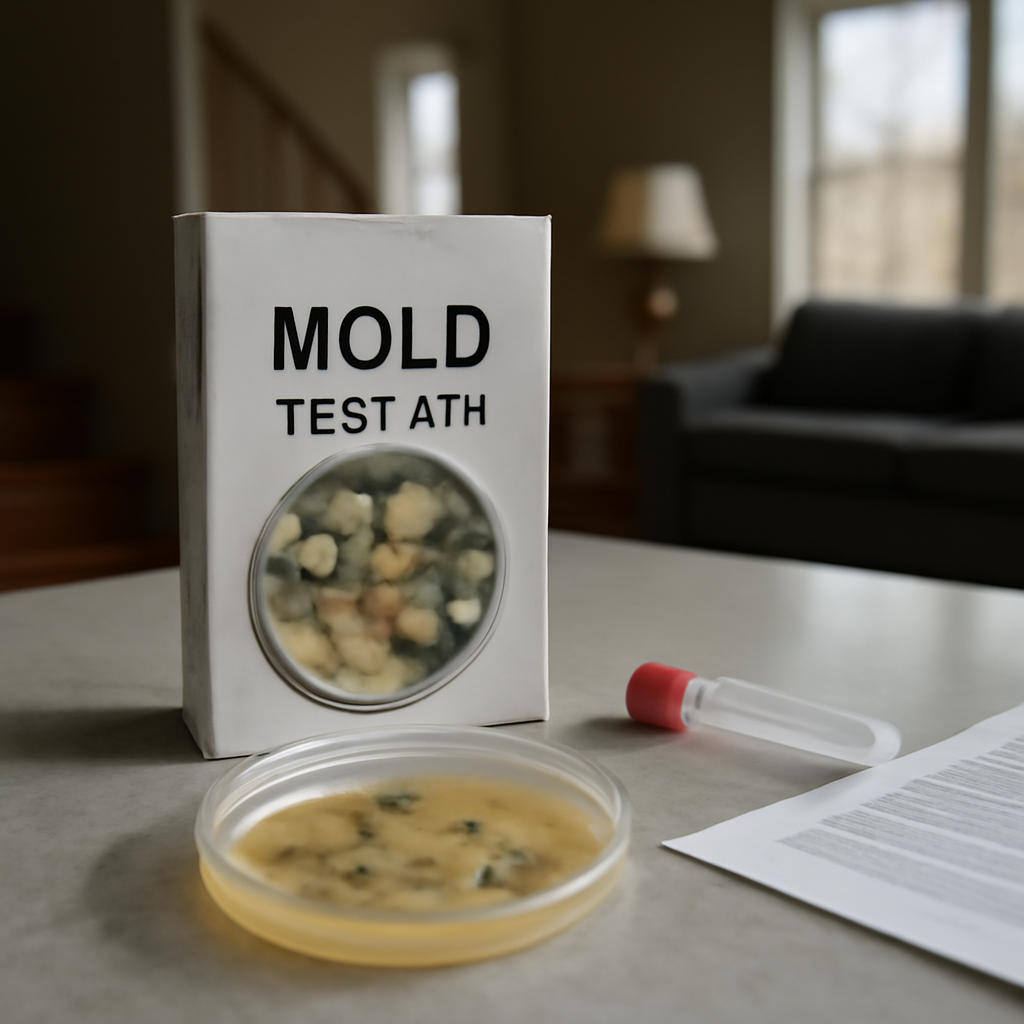
Consumer mold kits that mail your sample to a laboratory sit a notch above instant strips, and the Pro Lab mold test kit is a widely sold example of that lab-analysis category. The promise is a real laboratory looking at your sample rather than a five-minute color change. Knowing how these kits work, what the optional lab report can and cannot tell you, and where they fall short helps you decide whether one is worth your money. This guide summarizes EPA and CDC guidance current as of 2026 — consult your physician about symptoms and a certified professional for testing and remediation decisions.
Is this mold, asbestos, or water damage? Get a free instant screen
Upload a clear photo of the suspect area. You'll get an instant AI screening opinion and what to do next. This is screening guidance, not a professional determination.
Screening guidance only. AI can be wrong. Confirm asbestos, mold type, or lead with lab testing or a licensed professional before acting.
What the Pro Lab Mold Test Kit Is
The Pro Lab mold test kit is a consumer kit that collects a mold sample — typically by surface swab or tape lift, or by exposing a settling plate to indoor air — for optional analysis at a participating laboratory for an additional fee. You buy the kit at a retailer, collect a sample following the instructions, and, if you want species identification, mail it to the lab and pay the analysis charge separately.
This places it between two extremes. It is more informative than a rapid antigen strip because a lab can identify mold types and provide a report, but it depends entirely on how and where you collect the sample. The EPA’s longstanding position still applies: if mold is already visible, testing is generally unnecessary — clean it up and fix the moisture. For a survey of the full range, the overview of home mold test kits sets out the options.
One point to settle up front is what you are buying versus what you may pay for later. The retail kit price typically covers the collection materials and, in some versions, a basic do-it-yourself reading. The detailed laboratory identification — the part that actually names what grew — is usually a separate fee paid when you mail the sample in. Knowing that split avoids the common surprise of expecting a full lab report for the shelf price, and it helps you compare the true cost against a professional assessment that bundles collection, lab work, and interpretation together.
How the Kit Works
Most lab-based consumer kits offer one or more collection methods. A settling-plate or air method exposes a culture medium to indoor air for a set time so spores settle onto it. A swab or tape lift collects growth directly from a visible surface. After collection, you either read a basic result yourself or, more usefully, send the sample to the lab for identification.
The laboratory step is where the value lies. A lab can grow or examine the sample and report which mold genera are present, something no instant strip does. That analysis takes days and carries a fee beyond the kit’s purchase price. By contrast, a mold petri dish test grows colonies you can sometimes count at home, while a rapid strip gives only a presence-style reading. Each method trades cost, speed, and detail differently.
What the Results Tell You
A lab report from a consumer kit can identify the mold genera detected and sometimes give a rough sense of quantity. That is genuinely more than a strip provides. What it usually cannot do is place your result in a reliable health context, because there is no federal standard for acceptable indoor mold levels — the EPA has not established a safe spore-count threshold for homes.
Mold spores are present in nearly all indoor and outdoor air, so a report showing “mold detected” is expected rather than alarming on its own. Identifying a particular genus does not establish that your home is hazardous or that remediation is required. The report is a data point, useful for understanding what is present, but not a diagnosis. Pairing the identification with where and why you sampled is what gives it meaning.
Accuracy and Limitations
The biggest limitation of any consumer kit is sampling, not the lab. Several factors constrain reliability:
- Sampling location. Results reflect only where you collected. Mold hidden in walls, under floors, or in ducts can be missed entirely.
- No baseline comparison. A single indoor sample without a matching outdoor reference is hard to interpret, since outdoor spores set the background level.
- Collection technique. Settling-time, plate exposure, and surface choice all affect what the lab receives.
- Added cost. The meaningful lab identification usually costs extra beyond the kit price.
The EPA again emphasizes that visible mold needs cleanup, not testing. Professional assessors typically collect paired indoor and outdoor air samples and use calibrated equipment, producing data that is far easier to interpret than a single consumer plate. A consumer kit can be a starting point, but it rarely answers the practical question of whether and where you have a problem.
Settling-plate kits carry a particular pitfall worth understanding. Because spores settle out of the air over time, leaving a plate exposed longer almost always grows more colonies, so the “amount” you see can reflect how long you left it out as much as the actual air quality. There is no built-in standard exposure that lets you compare your plate to a meaningful reference. That is why two people testing the same room with the same kit can reach opposite conclusions simply by leaving their plates out for different lengths of time. The method feels scientific because something grows, but without controlled exposure and an outdoor comparison, the growth is hard to translate into a real answer about your home.
How to Use a Kit Sensibly If You Buy One
If you decide a consumer kit fits your situation, a few practices make the result more useful. Follow the instructions exactly, including any specified exposure time, so the sample is at least internally consistent. Sample deliberately near a suspected source or a musty area rather than a random clean surface, and avoid testing right after heavy cleaning, which temporarily suppresses surface growth.
If the kit allows it, collect a comparison sample — for instance, an outdoor reference or a sample from a room you believe is unaffected — so you have something to weigh the result against. Pay for the lab identification if you want anything beyond a vague presence reading; the do-it-yourself read alone tells you little. And whatever the result, anchor your next steps in moisture: visible growth gets cleaned, damp areas get dried, and persistent musty smells with no visible cause justify a professional look rather than a second kit. Used this way, a kit becomes a modest data point inside a sound process instead of a misleading verdict.
Why an Outdoor Baseline Matters
One of the most important and most overlooked aspects of mold sampling is the outdoor comparison. Mold spores are part of normal outdoor air, and they drift indoors every time a door opens. So an indoor sample on its own — “we found Cladosporium and Penicillium” — means little without knowing what is in the outdoor air at the same time and place.
Professional assessors address this by collecting a paired outdoor sample as a reference. If the indoor types and concentrations roughly mirror the outdoors, that suggests normal infiltration rather than an indoor source. If indoor levels are markedly higher, or if types appear indoors that are scarce outside, that pattern points toward an indoor growth problem. Most consumer kits, including settling-plate and swab kits, do not build in this paired comparison, which is a core reason their results are hard to interpret. A report showing mold “present” can describe a perfectly normal home just as easily as a problem one. Without the baseline, the number on the page lacks the context that gives it meaning.
When a Lab Kit Helps and When It Does Not
A lab-analysis kit can be reasonable when you suspect mold but cannot see it, want to know what genus is present out of curiosity, or are comparing a couple of locations on a budget. The identification it provides is more than a strip offers.
It is poorly suited to several common situations. If mold is visible, skip testing and clean. If you smell a musty odor but find nothing, a single surface sample is unlikely to locate hidden growth inside a cavity. For health concerns, a kit cannot link mold to symptoms — that is a physician’s role. And for real estate disputes or insurance claims, professional documentation carries more weight than a consumer report. The mold inspection hub frames where testing fits overall.
Smarter Next Steps After Testing
Whatever a kit reports, the productive moves are the same. Remove small areas of visible surface mold yourself with detergent, water, and protective gear, and call a professional for areas over roughly ten square feet or any growth from sewage or flooding. Then find and fix the moisture: leaks, humidity, condensation, and weak ventilation all feed mold.
Hold indoor relative humidity below about 50 percent, which in Front Range homes often means running a dehumidifier in basements and crawl spaces, and dry wet materials within 24 to 48 hours. If you suspect hidden mold, a professional inspection that combines moisture readings with a visual survey will tell you more than any mailed sample. Treat a kit’s report as a clue, not a conclusion.
It helps to keep the underlying question in view. Homeowners rarely need to know simply whether mold exists, because some mold exists in nearly every building. The questions worth answering are whether there is unusual growth, where the moisture feeding it originates, and whether it is affecting anyone’s health. A mailed sample speaks weakly to the first and not at all to the second or third. Energy spent finding and fixing moisture — inspecting under sinks, around windows, in the basement, and in the crawl space — addresses the cause, while a kit only ever characterizes a symptom at a single sampled point on a single day.
When to Call a Professional
Bring in a professional when mold is widespread, when musty odors persist with no visible source, when occupants have asthma or weakened immune systems, or when a kit’s result leaves you unsure how to proceed. Certified assessors collect representative paired samples, use calibrated tools, and work with accredited labs for interpretation.
A professional can also find hidden moisture and growth a surface sample will never reach, and can advise on remediation scope. For health questions, a physician is the right resource. A consumer lab kit can satisfy curiosity, but decisions affecting your home or health are better grounded in professional assessment.
The financial logic usually favors matching the tool to the stakes. A consumer kit costs little, so for casual curiosity about a single spot it is harmless. But acting on a misleading result can be expensive — ignoring a real problem after an unrepresentative sample, or opening walls based on a meaningless positive. When a purchase, an insurance claim, or a household member’s health is on the line, the higher upfront cost of a professional assessment buys interpretable, documented data you can actually act on, which is generally the better value despite the larger price tag.
In the end, the most useful takeaway about any consumer mold kit is to keep it in proportion. It is one modest data point, never a verdict on your home. Pair whatever it shows with the evidence of your own senses — visible growth, a musty smell, symptoms that track with time at home — and anchor your decisions in moisture rather than in a strip or a plate. Visible growth gets cleaned, damp areas get dried, and persistent unexplained odors justify a professional look. Used that way, a kit can satisfy curiosity without leading you astray.
References
- Should I Test for Mold? — U.S. Environmental Protection Agency
- About Mold and Health — Centers for Disease Control and Prevention
- A Brief Guide to Mold, Moisture and Your Home — U.S. Environmental Protection Agency
- Mold and Your Health — Colorado Department of Public Health and Environment
If a kit result left you uncertain and you are on the Front Range, reach out through our contact page to connect with a vetted local inspector for a clearer picture.
DIY mold test kits
A test kit can confirm whether a suspect patch is mold and (with lab analysis) what type — though visible mold over ~10 sq ft generally warrants a professional.
| Product | Why | Buy |
|---|---|---|
 DIY Mold Test (lab included) DIY Mold Test (lab included) | Surface + air-sampling options. | Amazon — $22.00 |
 Healthful Home 5-Minute Mold Test Healthful Home 5-Minute Mold Test | Rapid screening strips. | Amazon — $34.97 |
| Mold Test Plates (DIY petri dishes) | Settle-plate style sampling you culture at home. | Amazon |