Mold Petri Dish Tests: What Homeowners Should Know
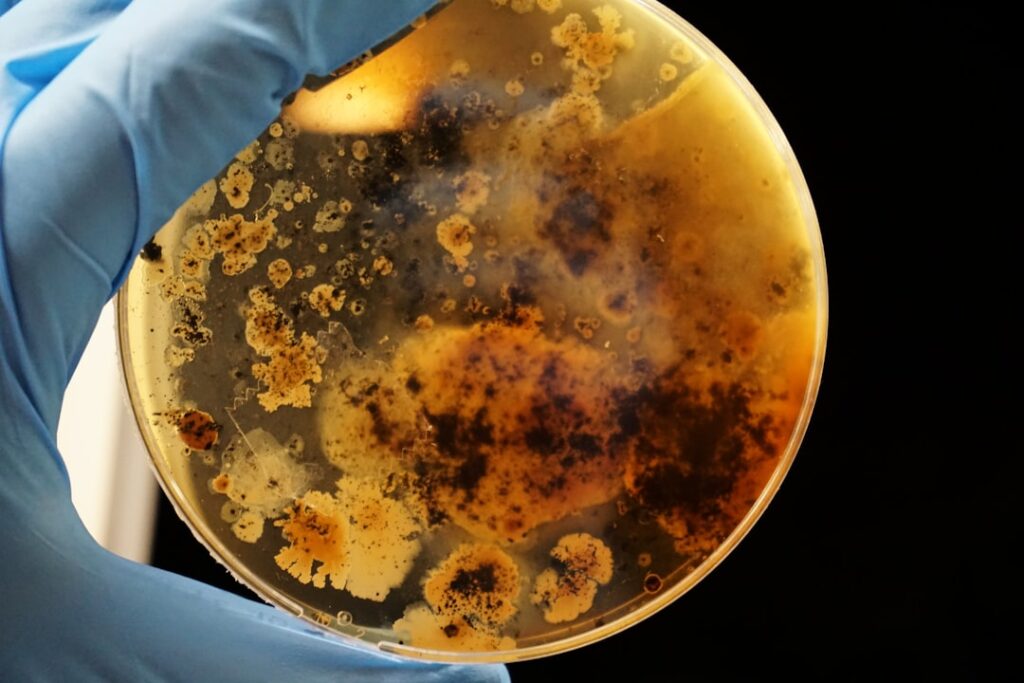
The drugstore mold petri dish kit promises a simple answer: set out a dish, wait a few days, and watch whether mold grows. These settle-plate kits are inexpensive and easy, which is why so many homeowners reach for them after smelling something musty. The harder truth is that a petri dish almost always grows something, because mold spores are everywhere indoors and out, and a positive result rarely tells you whether your home has an actual problem. This guide explains how these kits work, what their results mean, and why the EPA is skeptical of consumer mold testing. This article summarizes EPA and CDC guidance current as of 2026 and is educational only; consult a physician for health symptoms and a certified professional for testing decisions.
Part of our Types of Mold guide — start there for the full picture →
Is this mold, asbestos, or water damage? Get a free instant screen
Upload a clear photo of the suspect area. You'll get an instant AI screening opinion and what to do next. This is screening guidance, not a professional determination.
Screening guidance only. AI can be wrong. Confirm asbestos, mold type, or lead with lab testing or a licensed professional before acting.
How a Mold Petri Dish Test Works
A mold petri dish, sometimes called a settle plate, contains a growth medium, usually a gelatin-like agar with nutrients fungi feed on. You remove the lid and expose the dish to indoor air for a set period, often an hour, then re-cover it and let it incubate at room temperature for several days. Airborne spores that land on the agar germinate and form visible colonies, which you can count or, with some kits, mail to a lab for identification at an added cost.
The appeal is obvious: the kits cost roughly $10 to $40, require no professional, and produce a visible result. The problem is interpreting that result, because the method has fundamental limitations the packaging rarely emphasizes.
What Mold Petri Dish Results Can Tell You
A settle plate can confirm that viable, culturable mold spores are present in the air of a room, and roughly how readily they grow on that medium. If you run identical plates in a problem room and a control room and the problem room grows dramatically more, that comparison can hint at elevated growth. With a lab add-on, the kit can name some of the species that happened to be culturable on that particular agar.
That is genuinely the extent of useful information, and even that comes with caveats. The result reflects only spores that settled during the brief exposure and that happen to grow on the specific medium, not the full picture of what is in your air or walls.
What a Petri Dish Cannot Tell You
This is where the EPA’s caution matters. The agency states plainly that sampling for mold is not generally recommended for homeowners, because there are no health-based standards for indoor mold spore counts and the results are difficult to interpret. A petri dish cannot tell you:
- Whether you have a problem. Every home grows something on a settle plate, because spores are ubiquitous. A positive result is normal, not alarming.
- How much mold is in your air. Settle plates do not measure spore concentration the way calibrated air sampling does.
- The full range of species. Many molds, including some that matter, do not grow well on standard agar, so they go undetected.
- Whether it is making you sick. There is no spore count that defines a “safe” or “dangerous” level, so a number cannot diagnose health risk.
- Where the mold is. A dish detects airborne spores but cannot locate hidden growth in a wall or duct.
Because of these limits, a petri dish result is easy to misread in both directions: a worried homeowner may panic over a normal positive, or a relieved one may ignore a real moisture problem because the plate looked “clean.” Our broader look at the electronic mold detector covers similar limitations of consumer mold-detection gadgets.
Settle Plates Versus Professional Air Sampling
It helps to see how a drugstore petri dish compares with the air sampling a professional assessor performs, because the gap explains why the EPA distinguishes between casual and methodical testing.
A settle plate is passive. It relies on whatever spores happen to drift down onto the agar during a brief exposure, and it captures only organisms that grow on that particular medium. There is no measurement of air volume, so the result cannot be expressed as a concentration; it is simply a count of colonies that appeared.
Professional air sampling is active. A calibrated pump draws a known volume of air through a collection cassette over a measured time, so results can be reported as spores per cubic meter and compared against an outdoor control sample taken the same day. Laboratories analyze the cassettes and can detect non-culturable spores that never grow on a settle plate. An assessor also pairs the data with a physical inspection, which is what gives the numbers meaning. The difference is between a curiosity and an interpretable measurement. Our overview of the electronic mold detector covers a third category of consumer device with its own limits.
What the EPA Recommends Instead
The EPA’s consistent advice is to skip the testing question and focus on what you can see and smell. If mold is visible or there is a persistent musty odor, the response is the same regardless of species: find the moisture source, fix it, and remove the growth. Identifying the exact species through a petri dish does not change that response, which is why the agency considers routine consumer testing of limited value.
Testing earns its place in specific situations, and even then professional sampling is more reliable than a settle plate. Those situations include suspected hidden mold, occupants with unexplained symptoms when the source is unclear, and documentation needs for insurance or a real estate transaction. In those cases, an independent assessor using calibrated equipment provides far more interpretable data than a drugstore dish. The mold inspection and testing hub explains how professional assessment differs from DIY kits.
If You Still Want to Use a Petri Dish
If you use a kit anyway, make it more meaningful by running controls. Place one plate in the suspect room and an identical plate outdoors and in an unaffected room, exposing all for the same time under the same conditions. A problem room that grows far more than both controls is more suggestive than a single plate in isolation. Even then, treat the result as a rough signal, not a verdict, and let visible growth and moisture guide your decisions.
How People Misread Petri Dish Results
The interpretation traps are predictable, and knowing them prevents costly overreactions or false reassurance.
Treating any growth as proof of a problem. Because every home grows something on a settle plate, a positive result is the expected outcome, not evidence of an unsafe house. Homeowners who panic at a few colonies are reacting to normal background mold.
Reading a clean-looking plate as an all-clear. A plate that grows little may simply have missed the spores, or the relevant mold may not culture on that medium. A sparse plate does not rule out a hidden moisture problem behind a wall.
Comparing to an imagined “safe” number. There is no health-based threshold for indoor spore counts, so any number a kit produces cannot be judged against a standard, because no such standard exists.
Skipping controls. A single plate in isolation has no baseline. Without an outdoor and an unaffected-room comparison, the result is uninterpretable.
Each of these errors leads homeowners to either ignore a real problem or spend money chasing a phantom one, which is precisely why visible growth and moisture, not a culture plate, should drive decisions.
Health Context
The CDC notes that mold exposure can cause nasal congestion, throat irritation, coughing, and wheezing, particularly in people with asthma, allergies, or weakened immune systems. Crucially, the CDC also states there is no medical test linking a specific spore count to a specific illness, which reinforces why a petri dish number cannot diagnose a health risk. If household members have persistent symptoms, the right step is to see a physician and address visible moisture and mold, not to chase a culture-plate reading.
When a Petri Dish Has Any Legitimate Use
Despite the heavy caveats, settle plates are not entirely worthless; they simply must be used for the narrow questions they can address. Used with proper controls, a petri dish can offer a rough, relative comparison: if a suspect room consistently grows far more than both an outdoor plate and an unaffected-room plate exposed under identical conditions, that pattern is at least suggestive of elevated indoor growth worth investigating further. The kit can also satisfy curiosity, letting a homeowner see that mold is genuinely present rather than imagined, which sometimes motivates addressing a moisture problem they had been ignoring.
For science-fair projects, teaching, and casual observation, a petri dish is a fine, inexpensive demonstration of how ubiquitous mold spores are. The danger lies only in over-interpreting the result, treating a culture plate as a diagnosis of home safety or health risk it cannot provide. Used as a rough signal that prompts a closer look at moisture, rather than as a verdict, a settle plate occupies a modest but honest place. The decisions that actually protect a home, fixing leaks, removing visible growth, controlling humidity, still rest on what you can see and smell, not on what grew in the dish.
When to Call a Professional
Call an independent assessor when you suspect hidden mold, when symptoms persist with an unclear source, or when you need documented results, rather than relying on a settle plate. Call a remediation professional when visible growth exceeds about 10 square feet, appears in the HVAC system, follows contaminated water, or keeps returning. A petri dish can spark useful curiosity, but the decisions that protect your home and health rest on moisture, not on what grew in a dish.
Why There Is No “Safe” Mold Count
The single fact that undermines most petri-dish anxiety is that no health-based standard exists for indoor mold spore counts. Unlike, say, carbon monoxide or radon, where agencies publish action levels, mold has no federal or widely accepted threshold defining how many spores are too many. The EPA states plainly that sampling results are difficult to interpret for exactly this reason. Spore counts vary enormously by season, weather, geography, time of day, and recent activity in the home, so a number in isolation has no fixed meaning.
This is why a culture plate cannot tell you whether your home is “safe.” There is nothing to compare the result against. Even professional air sampling derives meaning mainly by comparing indoor counts to a same-day outdoor control, looking for a relative elevation rather than crossing a fixed line. A petri dish, with no calibrated volume and no control, offers even less basis for judgment. Understanding that the standard simply does not exist frees homeowners from chasing a number and redirects attention to the variable that does have meaning: visible moisture and growth. A culture plate produces a number, and the human instinct is to compare a number to a target, but here there is no target to compare against, which is precisely why the number misleads more often than it informs. The most honest reading of any settle-plate result is that it confirms what was already known, mold spores exist in the home, and that the meaningful next step lies with moisture and visible growth, not with the dish.
References
- Mold and Health — U.S. Environmental Protection Agency
- Mold Cleanup in Your Home — U.S. Environmental Protection Agency
- About Mold and Your Health — Centers for Disease Control and Prevention
Frequently asked questions
Does a mold petri dish test actually work?
It confirms that culturable spores are present and grows visible colonies, but a positive result is normal because spores exist in every home. It cannot measure airborne concentration, detect all species, locate hidden mold, or determine health risk, so the EPA considers these kits of limited value.
Why does my petri dish always grow mold?
Because mold spores are everywhere, indoors and outdoors, a settle plate almost always grows something. A positive result alone does not indicate a problem. Running control plates outdoors and in an unaffected room provides a more meaningful comparison than a single dish.
Should I test for mold or just clean it?
The EPA recommends focusing on what you can see and smell. If mold is visible or there is a musty odor, fix the moisture and remove the growth regardless of species. Testing helps mainly for hidden mold, unexplained symptoms, or documentation, and professional sampling is more reliable than a petri dish.
Can a petri dish tell me if mold is making me sick?
No. There are no health-based standards for indoor spore counts, and the CDC notes no test links a specific count to a specific illness. A culture plate cannot diagnose health risk; see a physician for symptoms and address visible moisture and mold.
Front Range homeowners who want help connecting with a vetted local inspector for a proper mold assessment can get in touch through our contact page.
DIY mold test kits
A test kit can confirm whether a suspect patch is mold and (with lab analysis) what type — though visible mold over ~10 sq ft generally warrants a professional.
| Product | Why | Buy |
|---|---|---|
 DIY Mold Test (lab included) DIY Mold Test (lab included) | Surface + air-sampling options. | Amazon — $49.99 |
 Healthful Home 5-Minute Mold Test Healthful Home 5-Minute Mold Test | Rapid screening strips. | Amazon — $35.47 |
 Mold Test Plates (DIY petri dishes) Mold Test Plates (DIY petri dishes) | Settle-plate style sampling you culture at home. | Amazon — $22.99 |