Black Mold Petri Dish Pictures: A Plain Guide
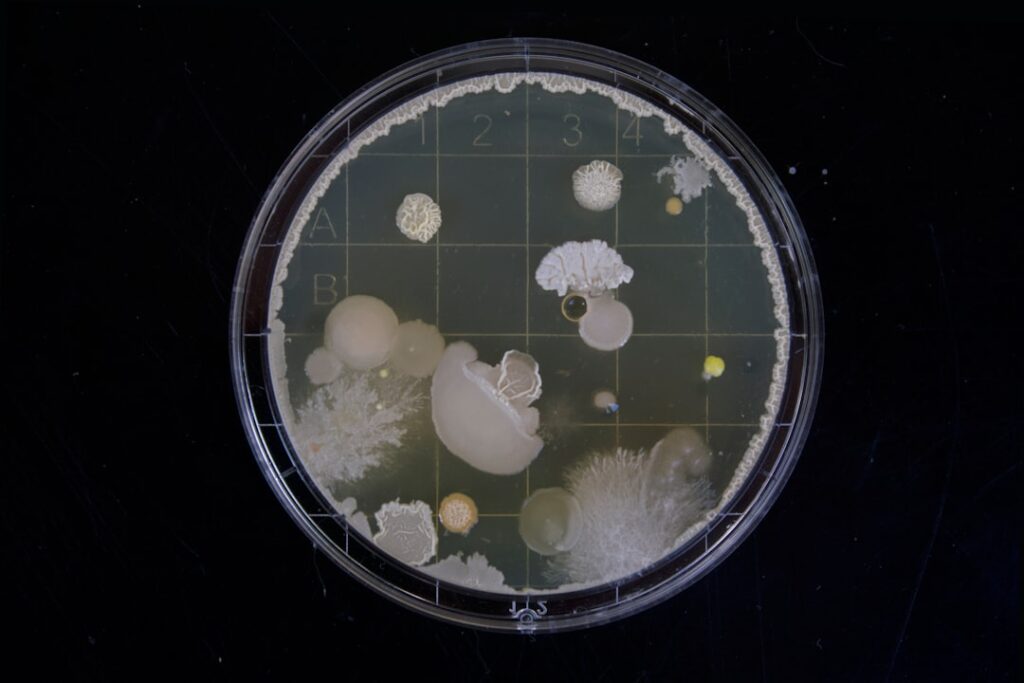
Settle-plate kits turn an invisible question into something you can photograph, which is why so many homeowners search for black mold petri dish pictures to compare against their own results. The images are useful for setting expectations, but they routinely get over-interpreted, because a dark colony on a plate says far less than it appears to. This guide summarizes EPA and CDC guidance current as of 2026 and is educational only; consult a certified professional for interpretation and your physician for any symptoms.
Part of our Black Mold & Your Health guide — start there for the full picture →
Is this mold, asbestos, or water damage? Get a free instant screen
Upload a clear photo of the suspect area. You'll get an instant AI screening opinion and what to do next. This is screening guidance, not a professional determination.
Screening guidance only. AI can be wrong. Confirm asbestos, mold type, or lead with lab testing or a licensed professional before acting.
What do black mold petri dish pictures actually show?
A petri-dish or settle-plate kit holds a nutrient gel that mold spores land on and grow into visible colonies over several days. In photos, “black mold” colonies appear as dark green, gray, brown, or black fuzzy or velvety spots, sometimes with paler edges. What the picture confirms is that viable spores were present in the sampled air and grew on the medium. That is essentially guaranteed in any home, since spores are everywhere.
What the picture does not show is the species, the airborne concentration in any health-relevant unit, or whether the growth came from a real indoor source versus normal outdoor spores drifting in. A striking image can look alarming while representing a perfectly ordinary spore load. The visual drama and the actual significance are only loosely related.
Why color does not identify the mold
The single most common mistake is assuming a black colony equals toxic black mold (Stachybotrys). In reality, many genera produce dark colonies, and the common indoor molds Cladosporium, Aspergillus, and Alternaria frequently appear black or near-black on a plate. Stachybotrys is comparatively slow-growing and less likely to dominate a casual settle plate.
Color, texture, and shape can hint at a category to a trained mycologist, but even experts confirm identity under a microscope or by culture, not from a snapshot. A homeowner comparing a phone photo to internet pictures has no reliable way to name the organism. This is the same point made in the guide on normal mold test results pictures: the appearance of a plate is not a diagnosis, and treating it as one leads to either false alarm or false comfort.
Reading colony count and density
If pictures are useful for anything, it is rough density comparison. A plate with a few discrete colonies after a standard exposure suggests an ordinary spore load. A plate that grows a dense, merging carpet of colonies in the same exposure time points toward a heavier source nearby. But density depends entirely on variables the photo rarely states: exposure duration, room airflow, plate placement, and incubation temperature and time.
A plate left open for four hours grows far more than one left open for one hour, so two photos can look wildly different from identical air. Without knowing the exposure protocol, comparing colony counts between your plate and an online image is guesswork. The only count comparison that means anything is between your indoor plate and an outdoor control plate run under identical conditions at the same time.
The outdoor control: the missing piece in most photos
Online petri-dish pictures almost never include a paired outdoor control, which is exactly what makes them misleading. Indoor air should resemble outdoor air, since spores enter through doors, windows, and ventilation. Running an outdoor plate alongside your indoor plate, same medium, same duration, same day, gives you the comparison that actually matters: is the indoor plate dramatically heavier than outdoor, or are they similar?
Similar plates suggest the indoor growth reflects normal background spores. A much heavier indoor plate, or indoor colonies absent from the outdoor plate, suggests an indoor source worth investigating. A dramatic-looking indoor plate with no control tells you almost nothing on its own. The guide on the Lowes mold test kit walks through running that control properly.
From picture to lab: when identification matters
If a plate concerns you and you want to know what grew, the next step is laboratory analysis, not more photos. Mail-in kits and professional samplers send the growth to an accredited lab where technicians identify genera by microscopy or culture. That is the only path to a real species name, and even then, identification does not establish a health threshold, because no residential safe-level standard exists.
Lab work is most worthwhile when results would change your decisions, for example, distinguishing a benign surface mold from a water-damage indicator before committing to costly remediation, or confirming clearance after cleanup. The mold inspection and testing hub explains how sampling and lab analysis fit into a full assessment rather than standing alone.
What to do after a concerning plate result
The EPA’s guidance is consistent: if you can see or smell mold, prioritize finding the moisture source and cleaning, not collecting more samples. A concerning plate is a prompt to inspect your home for damp spots, leaks, condensation, and musty odors, and to check humidity against the recommended 30 to 50 percent range.
Clean small visible areas, under about ten square feet on hard surfaces, with detergent, water, and protective gear, and address whatever moisture fed the growth. If growth is extensive, recurring, tied to flooding, or paired with health symptoms, bring in a certified professional who can sample properly, interpret results against an outdoor baseline, and remediate with containment. A photo is a starting point for curiosity, not a basis for major spending.
Why two photos of the same air can look completely different
The most misleading thing about petri-dish images is how much the visible result depends on factors that never appear in the photo. Exposure time alone can transform a plate: one left open for an hour might show a handful of colonies, while the same plate in the same room left open four hours can grow a dense carpet, purely because it sampled more air. Comparing your one-hour plate to someone’s four-hour plate online is comparing two unrelated experiments.
Placement matters just as much. A plate set on a damp basement floor near a foot-traffic path collects far more settling spores than one on a dry upper shelf in still air. Incubation temperature and duration shift the result again, since warmth speeds colony growth and a few extra days of incubation enlarges and merges colonies that started as specks. Even the camera plays a role: lighting and white balance can make an ordinary gray-green colony photograph as ominous black. None of these variables changes the air being sampled, yet each dramatically changes the picture, which is why a snapshot divorced from its protocol tells you very little.
From colony to genus: what the lab actually does
When identification genuinely matters, the path runs through a laboratory, not a comparison to internet photos, and knowing what the lab does clarifies why. A technician examines the growth under a microscope, looking at the shape, arrangement, and color of the spore-bearing structures, the conidiophores and spores, which differ between genera in ways invisible to the naked eye. For some organisms, the lab cultures the sample on selective media to encourage features that confirm identity, a process that takes days because the mold has to grow into a recognizable form.
Even with a confirmed genus name, the lab cannot tell you whether your home is safe, because no residential exposure standard exists to measure against. Identification informs decisions, distinguishing a benign surface mold from a water-damage indicator before you commit to expensive work, or confirming that post-cleanup levels match the outdoors, rather than producing a verdict. That gap between a precise species name and an absent safety threshold is exactly why a homeowner staring at a phone photo cannot reach a conclusion the lab itself would decline to make.
Using a plate result without overreacting or dismissing it
A petri-dish photo sits in an awkward middle ground: dramatic enough to alarm, weak enough to mislead, so the sensible response avoids both extremes. Overreacting, assuming a dark colony proves a toxic, dangerous home, leads to needless panic and money spent on testing or treatment a single plate cannot justify. Dismissing it entirely, treating a heavy indoor plate as meaningless, can miss a genuine moisture problem worth finding.
The balanced reading treats the plate as one prompt among several. A heavy indoor plate alongside a light outdoor control, a musty smell, a visible stain, or a known past leak together build a far stronger case than any one of them alone. A dramatic plate with no control, no odor, and no visible growth warrants a calm look around the house rather than alarm. The decision that follows, clean a small visible area, fix a moisture source, or call a professional for extensive or recurring growth, depends on that whole picture, not on how scary the dish looks in a photo.
What the colors and textures can and cannot suggest
Homeowners naturally try to read meaning into a colony’s look, and while appearance hints at categories, it never confirms identity. Dark green to black, velvety colonies are common across several genera, including the everyday Cladosporium and Aspergillus that dominate ordinary indoor and outdoor air. Powdery yellow-green growth often suggests Aspergillus or Penicillium types. A slimy, dark, slow-spreading colony might raise a trained eye’s suspicion of a water-damage indicator, but even that is a prompt to test, not a conclusion.
The trap is that these visual cues overlap heavily and vary with the medium, the lighting, and the colony’s age. A young colony looks pale and discrete; the same colony days later is darker, larger, and merged with its neighbors. Two genera can look nearly identical to the naked eye while differing clearly under a microscope. This is why a mycologist confirms identity by examining spore structures rather than by glancing at color, and why a homeowner cannot responsibly claim a colony is “toxic” from a photo. Appearance can suggest what to ask the lab; it cannot answer the question itself.
Settle plates versus what a professional uses
It helps to see where a consumer settle plate sits relative to professional sampling, because the gap explains the plate’s limits. A settle plate relies on gravity to deposit spores over an uncontrolled span of time, so it samples an unknown volume of air and over-represents larger, heavier spores that fall fastest while under-sampling lighter ones that stay aloft. The result is qualitative, this grew here, with no way to convert colonies into a concentration.
A professional uses a calibrated pump that draws a measured volume of air across a collection medium at a fixed rate, which lets the lab report spores per cubic meter, a number that can be compared against an outdoor sample taken the same way. Inspectors also pair air sampling with moisture mapping and visual inspection, so the count is interpreted alongside where water is and what is visibly growing. A settle plate offers none of that calibration or context, which is why its dramatic-looking colonies are a starting prompt for curiosity rather than a measurement anyone would base remediation spending on.
Why online comparison photos mislead more than they help
The instinct to hold a phone photo of your plate next to a search-result image and judge severity is understandable, but the comparison fails for reasons baked into how the images are made. Online photos almost never state the exposure time, the sampling method, the incubation temperature and duration, or whether a paired outdoor control existed, the very variables that determine how much grew. Comparing your plate to one made under unknown, likely different conditions is comparing two experiments that share only their appearance.
The images are also self-selected toward the dramatic. People photograph and post their scariest-looking plates, not their unremarkable ones, so the pool of comparison pictures skews heavily toward dense, dark growth that looks alarming regardless of what it represents. Lighting and camera settings exaggerate the effect, deepening ordinary gray-green colonies into ominous black. The result is a gallery that makes almost any home plate look mild or severe depending on which image you land on, with no consistent basis. The only comparison that carries meaning is your own indoor plate against your own outdoor control, run together under identical conditions, which is exactly what an internet photo can never be.
References
- Mold Cleanup in Your Home — U.S. Environmental Protection Agency
- A Brief Guide to Mold, Moisture and Your Home — U.S. Environmental Protection Agency
- About Mold and Your Health — Centers for Disease Control and Prevention
- Mold Health Topic — National Institute of Environmental Health Sciences
Frequently asked questions
Can I identify black mold from a petri dish picture?
No. Many common, less concerning molds like Cladosporium and Aspergillus appear black on a plate, and even experts confirm species under a microscope or by culture, not from a photo. A picture only shows that spores grew, which happens in essentially every home.
How many colonies on a petri dish is normal?
There is no fixed normal count, because growth depends on exposure time, airflow, and plate placement. A few scattered colonies is typical, while a dense carpet suggests a heavier source. The only meaningful comparison is between your indoor plate and an outdoor control run identically.
Why does my plate need an outdoor control?
Because indoor air should mirror outdoor air, which always carries spores. An outdoor plate run at the same time and duration shows whether your indoor growth is normal background or an indoor source. Without it, a dramatic-looking plate means little.
What should I do if my petri dish grew a lot of black mold?
Treat it as a prompt to inspect for moisture, leaks, condensation, and musty smells, and to check humidity against the 30 to 50 percent range. Clean small visible areas with EPA methods, fix the water source, and call a professional for large, recurring, or flood-related growth.
If a petri-dish result has you worried, Front Range homeowners can reach out through our contact page to connect with a vetted local inspector who can sample and interpret results properly.
DIY mold test kits
A test kit can confirm whether a suspect patch is mold and (with lab analysis) what type — though visible mold over ~10 sq ft generally warrants a professional.
| Product | Why | Buy |
|---|---|---|
 DIY Mold Test (lab included) DIY Mold Test (lab included) | Surface + air-sampling options. | Amazon — $49.99 |
 Healthful Home 5-Minute Mold Test Healthful Home 5-Minute Mold Test | Rapid screening strips. | Amazon — $35.47 |
 Mold Test Plates (DIY petri dishes) Mold Test Plates (DIY petri dishes) | Settle-plate style sampling you culture at home. | Amazon — $22.99 |