What Does Black Mold Look Like in a Petri Dish?
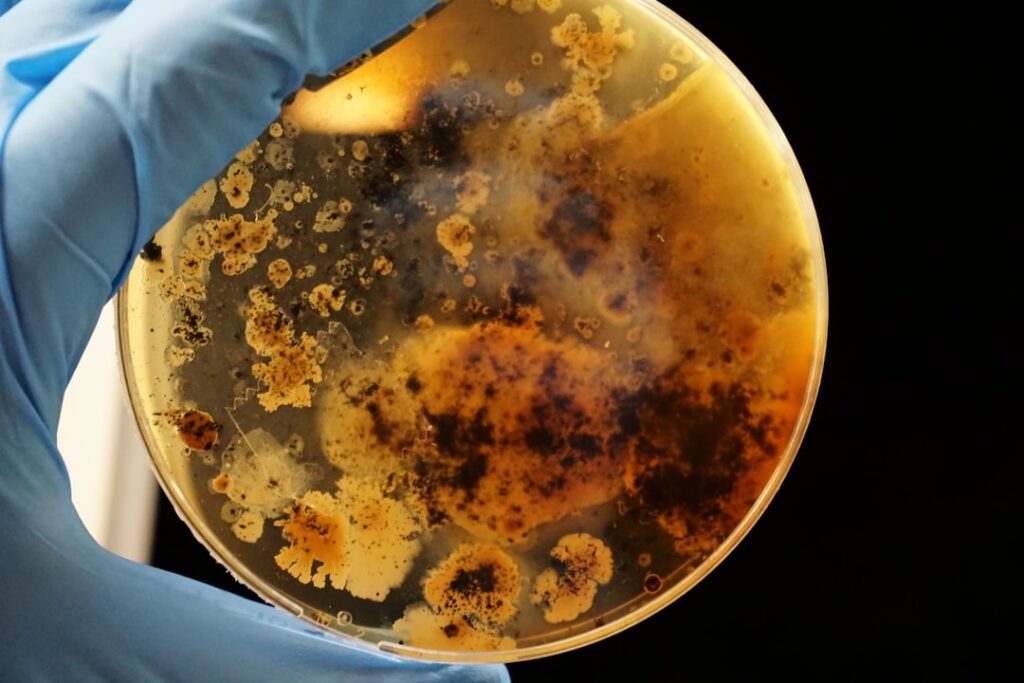
Home mold test kits that grow a culture on a small dish appeal to homeowners who want a visible answer to an invisible worry. After a few days, dark fuzzy spots appear, and the natural question follows: is that black mold? What black mold looks like in a petri dish is less clear-cut than the marketing implies, because colony color shifts with species, age, and growth conditions, and the dish alone cannot confirm a hazard. This guide summarizes EPA and CDC guidance current as of 2026 and is educational only; consult a physician about symptoms and a certified lab for identification.
Part of our Black Mold & Your Health guide — start there for the full picture →
Is this mold, asbestos, or water damage? Get a free instant screen
Upload a clear photo of the suspect area. You'll get an instant AI screening opinion and what to do next. This is screening guidance, not a professional determination.
Screening guidance only. AI can be wrong. Confirm asbestos, mold type, or lead with lab testing or a licensed professional before acting.
What black mold looks like in a petri dish
When mold grows on the nutrient gel in a settle-plate kit, it forms circular colonies that start small and spread outward over several days. So-called black mold colonies typically appear as dark green, gray-black, or true black fuzzy or velvety circles, sometimes with a lighter halo at the edges where new growth is forming and a darker, denser center as the colony matures and produces spores.
The texture varies. Some colonies look powdery, others cottony or slimy, depending on the species and how wet the medium is. Stachybotrys chartarum, the species most people mean by “black mold,” tends to grow slowly and appears as a dark, slimy-to-velvety black colony, but it is not the only mold that grows dark. Aspergillus niger and Cladosporium also produce black or near-black colonies that an untrained eye cannot distinguish. Our guide to the black mold petri dish test covers what these kits include and how to run one.
Why color alone cannot identify black mold
The central limitation of a petri-dish test is that color and shape do not reliably identify a species, let alone whether it is harmful. Dozens of common indoor molds grow dark on a culture plate. The same species can look green on one plate and black on another depending on age, moisture, and nutrients. A dark colony tells you mold grew; it does not tell you it is Stachybotrys or that your home has a dangerous problem.
Definitive identification requires a microscope and trained analysis of spore structure, or in some cases DNA testing, work done by an accredited laboratory, not a kitchen counter. The CDC and EPA both take the position that identifying the exact species is generally unnecessary for homeowners, because the response to any indoor mold is the same: remove it and fix the moisture. A home culture can confirm that mold is present and growing, but it cannot grade the risk. For more on what testing reveals, see our overview of how to test for mold exposure.
How colonies change as they grow
A petri dish is not a static picture; the colonies evolve over days, and knowing the timeline helps you read what you are seeing. In the first day or two, captured spores germinate and produce fine white or translucent threads of mycelium that are easy to miss. By days three to five, colonies take on color and texture as they mature and begin producing spores, which is when “black mold” species finally look dark.
Color often deepens from the center outward, so a colony may show a pale, fuzzy growing edge around a dark, dense core. The same plate frequently grows several different colonies at once, in greens, blacks, grays, and sometimes orange or pink, because indoor air carries a mix of species. This is one reason home reading is unreliable: distinguishing one dark colony from another by eye is guesswork, and a fast-growing common mold can overrun and obscure a slower one. Beyond about a week, colonies merge and the plate becomes hard to interpret at all. The maturation also means an early read can badly misjudge what is present, since the dominant colony at day two may not be the dominant one at day five. Only laboratory microscopy of the spore structures reliably sorts this out, which is the point our companion guide to the black mold petri dish test makes about mail-in analysis.
What a petri dish test actually tells you
A settle-plate test has real but narrow uses. Leaving an open dish in a room for a set time captures spores settling out of the air; comparing a problem room to an outdoor control or a clean room can suggest whether one area has more airborne mold. The presence and quantity of growth can confirm a hunch that a musty room has elevated spores.
What it cannot do is quantify exposure accurately, identify species reliably, or tell you whether the level is hazardous to your health. Spore counts vary by season, time of day, and air movement, so a single plate is a snapshot, not a measurement. The EPA does not recommend routine mold sampling for typical homeowners precisely because the results are hard to interpret without professional context. If a plate grows heavy dark colonies, the useful takeaway is to investigate the moisture source, not to attempt a self-diagnosis of species. Our guide to black mold detectors explains the same limits for electronic and consumer sensing products.
Should you use a home petri dish mold test?
For a curious homeowner, a culture kit can satisfy the question “is mold growing in this room?” inexpensively. It is a reasonable first look if you already suspect a problem and want low-cost confirmation. But its limits mean it should not drive major decisions.
If you can already see or smell mold, you do not need a dish to confirm what is in front of you; the EPA’s advice is to clean it and fix the moisture. If you cannot find the source but suspect hidden growth, a petri dish will not locate it, and professional moisture metering and air sampling are far more useful. For health questions, no home test substitutes for a physician’s evaluation of symptoms. The clearest path when results worry you is a professional mold inspection, which combines visual assessment, moisture readings, and lab-analyzed samples interpreted by someone trained to read them.
What to do after a positive petri dish result
If your dish grows dark mold, treat it as a prompt to investigate rather than a diagnosis. Walk the room for moisture sources: condensation on windows, a musty closet, damp drywall, a slow leak under a sink. Measure indoor humidity and keep it below the 60 percent the EPA recommends. Address any visible growth with appropriate cleaning while wearing a mask and gloves.
If the dish result lines up with a musty smell, visible staining, or symptoms that ease away from home, escalate to a professional who can sample the air properly, send specimens to an accredited lab, and identify the moisture source. For lab-grade species identification, an accredited environmental laboratory analyzes tape lifts, bulk samples, or air cassettes under a microscope. Front Range homeowners can ask a local certified inspector to coordinate that lab work and interpret the report, which turns a vague dark-colony picture into actionable next steps. Persistent health concerns always belong with a doctor, not a test kit.
Common mistakes that ruin a home culture test
If you do run a settle plate, several easy errors make the result meaningless, and avoiding them is worth knowing. The most frequent mistake is skipping the outdoor control plate. Outdoor air always carries mold spores, so a single indoor dish growing colonies proves nothing without a baseline to compare against; the question is never whether mold grew but whether the indoor plate grew noticeably more or different growth than outside.
Other common errors include leaving the dish open far longer than the instructions specify, which overloads the plate so that everything grows and nothing is distinguishable; placing the dish in a draft or doorway where airflow skews what settles; touching or contaminating the gel surface; and reading the result too early or too late, missing the window when colonies are most distinct. Storing the dish too warm or in sunlight also distorts growth. Perhaps the biggest interpretive mistake is treating any dark colony as proof of dangerous “toxic mold,” when in fact most dark household molds are ordinary and the species cannot be judged by eye. Running a proper indoor-versus-outdoor comparison, following the timing exactly, and sending the plate to a lab if the result concerns you are what make the small effort worthwhile rather than misleading.
References
- Mold Testing or Sampling — U.S. Environmental Protection Agency
- About Mold and Your Health — Centers for Disease Control and Prevention
- A Brief Guide to Mold, Moisture and Your Home — U.S. Environmental Protection Agency
Frequently asked questions
What does black mold look like in a petri dish?
It usually appears as dark green to black, fuzzy or velvety circular colonies that spread outward over several days, often with a lighter edge and a darker center. Texture ranges from powdery to slimy depending on species and moisture. Several common molds grow dark, so appearance alone does not confirm it is Stachybotrys.
Can a petri dish test tell me if mold is dangerous?
No. A culture confirms that mold grew but cannot reliably identify the species or grade the health risk. Color and shape vary with age and conditions, and definitive identification needs a microscope and an accredited lab. The EPA and CDC note that the response to any indoor mold is the same regardless of species.
Should I use a home petri dish mold test?
It can be a low-cost first look if you suspect a problem, but it will not locate hidden mold, quantify exposure, or identify species accurately. If you can already see or smell mold, skip the test and address the moisture. For serious concerns, a professional inspection with lab analysis is far more useful.
What should I do if my mold petri dish grows dark colonies?
Treat it as a prompt to investigate, not a diagnosis. Look for moisture sources, measure humidity and keep it below 60 percent, and clean visible growth with a mask and gloves. If it coincides with a musty smell or symptoms, hire a professional to sample properly and identify the source, and consult a doctor about health.
If a home mold test has you worried and you want results you can trust, get in touch with a vetted Front Range inspector here for proper sampling and an interpreted lab report.
DIY mold test kits
A test kit can confirm whether a suspect patch is mold and (with lab analysis) what type — though visible mold over ~10 sq ft generally warrants a professional.
| Product | Why | Buy |
|---|---|---|
 DIY Mold Test (lab included) DIY Mold Test (lab included) | Surface + air-sampling options. | Amazon — $49.99 |
 Healthful Home 5-Minute Mold Test Healthful Home 5-Minute Mold Test | Rapid screening strips. | Amazon — $35.47 |
 Mold Test Plates (DIY petri dishes) Mold Test Plates (DIY petri dishes) | Settle-plate style sampling you culture at home. | Amazon — $22.99 |