What Does Black Mold Look Like on Walls
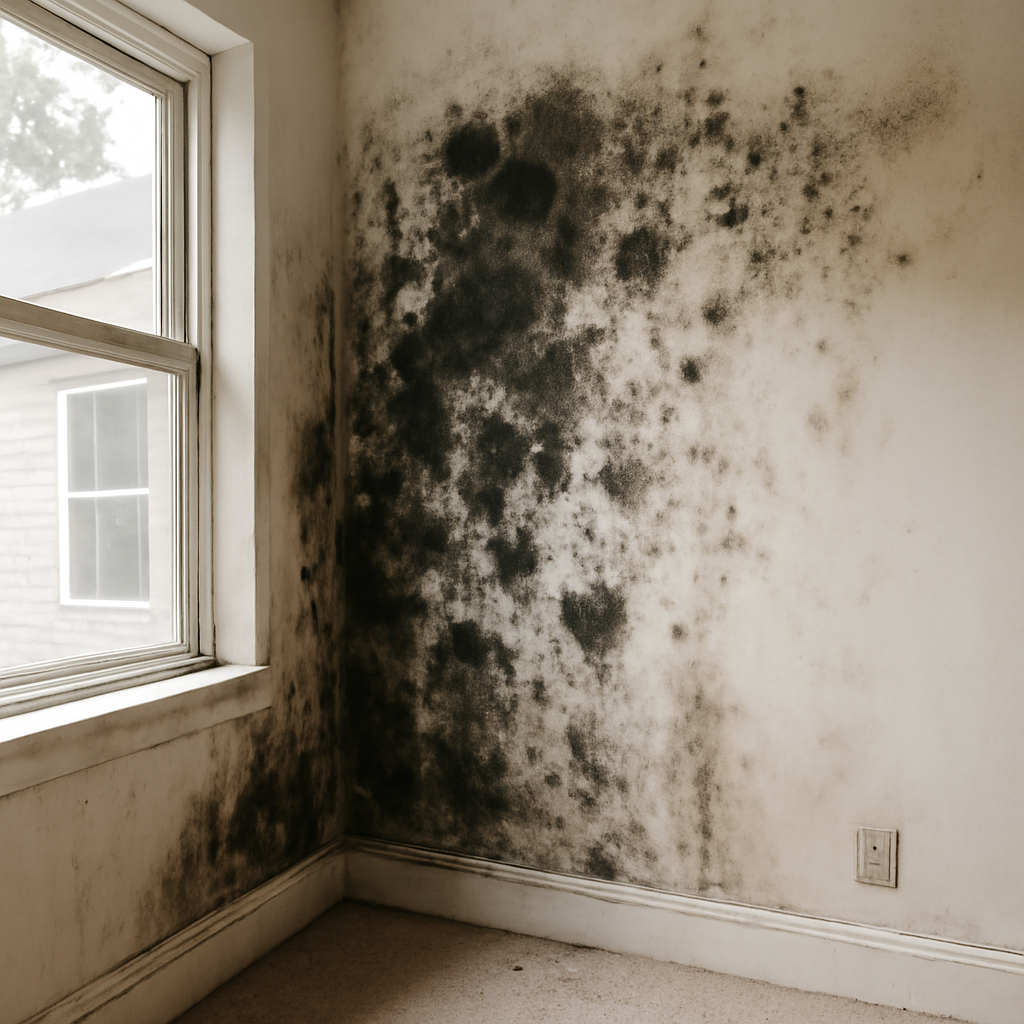
A dark smudge creeping up a corner or spreading behind furniture sends most homeowners straight to a search bar, asking what does black mold look like on walls and whether the patch they’re staring at is dangerous. Black mold has some recognizable traits, but it’s easy to confuse with dirt, soot, water staining, or harmless surface marks. Knowing what to look for—and what it means—helps you respond correctly. This guide summarizes EPA and CDC guidance current as of 2026 and is informational only; consult a physician for any health symptoms and a certified professional for large or hidden growth.
Is this mold, asbestos, or water damage? Get a free instant screen
Upload a clear photo of the suspect area. You'll get an instant AI screening opinion and what to do next. This is screening guidance, not a professional determination.
Screening guidance only. AI can be wrong. Confirm asbestos, mold type, or lead with lab testing or a licensed professional before acting.
What Black Mold Looks Like on Walls
On walls, black mold typically appears as irregular, blotchy patches in shades of black, dark green, or gray-green, often with a slightly fuzzy, slimy, or speckled texture rather than a flat, uniform tone. It frequently starts small and spreads outward in a clustered or splotchy pattern, sometimes following a moisture line such as the edge of a leak or the cool base of an exterior wall. The growth may look damp or have a faint sheen when active. A musty, earthy odor often accompanies it. Unlike a clean paint stain, mold has a three-dimensional, living quality—it sits on the surface and can smear when wiped.
How to Tell Mold From Dirt, Soot, and Stains
Several look-alikes fool homeowners. Dirt and dust accumulate evenly along edges and ledges and wipe away cleanly without returning. Soot from candles or a furnace tends to be sooty-black, fine, and concentrated near vents or above heat sources, and it smears into a greasy streak. Water stains are usually flat, brownish or yellowish rings without texture or odor. Efflorescence on masonry walls is a white-to-gray crystalline mineral that crumbles when touched. Mold, by contrast, is patchy, often colored green-to-black, may feel fuzzy or slimy, carries a musty smell, and tends to come back after cleaning if the moisture remains. When in doubt, the musty odor and the tendency to recur are the strongest tells. Those weighing surface tests can read our guide on a musty smell of mold as a reliable early signal.
Where Black Mold Hides on Walls
Mold favors the dampest, least-ventilated spots. On interior walls, look behind furniture pushed against exterior walls, in closet corners, around window frames, near plumbing chases, behind baseboards, and at the base of basement walls. Bathroom and kitchen walls near water sources are common. The visible patch is often smaller than the actual growth, because mold can colonize the back of drywall and the inside of a wall cavity while showing only a faint surface mark. A small spot accompanied by a strong musty smell or soft, bubbling drywall may signal a larger hidden colony. The broader detection picture is covered in the mold inspection and testing hub.
Is Black Mold on Walls Dangerous?
The CDC’s position is measured: no specific mold color or species is reliably linked to unique severe illness, and the health response to any indoor mold is the same—remove it and fix the moisture. Mold on walls can trigger allergy and asthma symptoms such as congestion, coughing, eye and throat irritation, and skin reactions, with greater risk for people who have allergies, asthma, or weakened immune systems. The presence of mold matters more than its exact species. Anyone with persistent symptoms should see a physician rather than self-diagnosing from the appearance of a wall patch.
What to Do When You Find It
Start by finding the moisture source—a leak, condensation, or high humidity—because cleaning without fixing the water guarantees a return. For a small patch under about 10 square feet on a non-porous or solid surface, the EPA’s method is to scrub with detergent and water, then dry completely, wearing an N95 respirator, gloves, and eye protection. Porous materials like moldy drywall usually need to be cut out and replaced rather than cleaned, since the growth penetrates the paper face. Never paint over mold; it bleeds through and keeps spreading. Step-by-step cleanup overlaps closely with our guide to killing black mold.
Acting Quickly on Early Growth
Because mold on a wall spreads as long as moisture remains, the cheapest and easiest time to deal with it is the moment you first notice it. A faint, small patch handled promptly is a quick cleanup and a minor moisture fix; the same growth ignored for months becomes a larger colony that may have penetrated the drywall, reached the insulation, or spread behind the surface, turning a simple wipe-down into a demolition job. Watching damp-prone areas — under sinks, around windows, basement corners, behind furniture on exterior walls — and responding to the first signs keeps the problem small. Pairing quick action on the visible growth with a fix for the underlying moisture is what stops a wall stain from becoming a recurring, expensive headache.
When to Call a Professional
Bring in a remediation specialist when growth covers more than about 10 square feet, when soft or bubbling drywall and a strong odor suggest hidden growth inside the wall, when mold follows sewage or flooding, or when it returns after cleanup. These cases require containment, negative air pressure, and proper material removal that household tools can’t provide, and they usually point to a moisture problem larger than the visible patch suggests.
What a Musty Smell Adds to the Picture
Sometimes the nose detects what the eye misses. A persistent musty, earthy odor on a wall that looks clean is one of the strongest signs of hidden growth inside the cavity or behind a finish. Mold produces volatile organic compounds as it grows, and that smell can precede any visible patch by weeks. If a wall smells musty, feels damp, or shows soft or bubbling drywall without obvious surface mold, the growth may be on the back of the drywall or within the insulation. That combination warrants either opening a small inspection hole or calling a professional with a moisture meter, rather than assuming the absence of a visible patch means the absence of a problem. The odor is data, and ignoring it lets a hidden colony grow.
What Different Wall Materials Reveal
The wall material affects both how mold looks and what it means. On painted drywall, mold often appears as spreading black or green blotches, sometimes with the paper face beneath bubbling or softening where moisture has penetrated — a sign the drywall may need replacement rather than cleaning. On bare concrete or block basement walls, dark growth can be mold, but a white-to-gray crystalline deposit is usually efflorescence, a harmless mineral salt that crumbles when touched. On tile and grout, mold shows as dark lines in the grout and along caulk, generally cleanable on the non-porous tile but stubborn in porous grout. On wood paneling or trim, growth sits on the surface and can often be cleaned and treated, unless the wood is soft or rotted. Reading the material alongside the growth helps a homeowner judge whether a wall can be cleaned or needs to be opened.
How Mold Looks at Different Stages
Mold’s appearance changes as a colony matures, which can make early growth easy to dismiss. In its earliest stage, growth may look like a faint, light-colored haze or a few small specks, sometimes white or gray before pigment develops. As it establishes, it darkens and spreads into the blotchy black, green, or gray-green patches most people recognize, taking on a fuzzy or, in damp conditions, a slimy texture. A long-established colony can look thick and three-dimensional, with a strong musty odor and clear penetration into porous material. Catching mold at the faint-haze stage makes cleanup far easier and cheaper than waiting until it’s an obvious dark patch, so a light, fuzzy discoloration in a damp area is worth investigating rather than wiping away and forgetting.
Black Mold vs. Other Wall Discoloration
Walls discolor for many reasons besides mold, and confusing them wastes effort. Water stains are flat, brownish or yellowish rings without texture or odor, marking where water traveled even after it dried. Soot and smoke leave a fine, greasy black film, often near vents, candles, or above heat sources, that smears into a streak. Ghosting — dark lines that trace studs or fasteners — comes from temperature differences and particle deposition, not biology. Efflorescence is the white mineral bloom on masonry. Mold is distinguished by its patchy, often green-to-black color, fuzzy or slimy texture, musty smell, and tendency to return after cleaning if moisture remains. When two or more of those mold traits are present, especially the odor and the recurrence, you’re likely looking at growth rather than a stain.
Should You Test to Confirm It’s Mold?
When a wall patch is ambiguous, homeowners sometimes consider a mold test. In most cases it isn’t necessary. The EPA’s guidance is that visible or smellable mold rarely needs testing to justify cleanup, since the response is the same regardless of species. The faster, cheaper confirmation is usually a careful look at the traits — color, texture, odor, and whether it returns after cleaning — and a check of the surface for the water-dissolve test that distinguishes mold from efflorescence. Testing makes more sense when growth is suspected behind an intact wall, when a dispute needs an objective record, or when a sensitive household wants post-cleanup verification. For a simple wall patch you can see and reach, the better use of money is cleaning it correctly and fixing the moisture rather than paying a lab to name the species.
How Mold Spreads Across a Wall
Mold on a wall doesn’t appear randomly; it follows moisture. Growth that climbs from the baseboard upward suggests water wicking from the floor or a slab. A patch around a window points to condensation or a frame leak. Growth tracing a vertical line inside a wall can mark a hidden pipe or a path where water runs. A ceiling-to-wall pattern often traces a roof or upstairs leak. Because the visible mold maps the moisture, the pattern itself is a diagnostic clue — following it back usually leads to the source. This is why professionals study the shape and location of growth rather than just its presence, and why cleaning the patch without reading what it’s telling you misses the point.
Cleaning vs. Replacing Moldy Wall Material
The decision to clean or replace comes down to the material and how deep the growth goes. Non-porous surfaces — tile, sealed concrete, glass, metal — can almost always be cleaned and dried. Solid wood trim is usually salvageable through surface removal and treatment. Porous drywall is the hard case: surface mold on sound, painted drywall can sometimes be cleaned, but once the paper face is stained through, soft, or bubbling, the growth has penetrated where a brush can’t reach, and that section should be cut out and replaced. Insulation behind a moldy wall is generally replaced rather than cleaned. The rule of thumb is simple — non-porous or solid means clean, porous and penetrated means replace — and following it prevents the frustration of cleaning a surface that will only regrow.
Preventing Mold From Returning to Walls
Once a wall is cleaned or rebuilt, keeping it mold-free is about the conditions around it. Hold indoor relative humidity below 50 percent, verified with a hygrometer rather than guessed. Improve airflow by pulling furniture a few inches off exterior walls and ventilating closets. Run exhaust fans in bathrooms and kitchens, insulate cold surfaces that sweat in winter, and fix leaks promptly. Direct water away from the foundation with good grading and working gutters. In Front Range homes, winter condensation on cold exterior-wall corners and spring moisture against foundations are the two seasonal triggers worth watching. These habits address the moisture that produced the growth, which is the only way to keep a wall clean for good rather than cleaning it again next season.
References
- Mold Cleanup in Your Home — U.S. Environmental Protection Agency
- About Mold and Your Health — Centers for Disease Control and Prevention
- Facts About Stachybotrys Chartarum — Centers for Disease Control and Prevention
- Mold and Dampness — American Lung Association
If a wall patch and a musty smell suggest hidden growth in a Front Range home, a professional can confirm what’s behind the drywall. Get in touch through our contact page to connect with a vetted local inspector.