Affordable Mold Removal Near Me: Cost-Tier Comparison Guide
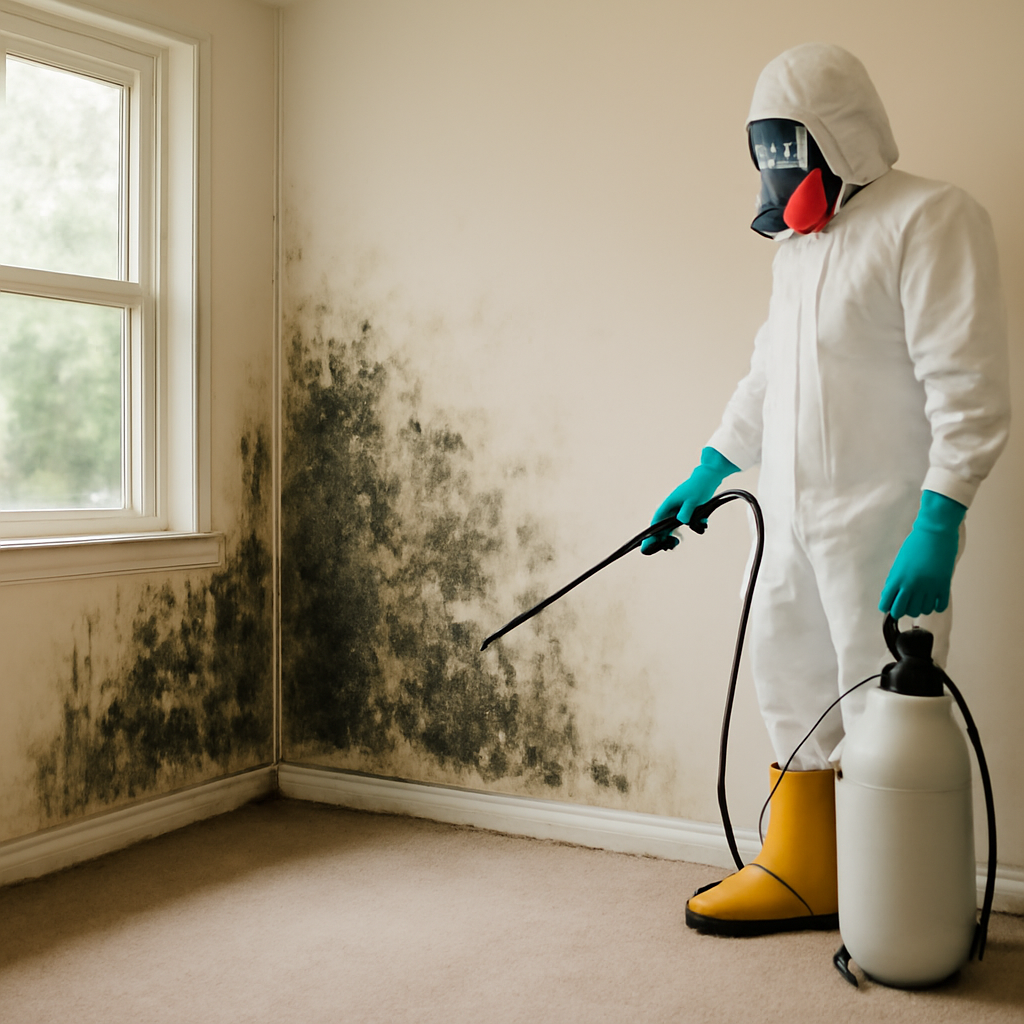
The search “affordable mold removal near me” carries an honest tension. Mold remediation is genuinely expensive in some cases and surprisingly modest in others, and the spread between contractor bids on the same job is wider than for most trades. “Affordable” rarely means cheapest; it means matched to the actual scope and free of the corners that drive regrowth. This guide summarizes EPA, CDC, and IICRC S520 guidance current as of 2026 to help homeowners understand cost drivers and compare bids fairly. It is intended for education, not as medical advice or a substitute for site-specific assessment.
Part of our Mold Removal & Remediation guide — start there for the full picture →
Is this mold, asbestos, or water damage? Get a free instant screen
Upload a clear photo of the suspect area. You'll get an instant AI screening opinion and what to do next. This is screening guidance, not a professional determination.
Screening guidance only. AI can be wrong. Confirm asbestos, mold type, or lead with lab testing or a licensed professional before acting.
Affordable mold removal near me: the short answer
The most affordable legitimate option for a given job is the median of three bids built on the same written scope of work. Bids that are dramatically lower than the median usually omit containment, downplay material removal, or skip clearance testing. Bids that are dramatically higher often pad markup on insurance claims. The IICRC S520 standard is the cost-control benchmark: any work that meets the standard is acceptable at the lower end of the price range.
What “affordable” should mean in mold work
Affordability in this trade is best defined as the lowest price among contractors who all meet the same standard: IICRC AMRT credentials, written scope referencing S520, current insurance with mold endorsement, and independent clearance testing. Comparing one such bid to another is comparing affordable options. Comparing a credentialed bid to a non-credentialed bid is comparing different products entirely.
What “affordable” cannot mean
Skipping containment is not affordable; it spreads contamination to clean parts of the home. Skipping HEPA filtration is not affordable; it leaves spores airborne. Skipping moisture source repair is not affordable; it guarantees regrowth. Skipping clearance testing is not affordable; it hides incomplete work. Each of these is a real cost line that contractors who skip the work do not pay — but the homeowner pays the consequence later.
Cost drivers in mold remediation
Affected square footage is the biggest driver. Material complexity is the second: drywall is cheaper to remove than tile, and cabinets push cost up. Containment complexity matters: a single basement room is straightforward; a contaminated HVAC system pulling negative pressure on the whole house is not. Crew size and duration follow from those factors. Disposal cost varies by jurisdiction. The cost framing guide walks through driver-by-driver pricing.
Pricing tiers in 2026
Industry estimates run $500 to $1,500 for limited surface contamination on non-porous materials, $1,500 to $3,500 for moderate contamination in a single room with porous material removal, $3,500 to $7,500 for whole-basement or multi-room jobs, $7,500 to $15,000 for HVAC-involved or whole-floor projects, and $15,000 and above for whole-house remediation including crawl space, basement, and HVAC. These ranges are national; Front Range pricing skews to the middle to upper end of each band.
How to compare bids apples to apples
Develop a written scope with an independent assessor before requesting bids. Provide the same scope to three contractors. Ask each to bid line by line: containment setup, negative air machine days, demolition labor, disposal, HEPA cleaning labor, antimicrobial treatment if specified, and clearance testing allowance. Compare line items rather than lump-sum totals. The cheapest line-item bid usually wins; the cheapest lump-sum bid often hides scope cuts.
The pre-remediation assessment
Hiring an independent indoor air quality consultant or industrial hygienist for the pre-remediation assessment costs $300 to $1,200 in most Front Range markets. That cost is recovered through better bid comparison, cleaner insurance documentation, and avoidance of conflict-of-interest scope inflation. Skipping the assessment to save money is one of the most expensive false economies in this trade.
The conflict-of-interest trap that inflates cost
When the same firm tests and remediates, the financial incentive aligns toward larger scope. Studies of similar conflicts in other trades show 20 to 40 percent scope inflation on average. Separating testing from remediation almost always reduces the final cost even after the testing fee is paid. The EPA flags this conflict explicitly. The red flags guide covers conflict patterns.
Insurance and affordability
Insurance coverage transforms the affordability conversation. Sudden water damage that produces mold is often covered, sometimes with a separate mold endorsement and lower limit. Long-term humidity-driven contamination is commonly excluded. The affordability calculation shifts when insurance pays most of the bill — but only if the policy applies and the claim is documented from the first hour. Read the policy before assuming coverage.
Front Range Colorado affordability factors
Denver, Douglas, Jefferson, Boulder, and El Paso County labor rates are above the national median for remediation crews. Materials and disposal are roughly average. The competitive market produces wider bid spreads than in smaller markets, which makes the three-bid approach especially valuable. Local franchise franchises and independent specialists both operate; bids from each end of the spectrum produce useful comparison data.
Lead-generation directories versus real contractors
Many of the local results for “affordable mold removal near me” are lead-generation directories that resell each inquiry to three or four contractors. The contractors then pay a fee per lead, which raises their pricing. Searching Google Maps directly and clicking into the contractor’s business profile, verifying a physical office address, and confirming a specific certification claim usually identifies real local operators.
Restoration franchise versus independent remediator
Franchises run on volume and have predictable pricing aligned with insurance billing. Independent IICRC-certified remediators often quote lower for non-emergency planned work because they lack franchise fees. For a homeowner paying out of pocket on a planned remediation, an independent specialist often wins on affordability. For an emergency claim that the insurance pays, the franchise’s claim-handling experience may be worth the price.
DIY scope at the bottom of the affordability ladder
EPA guidance allows homeowner cleanup of contamination under approximately 10 contiguous square feet on non-porous surfaces with a known and corrected moisture source. PPE includes N95 respirator, gloves, eye protection, and disposable outer clothing. Total DIY cost is typically under $100 in supplies. The trade-off is no containment, no negative air, and no clearance testing — appropriate for small jobs, dangerous for large ones.
Antimicrobial fogging as a “cheap” alternative
Some contractors offer fogging with biocides or anti-microbial treatments as a low-cost alternative to source removal. The EPA does not endorse fogging as a substitute for source removal because it does not address the root contamination in porous materials. Treat fogging-only proposals as a red flag rather than as a budget option. Source removal is the core of remediation and cannot be replaced by chemicals.
When to negotiate scope rather than price
If the lowest legitimate bid exceeds budget, negotiate scope rather than price. Phasing the work — remediation now, restoration later — spreads cost over time. Self-performing the moisture source repair through a separate trade reduces the remediator’s scope. Doing your own final paint and trim after restoration is complete saves money without compromising the microbial work. The four-phase sequence guide covers phase separation.
What to expect in a legitimate budget remediation
For a single-room budget remediation in the $1,500 to $2,500 range, expect a written scope referencing S520, single-room containment, one or two negative air machines, removal of affected drywall and carpet pad, HEPA cleaning of remaining surfaces, basic visual clearance, and a one-year regrowth warranty. Independent third-party clearance air sampling adds another $200 to $400. The total stays affordable while meeting the standard.
Red flags in “cheap” bids
Lump-sum pricing with no scope detail, no IICRC AMRT credentials, no insurance certificate, no mention of containment or negative air, fogging only, dismissal of clearance testing, no moisture source identification, and same-day signature pressure. These signal a contractor selling a non-remediation service at a low price. The work product is not remediation, regardless of the marketing label.
How to vet an affordable contractor
Verify IICRC AMRT credentials by number, confirm general liability with mold endorsement, require a written scope referencing S520, separate testing from remediation in different firms, collect three competitive bids on a common scope, check three local references, and require independent clearance testing. Affordability is the median of qualified bids, not the bottom of unqualified ones. The broader mold inspection hub covers full workflow.
Phasing as a cost-management strategy
Splitting a large project into phases extends payment over time without compromising the remediation work itself. Phase one might cover the worst-affected room; phase two covers the rest of the contaminated area after a clearance test on phase one. This approach preserves IICRC compliance while spreading the financial impact. Discuss phasing options during bid review rather than after work begins.
Self-performing the moisture source repair
Many moisture sources fall outside the remediator’s scope: roof leaks, plumbing repairs, sump pump failures, exterior drainage issues. Homeowners who self-coordinate the source repair through separate trades often save money compared to bundling everything under the remediation contract. The trade-off is project management complexity; the homeowner becomes the integrator. The remediation services overview covers source repair coordination.
Insurance maximization without scope inflation
When insurance is paying, the temptation is to expand scope. Resist this for two reasons: deductibles still apply, and inflated claims can increase premiums or trigger coverage non-renewal. Honest documentation of the actual loss usually produces the best long-term outcome. Work with a public adjuster only when the carrier’s adjuster is materially underpaying the legitimate claim.
Why repeat cleanups cost more than first-time complete work
A second cleanup faces all the same fixed costs (containment setup, mobilization, equipment deployment) plus additional issues: contamination has often spread, materials previously preserved now need removal, and insurance carriers may dispute coverage on repeat claims. The total of two partial cleanups commonly exceeds the cost of one complete first-time remediation by 40 to 80 percent.
Long-term cost of skimping
The economics of choosing the lowest non-compliant bid look favorable at signing but typically worsen over 12 to 36 months. Regrowth from skipped moisture-source repair, repeat contamination from inadequate containment, and disputed warranty claims all add cost. Tracked across multi-year ownership, the cost of a compliant single remediation is usually less than the cost of two non-compliant cycles.
Negotiating with restoration franchises
Restoration franchises operate with standardized pricing tied to insurance billing schedules. Negotiation room is limited on insurance claims because the carrier sets the rate. For out-of-pocket projects, ask franchises whether non-insurance pricing differs from claim pricing. Some franchises offer cash-pay discounts of 5 to 15 percent on smaller projects. Independent specialists usually have more negotiation flexibility.
When to call a professional
Contamination over 10 square feet, hidden growth, porous-material contamination, HVAC involvement, post-flood emergencies, and homes with vulnerable occupants all warrant professional involvement regardless of budget. The cost of regrowth from corner-cutting is higher than the cost of doing it right the first time. Consult a physician for symptoms; the EPA does not endorse contractors.
References
- Mold Cleanup in Your Home — EPA
- CDC Mold Cleanup Guidance — CDC
- InterNACHI Mold Inspection Reference — InterNACHI
- Colorado Mold Guidance — Colorado Department of Public Health and Environment
- Dealing With Contractor Vetting — FTC Consumer
Frequently asked questions
What does affordable mold removal actually mean?
The most affordable legitimate option is the median of three bids built on the same written scope of work. Bids dramatically below the median usually omit containment, downplay material removal, or skip clearance testing. Real affordability is the lowest price among contractors who meet the IICRC S520 standard.
How can homeowners reduce mold remediation cost?
Hire an independent assessor to develop a single scope of work, collect three bids on that scope, separate testing from remediation, and consider self-performing the moisture source repair and post-remediation restoration. Negotiate scope rather than price when budget is tight. Avoid fogging-only proposals.
Is the cheapest mold remediation bid usually the right choice?
Rarely. A bid 40 percent below the median usually omits containment, negative air, or clearance testing. The work product is not remediation, even if labeled that way. Compare line items rather than lump-sum totals to identify the cheapest legitimate option.
What is the lowest realistic cost for professional mold remediation?
For a small isolated surface contamination on non-porous materials, $500 to $1,500 covers a credentialed contractor following S520 with limited containment, one negative air machine, basic HEPA cleaning, and visual clearance. Below that range, the work usually skips required protocols.
Front Range homeowners comparing remediation bids and wanting a connection to a vetted, IICRC-certified affordable local contractor can reach out through our contact page.
Mold removal & cleanup picks
For a small, contained patch (under ~10 sq ft) these EPA-friendly removers handle surface mold. Larger or recurring growth warrants a professional assessment first.
| Product | Why | Buy |
|---|---|---|
 RMR-86 Instant Mold Stain Remover RMR-86 Instant Mold Stain Remover | Fast-acting on stains; ventilate and wear PPE. | Amazon — $29.99 |
 Concrobium Mold Control Concrobium Mold Control | No-bleach formula that also helps prevent regrowth. | Amazon — $11.26 |
 Mold Armor Mold & Mildew Remover Mold Armor Mold & Mildew Remover | Widely stocked bathroom/surface remover. | Amazon — $22.98 |