Mold and Restoration: The Four-Phase Restoration Sequence
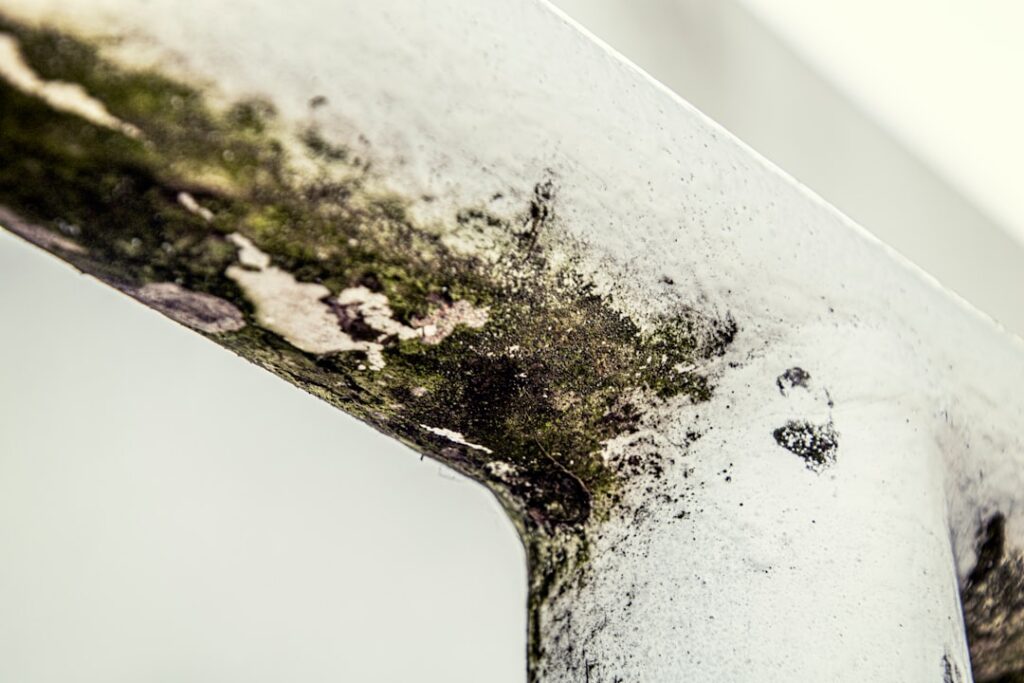
“Mold and restoration” is the umbrella term restoration companies use to package multiple services that homeowners often think of as separate: water mitigation, mold remediation, rebuild, and sometimes contents cleaning. Understanding which phase you’re in determines who you should hire, what insurance applies, and how the work should be documented. This guide summarizes EPA and CDC guidance current as of 2026 alongside IICRC consensus industry standards — consult your physician for any health symptoms and engage a certified professional for assessment decisions.
Is this mold, asbestos, or water damage? Get a free instant screen
Upload a clear photo of the suspect area. You'll get an instant AI screening opinion and what to do next. This is screening guidance, not a professional determination.
Screening guidance only. AI can be wrong. Confirm asbestos, mold type, or lead with lab testing or a licensed professional before acting.
What “mold and restoration” actually packages
Most restoration companies bundle four service categories under this label: emergency water extraction, structural drying, mold remediation when contamination is confirmed, and finish rebuild. Some include contents cleaning and pack-out. The bundling makes coordination easier but obscures which credentials apply to which phase.
Phase one: emergency water mitigation
Standard response time is under four hours for active water events. The work involves extraction equipment, structural drying with dehumidifiers and air movers, and moisture-mapping with pin and pinless meters. The IICRC S500 standard governs this phase. Most insurance policies cover this work under sudden-and-accidental water damage.
Phase two: mold assessment
If drying does not bring moisture below dry-standard within 72 hours, mold growth becomes likely. An independent assessor should evaluate at this point — not the restoration company performing the drying. The assessment determines whether you have moved from a water damage claim to a mold remediation claim, which is typically not covered or covered only to a low limit.
Phase three: remediation
When assessment confirms Condition 3 active growth, remediation follows IICRC S520: containment, HEPA filtration, removal of contaminated porous materials, surface cleaning of non-porous surfaces, and independent clearance testing. The technicians performing this work should hold AMRT certification at minimum on the supervising level.
Phase four: rebuild and restoration
After clearance, finish carpentry, drywall, paint, flooring, and cabinetry reinstallation rebuild the affected area. This phase typically falls under a state-licensed general contractor’s scope, separate from the IICRC-certified remediation work. The mold damage restoration walkthrough covers this sequence in detail.
Why phase separation matters for insurance
Phase one is usually a covered loss. Phase three may not be, depending on policy mold coverage limits. When a single contractor bundles all four phases into a single invoice without itemization, adjusters often deny portions and approve others, leaving homeowners with surprise out-of-pocket costs. Itemized invoices by phase prevent this.
The role of moisture mapping
Moisture mapping documents the extent of water intrusion before drying begins, providing the baseline against which drying progress is measured. Daily moisture readings during drying create the paper trail that proves work is progressing. Without this documentation, disputes about when drying ended and when remediation began become common.
When pack-out is needed
Pack-out — removing contents to a cleaning facility — is appropriate when porous contents (textiles, books, papers) are inside containment for an extended period or when contamination is heavy. Pack-out adds $1,000 to $5,000 to typical residential jobs and should appear as a separate line item with itemized inventory.
How HVAC fits the restoration sequence
Active HVAC during a water event distributes moisture through the duct system. Restoration scope should include HVAC inspection by a NADCA-certified technician and possibly duct cleaning. Skipping this step often leads to recurrence of mold in other parts of the house weeks after primary remediation completes.
Vetting a “mold and restoration” company
Three filters apply. IICRC firm certification (verifiable on the IICRC website), state contractor licensing for the rebuild phase, and insurance with both pollution liability and general liability for the full sequence. Companies that hedge on any of these are not ready to handle multi-phase work.
Independent assessment versus in-house assessment
Restoration companies sometimes employ in-house inspectors who recommend the company’s own remediation services. This conflict of interest is documented and well-known in the industry. EPA guidance recommends keeping assessment and remediation financially separate. Insist on an independent assessor whose only product is the report.
What a complete restoration contract should specify
Each phase as a separate scope, payment milestones tied to phase completion (not calendar dates), independent clearance contingency on final payment, change-order clause requiring written homeowner approval, and warranty terms for both workmanship and recontamination. Combined-phase lump-sum contracts hide too much.
Timeline expectations
A typical four-phase residential project runs 10 to 30 working days end to end, with most time spent on drying (3 to 7 days) and rebuild (7 to 14 days). Remediation itself often takes 2 to 5 days. Compressed timelines suggesting “all four phases in three days” usually mean a phase was skipped.
Cost ranges by phase
Phase one water mitigation: $1,000 to $4,000. Phase two assessment: $300 to $700. Phase three remediation: $1,500 to $9,000. Phase four rebuild: $1,500 to $8,000. Total restoration projects often fall between $5,000 and $25,000 depending on extent of damage and finishes.
Red flags during the quote process
Door-to-door solicitation after a community-wide water event, demands to sign assignment-of-benefits forms before assessment, refusal to itemize phases, and pressure to skip independent clearance are individually disqualifying. Assignment-of-benefits paperwork in particular shifts insurance negotiation rights to the contractor and is rarely in the homeowner’s interest.
How to coordinate with your insurance adjuster
Document everything: photos before drying, daily moisture readings, all invoices itemized by phase, and the assessor’s clearance report. Provide all documentation to the adjuster directly. Avoid signing any document presented by the restoration contractor without your insurance broker reviewing it first.
Why response speed varies during regional events
A localized event — one home’s burst pipe — sees normal four-hour response from quality firms. Regional events affecting hundreds of homes simultaneously stretch every firm’s capacity, often delaying response by 12 to 48 hours. During regional events, document conditions, perform DIY mitigation where safe (extract standing water, open windows where outdoor conditions allow, run available fans), and call multiple firms rather than waiting for a single dispatcher.
How content cleaning fits the sequence
Porous contents — clothing, books, papers, soft furniture — inside containment for more than 48 hours often require cleaning or replacement. Content cleaning facilities use ozone treatment, ultrasonic cleaning, and HEPA vacuuming to decontaminate items that can be salvaged. Replacement cost reimbursement applies to items beyond salvage. Itemized inventory at pack-out is essential for insurance documentation.
Special considerations for finished basements
Finished basements present specific restoration challenges: limited ventilation slows drying, concrete floors retain moisture for days after surface water is extracted, and below-grade vapor intrusion can continue after the visible water event ends. Front Range basements warrant longer drying timelines and post-restoration humidity monitoring more often than upper floors.
When sewage contamination changes the scope
Category 3 water (sewage, flood water, groundwater intrusion) requires different protocols than clean water events. PPE escalates to full Tyvek suits with sealed boot covers, all porous materials in the affected area typically require removal, and antimicrobial application uses higher-strength formulations. Some restoration firms decline Category 3 work; verify category coverage during the bid phase.
Documentation that survives a long-tail insurance dispute
Insurance disputes on water and mold claims sometimes surface months or years after the initial work. The documentation that survives long-tail disputes includes daily moisture logs, dated photographs of every phase, itemized invoices by phase, the assessor’s reports, the clearance pass document, and email or text records of every change order. Keep this documentation indefinitely with closing papers.
How long-term humidity control prevents recurrence
After phase four rebuild completes, the original moisture source must remain controlled to prevent recurrence. Dehumidifier sizing, HVAC supply-air relative humidity, and crawl-space encapsulation all influence ongoing humidity. The four-phase project addresses the contamination present; it does not prevent recurrence if humidity drifts above 60 percent in finished areas.
How emergency response calls should be handled
The first call to a restoration company should produce a defined arrival time, the name of the responding technician, and a verbal confirmation of services to be provided on arrival. Dispatchers who can’t commit to an arrival time, won’t name the responding crew, or won’t describe initial services are signals of process gaps. Reputable firms commit specifics on the first call.
Walking through the property with the first responder
The arriving technician should walk every affected room with the homeowner, document conditions with photographs, take moisture readings at multiple points, and discuss preliminary scope before powering up equipment. This walk-through establishes baseline and prevents disputes later about what conditions existed at arrival.
How equipment placement decisions are made
Dehumidifier capacity (pints of water per day at 80°F and 60 percent humidity) and air mover quantity are calculated from affected square footage, Class of water intrusion, and ambient conditions. Reputable mitigators document the calculation rather than just placing equipment empirically. Under-equipped jobs stretch drying timelines and increase mold risk.
Daily drying logs and what they should contain
Each day during drying, the technician should document moisture readings at the same points, ambient temperature and humidity, equipment running time, and any conditions noticed. The log creates the timeline insurance adjusters need and proves drying progress objectively. Days without logs are weak points in the documentation chain.
When restoration crosses into renovation territory
Some restoration projects expand scope into renovation — upgrading insulation beyond original specs, replacing rather than repairing damaged finishes, or addressing pre-existing conditions discovered during work. These additions should be invoiced separately from the insurance-covered restoration to maintain claim clarity. Mixing covered and non-covered work in single line items often triggers adjuster pushback.
What pre-existing conditions documentation looks like
Homes with prior water damage often have settled patterns of staining, minor cracks, and wear that pre-date the current event. Documenting these pre-existing conditions at first arrival prevents disputes about which damage the current event caused. Photos with timestamps and the technician’s notes create the baseline.
How contents claim documentation works alongside structural work
Contents claims (personal property damaged in the event) typically run as a separate insurance line from structural restoration. The contents adjuster handles inventory and valuation separately. Restoration contractors who try to combine contents and structural work into single invoices often complicate the claim process rather than simplifying it.
When to call a professional
Any water event affecting more than one room, any standing water for more than 24 hours, any visible mold larger than 10 square feet, and any moisture incident in a finished basement warrants professional response. Smaller events may be DIY. The mold inspection hub covers when each tier of response is appropriate.
References
- EPA mold cleanup guidance for homes — U.S. Environmental Protection Agency
- CDC about mold and health — Centers for Disease Control and Prevention
- InterNACHI standards for mold inspection — International Association of Certified Home Inspectors
- HUD Healthy Homes guidance — U.S. Department of Housing and Urban Development
Front Range homeowners coordinating a multi-phase water and mold event can get in touch here for help vetting independent assessors before signing assignment-of-benefits paperwork.