Mold Removal and Remediation Services Guide
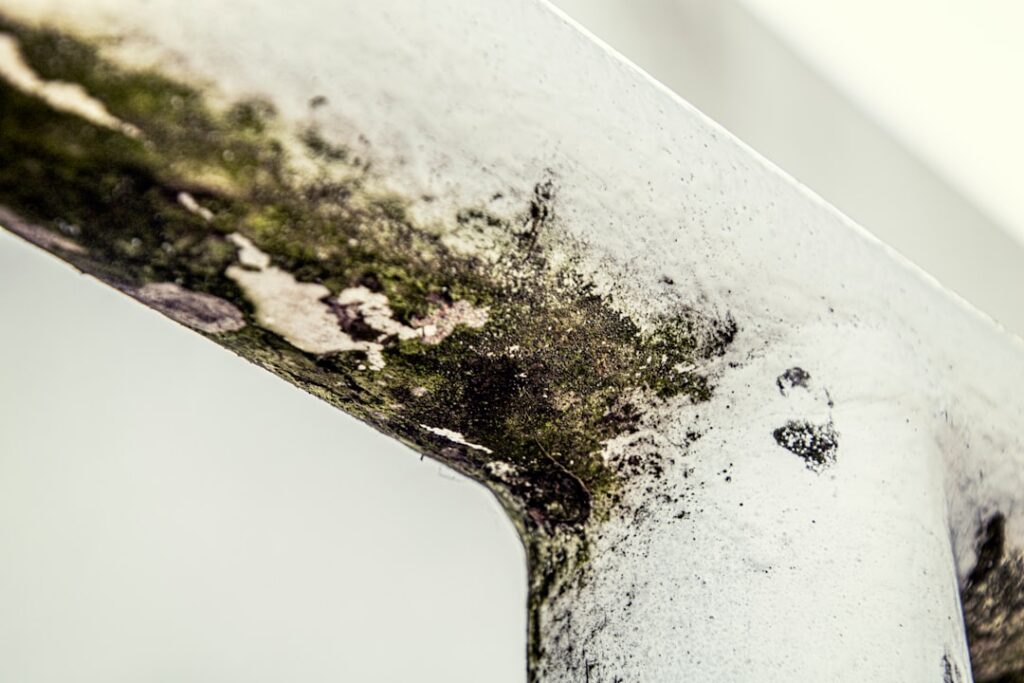
Many residential contractors advertise “mold removal and remediation services” as a single combined offering, but the two words signal slightly different scopes in industry literature. “Removal” tends to describe consumer-facing cleaning work; “remediation” refers more precisely to the controlled-protocol work governed by IICRC S520. The distinction matters when a homeowner is comparing bids — one company’s “removal” can be another company’s “remediation,” priced very differently for the same actual work. This guide summarizes EPA, CDC, and IICRC guidance current as of 2026 to help homeowners read scope correctly. Consult your physician for symptoms and a certified professional for testing decisions.
Part of our Mold Removal & Remediation guide — start there for the full picture →
Is this mold, asbestos, or water damage? Get a free instant screen
Upload a clear photo of the suspect area. You'll get an instant AI screening opinion and what to do next. This is screening guidance, not a professional determination.
Screening guidance only. AI can be wrong. Confirm asbestos, mold type, or lead with lab testing or a licensed professional before acting.
Removal vs remediation in industry usage
The IICRC S520 standard uses “remediation” throughout — the controlled removal of mold-contaminated material with containment, negative air, HEPA filtration, post-verification, and documentation. EPA guidance uses both terms, leaning toward “remediation” in its school and commercial-building document. Consumer marketing tends to use “removal” because it reads more decisive than the academic-sounding “remediation.” When evaluating bids, ignore the headline term and read the scope of work itself.
What a combined “removal and remediation” service typically includes
Assessment with moisture mapping; containment construction with 6-mil polyethylene and zipper doors; deployment of HEPA-filtered negative-air machines; PPE-protected removal of contaminated porous materials; HEPA vacuuming and damp wiping of semi-porous materials; antimicrobial application if the protocol calls for it; drying with air movers and dehumidifiers until target moisture content is reached; post-remediation verification; teardown of containment; documentation packet. Repair work — drywall, paint, flooring — is usually itemized separately or quoted as a separate phase.
Why combining the two terms can be deceptive
A contractor saying “we provide removal and remediation services” can mean: full IICRC S520 remediation, or basic janitorial cleaning, or anything in between. The phrase is a marketing umbrella, not a scope description. A homeowner who asks for “the same job” from two contractors using this phrase can receive wildly different bids — one priced as a $1,200 cleaning, one priced as a $9,000 full remediation. The fault is not in the bidders; it is in the imprecise umbrella term.
The IICRC S520 condition classifications
S520 defines three conditions of contamination. Condition 1 is normal fungal ecology — what you would expect to find on outdoor surfaces and small indoor surfaces. Condition 2 is settled spores from a nearby Condition 3 contamination. Condition 3 is actual fungal growth. The remediation goal is to return Condition 2 and Condition 3 spaces to Condition 1. A contractor who can name these conditions and explain how they apply to your specific situation is materially more competent than one who cannot.
Containment levels — limited, full, and what they require
Limited containment uses single-layer 6-mil poly with a zipper entry and a HEPA-filtered negative-air machine. Full containment uses two layers of poly with a decontamination chamber and stronger negative pressure. The condition classification and square footage drive which level is appropriate. Most residential Condition 2 jobs use limited containment; Condition 3 jobs above 100 square feet often warrant full containment. A bid that omits containment entirely is either underscoped or assumes a very small Condition 1 cleanup.
Antimicrobial application — when and what
Antimicrobials are EPA-registered fungicides or sanitizers applied after physical removal to address residual surface contamination. The IICRC view is nuanced — the primary remediation tool is physical removal, not chemical application, but EPA-registered products may be used as a secondary measure. Bids that lead with antimicrobial application as the primary remediation step are inconsistent with industry standards. Ask for the product name and EPA registration number; cross-check with EPA’s pesticide product database.
Drying targets and the moisture-meter test
Drying continues until target moisture content is reached — typically 15-16 percent wood-moisture-equivalent for framing, lower for drywall (which is replaced rather than dried in most cases). A contractor without a moisture meter on site is operating without a key diagnostic. A contractor who never measures moisture content during the drying phase is finishing the job by guess. Either should be a meaningful red flag.
Post-remediation verification — what passes the job
Verification typically involves a visual inspection (no visible mold growth), a moisture-content check on framing and substrate, and where the protocol calls for it, air or surface sampling. The verifier should ideally be independent of the remediation contractor — same firm but different person at minimum, fully independent inspector or hygienist preferred for larger jobs. For more on the four-phase methodology see our professional mold removal methodology guide.
Insurance billing — how the language affects claims
Carrier estimating software (Xactimate, Symbility) has discrete line items for remediation and for repair. Mold remediation falls under abatement / hazardous-material categories; repair falls under standard restoration line items. A contractor who runs both phases under the same code is either inexperienced with carrier billing or attempting to obscure margins. Homeowners on insurance-covered jobs should request Xactimate-formatted estimates and request itemization that separates the remediation phase from the repair phase clearly.
Conflict-of-interest separation
The EPA recommends separating testing from remediation. Many companies offering “removal and remediation services” also offer testing, often at a discount or for free as a lead-generation tactic. For small jobs this turnkey model is workable; for jobs above a few thousand dollars, hire an independent inspector or hygienist to write the protocol, then bid that protocol to two or three remediation contractors. Our mold inspection and testing hub explains how to find a clean independent inspector.
What a written contract should look like
A defensible contract spans several pages. It identifies affected areas with square footage. It specifies containment level and equipment. It names the IICRC contamination condition. It itemizes removal materials. It lists antimicrobial products with EPA registration numbers, if used. It states drying targets and time. It defines post-remediation verification method and pass criteria. It separates remediation from repair phase pricing. It includes a payment schedule (deposit at signing, balance at clearance). It includes a workmanship warranty in writing. Contracts shorter than two pages on jobs above $5,000 are unusual.
Front Range factors that shape scope
Colorado’s dry climate suppresses some mold pressures but freeze-thaw water intrusion and slab-on-grade basement moisture drive recurring remediation calls in Denver, Boulder, Douglas, and Jefferson counties. Crawl-space mold in El Paso and Adams county homes is also common. Pre-1978 housing in Capitol Hill, Park Hill, and similar older Denver neighborhoods adds asbestos-overlap concerns — the remediation contractor may need EPA RRP certification and coordination with CDPHE-licensed asbestos abatement crews.
When to call a professional
Visible mold over 10 square feet, any mold linked to sewage or category-3 water, mold inside HVAC ducting, mold accompanied by occupant respiratory symptoms, or a household with immunocompromised residents. Document with photos and dated notes before any contractor arrives. For pillar-level context on the full restoration sequence see our mold and restoration four-phase guide.
How the documentation packet protects the homeowner
The job-close documentation packet is the deliverable that separates competent service from sloppy service. It should contain the initial scope-of-work document with affected areas and square footage; daily progress logs showing moisture readings and photographic documentation; the final post-remediation verification report with clearance criteria stated and the result; antimicrobial product safety data sheets and EPA registration numbers where applicable; air or surface sampling chain-of-custody and lab results, if any sampling was performed; the workmanship warranty in writing; an itemized final invoice separating remediation and repair phases. This packet matters for insurance documentation, for future resale disclosure obligations, and for warranty support if recurrence happens.
The moisture-source diagnostic step
Mold cannot grow without moisture. A removal and remediation service that does not identify the underlying moisture source has not finished the job — the corrective work treats the symptom, not the cause. Common Front Range sources include roof leaks (often slow and intermittent), plumbing leaks behind walls or under slabs, foundation moisture intrusion, basement waterproofing failure, HVAC condensate-drain blockage, ice-dam water intrusion at eaves during winter freeze-thaw, and inadequate kitchen or bathroom ventilation. The contractor’s post-remediation report should explicitly state what source was identified and how it was corrected. If the source remains uncertain, additional diagnostic work (thermography, moisture mapping) is warranted before the rebuild phase begins.
Worker protection and homeowner safety during the work
OSHA’s respiratory-protection rule (29 CFR 1910.134) governs worker protection during mold remediation. Technicians inside containment should wear P100 respirators with fit-testing documented, Tyvek suits, nitrile gloves, and eye protection. Homeowners remaining in the property during the work should not enter the contained area. HVAC zones serving the contaminated area should be isolated or shut down to prevent spore transport to clean parts of the home. Pets and immunocompromised residents should be relocated for the active phase. The contractor should explain the safety plan in writing before work begins; ad-hoc verbal explanations are insufficient.
How the bidding process should run
Two or three contractors bid on the same written scope. Each performs a site visit with diagnostic instruments — moisture meter at minimum, thermal imaging or borescope ideal for hidden-condition assessment. Each delivers a written bid within 48-72 hours that itemizes containment, removal, antimicrobial application, drying, post-verification, and repair as separate line items. The homeowner compares scope-to-scope before comparing price-to-price. Variance of 30-40 percent on identical scope is common; the lowest bid often reflects scope omission rather than efficiency. Price the redo risk into the comparison.
How occupant respiratory health changes the scope
Residents with asthma, chronic obstructive pulmonary disease, immunocompromise from medication or chronic illness, pregnancy, or young children may need conservative scoping. The CDC and NIH note mold exposure can exacerbate respiratory conditions and trigger allergic responses in sensitized individuals. Conservative approach: escalate one tier above what square-footage rules suggest, request clearance sampling on jobs that might otherwise skip it, arrange temporary relocation during the active remediation phase, and document symptoms in writing for any future insurance or legal need. Consult your physician for individual symptom evaluation; the removal contractor’s role is the physical work, not medical assessment.
The reconstruction-phase distinction
After remediation passes post-verification, the reconstruction phase rebuilds the affected area to a finished condition — drywall, paint, baseboard, flooring, sometimes cabinetry. Reconstruction is ordinary construction work governed by general contracting standards and building codes, not by IICRC S520. Some removal and remediation services handle reconstruction in-house; others hand off to a separate general contractor. On larger jobs the separated approach often benchmarks better, since rebuild margins differ from remediation margins and a GC may price the rebuild more competitively. Either approach works; the homeowner needs to know which model the service is using before signing.
References
- EPA Mold Remediation Guidance — U.S. Environmental Protection Agency
- CDC Mold Cleanup Guidance — Centers for Disease Control and Prevention
- InterNACHI Mold Inspection Resources — International Association of Certified Home Inspectors
- OSHA Mold Worker Protection — Occupational Safety and Health Administration
- CDPHE Mold Information — Colorado Department of Public Health and Environment
Frequently asked questions
What is the difference between mold removal and mold remediation?
In industry usage, remediation refers to the controlled IICRC S520 protocol with containment, HEPA filtration, and post-verification. Removal is the looser consumer-marketing term that may describe either light cleaning or full remediation. Read the scope of work itself rather than relying on the headline term.
Should I hire one company for both removal and remediation?
Most contractors offer both as a combined service. The issue is not whether one company does both but whether the scope is itemized clearly. Bids that lump everything together are hard to benchmark. Insist on itemization separating containment, removal, antimicrobial, drying, and post-verification.
How long do mold removal and remediation services take?
A typical 200-square-foot Condition 2 job runs three to five working days for the remediation phase, including setup, removal, drying, post-verification, and teardown. Repair phase adds another five to ten working days depending on finishes. Larger jobs scale accordingly.
Do mold remediation services use chemicals?
Sometimes. EPA-registered antimicrobials may be applied after physical removal as a secondary measure. The primary remediation tool is physical removal, not chemical application. Ask for product names and EPA registration numbers; verify in EPA's pesticide product database.
Front Range homeowners weighing combined mold removal and remediation service bids can get in touch through our contact page for a second opinion before signing.
Mold removal & cleanup picks
For a small, contained patch (under ~10 sq ft) these EPA-friendly removers handle surface mold. Larger or recurring growth warrants a professional assessment first.
| Product | Why | Buy |
|---|---|---|
 RMR-86 Instant Mold Stain Remover RMR-86 Instant Mold Stain Remover | Fast-acting on stains; ventilate and wear PPE. | Amazon — $29.99 |
 Concrobium Mold Control Concrobium Mold Control | No-bleach formula that also helps prevent regrowth. | Amazon — $11.26 |
 Mold Armor Mold & Mildew Remover Mold Armor Mold & Mildew Remover | Widely stocked bathroom/surface remover. | Amazon — $22.98 |