HEPA Filter: Purifiers, Vacuums and HVAC Filters Explained
The phrase HEPA shows up on air purifiers, shop vacuums, furnace filter packaging and even car cabin filters. Some of those products use a real HEPA filter, and some only borrow the name. For homeowners trying to deal with allergies, mold cleanup dust, lead paint debris or wildfire smoke drifting over the Front Range, the difference matters. This guide explains what the term means according to federal guidance, how true HEPA differs from “HEPA-type” marketing, how to size a portable purifier, where HEPA vacuums fit into mold and lead cleanup, why central HVAC systems usually rely on MERV-rated filters instead, and what HEPA filtration cannot do, including removing radon. It summarizes EPA guidance current as of 2026; anyone with respiratory or health concerns should talk with a physician, and remediation decisions belong with qualified professionals.
Part of our Air Purifiers, Filters & Odors guide — start there for the full picture →
What a HEPA Filter Is
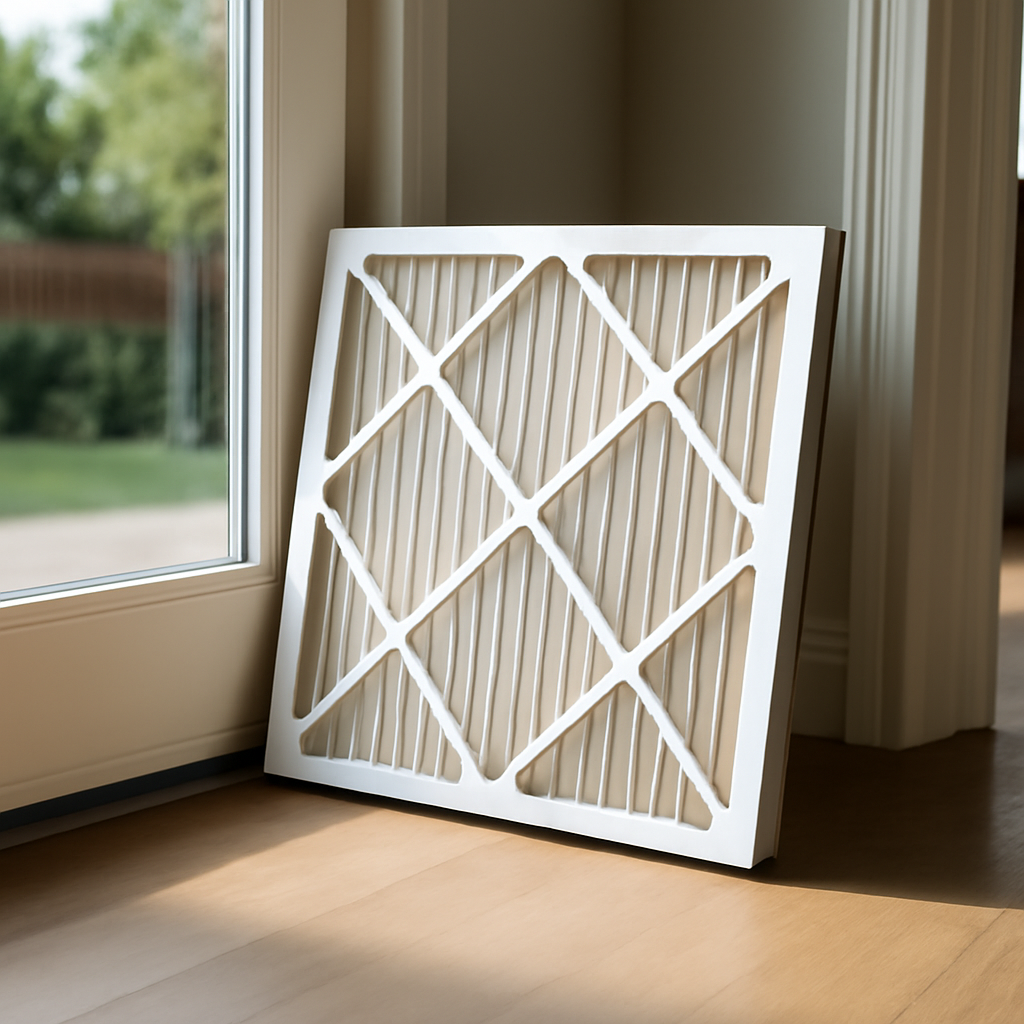
HEPA stands for high efficiency particulate air. The EPA describes a HEPA filter as a type of pleated mechanical air filter, common in portable air cleaners, and notes that the term is officially defined by the U.S. Department of Energy. According to the EPA, this type of filter can theoretically remove at least 99.97% of dust, pollen, mold, bacteria and other airborne particles with a size of 0.3 microns.
That 0.3-micron figure is often misunderstood. It is not the smallest particle a HEPA filter can catch. The EPA explains that 0.3 microns represents the worst case, the most penetrating particle size, and that particles larger or smaller than that are trapped with even higher efficiency. Very large particles slam into fibers, mid-sized ones get intercepted as they pass close to fibers, and very small particles bounce around randomly until they stick. The 0.3-micron range falls between those mechanisms, which is why it is used as the benchmark.
A HEPA filter is purely mechanical. It does not use charged plates, ionizers or chemicals to work. Air must be pushed through the dense media by a fan, which is why HEPA devices tend to be bulkier and louder than a simple fan of the same airflow, and why the fan, the seal around the filter and the filter itself all matter.
True HEPA vs “HEPA-Type” Filters
Retail labels use a wide range of terms: True HEPA, HEPA, HEPA-type, HEPA-like, HEPA-style, 99% HEPA and similar. Only products that meet the efficiency definition qualify as HEPA in the technical sense. “HEPA-type” and “HEPA-like” generally signal a filter that resembles HEPA media but does not meet that standard, and its efficiency may be considerably lower.
A few practical ways to read labels:
- Look for a stated efficiency of 99.97% at 0.3 microns. Vague claims such as “captures up to 99% of allergens” do not say the same thing.
- Check whether a clean air delivery rate (CADR) is published. That number describes how much filtered air the whole device delivers, which matters more for a room than the filter label alone.
- Check replacement filter part numbers and prices. A cheap purifier with expensive or hard-to-find filters can cost more over time.
- Be cautious with “H13” and “H14” claims on unfamiliar brands. Those grades come from a European classification and indicate high efficiency, but the claim is only as good as the manufacturer’s testing.
A sealed design also matters. A filter that meets HEPA efficiency in a lab can underperform if air leaks around a loose gasket instead of passing through the media. This is especially relevant for vacuums, where leaks around the filter housing can blow fine dust back into the room.
Portable Air Purifiers and CADR Sizing
Most homeowners encounter HEPA filters in portable air cleaners. The EPA’s guide to air cleaners in the home advises choosing a portable unit with a CADR large enough for the size of the room, and notes that a higher CADR means the unit can filter more particles and serve a larger area. It also points out that portable units often achieve a high CADR by using a HEPA filter.
How to size a unit
The EPA guide includes a sizing table based on an 8-foot ceiling. It lists a minimum CADR of 65 cubic feet per minute for a 100-square-foot room, 130 for 200 square feet, 195 for 300, 260 for 400, 325 for 500 and 390 for 600. The guide says rooms with higher ceilings may call for a higher CADR. Many Colorado homes have vaulted great rooms or two-story entries, so a unit sized only by floor area may fall short there.
The guide also notes that higher fan speeds and longer run times increase the amount of air filtered. A purifier set on its quietest setting in the corner of a large room delivers much less cleaning than its maximum CADR suggests. Running a unit continuously on a moderate setting, rather than occasionally on high, often works better for daily allergen control.
Gases, odors and ozone
HEPA media traps particles, not gases. The EPA guide explains that filtering gases requires an activated carbon filter or another filter designed for gases, and that the CADR rating system applies to particles only. Units that combine HEPA and a substantial carbon stage can address both, though the EPA notes there is no widely used performance rating system for gas filtration.
The same guide advises avoiding air cleaners that intentionally produce ozone, which is a lung irritant, and notes that some devices with electrostatic precipitators, ionizers, certain UV lights and plasma technology may emit ozone. A plain mechanical HEPA unit avoids that concern. Buyers comparing models with extra “ionizing” or “plasma” features can check whether those features can be turned off.
Some newer purifiers include built-in sensors that display particle levels. The air purifier with air quality monitor guide covers how useful those readings are and how they differ from standalone monitors.
HEPA Filters in Central HVAC Systems
A common question is whether a home’s furnace can simply use a HEPA filter. In most residential systems, the answer is no, at least not without modification. HEPA media is dense and creates high resistance to airflow. A typical residential blower is not designed to push enough air through that kind of filter in a standard 1-inch or 4-inch slot. Forcing it can reduce airflow, strain the blower motor, cause the evaporator coil to freeze in cooling mode and contribute to overheating in heating mode.
Central systems are rated on a different scale. The EPA explains that Minimum Efficiency Reporting Values, or MERVs, report a filter’s ability to capture particles between 0.3 and 10 microns, using a test method developed by ASHRAE, and that a higher MERV indicates better capture. When upgrading, the EPA suggests choosing a filter with at least a MERV 13 rating, or as high as the system fan and filter slot can accommodate, and notes that a professional HVAC technician may be needed to determine what will work.
Whole-house HEPA systems do exist. They usually take the form of a bypass unit with its own fan that pulls a portion of air from the return duct, filters it and sends it back. These require installation by a contractor and sometimes duct changes. Duct leakage and sizing problems can undercut any filter upgrade, so the condition of the ducts matters too. The ductwork replacement guide explains how ducts are evaluated, and the furnace filter replacement guide covers choosing and changing standard filters.
The EPA guide also notes that furnace and HVAC filters only clean air while the system is running, which in many homes is a fraction of the time during heating and cooling seasons. Setting the thermostat fan to “on” or using a circulation setting increases filtration time, though it also increases electricity use.
HEPA Vacuums for Mold and Lead Cleanup
HEPA vacuums are standard equipment in professional mold remediation and lead-safe renovation work. A conventional vacuum can capture large debris while blowing fine particles out of its exhaust. A properly sealed HEPA vacuum captures fine dust and holds it.
Mold
Remediation contractors commonly use HEPA vacuums to clean surfaces after moldy materials are removed and before final cleaning. Vacuuming does not fix a moisture problem, and mold will return if the water source is not addressed. The HEPA vacuuming in mold remediation guide covers how contractors use these vacuums, what to expect during cleanup and why containment matters.
Lead
Lead paint dust is a major concern in homes built before 1978, which includes a large share of older housing stock in Denver, Boulder, Colorado Springs and Pueblo. The EPA’s guidance on reducing lead exposure at home advises that when there is visible dust or debris from chipping or flaking paint, only vacuums with HEPA filters should be used, and people should not dry sweep. It also advises wet mopping hard surfaces and avoiding buffers or vacuums with beater bars that can wear away painted surfaces. If there is no visible paint debris, the EPA says a standard vacuum can be used.
Renovation work that disturbs lead paint is a separate issue. Contractors working on pre-1978 homes generally must follow EPA lead-safe work practices, which include containment and specialized cleaning.
What HEPA Filters Cannot Do
A HEPA purifier can lower the amount of particles in a room. It cannot remove the source of those particles, and it cannot do much for pollutants that are not particles.
Radon
Radon is a radioactive gas, a serious concern across much of Colorado. A HEPA filter does not remove radon gas. Air purifiers are not a substitute for testing and, where levels are elevated, a properly installed mitigation system. The do air purifiers help with radon guide explains what filtration can and cannot do for radon and why mitigation focuses on keeping the gas out of the house.
Mold growth
The EPA guide to air cleaners notes that portable units and HVAC filters may remove some particles generated by mold and may help reduce odors, but they will not resolve a mold and moisture problem. Mold growing on drywall, framing or carpet keeps producing spores until the moisture is fixed and the growth is removed. The mold air purifier guide covers when a purifier may help during and after remediation.
Gases and VOCs
Fumes from paint, cleaners, new furniture and combustion appliances are not captured by HEPA media. Source control and ventilation are the main strategies, with activated carbon filtration as a supplement.
Wildfire Smoke Days on the Front Range
Smoke from fires in Colorado and from blazes across the West has become a regular summer and fall issue along the Front Range. Fine smoke particles are well within the range HEPA filters capture, so a portable HEPA purifier is one of the most practical tools for smoky days.
The EPA’s wildfire and indoor air quality guidance says portable air cleaners and high-efficiency HVAC filters can remove smoke particles from the air, and notes that the two can be used together for more effective filtration. It recommends choosing a high-efficiency HVAC filter such as MERV 13, or as high as the system can accommodate, making sure the filter fits snugly so air does not leak around it, choosing a portable air cleaner sized for the room, and making sure it does not produce ozone. The guidance also describes do-it-yourself box-fan filters built from furnace filters, while noting that commercial air cleaners with a known CADR are typically preferred.
A practical approach for smoke season is to choose one room, often a bedroom, as a clean room: close windows, run a properly sized HEPA purifier continuously and keep doors closed. Keeping spare filters on hand matters, since heavy smoke can load filters faster than normal.
Maintenance and Costs
A HEPA filter only works when it is in good condition and seated properly. Manufacturers typically recommend replacing HEPA filters in portable purifiers every 6 to 12 months under normal conditions, and sooner during smoke events or heavy use. Prefilters that catch hair and lint may be washable or replaceable more often. Most HEPA filters should not be washed unless the manufacturer specifically says so, because washing can damage the fiber structure.
Cost ranges vary by brand, size and region. Rough figures commonly reported include:
- Small portable HEPA purifier (bedroom-size): often about $80 to $200.
- Large-room portable HEPA purifier: often about $200 to $700 or more.
- Replacement HEPA filters: often roughly $25 to $150 each, depending on the model.
- HEPA shop vacuum or certified HEPA vacuum: often a few hundred dollars, with professional-grade units higher.
- Whole-house bypass HEPA system: installed costs commonly run into the low thousands, depending on equipment and ductwork changes.
- MERV 13 furnace filters: often about $15 to $50 each, depending on size and depth.
Electricity use also adds up for units running continuously. Checking the wattage at the settings that will actually be used gives a more realistic picture than the maximum figure alone.
How Inspectors and Professionals Fit In
A standard home inspection looks at the heating and cooling equipment and the filter slot, and an inspector may note a dirty filter, a missing filter or a filter that does not fit. Portable purifiers are personal property and generally are not evaluated. Inspectors are not required to assess indoor air quality or the performance of electronic air cleaning devices under typical standards of practice.
Homeowners worried about persistent dust, odors or allergy symptoms may benefit from a broader look at the HVAC system and ducts. The air duct cleaning guide explains when cleaning helps and when it does not, and the whole house humidifier guide covers another common HVAC add-on in dry Colorado winters. For mold or lead concerns, testing and remediation by qualified professionals comes first, with HEPA filtration as a supporting step.
The home inspector hiring guide explains how to choose an inspector and what add-on services to consider, and the heating and cooling hub collects related HVAC guides.
References
- What Is a HEPA Filter? — U.S. Environmental Protection Agency
- Guide to Air Cleaners in the Home — U.S. Environmental Protection Agency
- What Is a MERV Rating? — U.S. Environmental Protection Agency
- Wildfires and Indoor Air Quality — U.S. Environmental Protection Agency
- Reduce the Risk of Lead Exposure at Home — U.S. Environmental Protection Agency
Frequently asked questions
What does HEPA stand for?
HEPA stands for high efficiency particulate air. The EPA describes it as a pleated mechanical filter that can theoretically remove at least 99.97% of airborne particles at 0.3 microns, a definition that comes from the U.S. Department of Energy.
Is a HEPA-type filter the same as true HEPA?
No. HEPA-type or HEPA-like labels usually describe filters that resemble HEPA media but do not meet the 99.97% at 0.3 microns efficiency definition. Look for that stated efficiency and a published CADR.
Can a furnace use a HEPA filter?
Most residential furnaces cannot use a true HEPA filter without modification because the dense media restricts airflow. The EPA suggests a MERV 13 filter or as high as the system can accommodate, and whole-house HEPA usually requires a separate bypass unit.
Does a HEPA filter remove radon?
No. Radon is a gas, and HEPA filters capture particles. Testing and, where needed, a radon mitigation system are the recommended approach.
How often should a HEPA filter be replaced?
Many manufacturers recommend every 6 to 12 months for portable purifiers, and sooner during wildfire smoke or heavy use. Follow the specific manufacturer's guidance for each unit.
Wondering whether a home’s HVAC system and filters are in good shape before you buy? Get in touch and we can point you to a local inspector.