How Often to Change Air Purifier Filters: HEPA, Carbon, Pre
Most home air purifiers need the washable pre-filter cleaned about once a month, the main HEPA filter replaced roughly every 6 to 12 months and any activated carbon filter replaced more often, commonly every 3 to 6 months. The manufacturer’s schedule for your specific model comes first, and heavy use, pets, smoke or dusty conditions can shorten every one of those intervals. This guide explains what each filter layer does, how to adjust the schedule to your home, the signs a filter is overdue, what replacement filters typically cost and how air purifier filters differ from your furnace filter.
Part of our Heating, Cooling & Ventilation guide — start there for the full picture →
The guidance below is general information as of 2026. Your purifier’s manual, its filter indicator and the replacement filter packaging take priority for your unit.
Quick Answer: Typical Replacement Schedule by Filter Type
Most portable air purifiers use two or three stages. The intervals below are typical manufacturer ranges for average household use. They are rules of thumb, not fixed limits.
| Filter stage | What it catches | Typical maintenance | Replace sooner if |
|---|---|---|---|
| Pre-filter (mesh or foam) | Hair, lint, pet fur, large dust | Vacuum or rinse about every 2-4 weeks; replace if torn or if it is a disposable type | Pets, carpet, construction dust |
| True HEPA or HEPA-type | Fine particles: dust, pollen, pet dander, mold spores, smoke particles | Replace about every 6-12 months; not washable unless the manufacturer says so | Wildfire smoke, smokers in home, running 24/7 |
| Activated carbon | Odors and some gases (VOCs) by adsorption | Replace about every 3-6 months | Cooking odors, pets, smoke smell returns |
| Combination HEPA + carbon cartridge | Both of the above in one unit | Replace about every 6-12 months, per manufacturer | Odor control fades before particle filtering |
| Permanent or washable electrostatic | Particles, using charged media | Clean per manual, often monthly | Visible buildup, reduced airflow |
The U.S. Environmental Protection Agency’s guide to air cleaners in the home puts the core point simply: all filters need regular replacement, and a dirty, overloaded filter will not work well. Follow the manufacturer’s recommendation as your starting point and shorten it based on what you see.
What Each Filter Layer Does and Why Schedules Differ
Pre-filter
The pre-filter is the coarse outer layer. It traps the big stuff, such as pet hair, lint and larger dust, so the more expensive HEPA filter behind it does not clog as quickly. Because it catches the most visible debris, it is also the layer that fills up fastest. Many pre-filters are washable or vacuumable. Keeping this layer clean is the cheapest way to extend the life of the main filter.
HEPA filter
The EPA explains that HEPA stands for high efficiency particulate air, a pleated mechanical filter that can theoretically remove at least 99.97 percent of dust, pollen, mold, bacteria and other airborne particles at 0.3 microns, the most penetrating particle size. Particles larger or smaller than that are captured with even higher efficiency. A HEPA filter works by physically trapping particles in its fibers, so it gradually loads up. As it loads, it can still catch particles, but airflow through the purifier drops, so the unit cleans less air per hour. That is the main reason to replace it on schedule.
Labels such as “HEPA-type” or “HEPA-like” are not the same as a filter meeting the HEPA definition. Check the product specifications if this matters to you.
Activated carbon filter
Carbon filters work differently. Gas and odor molecules stick to the surface of the carbon granules, a process called adsorption. Once those surfaces are filled, the carbon stops removing odors, even though it may look exactly the same. That is why carbon is usually replaced more often than HEPA, and why the first sign is often that a familiar odor, such as cooking smells or pet odor, starts lingering again. Thin carbon sheets saturate faster than filters with a deep bed of loose carbon granules.
Best Air Purifiers: our top 3 picks
| Product | Best for | Key features | Price | Buy |
|---|---|---|---|---|
| Coway Airmega Mighty2 | Best overall for living rooms |
| $269.99as of October 18, 2026 | Buy now →Check current price |
| Levoit Core 300-P | Best for bedrooms |
| $89.99as of October 18, 2026 | Buy now →Check current price |
| Levoit Vital 100S-P | Best for wildfire smoke season |
| $119.99as of October 18, 2026 | Buy now →Check current price |


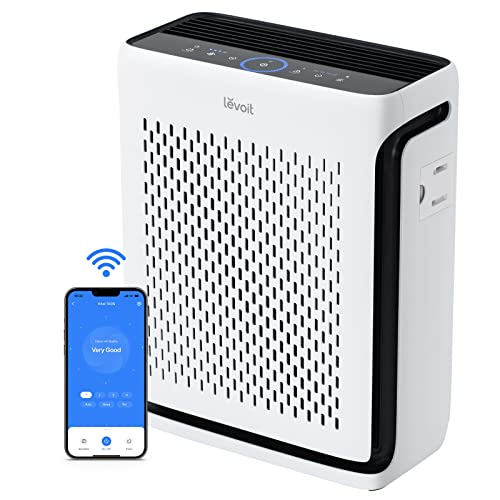
Prices are Amazon’s listed prices as of the time shown and change often; check Amazon for today’s price. As an Amazon Associate we earn from qualifying purchases.
How to Adjust the Schedule for Your Home
Manufacturer intervals assume average conditions. Use these factors to decide whether to change filters sooner than the label suggests or whether the standard interval is fine.
- Run time. A purifier running 24 hours a day loads its filters much faster than one running a few hours in the evening. Many filter-life estimates assume a certain number of hours per day. Check what your manual assumes.
- Fan speed. Higher speeds move more air through the filter, which cleans the room faster and also loads the filter faster.
- Pets. Fur and dander clog pre-filters quickly. Cleaning the pre-filter every one to two weeks is common in multi-pet homes.
- Smoke. Tobacco smoke and wildfire smoke load HEPA filters and saturate carbon quickly. During a heavy smoke event, a filter can reach the end of its useful life in weeks rather than months.
- Renovation or construction dust. Drywall sanding and demolition dust can clog a filter fast. Some people use an older filter during a project and install a fresh one afterward.
- Room size. A purifier that is undersized for the room tends to run on high constantly, which shortens filter life.
- Allergy or asthma sensitivity. If someone in the home is sensitive, many people err toward the short end of the replacement range.
Worked example: setting a schedule
Here is how a homeowner might set a realistic schedule. Treat it as an example method, not a rule.
- The manual says: clean pre-filter monthly, replace HEPA every 12 months and carbon every 6 months, based on about 12 hours a day of use.
- The household runs the unit about 24 hours a day in the bedroom and has two dogs.
- Doubling the run time roughly doubles the load, so a reasonable starting point is HEPA about every 6 months and carbon about every 3 months.
- With two dogs, the pre-filter gets vacuumed every 1 to 2 weeks.
- After the first replacement, the homeowner compares the old filter with a new one. If the old HEPA is only lightly gray, they can stretch the next interval slightly. If it is dark and clogged, they keep the shorter schedule.
Signs Your Air Purifier Filter Needs Changing
Do not rely only on the calendar. These signs suggest a filter is due now, whatever the schedule says:
- The filter indicator light is on. Many indicators are simply timers, not sensors, so they are a reminder rather than a measurement. Reset the indicator after each replacement.
- Visible discoloration. A HEPA filter that started white and is now dark gray or brown across the intake face is heavily loaded.
- Reduced airflow. Less air coming out of the outlet at the same fan speed.
- The unit is louder. The fan works harder to pull air through a clogged filter.
- Odors return. Usually the carbon filter is saturated.
- More dust on surfaces or more allergy symptoms than usual, with nothing else having changed.
- A musty smell from the purifier itself. A filter that got damp can grow mold. Replace it and figure out why it got wet.
How to Change and Maintain the Filters
- Unplug the purifier.
- Remove the cover as described in the manual.
- Take out the old filters carefully and bag them right away to avoid releasing trapped dust. Doing this outdoors or near a trash can helps. People with allergies may want to wear a dust mask.
- Wipe out the housing with a dry or slightly damp cloth, and let it dry completely.
- Clean or rinse the pre-filter if it is washable, and let it dry fully before reinstalling.
- Install the new filters in the correct orientation. Many have an airflow arrow, and a filter installed backward or not seated properly lets air bypass it.
- Reset the filter indicator.
- Write the date on the edge of the new filter.
Do not wash or vacuum a HEPA filter unless the manufacturer specifically says it is a washable design. Washing can damage the fine fibers and reduce efficiency.
What Replacement Filters Typically Cost
Filter cost is a real part of owning an air purifier, sometimes more than the electricity over the life of the unit. Typical ranges vary widely by brand and size:
- Small room purifiers: replacement filters commonly run from roughly the price of a takeout meal to a few times that, per filter.
- Large-room and premium models: HEPA and combination cartridges can cost considerably more, and some brands use proprietary cartridges.
- Carbon filters: often cheaper per filter but replaced more often.
The main cost drivers are filter size, whether the cartridge combines HEPA and carbon, brand-specific shapes and how often you replace them. Before buying a purifier, check the price and availability of its replacement filters and multiply by how many you will use per year. Third-party compatible filters are available for many models. They can save money, but quality varies, and some may not seal as well or match the original’s efficiency.
Running cost matters too. ENERGY STAR certifies room air purifiers and rates them by a ratio of clean air delivered to watts used. A certified unit typically uses less electricity for the same cleaning, which matters for a purifier that runs all day.
Air Purifier Filters Versus Your Furnace Filter
A portable air purifier and your home’s furnace or HVAC filter are separate, and both need attention. The EPA’s air cleaner guidance notes that HVAC filter manufacturers typically recommend replacement every 60 to 90 days, and that you should change filters more often if they look heavily soiled when you replace them. A clean furnace filter protects the equipment and helps with whole-house dust, while a portable purifier concentrates cleaning in one room.
The EPA also emphasizes that filtration does not replace source control and ventilation. Reducing dust sources, running bathroom and kitchen exhaust fans and keeping humidity in a reasonable range all help the purifier and the furnace filter do their jobs. Our guide on whether air filters help with dust covers the furnace side in more detail.
Example Schedules for Common Situations
These scenarios show how the same purifier might need very different maintenance depending on how it is used. They are illustrations of the adjustment method above, not manufacturer specifications.
| Scenario | Pre-filter | HEPA | Carbon |
|---|---|---|---|
| Bedroom unit, evenings only, no pets | Monthly | About 12 months | About 6 months |
| Living room unit, running all day, one cat | Every 2 weeks | About 6-9 months | About 3-4 months |
| Nursery or allergy bedroom, running 24/7 | Every 2-3 weeks | About 6 months | About 3-6 months |
| Home office during a renovation | Weekly during the work | Check monthly; replace after the project if loaded | As odors return |
| Any room during a heavy wildfire smoke week | Check weekly | Inspect after the event; replacement often needed sooner | Often saturated within weeks |
Common Filter Mistakes to Avoid
Many complaints that a purifier “stopped working” come down to a handful of avoidable maintenance mistakes.
- Leaving the plastic wrap on a new filter. It happens more often than you would think, and it blocks nearly all airflow.
- Installing the filter backward. Many filters are directional. A reversed carbon layer or pre-filter can reduce performance.
- Using a filter that does not seal. If a replacement filter is slightly the wrong size, air takes the path of least resistance around the edges, and the purifier moves air without cleaning much of it.
- Reinstalling a damp pre-filter. A wet pre-filter can grow mold and push a musty smell into the room. Let washed filters dry completely.
- Ignoring the pre-filter. A neglected pre-filter shortens the life of the HEPA filter behind it, which is the expensive part.
- Trusting the timer alone. A timer cannot tell whether you had a smoky week or a quiet month. Look at the filter.
- Placing the purifier in a corner or behind furniture. Restricted airflow means the filters work harder while cleaning less of the room. Keep a few feet of open space around the intake and outlet where the manual recommends it.
- Storing spare filters in a damp basement. Keep replacement filters sealed in their packaging in a dry place so they do not absorb moisture or odors before you use them.
What About a Purifier That Sits Unused?
Filters do not wear out much while a purifier is switched off, so a unit that sat in a closet for a season usually does not need a new HEPA filter just because time passed. Carbon is the exception: activated carbon can slowly pick up odors and moisture from the surrounding air even when the fan is not running, especially in a damp or smelly storage space. Before putting a stored purifier back into service, inspect the filters, sniff the outlet after a few minutes of running and replace any filter that smells musty, looks discolored or was exposed to moisture. If you buy a used purifier, replace all of its filters before use, since you cannot know what they were exposed to. Keep the old filter’s model number handy so the replacement matches exactly.
Front Range Considerations
- Wildfire smoke seasons. Smoke from regional and western wildfires can drift over the Front Range in summer and fall. During smoky periods, purifiers run harder and filters load faster. Keeping a spare HEPA filter on hand is a practical step, and checking the filter after a heavy smoke event is worthwhile.
- Dry, dusty air. Low humidity and wind-blown dust mean pre-filters often catch more fine debris than in humid climates.
- Pollen spikes. Spring tree pollen and late-summer weed pollen can increase filter loading during peak weeks.
- Avoid ozone-generating devices. Some air cleaners intentionally produce ozone. The EPA advises against using devices that generate ozone, which is a lung irritant. A standard HEPA purifier does not have this issue.
Choosing a Purifier With Reasonable Filter Upkeep
When shopping, look at the clean air delivery rate (CADR) for the room size, ENERGY STAR certification, the cost and availability of replacement filters and whether the pre-filter is washable. Our guide on how to choose an air purifier explains CADR and room sizing step by step, and you can see our picks in the best air purifier roundup.
When to Call a Professional
If filters clog unusually fast, there may be a bigger source of dust, smoke or moisture in the home: leaky ductwork pulling attic or crawl space air, a furnace problem, ongoing renovation dust or hidden mold. A heating and cooling contractor can check ductwork and the HVAC filter setup, and our heating and cooling hiring guide explains how to pick one. If you are buying a home and want the HVAC system, attic and crawl space looked at, you can contact our team to schedule a Front Range inspection.
References
- What Is a HEPA Filter? — U.S. Environmental Protection Agency
- Guide to Air Cleaners in the Home — U.S. Environmental Protection Agency
- Air Cleaners and Air Filters in the Home — U.S. Environmental Protection Agency
- Room Air Purifiers — ENERGY STAR
Frequently asked questions
How often should you change an air purifier filter?
Typically, clean the pre-filter about monthly, replace the HEPA filter roughly every 6 to 12 months and replace carbon filters about every 3 to 6 months. Follow your manufacturer's schedule and shorten it for heavy use, pets or smoke.
Can you wash a HEPA filter?
Only if the manufacturer says it is a washable design. Washing or vacuuming a standard HEPA filter can damage its fibers and reduce how well it captures fine particles.
What happens if you do not change your air purifier filter?
A clogged filter reduces airflow, so the purifier cleans less air and may run louder. A saturated carbon filter stops removing odors, and a filter that got damp can develop mold.
Is the filter indicator light accurate?
Many indicator lights are simple timers that track run hours rather than measuring the filter. Use the light as a reminder and also check the filter's color, airflow and odor control.
Do air purifier filters wear out faster during wildfire smoke?
Yes. Smoke particles load HEPA filters and saturate carbon quickly, so a filter can wear out in weeks during a heavy smoke event. Check it afterward and keep a spare on hand.
Filters clogging fast or dust that keeps coming back? Get in touch with our team to arrange a Front Range home inspection.