Do Air Purifiers Work? What EPA Research Says They Can Do
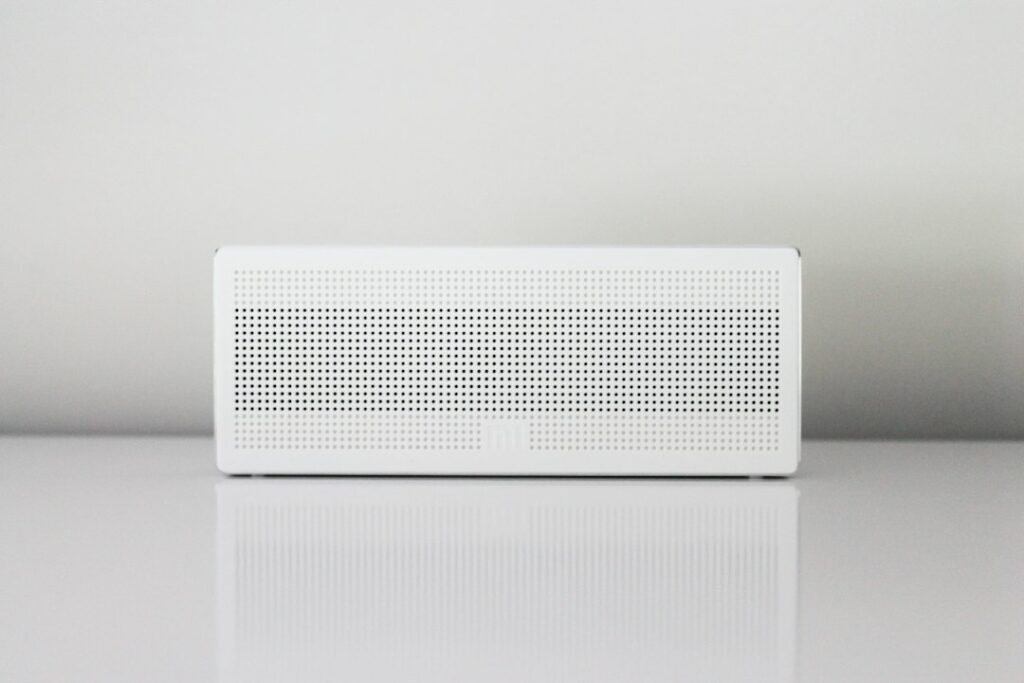
Yes, air purifiers work for what they are designed to do: a properly sized portable unit with a HEPA filter reduces airborne particles such as smoke, pollen, pet dander and fine dust in the room where it runs. They do not remove dust that has already settled on surfaces, they do little for most gases unless they carry a substantial carbon filter, and they cannot fix mold, radon or a ventilation problem. The honest summary from the U.S. Environmental Protection Agency is that portable air cleaners “can reduce indoor air pollution; however, they cannot remove all pollutants from the air,” and that the most effective steps are reducing pollutant sources and ventilating, with filtration as a supplement. This guide explains how air purifiers work, what the evidence says about health benefits, which claims to be skeptical of, how to size one so it actually performs, and what to try first. It summarizes EPA guidance current as of 2026; anyone with asthma, allergies or heart or lung conditions should discuss air cleaning with a physician.
Part of our Heating, Cooling & Ventilation guide — start there for the full picture →
The Short Answer: What Air Purifiers Do and Do Not Do
| Pollutant or problem | Does a typical HEPA purifier help? | Notes |
|---|---|---|
| Wildfire smoke particles | Yes, often substantially | Size by the smoke CADR and run continuously with windows closed |
| Pollen and pet dander in the air | Yes | Works best combined with cleaning and keeping pets out of bedrooms |
| Fine airborne dust | Yes, partly | Does not touch dust already on floors and furniture |
| Cooking particles | Partly | A range hood vented outdoors does more at the source |
| Odors and VOCs | Only with a substantial activated carbon filter | No widely used performance rating exists for gas removal |
| Mold | No, not the cause | Mold is a moisture problem; the water source must be fixed |
| Radon | No | Radon is a gas; testing and mitigation are the answer |
| Carbon monoxide | No | Requires working CO alarms and properly vented appliances |
How Air Purifiers Work
A portable air purifier is a fan in a box with one or more filters. Room air is drawn in, pushed through the filters, and blown back out cleaner. The EPA’s Guide to Air Cleaners in the Home explains that portable air cleaners, also called air purifiers or air sanitizers, are designed to filter the air in a single room or area, while central furnace or HVAC filters are designed to filter air throughout a home.
Particle filters
Most purifiers rely on a HEPA filter, a dense fibrous filter built to catch very fine particles. EPA’s MERV reference table lists HEPA filters as capturing at least 99.97 percent of particles at 0.3 microns, the size that is hardest to catch. Larger and smaller particles are generally captured at even higher efficiency. Some models use “HEPA-type” or “HEPA-like” filters, which are not held to the same standard, so the exact wording on the box matters.
Gas filters
EPA notes that most filters are designed to capture either particles or gases, not both, which is why many units include a second stage of activated carbon for odors and gases. EPA states that activated carbon can be effective when a large amount of material is used, and that “the thicker the better.” A thin carbon-dusted sheet does little. EPA also notes that research has not yet shown that technologies such as plasma, photocatalytic oxidation or UV light remove gases effectively in portable residential air cleaners.
The CADR rating
The single most useful number on the box is the clean air delivery rate, or CADR. EPA explains that the higher the CADR, the more particles the unit can filter and the larger the area it can serve, and that the rating is typically measured at the highest fan speed. Packaging may list separate CADRs for tobacco smoke, dust and pollen, which stand in for small, medium and large particles. For smoke and the finest particles, the smoke CADR is the one that matters.
Best Air Purifiers: our top 3 picks
| Product | Best for | Key features | Price | Buy |
|---|---|---|---|---|
| Coway Airmega Mighty2 | Best overall for living rooms |
| $269.99as of Oct 19, 2026 8:59 pm GMT+0000 | Buy now →Check current price |
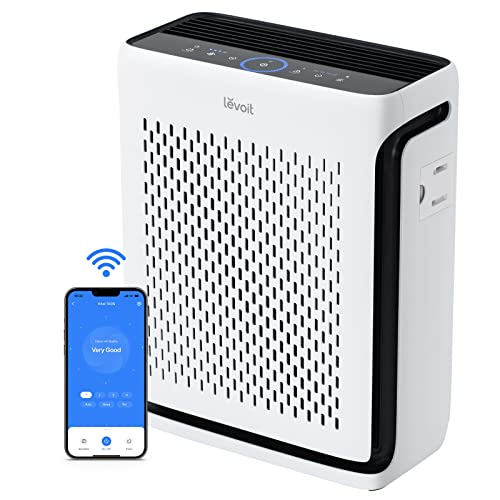
| Levoit Core 300-P | Best for bedrooms |
| $89.99as of Oct 19, 2026 8:58 pm GMT+0000 | Buy now →Check current price |
| Levoit Vital 100S-P | Best for wildfire smoke season |
| $119.99as of Oct 19, 2026 8:59 pm GMT+0000 | Buy now →Check current price |


Prices are Amazon’s listed prices as of the time shown and change often; check Amazon for today’s price. As an Amazon Associate we earn from qualifying purchases.
What the Evidence Says About Health Benefits
EPA’s guide answers the health question carefully, and its answers are worth quoting closely because marketing often overstates them.
- Can air purifiers improve indoor air quality? EPA says yes: most portable air cleaners and furnace filters can filter particles from the air, and some can filter the small particles of greatest health concern (PM2.5).
- Can they benefit health? EPA says “possibly.” Several studies with portable HEPA cleaners have shown small improvements in cardiovascular and respiratory health. EPA notes the improvements are typically small and not always noticeable to the individual, although they may be measurable by health professionals.
- Can they reduce allergy or asthma symptoms? Again “possibly.” EPA says multiple studies have found improvements in one or more allergy or asthma symptoms, but they do not always show major improvements or improvements in all symptoms.
- Can they solve mold problems? EPA says no. Air cleaners do not address the cause of mold, which is moisture. They may remove some particles produced by mold and sometimes reduce odors, but they will not resolve the problem.
The practical takeaway is that a good purifier is a reasonable tool, not a cure. People who buy one expecting a dramatic change in symptoms are often disappointed, while people who use one to cut smoke exposure or reduce dander in a bedroom are more often satisfied.
Where Air Purifiers Earn Their Keep on the Front Range
Wildfire smoke
This is the clearest case. EPA’s guidance on wildfires and indoor air quality notes that smoke from outdoors can enter homes, and that portable air cleaners and high-efficiency HVAC filters can remove smoke particles and improve indoor air quality, especially when used together. Smoke from Colorado and western fires has become a recurring summer and fall concern along the Front Range, and a bedroom purifier gives a household at least one room with cleaner air on bad days.
Pollen and pets
Spring tree pollen and summer grass and weed pollen are common triggers. A purifier in the bedroom, run continuously with the door closed, reduces airborne pollen where people spend eight hours a night. The same applies to cat and dog dander, though bathing pets, washing bedding and keeping animals out of bedrooms often do as much.
Timing helps too. Pollen counts along the Front Range tend to peak on warm, dry, breezy days, so keeping bedroom windows closed on those days and running the purifier through the night gives it a manageable job. Opening windows to air out the house on a high-pollen afternoon undoes much of the benefit, and the unit then spends hours catching up.
Dry, dusty conditions
Windy days and nearby construction can push fine soil into homes. A purifier helps with what is floating in the air, and a better furnace filter helps whenever the system runs.
Claims to Be Skeptical Of
Ozone generators and ozone-emitting cleaners
EPA’s page on ozone generators that are sold as air cleaners is blunt. It states that ozone can be harmful to health, that inhaling it can damage the lungs, and that some studies show ozone generators can exceed health standards even when used as directed. It concludes that at concentrations that do not exceed public health standards, ozone is generally ineffective in controlling indoor air pollution. EPA’s consumer guide adds that some ionizers, electrostatic precipitators, UV lights without adequate lamp coatings and plasma devices may emit ozone, and it points to lists maintained by the California Air Resources Board and the Association of Home Appliance Manufacturers of cleaners tested to emit little or no ozone.
“Kills 99.9 percent of viruses”
Lab claims on germ-killing features often come from small test chambers that look nothing like a real room. A filter removes particles that reach it; it does not sterilize a home. Filtration can reduce airborne particles in a room, but treating it as a substitute for ventilation and other basic precautions overstates what any single appliance can do.
“Whole-house coverage” from one small unit
A small purifier rated for a bedroom cannot clean a 2,000-square-foot open floor plan. The CADR sets the limit, and the unit will only serve the space its airflow can actually cycle.
The ENERGY STAR label
EPA notes that the ENERGY STAR label on an air cleaner means it meets energy efficiency guidelines, and that the label does not refer to its air-cleaning effectiveness in any way. It is a useful tiebreaker for running costs, not a performance rating. ENERGY STAR’s room air cleaner page states that a standard room air cleaner operating continuously uses about 394 kWh per year, and that certified models are more than 50 percent more energy-efficient than standard models.
How to Make an Air Purifier Actually Work
Most disappointing results come from undersized units, low fan speeds, or bad placement. EPA’s guidance supports these steps:
- Measure the room. Multiply length by width. For an open floor plan, count the whole connected space.
- Match the CADR. EPA’s chart, based on 8-foot ceilings, pairs a 300-square-foot room with a minimum CADR of about 195 cfm and a 500-square-foot room with about 325 cfm. As a rule of thumb, that is roughly two-thirds of the floor area. For vaulted ceilings, size up.
- Run it longer and faster. EPA notes that higher fan speeds and longer run times increase the amount of air filtered. A unit on its lowest setting for an hour a day does little.
- Pick a quiet enough unit. EPA notes that a noise rating around 50 decibels is roughly the sound of a modern refrigerator. A unit too loud to run at night will be turned off.
- Place it well. EPA suggests putting it in the rooms where people spend the most time, with airflow unobstructed and away from curtains.
- Close windows during smoke events. A purifier cannot keep up with an open window on a smoky day.
- Replace filters on schedule. EPA warns that a dirty, overloaded filter will not work well.
Worked example: a 14-by-16-foot bedroom is 224 square feet. Two-thirds of that is about 150, so a unit with a smoke CADR of at least 150 cfm fits, and one in the 200 range gives headroom for running on a quieter middle speed. Our guide on how to choose an air purifier walks through more sizing scenarios and filter costs.
Portable Purifier or Better Furnace Filter?
Homes with forced-air heating have a second filtration option already built in. The two approaches complement each other rather than compete.
| Factor | Portable HEPA purifier | Upgraded furnace filter (MERV 13 where the system allows) |
|---|---|---|
| Area served | One room or area | Every room on the duct system |
| When it filters | Whenever it is switched on | Only when the blower runs |
| Typical upfront cost | Higher per room | Low, a filter swap |
| Best for | Bedrooms, smoke days, allergy sufferers’ rooms | General whole-house particle reduction |
| Limits | Noise, filter cost, multiple units for a large home | Fan must run; some older systems may need a technician’s check first |
EPA notes that HVAC systems in most homes run only when heating or cooling is needed, often less than 25 percent of the time during those seasons, which is why a furnace filter alone may underperform in spring and fall. Many households do both: a MERV 13 filter for the whole house and a portable unit in the bedroom.
How to Tell Whether Yours Is Working
Because clean air looks the same as slightly dirty air, people often cannot tell whether a purifier is doing anything. A few checks help:
- Look at the filter. A HEPA filter that turns gray over a few months is capturing particles. One that stays white after months of use may be bypassed or barely running.
- Use a particle monitor. Inexpensive consumer PM2.5 monitors are not lab instruments, but they show trends well, such as how quickly readings fall after cooking or on a smoky evening.
- Check the seal. A filter that is installed loosely or with packaging still on it lets air go around rather than through.
- Notice dust on surfaces. A modest slowdown in how fast furniture gets dusty is a realistic sign of success; a dust-free house is not.
Typical Costs to Own One
Costs vary with size and brand, so these are typical national ranges rather than quotes:
- Purchase: roughly $100 to $400 for a bedroom or living-room HEPA unit; large-room models cost more.
- Filters: replacement HEPA and carbon filters typically run from about $20 to more than $100 per set, replaced anywhere from a few months to a year apart depending on use and air quality.
- Electricity: modest for most units, but continuous operation adds up. ENERGY STAR estimates certified models save about 211 kWh per year compared with standard models.
The biggest cost drivers are the CADR needed, the price and life of replacement filters, and how many rooms need their own unit. Checking filter prices before buying avoids surprises, since some inexpensive purifiers use costly proprietary filters.
Try These First, or Alongside
EPA’s guidance on air cleaners and air filters in the home puts source control and ventilation ahead of filtration. In practice:
- Upgrade the furnace filter to at least MERV 13 if the system can handle it, as EPA suggests.
- Use a range hood that vents outdoors when cooking.
- Keep smoking and strong-smelling products out of the house.
- Vacuum with a sealed HEPA vacuum and dust with a damp cloth.
- Fix moisture problems that support mold and dust mites.
- Test for radon. Radon is the most significant invisible air hazard in many Front Range homes, and our article on whether radon mitigation works explains the real fix.
When to Call an Inspector or HVAC Pro
Air quality complaints that a purifier does not touch often have a building cause. Consider a professional look when:
- A musty odor persists, or there are signs of past water damage
- Symptoms improve when away from home and return on coming back
- Combustion appliances such as a furnace, water heater or fireplace may be venting poorly
- The home has never been tested for radon
- Dust returns quickly despite good filtration, which can point to duct leaks
An HVAC contractor can evaluate filtration and ventilation, and a home inspector can identify moisture, venting and radon-related concerns during a purchase. Our heating, cooling and ventilation hub collects related guides, and the guide to hiring an inspector explains what an inspection covers.
See Our Picks
When a purifier is the right tool, our roundups compare current models by CADR, noise, filter cost and energy use:
- Best air purifiers for bedrooms, living rooms and open plans
- Best HEPA air purifiers for smoke and fine particles
- Best air purifiers for allergies for pollen and dander
References
- Guide to Air Cleaners in the Home — U.S. Environmental Protection Agency
- Air Cleaners and Air Filters in the Home — U.S. Environmental Protection Agency
- Ozone Generators That Are Sold as Air Cleaners — U.S. Environmental Protection Agency
- Wildfires and Indoor Air Quality — U.S. Environmental Protection Agency
- Room Air Cleaners — ENERGY STAR
Frequently asked questions
Do air purifiers really work?
Yes, for airborne particles. A properly sized HEPA purifier reduces smoke, pollen, dander and fine dust in the room where it runs. EPA notes they cannot remove all pollutants and work best alongside source control and ventilation.
Do air purifiers help with allergies?
Possibly. EPA says multiple studies with portable HEPA cleaners found improvements in one or more allergy or asthma symptoms, but not always major improvements or improvements in every symptom. Cleaning and reducing exposure to triggers still matter.
Do air purifiers remove dust?
They remove dust while it is airborne, which can reduce how quickly surfaces get dusty. They do not remove dust already settled on floors, furniture or bedding, so vacuuming with a HEPA vacuum and damp dusting are still needed.
Are ionizers and ozone air purifiers safe?
EPA advises avoiding air cleaners that intentionally produce ozone, a lung irritant, and says ozone at levels below health standards is generally ineffective at cleaning indoor air. Some ionizers and other electronic cleaners may also emit ozone.
How long does it take an air purifier to work?
It depends on the CADR, room size and fan speed. A unit sized for the room and run on a medium or high setting with windows closed typically cuts airborne particles noticeably within an hour or so, and running it continuously maintains the effect.
If indoor air problems persist despite good filtration, the cause may be in the building itself. Front Range homeowners can reach out to our team to connect with a local inspector.