White Mold on Wood: How to Identify, Clean and Prevent It
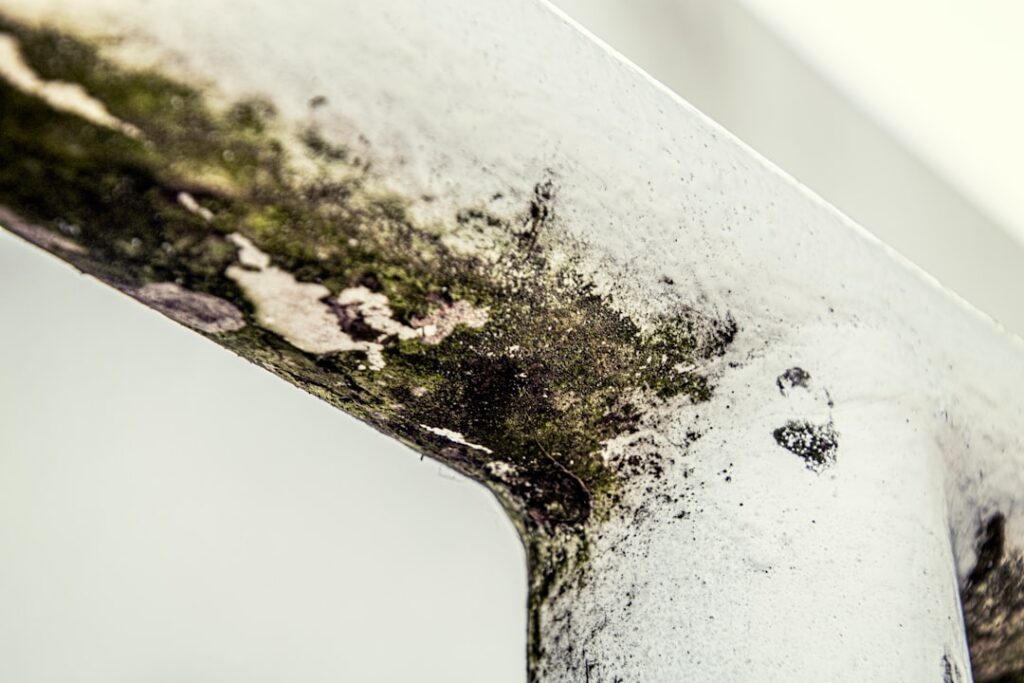
A white, fuzzy or powdery film on a floor joist, a stack of firewood or the back of an old dresser is one of the most common finds in Front Range basements and crawl spaces. White mold on wood looks less alarming than dark staining, so it is easy to brush off as dust or salt. It deserves attention anyway, because any mold growing on wood means the wood has been damp long enough to support it. This guide explains what white growth on wood usually is, how to tell it apart from efflorescence and wood-decay fungi, how to clean surface mold on structural lumber, and how to keep it from coming back. It draws on published EPA and CDC guidance and is educational only. Structural concerns belong with a qualified professional, and health questions belong with a physician.
Part of our Mold Around the Home guide — start there for the full picture →
Is this mold, asbestos, or water damage? Get a free instant screen
Upload a clear photo of the suspect area. You'll get an instant AI screening opinion and what to do next. This is screening guidance, not a professional determination.
Screening guidance only. AI can be wrong. Confirm asbestos, mold type, or lead with lab testing or a licensed professional before acting.
What Is White Mold on Wood?
“White mold” is a description, not a species. The EPA’s mold course states that molds come in many colors, including white, and that labels such as “black mold” do not identify a specific kind of mold. The same logic applies to white. Several unrelated fungi can produce pale, cottony or powdery growth, and some molds that start out white darken as they mature and produce spores. Color alone does not tell you which organism is present or how much of a problem it is.
What all of these growths share is a need for moisture. The EPA’s Brief Guide to Mold, Moisture and Your Home says there are many types of mold and none of them will grow without water or moisture. The same guide shows a photo of mold growing outdoors on firewood with both white and black colonies side by side, a good reminder that one piece of wood can host more than one type at once.
Wood is an easy food source. The CDC lists wood alongside paper, cardboard and ceiling tiles as materials mold grows on, and the EPA course notes that unchecked mold growth can rot wood and damage buildings. Unfinished lumber, especially the rough surfaces of joists, rim boards and subfloor sheathing, holds onto moisture and dust in a way that painted or sealed surfaces do not. For a broader look at the species and colors that show up on lumber, see our guide to types of mold on wood.
Where white mold on wood usually shows up
- Floor framing and subfloors: Joists, beams and the underside of plywood or OSB above crawl spaces and unfinished basements, where humid air meets cool wood.
- Attic sheathing and rafters: Roof decking can grow pale or mottled mold when warm, moist household air leaks into a cold attic and condenses.
- Furniture and stored items: Unfinished backs and drawer bottoms of wood furniture kept against cold basement walls or in storage units.
- Firewood: Split wood stored on bare ground, tightly covered without airflow, or brought indoors to stack near the hearth.
- Trim and window sills: Wood near windows that collect condensation in winter.
- New construction lumber: Framing that was rained on during the build and enclosed before it dried.
In each case the pattern is the same: wood plus moisture plus time. Our room-by-room overview on the mold by room hub covers the other spots in a house where this pattern tends to repeat.
White Mold vs. Efflorescence vs. Wood Rot
Three very different things can leave white material on or near wood framing. Telling them apart matters, because the response to each is different. A white crust on a foundation wall calls for a drainage conversation. A fuzzy film on a joist calls for drying and cleaning. Soft, stringy wood under a white fungal mat may call for structural repair.
Efflorescence
Efflorescence is a mineral deposit, not a living organism. Water moving through concrete, brick, block or mortar carries dissolved salts to the surface, and when the water evaporates the salts are left behind as a white, chalky or crystalline crust. It forms on masonry, not on wood, so white growth on the wood itself is unlikely to be efflorescence. Confusion usually happens where a wood sill plate sits on a concrete foundation and both surfaces are visibly white. Efflorescence tends to crumble to a dry powder when rubbed between the fingers and often dissolves when wetted. Mold is more likely to smear and to look fuzzy or thread-like up close. Efflorescence is still worth noting, because it shows that water is moving through the foundation. Our efflorescence guide covers causes and fixes.
White rot and other wood-decay fungi
Surface molds mostly live on the outside of the wood and feed on sugars, starches and dust. Wood-decay fungi are different. They digest the structural components of the wood itself. Some decay fungi produce white, fan-shaped mats or cord-like strands across the surface, and “white rot” is the name for decay that can leave wood pale, soft, spongy or stringy. A screwdriver or awl that sinks easily into the wood, cross-cracking, or fruiting bodies that look like mushrooms or shelves are all signs that the problem has gone beyond surface mold. The EPA course notes that if a moisture problem goes unaddressed long enough, molds can weaken floors and walls by feeding on wet wood, and that a structural engineer or other qualified professional should be consulted when structural integrity is in question. Our guides on wood rot repair and mushrooms growing from mold go into more detail.
Quick comparison table
| Look-alike | How to tell | Next step |
|---|---|---|
| Surface white mold | Fuzzy, cottony or powdery film on the wood surface; may smear when wiped; wood underneath is firm; often a musty odor | Find and fix the moisture source, clean with detergent and water, dry fully, then consider a sealer |
| Efflorescence | White crystalline or chalky crust on concrete, block, brick or mortar rather than wood; crumbles to dry powder; may dissolve when wetted | Brush off and investigate drainage, grading and foundation moisture |
| White rot or decay fungus | Pale, soft, spongy or stringy wood; white mats or strands; mushroom-like or shelf-like fruiting bodies; tool probe sinks in | Stop the water, have a qualified pro assess structural damage, repair or replace affected members |
| Hair-like mold growth | Long, fine, white or gray filaments standing up from the surface, sometimes with small dots on the tips | Treat as mold: moisture fix, cleaning and drying |
| Dust or sawdust | Wipes away cleanly, no odor, no regrowth, no stain left behind | Clean and monitor; no moisture follow-up needed unless it returns as growth |
Filament-type growth that looks almost like fine hair is covered in our guide to mold that looks like hair. If the table leaves any doubt, treat the growth as mold until shown otherwise, and pay close attention to whether the wood underneath is still sound.
Is White Mold on Wood Dangerous?
The honest answer is that it depends on the person, the amount and the location, and that color does not change the answer. The CDC says exposure to damp and moldy environments may cause a variety of health effects, or none at all, and that some people experience a stuffy nose, sore throat, coughing or wheezing, burning eyes or skin rash. The CDC adds that people with asthma or mold allergies may have severe reactions, and that immune-compromised people and people with chronic lung disease may get lung infections from mold.
The EPA course makes two further points that are useful here. First, mold does not have to be alive to cause an allergic reaction, so dead mold left on wood can still bother sensitive people. Second, no one can tell whether a mold is producing mycotoxins just by looking at it. White growth is not automatically safer than dark growth, and dark growth is not automatically worse. Our guide on whether white mold on wood is dangerous covers the health side in more depth.
There is also a property risk. Molds gradually destroy the things they grow on, according to the EPA Brief Guide. On structural wood, the bigger concern is often what the mold says about moisture. Persistent dampness that supports mold can also support decay fungi, which do weaken framing over time.
How to Clean Surface Mold on Structural Wood
Surface mold on solid, firm lumber can often be cleaned in place. The EPA says that if the moldy area is less than about 10 square feet, roughly a 3-foot by 3-foot patch, homeowners can in most cases handle the job themselves. Larger areas, significant water damage, sewage-related water, or suspected mold in the HVAC system point toward professional help. Anyone with health concerns should talk with a health professional before starting.
Step 1: Fix the moisture first
The EPA is direct on this point: if you clean up the mold but do not fix the water problem, the mold problem will most likely come back. Look for plumbing leaks, condensation on cold water lines, roof or flashing leaks, wet soil in a crawl space, or a dryer venting into the space. Wet or damp materials dried within 24 to 48 hours after a leak or spill will in most cases not grow mold, according to the EPA.
Step 2: Protect yourself
The EPA Brief Guide recommends limiting exposure with an N-95 respirator, long gloves and goggles without ventilation holes, and avoiding touching mold with bare hands. Scrubbing or sanding releases spores and fragments, so close off the area where practical and ventilate to the outdoors.
Step 3: Clean with detergent and water
The EPA’s cleanup guidance for hard surfaces is to scrub mold off with detergent and water and then dry completely. Use a stiff brush and work into the grain. A HEPA-filtered vacuum is a common professional tool for picking up loosened material before and after scrubbing. The EPA does not recommend routine use of biocides such as chlorine bleach during mold cleanup, noting that dead mold can still cause allergic reactions and must be removed, not just killed. The CDC notes that household products, soap and water, or a bleach solution of no more than 1 cup of bleach per gallon of water can remove mold from hard surfaces, and both agencies warn never to mix bleach with ammonia or other cleaners. Our step-by-step guide on how to kill mold on wood compares cleaning options.
Step 4: Sand if staining or growth remains
Raw wood is somewhat porous, and mold can work into the surface fibers. If residue remains after scrubbing, light sanding of the affected surface is a common next step. Sanding moldy wood creates fine dust, so keep the respirator on, contain the area, and vacuum with a HEPA unit as you go. The EPA notes that mold may cause staining and cosmetic damage and that it may not be possible to restore an item’s original appearance. Faint staining that remains after thorough cleaning is not necessarily active growth.
Step 5: Dry, check, then seal
The EPA advises against painting or caulking moldy surfaces and says to clean up the mold and dry the surfaces before painting, because paint applied over mold is likely to peel. The same idea applies to mold-resistant primers and encapsulating sealers on framing. They are a final step, not a substitute for cleaning and drying.
Before sealing, it helps to confirm that the wood is actually dry. A pin-type moisture meter gives a quick reading of wood moisture content. Meters vary by model and wood species setting, so treat readings as a trend rather than a precise number, and compare suspect areas with dry wood elsewhere in the house. Many contractors look for readings in the mid-teens or lower before closing up or coating framing, though targets differ by product and situation. If readings stay high for days after the leak is fixed, something is still feeding moisture into the wood.
When cleaning in place is not enough
- The wood is soft, crumbling or stringy when probed.
- Growth covers more than about 10 square feet.
- The water source was sewage or flood water.
- The mold is on porous wood products such as particleboard or fiberboard that are swollen or delaminating.
- Occupants have asthma, severe allergies or weakened immune systems.
For framing that shows signs of decay, a contractor may need to sister, reinforce or replace members. That is a structural repair, not a cleaning job.
White Mold in Crawl Spaces and Basements
Crawl spaces are where many Front Range homeowners first see white mold on wood. The EPA mold course identifies crawl spaces with high relative humidity as common sites of hidden mold growth, particularly when the floor is bare earth. It explains that soil wicks moisture, and the relative warmth of the crawl space evaporates that moisture into the air, where it can cause mold to grow. The EPA also notes that moisture in a crawl space can move into the rest of the building through cracks in walls, floors and ceilings.
Colorado’s dry outdoor air does not prevent this. A crawl space is its own microclimate, sealed off from the dry air outside and in contact with soil that can stay damp after snowmelt, heavy spring rain or irrigation. Joists and subfloor sheathing over that space can sit at high humidity for long stretches. Common contributing factors include:
- Missing, torn or poorly lapped vapor barrier over the soil.
- Downspouts and grading that send water toward the foundation.
- Plumbing leaks or condensation on uninsulated cold water lines.
- Dryer or bathroom exhaust ducts that dump air into the crawl space.
- Summer vent openings that bring in warm air, which can condense on cooler wood surfaces.
Our dedicated guide to white mold in crawl spaces walks through vapor barriers, encapsulation and dehumidification. In finished basements, white mold on wood often shows up on the bottom plate of framed walls, on furring strips against concrete, and on stored furniture. The same moisture-first approach applies.
White Mold on Furniture, Firewood and Stored Items
Not every case involves the house frame. Furniture, lumber stock and firewood bring their own practical questions.
Furniture
The EPA Brief Guide includes a photo of mold growing on a suitcase stored in a humid basement, and furniture stored the same way behaves similarly. Move the piece to a dry, ventilated spot, and clean hard finished surfaces with detergent and water. Unfinished backs and drawer bottoms may need more scrubbing or light sanding. For valuable or sentimental pieces, the EPA suggests consulting a specialist in furniture repair, restoration or conservation. Once the piece is clean and dry, keep it away from cold exterior walls and off concrete floors.
Firewood
White fungus on firewood is common and is largely an outdoor process. The EPA notes that outdoors, molds break down dead organic matter such as fallen leaves and dead trees. The practical concern is bringing that growth indoors. Store firewood off the ground, covered on top but open on the sides for airflow, and outside the house. Bring in only what will be burned soon, and avoid stacking wood against interior walls or in basements where it can raise local humidity and spread spores.
Preventing White Mold on Wood
Prevention is mostly moisture control. The EPA says moisture control is the key to mold control, and the CDC lists many of the same everyday steps.
- Keep humidity in check. The EPA recommends keeping indoor relative humidity below 60 percent, ideally between 30 and 50 percent. The CDC recommends keeping it as low as possible and no higher than 50 percent. A basic hygrometer shows where a space actually sits.
- Dry wet wood fast. The EPA’s 24 to 48 hour window applies to subfloors after a dishwasher leak just as much as to drywall.
- Manage outside water. Clean gutters, extend downspouts, and make sure the ground slopes away from the foundation, as the EPA recommends.
- Insulate cold pipes. The EPA suggests covering cold surfaces such as cold water pipes with insulation to prevent condensation.
- Vent moisture outdoors. Dryers, bath fans and kitchen hoods should exhaust outside the home, not into a crawl space, attic or garage.
- Give stored items air. Keep furniture and boxes a few inches off concrete and away from exterior walls.
- Inspect periodically. A flashlight check of crawl space framing after spring snowmelt and heavy storms catches problems while they are small.
Our general guide to mold on wood and our page on black mold on wood cover prevention for darker growth as well, since the steps are the same regardless of color.
Do You Need Testing or an Inspection?
In most cases, testing is not needed to deal with visible white mold on wood. The CDC states that you do not need to know the type of mold, and that if mold is growing in your home you need to clean it up and fix the moisture problem. The CDC also says it does not recommend routine mold testing, in part because there are no set standards for acceptable amounts of mold in a home.
A professional inspection can still be worthwhile when:
- Musty odors are present but the source cannot be found.
- Growth appears widespread across framing, sheathing or insulation.
- There are signs of decay and the structure needs to be assessed.
- The home is being bought or sold and documentation is needed.
- Prior remediation was done and someone wants to confirm the cleanup held.
An inspector’s main value is usually in finding where moisture is coming from, using tools like moisture meters and thermal cameras, rather than in naming the mold. Our mold inspection pillar explains how inspections work and what to expect. For homeowners who want to collect a sample on their own, our mold test kit collection lists options, with the caveat that results need careful interpretation.
References
- A Brief Guide to Mold, Moisture and Your Home — U.S. Environmental Protection Agency
- Mold Cleanup in Your Home — U.S. Environmental Protection Agency
- Mold Course Chapter 1: Introduction to Molds — U.S. Environmental Protection Agency
- Mold Course Chapter 2: Why and Where Mold Grows — U.S. Environmental Protection Agency
- Mold — Centers for Disease Control and Prevention
Frequently asked questions
What causes white mold on wood?
Moisture. The EPA states that no type of mold will grow without water or moisture. On wood, the usual sources are leaks, condensation, high humidity in crawl spaces and basements, and lumber that got wet and was not dried within 24 to 48 hours.
How can you tell white mold from efflorescence?
Efflorescence is a salt deposit that forms on concrete, brick, block or mortar, not on wood. It is crystalline or chalky and crumbles to a dry powder. Mold on wood tends to look fuzzy or cottony and may smear when wiped.
Is white mold on wood the same as wood rot?
Not necessarily. Surface mold sits on the wood and the wood underneath stays firm. Wood-decay fungi, including white rot, break down the wood itself and leave it soft, spongy or stringy. Probe the wood with a screwdriver; if it sinks in easily, have a professional assess the damage.
Should bleach be used on white mold on wood?
The EPA does not recommend biocides such as bleach as a routine cleanup step and favors scrubbing hard surfaces with detergent and water, then drying completely. If bleach is used, never mix it with ammonia or other cleaners.
Can white mold on wood be painted over?
No. The EPA advises against painting or caulking moldy surfaces. Clean the mold, dry the wood fully, confirm the moisture source is fixed, and only then apply primer or sealer.
Found white growth on joists or subfloor and not sure if it is surface mold or something deeper? Send us a note and we can connect you with an independent Front Range inspector who can trace the moisture and check the framing.