How to Remove White Mold: Identification and Cleanup Guide
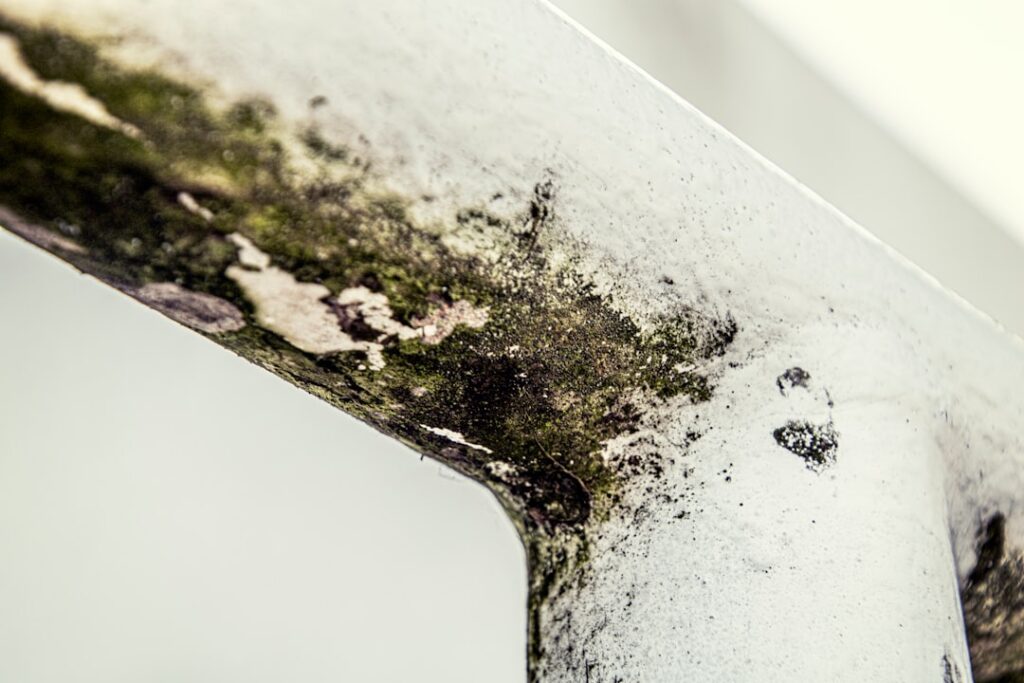
White mold is a common finding on basement walls, attic sheathing, crawlspace framing, and below-grade storage areas. The first task is not removal; it is identification. White or off-white powdery deposits on concrete, brick, or masonry are often efflorescence — mineral salts left behind as water evaporates from the masonry — and not mold at all. White mold is real, typically Aspergillus or Penicillium colonies, and behaves differently than efflorescence. Using the wrong treatment on the wrong material wastes effort or leaves contamination behind. This guide summarizes EPA and CDC guidance current as of 2026 — consult a certified mold inspector for testing decisions and your physician for symptom evaluation. The identification test takes five minutes; the removal approach depends on what the test reveals.
Is this mold, asbestos, or water damage? Get a free instant screen
Upload a clear photo of the suspect area. You'll get an instant AI screening opinion and what to do next. This is screening guidance, not a professional determination.
Screening guidance only. AI can be wrong. Confirm asbestos, mold type, or lead with lab testing or a licensed professional before acting.
The efflorescence-versus-mold identification test
The water test distinguishes the two in under five minutes. Spray a small amount of water on the suspect deposit. Efflorescence (mineral salt) dissolves in water and disappears or significantly diminishes; mold persists or even darkens slightly when wet. A second confirming test uses household bleach: dab a few drops of bleach on the deposit and wait one minute. If the deposit lightens dramatically, the growth is likely surface mold (Cladosporium-family or related light-colored genera). If the deposit remains unchanged, it is more likely efflorescence or a non-biological residue.
Efflorescence indicates that water is passing through the masonry — the salts in the masonry dissolve in groundwater, migrate to the surface as the water moves outward, and crystallize when the water evaporates. Efflorescence is a symptom of moisture intrusion but not a microbial problem. Real white mold is a microbial problem and indicates substrate moisture plus organic substrate (cellulose) feeding the colony.
Where white mold typically grows
Six locations consistently produce white mold findings. Attic sheathing in homes with inadequate ventilation, especially on the north-facing roof slope where summer condensation lingers. Crawlspace floor joists and subfloor undersides in spaces without vapor barriers. Basement framing behind drywall in below-grade finished spaces with chronic humidity. Wood furniture stored in basements or garages with seasonal humidity swings. Leather and fabric items in closets along exterior walls. And wood window-sill frames where condensation pools during winter.
Each location shares two features: organic substrate (wood, paper, leather, fabric) and chronic moisture exposure. Concrete and masonry rarely grow white mold directly because they lack organic feedstock; deposits on concrete are usually efflorescence or growth feeding on dust accumulated on the concrete surface rather than on the concrete itself.
Species typically identified as white mold
Lab analysis of white-mold samples typically returns Aspergillus species (often Aspergillus niger in its early stages before pigment develops, or Aspergillus glaucus, Aspergillus restrictus), Penicillium species (Penicillium chrysogenum and related), or Chaetomium (a darker spore but often appearing white during early colony stages). Stachybotrys chartarum can sometimes appear white-gray during initial growth phases but usually darkens within days.
The species mix matters for remediation decisions because some species (Aspergillus fumigatus, Stachybotrys) raise more serious health considerations than common surface species (Cladosporium, Alternaria). A tape-lift sample sent to a lab confirms species when the visible identification is uncertain. Tape-lift kits cost $25-$40 including lab fees and turn around in five to ten business days. Browse the InspectandTest mold inspection overview for context on species identification.
DIY removal workflow for under-10-square-feet white mold
EPA guidance allows DIY remediation for contamination under ten square feet of contiguous surface. The workflow starts with PPE: N95 respirator, nitrile gloves, eye protection, and disposable long-sleeve clothing. Open windows in adjacent rooms if possible and close doors to non-affected rooms to limit spore spread during the work.
Apply an EPA-registered antimicrobial cleaner (Sporicidin, Concrobium, or BioCide 100) directly to the affected area and surrounding 12 inches of clear margin. Let the antimicrobial dwell for the time specified on the label, typically ten minutes. Wipe with clean disposable cloths and bag the cloths immediately in a sealed trash bag. Re-treat any stubborn growth with a second application. After the surface is clean, allow the substrate to dry fully (24-48 hours) before any sealing, painting, or refinishing work.
White mold on wood: special considerations
White mold on wood framing, sheathing, or trim requires more careful handling than surface growth on hard non-porous finishes. Wood is a porous organic substrate, which means surface cleaning may leave colony fragments inside the wood grain. After applying EPA-registered antimicrobial and wiping the surface, sand the wood lightly with 100-150 grit sandpaper to remove any colony fragments embedded in the surface fibers. Re-apply antimicrobial, let dwell, wipe, and allow to dry.
For attic sheathing showing widespread white mold (more than 10-15 square feet of contiguous surface), DIY treatment is usually not adequate. The treatment requires reaching all affected surfaces, including framing edges that may be obscured by insulation, and verifying moisture content with a moisture meter before declaring success. Professional attic remediation in Front Range markets runs $1,500-$5,000 depending on attic size and accessibility.
Treating efflorescence (the look-alike that is not mold)
Efflorescence removal differs entirely from mold remediation. Brush the deposit off with a stiff-bristle brush or wire brush — most efflorescence flakes away easily. For stubborn deposits, use a mild masonry cleaner (Sika-1 Masonry Cleaner, Eaco-Chem NMD80, or muriatic acid diluted per manufacturer instructions). Rinse with clean water and allow to dry. The mechanical and chemical removal addresses only the visible deposit; the underlying water-passage problem driving the salt migration remains.
Long-term efflorescence remedy requires identifying and addressing the moisture source. Common Front Range sources include hydrostatic pressure pushing groundwater through foundation walls during spring snowmelt, downspout discharge too close to the foundation, grading that slopes toward the house, and inadequate exterior waterproofing on below-grade walls. A moisture-meter walkthrough and a thermal-imaging scan by a credentialed inspector identifies the source so it can be addressed before reapplication of finishes. The how-to-find-the-source-of-mold-in-your-home guide covers source identification in more depth.
Common mistakes with white mold removal
Six mistakes show up regularly. Treating efflorescence as if it were mold (and spending more on antimicrobial than the situation warranted). Treating mold as if it were efflorescence (and brushing off visible growth without antimicrobial, leaving viable spores). Cleaning surface growth without sanding wood substrate, leaving embedded colony fragments to regrow. Skipping the moisture-source investigation, which guarantees recurrence within months. Disposing of contaminated cleaning rags in open containers, which redistributes spores through the home. And skipping PPE during DIY work, which exposes the homeowner to spore concentrations during the disturbance.
The first mistake (treating efflorescence as mold) is the most common cosmetic mistake but rarely causes harm. The fourth mistake (skipping moisture investigation) is the most common consequential mistake because it dooms the work to repeat. Fixing the moisture source matters more than perfecting the antimicrobial chemistry.
When to call a professional for white mold
Five conditions argue for professional involvement. Visible growth exceeding ten square feet of contiguous surface. White mold on attic sheathing across multiple rafter bays. White mold in HVAC ducts or on supply registers. Confirmation by lab testing that Aspergillus fumigatus or Stachybotrys is present. Occupants with diagnosed mold allergy, asthma, or immunocompromised status.
Professional remediation for white mold typically includes containment with plastic sheeting and negative-pressure HEPA filtration, antimicrobial treatment with substrate-penetrating chemistry, structural drying if moisture readings remain elevated, and post-remediation verification air sampling. InterNACHI’s IAC2 mold credential and IICRC mold-remediation certification are the two common credentials to look for. Front Range homeowners can use the InspectandTest contact page for a vetted local connection.
Efflorescence vs white mold: the spray-water test in detail
The spray-water test is the single most reliable five-minute field check available to a homeowner, but the way the deposit responds to water carries more information than a simple dissolve-or-not result. Efflorescence is calcium carbonate, sodium sulfate, or calcium hydroxide salt left behind by evaporating groundwater. When sprayed, the salt crystals dissolve back into the water and the deposit visibly shrinks, fades, or disappears within seconds. The wet patch may darken the underlying masonry but the white powdery layer is gone. Repeating the test after the surface dries shows the deposit returning as the water evaporates again — a confirming sign that the residue is salt, not biological growth.
Real white mold, by contrast, holds its shape when wet. Aspergillus, Penicillium, and Cladosporium hyphae are physical structures of branching filaments and spore heads anchored to the substrate. Water beads on the colony surface or wets it without dissolving the structure. The colony may darken slightly as moisture saturates the hyphae but the visible mass remains. The location of the deposit also signals identity. Efflorescence appears almost exclusively on concrete foundation walls, brick veneer, masonry block, mortar joints, concrete-paver patios, and stucco — substrates carrying soluble mineral salts. Mold appears on drywall paper face, paper-faced gypsum at floor-wall corners, fiberglass insulation paper backing, wood framing studs, plywood and OSB sheathing, hardwood subfloor, and cellulose-fiber ceiling tile. A white powdery deposit on a concrete crawlspace wall is almost certainly efflorescence; the same deposit on a drywall corner or a wood floor joist is almost certainly mold. Mixing the two diagnoses costs time and money — treating mineral salt with antimicrobial wastes the chemistry, and brushing mold off with a wire brush spreads viable spores across a wider surface.
When white mold indicates a bigger problem
A small patch of white mold on a basement corner is usually a localized condensation issue, but early-stage Aspergillus or Penicillium colonies often serve as the first visible symptom of a hidden chronic moisture source elsewhere in the building. White-stage colonies are immature growth, meaning the moisture event driving them is recent or recurring. Five hidden sources surface repeatedly during Front Range inspections. Foundation seepage along below-grade walls during spring snowmelt, where the visible white patch appears feet away from the actual water entry point as moisture migrates laterally through framing cavities. Plumbing micro-leaks at supply or drain joints, where slow drips wet the back side of drywall or the underside of subfloor without producing a visible stain. Condensation behind exterior walls in poorly insulated stud bays, where winter temperature gradients push interior humidity through the vapor barrier to chill on cold sheathing. HVAC condensate-line clogs that overflow inside utility closets or mechanical rooms. And ice-dam meltwater that backs up under shingles and saturates attic sheathing or top-plate framing.
When small white-mold patches recur after thorough antimicrobial treatment, the problem is rarely the chemistry of the treatment and almost always an unaddressed moisture source. Call a licensed plumber when growth clusters near plumbing walls, water heater closets, or under sinks. Call a structural engineer or foundation specialist when growth appears along below-grade walls after rain or snowmelt events. Call an HVAC contractor when growth appears near supply registers, in utility closets, or on duct exteriors. Treating the visible colony without fixing the moisture upstream guarantees the patch returns within one to three months.
Front Range climate and white mold patterns
Colorado’s Front Range has a low-humidity climate by national standards — average summer relative humidity runs 35-50 percent and winter drops to 20-30 percent indoors after heating dries the air. The low ambient humidity reduces the building-wide mold pressure that humid coastal and Midwest markets experience. Front Range homeowners rarely see widespread mold across upper-level living areas in the way Houston or Atlanta homeowners do. But the climate produces specific localized moisture pockets that consistently generate white-mold outbreaks despite the dry ambient air.
Four localized patterns dominate. Basement window wells fill with snow during winter storms, then meltwater wicks through window frames and basement wall corners during March and April warm-ups, producing white mold along window-sill framing and the adjacent drywall. Crawlspaces with bare dirt floors release ground moisture year-round; without a sealed vapor barrier the relative humidity inside the crawlspace can exceed 70 percent even when the outside air is 25 percent, growing white mold on floor joists and subfloor undersides. Attic ice dams during late-January through March back snowmelt under shingles, wetting roof sheathing along the eaves and producing white mold on the north-facing roof slope by spring. Sump pits in unsealed basements vent humid air through the open lid, building local humidity in a 6-foot radius and growing white mold on adjacent walls and stored items. Seasonal patterns mean Front Range homeowners should plan a visual inspection in late April or early May, after snowmelt has run its course but before summer storage clutter hides early signs of growth.
References
- EPA: Mold Remediation in Schools and Commercial Buildings Guide — U.S. Environmental Protection Agency
- CDC: About Mold — U.S. Centers for Disease Control and Prevention
- InterNACHI: Mold Inspection Standards — International Association of Certified Home Inspectors
- NIEHS: Mold and Health — National Institute of Environmental Health Sciences
Front Range homeowners facing white mold on basement walls, attic sheathing, or crawlspace framing can reach out through our contact page for a connection to a vetted Denver, Boulder, Adams, or Jefferson County inspector experienced with below-grade and attic moisture investigations.
Mold removal & cleanup picks
For a small, contained patch (under ~10 sq ft) these EPA-friendly removers handle surface mold. Larger or recurring growth warrants a professional assessment first.
| Product | Why | Buy |
|---|---|---|
 RMR-86 Instant Mold Stain Remover RMR-86 Instant Mold Stain Remover | Fast-acting on stains; ventilate and wear PPE. | Amazon — $18.38 |
 Concrobium Mold Control Concrobium Mold Control | No-bleach formula that also helps prevent regrowth. | Amazon — $13.48 |
 Mold Armor Mold & Mildew Remover Mold Armor Mold & Mildew Remover | Widely stocked bathroom/surface remover. | Amazon — $22.98 |